testata inforMARE
Cerca
10 June 2026 - Year XXX
Independent journal on economy and transport policy
17:31 GMT+2
LinnkedInTwitterFacebook
FORUM of Shipping
and Logistics

COMMISSION OF THE EUROPEAN COMMUNITIES

Brussels, 13 February 2001

Proposal for a

DIRECTIVE OF THE EUROPEAN PARLIAMENT AND OF THE COUNCIL

On Market Access to Port Services

(TEXT WITH EEA RELEVANCE)

EXPLANATORY MEMORANDUM


1. INTRODUCTION

The port services market covers services of a commercial value which are provided against payment to port users in a seaport and whose payment is not normally included in the charges collected for being allowed to call at or operate in a port. Although this service sector is essential for the functioning of the Community's ports and hence for its trade, there is at present no specific Community regulatory framework for port services.

However, national port services regimes have to be in conformity with the freedoms guaranteed by the Treaty (freedom of establishment, free movement of workers, goods and services) as well as the Treaty's competition rules. Problems with the application of these rules, where they arose, have been dealt with by the Commission on a case by case basis.

Ports play a crucial role in intra and extra Community trade. They will be called upon to play an increasing role in attempts to transfer more goods and passengers to the environmentally less damaging and less congested sea transport mode and to encourage intermodal transport and make it less costly; there is hence a need to ensure their effectiveness.

The liberalisation of the Community's internal maritime transport market took place over the last decade. In fact, transitional rules continue to allow restrictions in the Greek islands cabotage market. The situation in port services varies considerably: in many ports, restrictions are still in place regarding access and fair and equal treatment of potential service providers with consequences for quality and costs of services. It can nevertheless be observed that developments in the port services market are following those of maritime transport towards a more open market, albeit with a considerable time lag. Developments, however, vary considerably.

For these reasons, it is necessary, in the interests of operators, authorities and consumers, to introduce specific and clear rules on access to the port services market which will take account of its unique features.


2. THE NEED TO ESTABLISH A COMMUNITY LEGAL FRAMEWORK

Recent developments have made it necessary to replace the case by case approach in the application of the Treaty rules by a more systematic approach.

Competition between ports within the same Member State and between ports in neighbouring Member States has substantially increased since the completion of the internal market. Although, of course, all ports have to follow rules set by the competent national authorities, the diversity and complexity of these rules as well as a considerable degree of uncertainty in procedural matters continue to be of key interest to port users and port service providers. Price and quality of port services have become one of the key elements where port users choose a port; a set of basic rules applicable in all Community ports would ensure that the competition between and within ports would take place on a level playing field.

Recent years have seen a continuing, even increasing trend to shift the provision of port services from the public to the private sector in order to increase efficiency, make use of the know-how of the private sector and introduce, and increase, competition between service providers. Although this trend is far from uniform and, indeed, tends to vary considerably between the different port service sectors, all Member States have opted for the principle of opening up this sector to competition. The accompanying rules vary considerably. Indeed, in many cases it is not clear what these rules are, thus effectively rendering unnecessarily difficult the exercise of the Treaty's freedoms.

The heterogeneous nature of the port services and the diversity of the ports (in terms of status, ownership, size, function and geographical characteristics) remain important factors. It requires that appropriate account be taken of each port's specificity and its relevance for the port service providers. This may, in particular, be the case where space and capacity constraints exist in a port or where specific maritime safety and environmental considerations exist. In addition, ports have a particular role to play in the Community's customs procedures.

The principle of subsidiarity implies that Member States and their competent authorities be empowered to take account of considerations of local, regional or national specificities. These considerations, well-founded as they may be in many cases, must, however, not unduly restrict the rights of service providers derived from the basic freedoms of the Treaty. It is therefore necessary to lay down at Community level the conditions for the exercise of these freedoms: in particular, that limitations in the number of service providers, where they are deemed necessary, are objectively justified and that the procedure leading to their authorisation is transparent, non-discriminatory, objective, relevant and proportional.

A further characteristic of a substantial number of ports is the dual role of the managing body of the port both as a body (public but also sometimes private) responsible for the management of the port and its development, for which in many cases public funds are given, and as a provider of port services where other service suppliers are admitted. It is often unclear under what conditions public and private suppliers can compete with each other.

A Community framework on port services should not apply to ports of all sizes. It is acknowledged that the implementation of the framework by Member States will, in most cases, impose an additional burden on authorities which, for the smaller ports, appears to be disproportionate to the expected results since limited cargo and passenger volumes do not normally require a multitude of service providers.

Under these circumstances it is appropriate to establish a Community legal framework ensuring, on the one hand, access to the port services market in application of the Treaty rules whilst, on the other hand, allowing Member States and their competent authorities to fill in this framework with specific rules which take due account of the ports' geographic and other characteristics as well as of local, regional or national specificities.


3. THE COMMISSION'S PROPOSAL

3.1. The key principles
  • Member States shall take the necessary measures to ensure that providers of port services have access to the market for the provision of port services.

    This principle gives effect to the Treaty rules on the major freedoms and competition as regards this specific sector.

    The Commission believes that no port service of a commercial nature should a priori be excluded from the Community framework. A list of port services is annexed to the legislative proposal.
  • Member States may require that a provider of port services obtain prior authorisation.

    This principle acknowledges that, in order to ensure proper management of a port with its inherent constraints as well as to ensure a satisfactory level of professional qualifications, Member States may operate a system of prior authorisation for providers of port services.

    The Commission believes that the conditions for granting of authorisations must be transparent, non-discriminatory, objective, relevant and proportional. They may relate only to the provider's professional qualifications, his sound financial situation and sufficient insurance cover, to maritime safety or the safety of installations, equipment and persons as well as to environmental protection. Where public service obligations are considered appropriate, these may relate to safety, regularity, continuity, quality and price of the service in question.
  • The number of authorisations can only be limited for reasons of constraints relating to available space or capacity or, for technical-nautical services, maritime traffic related safety. These constraints must be justified and Member States must carry out a transparent, objective and non-discriminatory selection process of the service providers. Key aspects of the selection procedures will be harmonised.

    This principle reconciles the Treaty rules on the freedoms of establishment and the provision of services with the fact that in a number of ports and port services sectors, the above-mentioned constraints make a limitation unavoidable.
  • Ports in which no limitations exist, are not bound by the rules on limitations, selection procedure, duration of authorisations and on transitional measures.

    This principle acknowledges that the aim which this Directive strives to achieve has already been achieved in these ports.
  • Member States shall take the necessary measures to allow self-handling.

    This principle acknowledges that there are in fact no reasons why self-handling should not, in principle, be allowed in ports if operators believe that such action provides better use of their resources and gains in efficiency of their own services. It acknowledges furthermore that conditions and criteria for self-handlers must not be stricter than those set for providers of port services for the same or a comparable kind of service.
  • Where the managing body of the port provides, or wishes to provide, port services in competition with other service providers, it must be treated like any other competitor. This requires that the managing body must not be involved in the selection procedure of service providers, must not discriminate, in its function as managing body of the port, between service providers in which it holds an interest and other service providers and must, in particular, separate its port services accounts from the accounts of its other activities.

    This principle reflects general competition principles and standards of transparency.
  • Member States will have to ensure full transparency of all procedures in relation to the provision of port services, as well as the availability of appeal procedures, including a judicial review.

    This is the principle of good governance.
  • Where a selection of service providers is made, the period during which the chosen provider may operate will be limited in time.

    This principle reconciles the need to maintain the possibility of potential and future service providers to enter the port services market with legitimate expectations of current service providers. It does not allow a simple catch-all solution. Indeed, it is appropriate to treat those cases differently where, on the one hand, no or only insignificant investments were made by the service provider and, on the other hand, where the service provider had to make such investments; where investments were made in moveable or immovable assets; and, of course, the level of investments needs to be given due consideration.
  • Transitional measures take account of legitimate expectations of current service providers but, at the same time, require that within a reasonable time frame, existing authorisations which were not granted in conformity with the Directive's rules be reviewed.

    This principle ensures that the objectives of this Directive are attained within a reasonable period of time whilst respecting legitimate expectations of current service providers. This is done, in particular, by taking into account the same criteria to be used for determining the duration of authorisations where their number had to be limited.
  • The Directive and its implementation by Member States must not jeopardise safety in ports.

    This principle re-affirms the Commission's concerns about maritime safety; all measures aiming at regulating access to the port services sector must fully ensure the highest levels of safety, in particular maritime safety, in ports.
  • The Directive and its implementation by Member States must not jeopardise environmental protection rules in ports.

    This principle re-affirms the importance the Commission attaches to environmental protection.

The proposal does not contain rules on institutional structures of the ports and does not prevent Member States from deciding which bodies should act as competent authorities.

In application of article 295 of the Treaty the proposal in no way prejudices the rules in Member States governing the system of property ownership of, or in, ports.

The proposal does not contain harmonised or minimum standards for training and qualifications of the personnel and the equipment involved. Without prejudice to existing Community legislation and in application of the subsidiarity principle it allows Member States to maintain and set appropriate rules provided these are, in particular, transparent, non-discriminatory and objective.

Finally, the proposal does not include harmonised safety and environmental rules but relies on existing rules which may take appropriate account of national, regional and local specificities.

The approach is in line with the conclusions of the European Council of Lisbon of 28 March 2000 where the Commission, Council and the Member States, each in accordance with their respective powers, were asked to "speed up liberalisation in areas such as….. transport". It takes into account the views expressed by the European Parliament, the Committee of the Regions, the Economic and Social Committee, following the publication of the Commission's "Green Paper on Sea Ports and Maritime Infrastructure", and has considerable (although not unanimous) support among interested industry groups.

3.2. Outline of the proposed directive

Article 1 sets out the Directive's objectives.

Article 2 sets out the Directive's scope. It clarifies that only services provided within the port area and not, e.g. in rivers leading to ports, are covered by the Directive and it explains, by referring to an annex, what port services are covered and introduces a threshold for ports to which the Directive would apply.

Article 3 explains that the Directive does not replace any of the obligations to which authorities are already subject as a result of the public procurement Directives 92/50, 93/36, 93/37 and 93/38. In addition, where one of those Directives already requires a contract to be tendered, it will be those Directives rather than the proposed Directive that determine the manner in which this should be done. Paragraph 3 furthermore ensures application of Directives 89/48, 92/51 and 99/42 on mutual recognition of professional education and training, in particular where Member States issue authorisations based on a provider's professional qualifications.

Article 4 defines key terms.

Article 5 requires Member States to designate competent authorities for the purpose of implementing this Directive.

Article 6 establishes the basic rule that Member State may require an authorisation for the providers of port services. The conditions for granting an authorisation must be transparent, non-discriminatory, objective, relevant and proportional. They must be made public, as has to be the procedure for obtaining the authorisation. This article contains a restricted list of optional criteria on which the authorisation may depend, in particular a limited list of public service obligations. It contains furthermore an obligation for the competent authority to provide adequate training where local knowledge is indispensable for a potential service provider and the right of a service provider to employ the personnel of his choice.

Article 7 sets out the procedures to be followed where the number of service providers in a port is to be limited. It requires nevertheless that the highest possible number of service providers must be allowed and that in the sector of cargo handling generally at least two providers must be authorised. It requires furthermore that a decision on limitations must not be taken by the managing body of the port if it is, or wishes to become, a service provider in that port.

Article 8 requires that a selection procedure of service providers must be set up and requires that this procedure be transparent, objective and non-discriminatory using proportionate and relevant criteria. It sets out certain key procedural formalities which a selection procedure must comply with whilst at the same time allowing that full use be made of modern electronic communication means. It addresses furthermore the situation where the managing body of a port wishes to provide a service in competition with another provider. In this case it cannot be the authority responsible for the selection process but an independent body has to be appointed for this purpose.

Article 9 introduces the principle of a time limit to authorisations given as a result of a selection procedure and links its duration to the criterion of investment in assets: The duration varies according to whether no or only insignificant investments were made by the service provider and whether the assets in which investments were made are moveable or not. Maximum duration periods are given.

Article 10 introduces the requirement that service providers must have accounts for port service activities.

Article 11 sets out that the rules of this Directive equally apply to self-handling and that any criteria set for self-handling should not be stricter than those set for other providers of the same or a comparable port service.

Article 12 addresses the situation where the managing body of a port, in addition to its management role, acts as service provider. It requires, in particular, that it must separate the accounts of its port services activities from those of its other activities. Auditing is made mandatory, and the auditor's report must include information on financial flows between the managing body's different activities. This article equally addresses the situation where no provider for a specific service is found and the managing body of the port therefore considers it necessary to offer this service itself and sets out that the managing body of a port must not discriminate between service providers.

Article 13 ensures full transparency of the selection process and requires Member States to establish appeal procedures, including a judicial review.

Article 14 recalls that the Directive in no way affects the rights and obligations of Member States in respect of law and order, safety and security at ports as well as environmental protection.

Article 15 ensures the application of social legislation.

Article 16 contains transitional measures. It allows for existing authorisations to remain in force unchanged where the port is not limiting access to the port services market, even though new authorisations have to comply with the rules of the Directive. This article then addresses existing authorisations granted after a public tender or an equivalent procedure and which are in conformity with the rules of this Directive which do not require adjustments. All other authorisations will become the subject of new authorisation procedures within given transition periods which latter vary according to the level and kind of investments made by the service provider currently holding the authorisation.

Article 17 lays down obligations of Member States to report on the application of the Directive and of the Commission to draw up a report on the basis of these reports accompanied, where appropriate, by a proposal for a revision.

Article 18 contains Member States' obligation to implement the Directive.

Article 19 provides for the entry into force of the Directive.

Article 20 contains the addressees of the Directive.


4. JUSTIFICATION FOR ACTION AT COMMUNITY LEVEL

4.1. What are the objectives of the proposed action in relation to the Community's obligations ?

The proposal aims to ensure a more systematic application of Treaty rules (4 freedoms and competition rules) in the port sector. It introduces procedural rules guaranteeing that all service providers, actual and potential, have a fair chance of entering the port services market. This will in turn lead to improved port services and encourage better use of shipping as an alternative transport mode and of combined transport, both reducing the strain on the Community's transport network.

Without pronouncing itself, in line with Article 295 of the Treaty, on the ownership regime of port installations and port service providers, the proposal establishes a system of equal rights and opportunities between private and public service providers.

4.2. Does competence for the planned activity lie solely with the Community or is it shared with the Member States?

The action falls under shared competence (article 80(2))of the Treaty.

4.3. What is the Community dimension of the problem (for example, how many Member States are involved and what solution has been used up to now)?

The Directive concerns all coastal Member States. Although in recent years Member States have generally made considerable progress in ensuring free access to port services, there is presently a wide divergence of practice with regard both to the coverage of port services and the procedures followed to implement the Treaty rights.

In order to ensure access to the ports services market and, in doing so, avoid distortion of competition, it is necessary to improve and harmonise, to the extent necessary, national rules, regulations and practices.

4.4. What is the most effective solution taking into account the means available to the Community and those of the Member States?

Given the current uneven levels of access to the port services market in the Member States and even within a Member State, and generally unclear and unsatisfactory procedural rules, in particular where private and public service providers are concerned, there is a need to establish Community-wide basic rules. These allow Member States, in application of the principle of subsidiarity, considerable discretion, in particular in view of geographic characteristics of the ports with varying maritime safety/environmental protection requirements.

The proposal establishes common rules in particular for

  • The implementation of the principle of freedom to provide port services;
  • Member States' right to require prior authorisation;
  • Member States' right to limit the number of service providers;
  • Procedures to be followed in the processes, including transparency;
  • The implementation of the right to self-handle;
  • The duration of authorisations;
  • The rights and obligations of port managing bodies in their dual functions of authority and service provider;
  • Appeal procedures.

4.5. What real added value will the activity proposed by the Commission provide and what would be the cost of inaction?

In view of the current situation as a result of developments in recent years, it is highly unlikely that a satisfactory situation throughout the Community will evolve which guarantees the implementation of the freedom to provide port services and does not distort competition between service providers in different Member States. This is essentially due to the fact that Member States, although they are making progress in their efforts to enhance free access to the port services market, lack a common framework of Community rules with the result that developments are incoherent, irregular and unsatisfactory.

4.6. What forms of action are available to the Community (recommendation, financial support, regulation, mutual recognition, etc…)?

In view of the complexity of Member States' port regimes and the diversity of ports with regard to size and function and maritime safety and environmental protection requirements, a Directive is considered the most appropriate legal instrument leaving the implementation of the common framework at the level of the Member States.

4.7. Is it necessary to have a uniform regulation or is a directive setting out the general objectives sufficient, leaving the implementation at the level of the Member States?

See 4.6 above.


Proposal for a

DIRECTIVE OF THE EUROPEAN PARLIAMENT AND OF THE COUNCIL

on Market Access to Port Services

THE EUROPEAN PARLIAMENT AND THE COUNCIL OF THE EUROPEAN UNION,

Having regard to the Treaty establishing the European Community, and in particular Article [80(2)] thereof,

Having regard to the proposal from the Commission,

Having regard to the opinion of the Economic and Social Committee,

Having regard to the opinion of the Committee of the Regions,

Acting in accordance with the procedure laid down in Article 251 of the Treaty,

Whereas:

  1. The objective of Article 49 of the Treaty is to eliminate the restrictions on freedom to provide services in the Community; in accordance with Article 51 of the Treaty, that objective must be achieved within the framework of the common transport policy.
  2. Through Council Regulations (EEC) No 4055/86 of 22 December 1986 applying the principle of freedom to provide services to maritime transport between Member States and between Member States and third countries and (EEC) No 3577/92 of 7 December 1992 applying the principle of freedom to provide services to maritime transport within Member States (maritime cabotage) that objective has been attained with regard to maritime transport services as such.
  3. Port services are essential to the proper functioning of maritime transport since they make an essential contribution to the efficient use of maritime transport infrastructure.
  4. In the Green Paper on Sea Ports and Maritime Infrastructure of December 1997 the Commission indicated its intention of proposing a legislative framework in order to achieve access to the port services market in Community ports with international traffic. Therein, port services should be defined as those services of commercial value that are normally provided against payment in a port.
  5. Facilitatingaccess to the port services market at Community level should remove prevailing restrictions that hamper access for port service operators, improve the quality of service provided to users of the port, increase efficiency and flexibility, help reduce costs and thereby contribute to promoting short sea shipping and combined transport.
  6. Where the authorisation under this Directive takes the form of a contract falling within the scope of Directives 92/50/EEC, 93/36/EEC, 93/37/EEC and 93/38/EEC, these latter Directives apply. Equally, where applicable, Directives 89/48/EEC, 92/51/EEC and 99/42/EC on the mutual recognition of professional education and training apply.
  7. Diverse national legislations and practices have led to disparities in the procedures applied and have created legal uncertainty regarding the rights of providers of port services and the duties of competent authorities. It is in the Community's interest, therefore, to establish a Community legal framework which lays down basic rules on access to the port services market, the rights and obligations of current and prospective service providers, the managing bodies of the ports, as well as on the procedures accompanying the authorisations and selection processes.
  8. In accordance with principles of subsidiarity and proportionality as set out in Article 5 of the Treaty, the objectives of the proposed action, which is the access for any natural or legal person, established in the Community, to the market for port services, cannot be sufficiently achieved by the Member states because of the dimension of that action and can therefore be better achieved by the Community. This Directive confines itself to the minimum required in order to achieve that objective and does not go beyond what is necessary for that purpose.
  9. The Community legislation on access to port services does not exclude the application of other Community rules. Competition rules have already been applied to port services and are relevant in particular to monopoly situations.
  10. In the interest of an efficient and safe port management, Member States may require that service providers obtain authorisations. The criteria for granting such authorisations must be objective, transparent, non-discriminatory, relevant and proportional. They must be made public.
  11. Since ports are made up of limited geographical areas, access to the market may, in certain cases, meet capacity and available-space constraints and traffic-related safety constraints for technical-nautical services. In such cases it may therefore be necessary to limit the number of authorised providers of port services.
  12. The criteria for any limitation must be objective, transparent, non-discriminatory, relevant and proportional. In the case of cargo handling, and unless exceptional circumstances prevail, the number of service providers for each category of cargo handling must not be limited to fewer than two completely independent providers.
  13. Service providers should have the right to employ personnel of their own choice.
  14. Where the number of providers of port services is limited, these will need to be selected by the competent authority, according to a transparent, objective, open and fair selection procedure with non-discriminatory rules.
  15. In order to ensure that decisions and procedural measures under this Directive are taken, and are seen to be taken, by neutral bodies, the position of the managing body of a port which is itself, or wishes to become, a provider of a port service should be defined. It must be subject to the same conditions and procedures as other service providers whilst remaining in a position to ensure the functioning of the port. Therefore any decision on limiting the number of service providers and the selection itself must be entrusted to a neutral body and the managing body of a port shall not discriminate between service providers and between port users.
  16. It is therefore necessary to ensure non-discrimination between the managing body of the port and independent operators, as well as between managing bodies of different ports.
  17. In the financial field it is necessary to impose the obligation for managing bodies of ports covered by this Directive, which are also acting as service providers, to keep accounts for activities carried out in their function as managing bodies separate from those carried out on a competitive basis.
  18. Commission Directive n° 2000/52 of 26 July 2000 lays down, for a certain number of undertakings, the obligation to maintain separate accounts which only applies to undertakings whose total annual turnover for each of the last two years exceeded EUR 40 million.

    In the light of the introduction of the freedom to provide port services in the Community, it is necessary to ensure that the principle of separation of accounts applies to all ports falling within the scope of the present Directive and to impose on ports transparency rules that are not less strict than those laid down in the Commission Directive n° 2000/52.
  19. The requirement to keep accounts for port service activities should apply to all undertakings which have been selected to provide such services.
  20. Self-handling should be allowed and any criteria set for self-handlers should not be stricter than those set for providers of port services for the same or a comparable kind of service.
  21. Authorisations granted through a selection procedure should be limited in time. It is reasonable to take into account, when determining the period of authorisation, whether the provider has had to invest in assets or not and, where this is the case, whether these assets are moveable or not. Although such procedure should lead to an adequate outcome, it is nevertheless necessary to set maximum periods of authorisation.
  22. The current situation in the Community ports, with its multitude of authorisation and selection methods and periods, requires that clear transition periods be determined. These transition rules should distinguish between ports where the number of service providers is restricted and those ports where it is not.
  23. Where the number of service providers is not restricted, there is no reason to change the existing authorisations, whilst future ones should be granted in accordance with the Directive's rules.
  24. Where the number of service providers is restricted, the transitional periods should distinguish between authorisations granted in accordance with a public tender, or an equivalent procedure, or not; between situations where the service provider has made significant investments or not; and where these investments were made in moveable or immovable assets. The interests of legal certainty require that, in each case maximum periods be fixed, whilst leaving national authorities a substantial margin adequately to take into account the specificities of each case.
  25. Member States should determine the competent authorities responsible for the implementation of this Directive.
  26. Appeal procedures against decisions of the competent authorities should be in place.
  27. Member States must ensure an adequate level of social protection for the staff of undertakings providing port services.
  28. The provisions of this Directive in no way affect the rights and obligations of Member States in respect of law and order, safety and security at ports as well as environmental protection.
  29. This Directive does not affect the application of the rules of the Treaty; in particular the Commission will continue to ensure compliance with these rules by exercising, when necessary, all the powers granted to it by Article 86 of the Treaty.
  30. On the basis of Member States' reports on the application of this directive, the Commission should make an assessment accompanied, if appropriate, by a proposal for the Directive's revision,

HAVE ADOPTED THIS DIRECTIVE:

Article 1 - Objective

Freedom to provide port services shall apply to Community providers of port services under the provisions set out in this Directive. Providers of port services shall have access to port installations to the extent necessary for them to carry out their activities.

Article 2 - Scope

1. This Directive applies to those port services set out in the Annex which are provided inside the port area for users of the port.

2. This Directive applies to any sea port or port system located in the territory of a Member State and open to general commercial maritime traffic , provided that the port's average annual throughput over the last 3 years has not been less than 3 million tonnes or 500.000 passenger movements.

3. Where a port reaches the freight traffic threshold referred to in paragraph 2 without reaching the corresponding passenger movement threshold, the provisions of this Directive shall not apply to port services reserved exclusively for passengers. Where the passenger movement but not the freight traffic threshold is reached, the provisions of this Directive shall not apply to port services reserved exclusively for freight. The Commission shall publish for information, in the Official Journal of the European Communities and on the basis of information provided by Member States, a list of the ports referred to in this Article. The list shall first be published within three months following the entry into force of this Directive, and thereafter annually.

4. Member States may require that the providers of port services be established within the Community and that vessels used exclusively for the provision of port services shall be registered in, and fly the flag of a Member State.

Article 3

1. This Directive is without prejudice to the obligations for competent authorities which flow from Directive 92/50/EEC, Directive 93/36/EEC, Directive 93/37/EEC and Directive 93/38/EEC.

2. Where one of the Directives referred to in paragraph 1 makes the tendering of a service contract mandatory, Articles 8(1,2,3,4 and 5), 12(1and 2), and 13 of this Directive shall not apply to the award of that contract.

3. This Directive is without prejudice, where applicable, to the obligations of competent authorities which flow from Directives 89/48/EEC, 92/51/EEC and 99/42/EC on a mutual recognition among Member States of professional education and training.

Article 4 - Definitions

For the purposes of this Directive:

(1) 'sea port' (in this Directive referred to as 'port') is an area of land and water made up of such improvement works and equipment as to permit, principally, the reception of ships, their loading and unloading, the storage of goods, the receipt and delivery of these goods by inland transport, the embarkation and disembarkation of passengers;

(2) 'port system' means two or more ports grouped together to serve the same city or conurbation;

(3) 'port authority' or 'managing body of the port' (hereafter referred to as 'managing body of the port') means a body which, whether or not in conjunction with other activities, has as its objective under national law or regulation the administration and management of the port infrastructures, and the co-ordination and control of the activities of the different operators present in the port or port system concerned. It may consist of several separate bodies or be responsible for more than one port;

(4) 'port services' means the services of commercial value that are normally provided against payment in a port and which are listed in the Annex;

(5) 'provider of port services' means any natural or legal person providing, or wishing to provide, one or more categories of port services;

(6) 'public service requirement' is a requirement adopted by a competent authority in order to secure adequate provision of certain categories of port services;

(7) 'self-handling' means a situation in which a port user provides for itself one or more categories of port services and where normally no contract of any description with a third party is concluded for the provision of such services;

(8) 'authorisation' means any permission, including a contract, allowing a natural or legal person to provide port services or to carry out self-handling.

Article 5 - Competent authorities

Member States shall designate the competent authority or authorities for the purpose of implementing articles 6, 7, 8, 10, 11, 12 and 19 of this Directive.

Article 6 - Authorisation

1. Member States may require that a provider of port services obtains prior authorisation under the conditions set out in par. (2), (3), (4) and (5). Authorisation shall be automatically granted to service providers selected under Article 8.

2. The criteria for the granting of the authorisation by the competent authority must be transparent, non-discriminatory, objective, relevant and proportional. The criteria may only relate to the provider's professional qualifications, his sound financial situation and sufficient insurance cover, to maritime safety or the safety of installations, equipment and persons. The authorisation may include public service requirements relating to safety, regularity, continuity, quality and price and the conditions under which the service may be provided.

3. Where the required professional qualifications include specific local knowledge or experience with local conditions, the competent authority must provide adequate training for applicant service providers.

4. Criteria referred to in paragraph (2) shall be made public and providers of port services shall be informed in advance of the procedure for obtaining the authorisation. This requirement applies equally to an authorisation linking the provision of service to an investment into immobile assets which will revert to the port upon expiry of the authorisation.

5. The provider of port services has the right to employ personnel of his own choice to carry out the service covered by the authorisation.

Article 7 - Limitations

1. Member States may only limit the number of providers of port services for reasons of constraints relating to available space or capacity or, for technical-nautical services, to maritime traffic-related safety. The competent authority must:

(a) inform interested parties of the category or categories of port services and the specific part of the port to which the restrictions apply as well as the reasons for such restrictions;

(b) allow the highest number of service providers possible under the circumstances.

2. Where constraints relating to available space or capacity exist and, for as long as there are no exceptional circumstances in relation to the volume of traffic and categories of cargoes, the competent authority shall authorise at least two service providers for each category of cargo, which shall be completely independent of each other.

3. Where the competent authority deciding on limitations in relation to the port in question is the managing body of that port and where the managing body itself or a service provider over which it has direct or indirect control or is involved in, is, or wishes to become, also a service provider in that port, Member States shall designate a different competent authority and entrust it with the decision, or approval of a decision, on limitations. This newly designated competent authority must be independent of the managing body of the port in question and must not:

(a) provide port services similar to those provided by any of the service providers in the port in question; and

(b) have any direct or indirect control over, or be involved in, any of the service providers in the port in question.

Article 8 - Selection procedure

1. Where the number of providers of port services has been limited in application of Article 7, the competent authority shall take the necessary measures to ensure a transparent and objective selection procedure, through tendering, using proportionate, non-discriminatory and relevant criteria.

2. The competent authority shall publish in the Official Journal of the European Communities an invitation to interested parties to participate in the selection process.

This publication may refer to the competent authority's or the port's own internet web-site or, where there is no such web-site, any other appropriate manner which makes the necessary information available in a timely way to any person interested in the process.

3. The competent authority shall include in its publication

(a) authorisation and selection criteria that define the authority's minimum requirements;

(b) award criteria that define the grounds on which the authority will choose among offers meeting the selection criteria; and

(c) conditions setting out the service requirements that the contract will cover and identifying any assets to be placed at the disposal of the successful tenderer together with the relevant terms and applicable rules.

4. The procedure shall provide for an interval of at least 52 days between the dispatch of the call for proposals and the latest date for receipt of them.

5. The competent authority shall include in the information it supplies to potential providers all relevant information it holds.

6. Where the competent authority carrying out the selection procedure in relation to the port in question is the managing body of that port and where the managing body itself or a service provider over which it has direct or indirect control or is involved in, is, or wishes to become, a service provider in that port, Member States shall designate a different competent authority and entrust it with the selection procedure in question. This newly designated competent authority must be independent of the managing body of the port in question and must not:

(a) provide port services similar to those provided by any of the service providers in the port in question; and

(b) have any direct or indirect control over, or be involved in, any of the service providers in the port in question.

Article 9 - Duration

Providers of port services shall be selected for a limited period of time to be determined in accordance with the following criteria:

1. In cases where the service provider will make no or insignificant investments in order to carry out the provision of services, the maximum duration of its authorisation shall be 5 years.

2. In cases where the service provider will make significant investments in

(a) moveable assets, the maximum period shall be 10 years;

(b) immovable assets, the maximum period shall be 25 years, irrespective of whether their ownership will revert to the port.

Article 10 - Accounting provisions

The competent authority shall oblige the selected service providers to keep separate accounts for each port service in question. The compilation of the accounts must accord with current commercial practice and generally recognised accounting principles.

Article 11 - Self-handling

1. Member States shall take the necessary measures to allow self-handling to be carried out in accordance with this Directive.

2. Self-handling may be subject to an authorisation for which the criteria must not be stricter than those applying to providers of the same or a comparable port service.

Article 12 - Managing body of the port

1. Where the managing body of the port provides port services, it must fulfil the criteria set out in Article 6 and separate the accounts of each of its port service activities from the accounts of its other activities. The compilation of the accounts must accord with current commercial practice and generally recognised accounting principles to ensure that:

(a) the internal accounts corresponding to different activities are separate;

(b) all costs and revenues are correctly assigned or allocated on the basis of consistently applied and objectively justifiable cost accounting principles;

(c) the cost accounting principles according to which separate accounts are maintained are clearly identified.

2. The auditor's report on the annual accounts must indicate the existence of any financial flows between the port service activity of the managing body of the port and its other activities. The auditor's report must be kept by the Member States and made available to the Commission upon request.

3. Where as a result of a selection procedure under Article 8 no suitable service provider could be found for a specific port service, the competent authority may, under the conditions of paragraph (1) of this Article, reserve the provision of this service to the managing body of the port for a maximum period of 5 years.

4. The managing body of the port shall not discriminate between service providers. It shall in particular refrain from any discrimination in favour of an undertaking or body in which it holds an interest.

5. The provisions of this Directive in no way affect the rights and obligations of Member States in respect of the Transparency Directive n° 2000/52/EC.

Article 13 - Appeals

1. Member States shall ensure that any party with a legitimate interest has the right to appeal against the decisions or individual measures taken, under this Directive, by competent authorities or the managing body of the port.

2. Where an application for access to provide port services under this Directive is rejected, the applicant(s) shall be informed of the reasons for not having been authorised or selected. Such reasons must be objective, non-discriminatory, well-founded and duly substantiated. Appeal procedures must be made available to the applicant. It must be possible to bring the appeal before a national court or a public authority that is independent in its organisation, funding, legal structure and decision-making of the competent authority or managing body of the port concerned and from any service provider.

3. Member States shall take the necessary measures to ensure that decisions taken by appeal bodies are subject to judicial review.

Article 14 - Safety, security and environmental protection

The provisions of this Directive in no way affect the rights and obligations of Member States in respect of law and order, safety and security at ports as well as environmental protection.

Article 15 - Social protection

Without prejudice to the application of this Directive, and subject to the other provisions of Community law, Member States shall take the necessary measures to ensure the application of their social legislation.

Article 16 - Transitional measures

1. Where the number of providers of port services in a port is not limited by constraints relating to available space or capacity or maritime safety, existing authorisations may remain in force unchanged until such time as the number becomes limited. New authorisations must comply with the provisions of this Directive.

2. Where the number of providers of port services in a port is limited, the rules of points (a) to (e) apply.

a) Where an existing authorisation was granted after a public tender or an equivalent procedure and is otherwise in conformity with the rules of this Directive, the authorisation may remain in force unchanged.

b) Where an existing authorisation was not granted in conformity with the rules of this Directive and where the service provider has made no or insignificant investments, a new authorisation procedure in conformity with the rules of this Directive must be carried out within 2 years of the date of transposition of this Directive in the case of a sole service provider and within 4 years in all other cases.

c) Where in the context of an existing authorisation a service provider has made significant investments in moveable assets, the following shall apply:

(i) Where the authorisation was not granted in conformity with the rules of this Directive but was preceded by a public tender or an equivalent procedure, the maximum duration of the existing authorisation shall be 10 years;

(ii) Where the authorisation was not granted in conformity with the rules of this Directive and was not preceded by a public tender or an equivalent procedure, a new authorisation procedure in conformity with the rules of this Directive must be carried out within 3 years of the date of transposition of this Directive in the case of a sole service provider and within 5 years in all other cases.

d) Where in the context of an existing authorisation a service provider has made significant investments in immovable assets, the following shall apply:

(i) Where the authorisation was not granted in conformity with the rules of this Directive but was preceded by a public tender or an equivalent procedure, the maximum duration of the existing authorisation shall be 25 years;

(ii) Where the authorisation was not granted in conformity with the rules of this Directive and was not preceded by a public tender or an equivalent procedure, a new authorisation procedure in conformity with the rules of this Directive must be carried out within 5 years of the date of transposition of this Directive in the case of a sole service provider and within 8 years in all other cases.

e) Where in the context of an existing authorisation a service provider has made significant investments in moveable and immovable assets, point (d) shall apply.

Article 17 - Information report and revision

Member States shall send the Commission a report on the application of this Directive no later than 3 years after the date of transposition.

On the basis of the Member States' reports, the Commission will make an assessment of the implementation by Member States of the Directive accompanied, where appropriate, by a proposal for its revision.

Article 18 - Implementation

1. Member States shall bring into force the laws, regulations and administrative provisions necessary to comply with this Directive not later than one year from the date of its entrance into force. They shall forthwith inform the Commission thereof.

When Member States adopt those provisions, they shall contain a reference to this Directive or be accompanied by such a reference on the occasion of their official publication. Member States shall determine how such reference is to be made.

2. Member States shall communicate to the Commission the text of the main provisions of national law which they adopt in the field covered by this Directive.

Article 19

This Directive shall enter into force on the twentieth day following that of its publication in the Official Journal of the European Communities.

Article 20 - Addressees

This Directive is addressed to the Member States.

Done at Brussels, […]

For the European Parliament For the Council

The President The President

[…][…]

ANNEX

LIST OF PORTS SERVICES CONCERNED BY THIS DIRECTIVE

(1) Technical-nautical services

(a) Pilotage

(b) Towage

(c) Mooring

(2) Cargo handling including

(a) stevedoring, stowage, transhipment and other intra-terminal transport;

(b) Storage, depot and warehousing, depending on cargo categories;

(c) Cargo consolidation.

(3) Passenger services (including embarkation and disembarkation)

›››File
FROM THE HOME PAGE
Product tanker hit in Strait of Hormuz region
Southampton/Muscat
One sailor was injured. Two other crew members are missing.
In the first quarter of this year, freight traffic in the port of Civitavecchia decreased by -1.0%.
Civitavecchia
Cruise passengers increase by +32.1%
A merchant ship was attacked in the Gulf of Aden
Southampton
Fire exchanged with the security team on board the ship
Gemini Cooperation increases cargo capacity on the Asia-Mediterranean route
Copenhagen
Sea-Intelligence adds additional weekly capacity of 22,402 TEUs
ESPO fully endorses the EU Council conclusions on the Maritime Industrial Strategy
Brussels
The central role of port facilities confirmed
CO2 capture and storage on ships is one of the most concrete and immediately available solutions for the decarbonisation of shipping.
London
Antitrust approves Messina Group's acquisition of Terminal San Giorgio
Rome
The Italian Competition Authority (AGCM) has also approved the acquisition by the MSC group of the Asso group's naval maintenance and repair activities (Jobson Italia and UASC UAE).
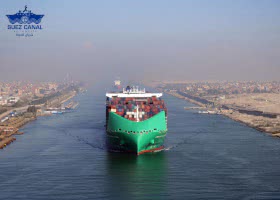
Rates for ships transiting the Suez Canal are expected to rise.
Ismailia
They will be applied from July 15th. Passenger ships excluded.
The Suez Canal Authority has announced that it will introduce surcharges on transit tariffs through the Egyptian canal for most major cargo vessels, effective July 15.
The Council of the EU accepts many of the requests put forward by the associations of the European maritime-port cluster
Luxembourg
However, necessarily, the text postpones the adoption of concrete measures to future legislative initiatives
ESPO calls for proactive use of the EES system to avoid congestion in European ports
Brussels
Ryckbost: Flexibilities activated promptly in exceptional but foreseeable circumstances
Rixi: It is necessary to overcome a maritime ETS that risks shifting traffic and investments to non-European ports.
Luxembourg
What is needed - highlights the vice minister - are incentives and flexibility, not new constraints
Houthis threaten to resume attacks on ships transiting the Red Sea
Sana'a
A total ban on navigation has been declared for all vessels linked to Israeli interests.
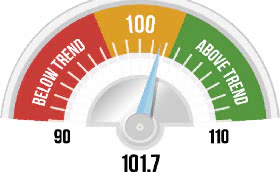
Global trade in goods may start to slow down
Geneva
This is reported by the latest reading of the WTO Goods Trade Barometer.
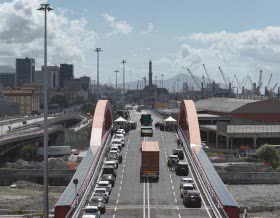
The new port road connection to Sampierdarena has been activated in Genoa.
Genoa
Paroli: the work now allows approximately 900-1,000 heavy vehicles per day to directly access the port's operational areas.
The rapporteurs of the Ports Bill defend the governance project centered on the Ports of Italy.
Rome
Ghio (PD) denounces that the governing bodies of this new company would be appointed entirely by the government. Ghirra (AVS): The objectives of national coordination could have been achieved by strengthening the National Conference of Port Authority Presidents.
US logistics companies WWEX Group and Auctane announce merger
Unexpected decline in European intermodal traffic in the first quarter of 2026
Brussels
UIRR: Infrastructure chaos caused by construction sites interrupting railway lines
Hanseatic Global Terminals acquires remaining 50% of Hanseatic Global Terminals Aracruz
Rotterdam/Aracruz
The company is building the new Brazilian container port of Imetame
Conftrasporto: The Ports Bill highlights clear operational, financial, and regulatory compliance issues.
Rome
Russo: the competences of Ports of Italy would overlap with those of the Port System Authorities, the Ministry of Transport and the Art
WoodMac believes decarbonisation rules could have a major impact on LNG-powered vessels
Edinburgh
According to the company, European regulations would put ships with DFDE engines out of the market
French MN will transport Avio's Vega C launcher between Italy and South America
Nantes
The French company will equip itself with a new vessel designed specifically for the transport of space equipment
EU methodology for calculating greenhouse gas emissions from transport services comes into force
Brussels
The system is based on the international standard EN ISO 14083:2023
The container ship MSC Sariska V was hit by two shells in the Persian Gulf on Monday.
Geneva/Rome
All crew members were unharmed.
In the first quarter, freight traffic in the port of Bremen/Bremerhaven grew by +5.8%
Bremen
Containers amounted to 1,245,515 teu (+4.4%)
MSC acquires 51% stake in Pivdennyi container terminal (Odessa)
Odessa
It has a traffic capacity of 400 thousand TEUs per year.
The IMO Convention on Liability and Compensation for Damage in Connection with the Carriage of Hazardous and Noxious Substances by Sea will enter into force on 19 November 2027.
London
Dominguez: a long-awaited achievement, which fills an important gap in the international regime
In April, ship transits through the Suez Canal increased by +13.9%
Cairo
In the first four months of 2026, an increase of +12.1% was recorded
In the first quarter, freight traffic in the port of Naples fell by -5.3%, while in Salerno it grew by +6.4%.
Naples
Container throughput in the two ports was 167,433 teu (-3.5%) and 101,509 teu (+7.8%) respectively.
Kerdjoudj (Feport): With the revision of the EU ETS, part of the proceeds should be allocated to ports.
Brussels
Call to carefully evaluate the risk of relocating transhipment traffic
With the new COSCO-PTP terminal, the port of Tarragona relaunches itself on the container market.
Tarragona
Construction work is expected to be completed in 2028 when the terminal will have a capacity of 680,000 TEUs.
In 2025, Egyptian ports set their new all-time container throughput record
Alexandria, Egypt
Strong growth in transhipment volumes, which had remained stable in 2024
The national contract for port mooring and boatmen has been renewed.
Rome
Filt-Cgil strengthens a regulatory framework essential for the sector
A study explains how to make the use of OPS facilities in European ports more attractive and effective.
Brussels
Clearer and more comparable tariffs are also needed.
Federlogistica calls for amendments to the port governance bill.
Genoa
Falteri: the new structure must guarantee the Port System Authority adequate financial resources and effective operational tools.
ESPO calls for EU ETS amendments to ensure the competitiveness of European ports.
Brussels
The negative impact on short sea shipping was also highlighted.
New measures adopted in Switzerland to strengthen the competitiveness of the maritime flag
Bern
A Swiss shipowner will be able to fly the Swiss flag even if the owning company is based abroad
Sea trials of the second cruise ship built in China have concluded.
Shanghai
The Adora Flora City will make its maiden voyage departing from the port of Guangzhou on November 22nd.
In the first quarter of 2026, the value of G20 freight traffic recorded a quarterly growth of +5.3%
Paris
Mitigation of the growth of cargo traffic in the port of Tangier Med
Tangier
In the first three months of 2026, 38.8 million tonnes were handled (+3.2%)
Cargo traffic in Chinese seaports grew by 2.6% in April
Beijing
Imports and exports increased by 0.6%. Containers totaled 26.9 million (+4.8%).
Fermerci asks the government for urgent measures to support rail freight transport.
Rome
Railway companies penalized by infrastructure disruptions
Port of Naples, first ship-to-ship LNG bunkering operation on a cruise ship
Naples
Axpo used the cargo barge "Green Zeebrugge"
CMA CGM closed the first quarter of 2026 with a net profit of $250 million (-78%)
Marseille
Revenues stable, with logistics and other activities offsetting the decline in shipping
The U.S. Supreme Court has reopened the case pitting Havana Docks against Carnival, Royal Caribbean, NCLH and MSC
New International Code of Safety for Autonomous Surface Vessels Adopted
London
It will come into force on July 1st and will be applied on a voluntary basis for at least two years
UIRR: Combined road-rail transport shipments to increase by 1.5% in 2025
Brussels
The association highlighted the disastrous effects on the railway construction sector in Germany.
Fincantieri and Teijin Automotive Technologies sign agreement to develop composite bulkheads for naval applications.
Trieste/Pouancé
Folgiero: We enable the development of lighter and more efficient units
After eight quarters of profits, ZIM reports an operating loss
Haifa
In the first three months of 2026, the volumes of cargo transported by ships also fell sharply (-8.3%)
The US has indicted four Chinese container manufacturers and seven of their executives.
Washington
The arrest of the marketing director of Singamas in France on April 14 was made public.
EU Parliament and Council reach agreement on tariffs agreement between the European Union and the United States
Strasbourg/Brussels
An expiry clause and a suspension clause have been introduced
FFS Cargo Switzerland is reorganizing its single-wagon freight network.
Bern
A reduction of 50 of the current 280 marshalling yards is expected
IMO reports 17% increase in maritime piracy incidents in 2025
London
The most affected area was the Straits of Malacca and Singapore with 122 incidents (+34%).
Hapag-Lloyd and CMA CGM have suspended bookings for maritime shipments to Cuba.
Paris/Frankfurt/Havana
Decision after Trump's expansion of US sanctions
International tender for the new container terminal at the port of Klaipeda will be held by the end of the year.
Klaipeda
It will have an annual traffic capacity of 2.5 million TEUs
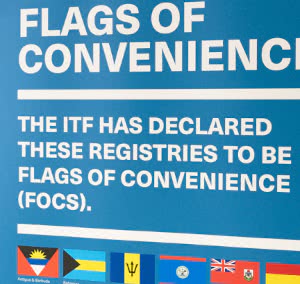
ITF calls on governments to dismantle the flag of convenience system once and for all
London
It is - the union denounces - the bad apple at the heart of the exploitation of seafarers
Evergreen's revenues decreased by 21.3% in the first quarter
Taipei
Operating profit and net economic profit fell by -69.5% and -68.8%
Viking Holdings closed the first quarter with a net loss of -54.2 million dollars
Los Angeles
Revenues up 17.5%
In the first three months of 2026, container traffic at Eurokai port terminals grew by +8.9%
Bremen
Increases of 12.7% in Germany and 7.8% in Italy. A decline in the port of Tangier Med.
Norovirus on Ambassador Cruise Line's Ambition cruise ship
Purfleet/Vlissingen
French health authorities have authorized the unit to continue normal operations.
In the first three months of 2026, freight traffic in the Port of Hamburg decreased by -2.0%
Hamburg
Containers amounted to two million TEUs (-1.6%)
Yang Ming and WHL's quarterly financial results continue to deteriorate.
Keelung/Taipei
In the first three months of this year, revenues decreased by -15.1% and -9.3% respectively.
Hapag-Lloyd closed the first quarter with an operating loss of -218.6 million euros
Hamburg
Revenues down 16.8%
In the first three months of 2026, HMM's revenue decreased by -4.8%
Seoul
Container segment saw a 7.9% decline and bulk segment saw a 20.1% growth.
Global Ports Holding's cruise terminals recorded record traffic in the first quarter of this year.
Istanbul
Five million passengers almost reached
In the first three months of 2026, freight traffic in the ports of Genoa and Savona-Vado fell by -3.8%
Genoa
In March, a decline of -6.1%, with a sharp contraction of -15.0% in containerized cargoes
Federconsumatori is calling on the government to take measures to mitigate the impact of the rising ferry ticket prices.
Rome
Price increases are at +18% for the central weeks of August
In the first quarter of this year, cargo traffic in Croatian ports grew by 14.6%.
Zagreb
Monthly record in March
Successful trial of HVO diesel fuel for cruise ship propulsion
San Donato Milanese
Experiment conducted jointly by Eni and MSC Cruises
Gioia Tauro takes second place in the ranking of the main Italian ports, overtaking Genoa
Rome
Fincantieri records a decline in revenues and new orders
Rome
The group's backlog reached a record value of 74.2 billion euros
In the first three months of 2026, maritime traffic in the Suez Canal increased by +11.5%
Cairo
In March alone, growth was +11.2%
In the first three months of 2026, freight traffic in Tunisian ports grew by +5.9%
La Goulette
Ferry passengers (+7.6%) and cruise passengers (+54.2%) are increasing.
Le Aziende informano
International Shipping Community to Gather in Genoa for Two Days of Maritime Dialogue and Networking
US government initiative to introduce nuclear power into large-scale maritime transport
Washington
Proposals invited for the development of a mini-reactor model
The U.S. government has launched an initiative to...
With the latest version of the bill on ports, the task of finding resources for the Ports of Italy is offloaded onto the AdSPs
Rome
This was stated by the vice-president of the Democratic Party group in the Chamber, Valentina Ghio
Carnival Corporation is moving its headquarters from Panama to Bermuda.
Miami
Abandonment of the dual-listed company with the creation of Carnival Corporation Ltd.
The Hondius will arrive on Sunday in front of the port of Granadilla (Tenerife)
Vlissingen/Santa Cruz de Tenerife/London
Passengers will be taken by sea to the airport for their return home.
New quarterly record for vessel traffic in the Straits of Malacca and Singapore
Port Klang
Transits of all the main types of vessels are growing
The regulatory proposal on port governance passed by the Quirinale downsizes the Ports of Italy
Rome
Maersk's first quarter financial results still suffer from the negative phase of containerized shipping
Copenhagen
Positive performances in the port terminal segment and in that of other logistics activities
The Spinelli Group has joined the Italian Association of Port Terminal Operators
Genoa
The company and Assiterminal expressed satisfaction with the resumption of an important association
In the first three months of 2026, freight traffic at UK ports fell by -2.6%
London
More significant decrease (-6.8%) in boarding loads
Mark Hindley is the new president of the European Motor Vehicle Logistics Association
Istanbul
Wolfgang Göbel was elected honorary president
At the Port of Genoa, a tugboat was stopped for irregularities in nitrogen oxide emissions.
Genoa
The vessel is used for the construction works of the new breakwater
In April, freight traffic in the port of Ravenna grew by +21.4%
Ravenna
An increase of +2.5% is expected in May
Sallaum Lines to launch dedicated China-Europe service in 2027
Nanjing
Two new 7,400 CEU PCTCs taken delivery
On June 12th in Naples, an initiative by Filt Cgil on governance in the port sector
Rome
Naval drone found in Romanian port of Constanta
Bucharest
The device self-destructed without causing any casualties.
HJSC receives approval in principle for the construction of a 10,000 TEU biofuel containership.
Athens
It was released from the Korean Naval Register
Global Ship Lease invests $917 million to purchase ten new container ships
Athens
They will be delivered between the fourth quarter of 2028 and the first quarter of 2030.
SAILING LIST
Visual Sailing List
Departure ports
Arrival ports by:
- alphabetical order
- country
- geographical areas
WASS (Fincantieri) and Magellan Agreement on Canada's Underwater Defense
Trieste
Industrial cooperation opportunities in the field of heavy torpedoes and countermeasures will be explored
Solutions to overcome the chronic staff shortage in the Italian maritime sector
Procida
Pagano (Maritime Labor Committee): Digitalization, simplification, and cooperation between training and businesses to overcome the crisis
Maritime training agreement signed by Gente di Mare (Cosulich) and Carnival
Genoa
Di Tizio: This collaboration allows us to bring an international project to the territory
Antipollution (V.Group) orders four eco-friendly vessels from ONEX Shipyards & Technologies
Athens
Option for four additional units
Spinelli has ordered three new handling vehicles from FTMH
Genoa
A reach stacker for empty containers has already entered service in the group's Livorno depot
Luigi Merlo to lead MSC Cruises' Italian cruise terminal company
Geneva
Centrone (formerly Fincantieri) takes over as Director of Maritime Policies and Government Affairs for the group in Italy
Greece's Skaramangas Shipyards and South Korea's HD Hyundai sign cooperation agreement
Athens
The aim is to collaborate in the construction of surface military vessels
AD Ports buys the Brazilian Corredor Logística e Infraestrutura
Sao Paulo/Abu Dhabi
The company handles the largest volume of agri-food bulk exports in the South American nation
The 2026-2028 Three-Year Operational Plan of the Northern Tyrrhenian Port Authority has been approved.
Livorno
Unanimous approval from the Management Committee
Chen Lichtenstein appointed president and CEO of ZIM
Haifa
He will replace the resigning Eli Glickman.
Gianluca Croce has been confirmed as president of Assagenti Genova.
Genoa
The members of the association's board for the two-year period 2026-2028
The Mega Serena ferry has joined the Corsica Sardinia Ferries fleet.
Vado Ligure
It has a capacity of up to 2,000 passengers and over 600 vehicles.
The first steel cutting of the Crystal Grace cruise ship took place in Marghera.
Miami
Fincantieri will deliver the vessel in spring 2028
Palumbo Superyacht awarded 13,048 square meters of mooring space to the Port of Ortona.
Ancona
Central Adriatic Port Authority, guidelines for issuing the single ZES authorization
Port of Livorno: Two new FHP MarterNeri warehouses inaugurated
Livorno
Investment exceeding 23 million euros
The Committee of the Central Northern Tyrrhenian Sea Port Authority has decided to close the institution's state of crisis.
Civitavecchia
New solution for exceptional transport on intermodal trains from FS Logistix and Van der Vlist
Verona
Two aerial platforms transported from Verona to Rostock
Port of Naples: Fire aboard GNV's Phoenix ferry
Naples
Flames broke out in the internal areas of deck 6 of the ship
Latrofa has chosen a trusted individual to lead an in-house company within the Lazio Port Authority.
Civitavecchia
The new sole director - he underlined - has been provided with particularly stringent management guidelines
In the first three months of 2026, MPC Container Ships' revenues decreased by -6.4%.
Oslo
Quarterly net income of $40.8 million (-31.8%)
The 2026-2028 Three-Year Operational Plan of the Sardinian Port Authority has been approved.
Olbia
Green light from the Management Committee
The environmental assessment process for the San Antonio Outer Harbor project has been completed.
Saint Anthony
The Viking Mira cruise ship was delivered at the Fincantieri shipyard in Ancona
Ancona/Los Angeles
It has a gross tonnage of 54,300 tons and a capacity of 998 passengers.
In 2025, RINA recorded revenues of over one billion euros (+11%)
Genoa
Net profit up 30%
The new railway bridge has been installed at the Port of Marina di Carrara.
Marina di Carrara
Pisano: A turning point in the port's logistics organization.
Ports, freight terminals, and corridors. Venice and the Upper Adriatic as a gateway to the East.
Venice
This is the theme of the event that will be held on Thursday in Venice
Estonian State Fleet orders electric-powered ferry from Polish shipyard Crist
Tallinn
Contract worth 49.93 million euros
In April, Spanish ports handled 1.7 million containers (+1.7%)
Madrid
Cruise passengers down by -18.4%
Container traffic in the port of Valencia decreased by 2.5% in April
Valencia
In the first four months of 2026, almost 1.8 million TEUs were handled (+0.2%)
Global Ship Lease posts record quarterly revenues again
Athens
Net profit down 24.0%
International cooperation between the Sardinian Port Authority and the Port of Tangier Ville for luxury yachting
Cagliari
Promotion of an integrated nautical circuit between Sardinia and Morocco
The new first aid medical center has been inaugurated in the port of Gioia Tauro
Gioia Tauro
Among the facilities, a first aid clinic and a CMR ambulance
BPER provides financing to Grimaldi Euromed for fleet modernization.
Milan/Naples
Resources used to partially cover the purchase of the ship "Grande Manila"
ASRY and Priya Blue establish ship recycling yard in Bahrain
Al Muharraq/Alang
First ship destined for dismantling has arrived in the Middle Eastern nation
SAAM Towage orders five new tugboats from Turkish shipyard Sanmar Shipyard
Santiago
They will have a pulling capacity of between 70 and 80 tons
Container traffic at the Port of Long Beach dropped 5.7% last month.
Long Beach/Singapore/Hong Kong
In Singapore, growth of +3.6% was recorded, while in Hong Kong containers decreased by -6.3%.
Carta (Fermerci): Urgent policies are needed to support railway companies.
Rome
In 2025, rail cargo lost approximately 3.5%, in terms of trains/km
Fratelli Neri orders two more new tugboats in Egypt
Ismailia
Contract with the Suez Canal Company for Modern Boats
Container traffic in the port of Barcelona grew by 17.4% in April.
Barcelona/Algeciras
Algeciras port increases by 6.3%.
The Islamabad government has approved the sale of a 30% stake in the Pakistan National Shipping Corporation.
Islamabad
The share will go to the state logistics company NLC which will also assume management control of PNSC
In 2025, the Spanish port system recorded record revenues
Madrid
Pre-tax profit was 349 million euros (+4.2%)
Leapmotor International strengthens its partnership with the Neapolitan Grimaldi shipping group.
Hoofddorp
In the first quarter, approximately 20,000 units were transported from China to the Italian market.
Cruise traffic in German ports reached a new record last year
Wiesbaden
With 1.51 million passengers, growth was +4.1%.
Federazione del Mare joins the celebrations for the International Day for Women in Maritime 2026.
Rome
Mattioli: The maritime economy is losing opportunities and potential.
After years of sustained growth, short sea shipping in Spain has entered a phase of structural slowdown
Madrid
This is what the latest report from the Observatorio Estadístico del Transporte Marítimo de Corta Distancia reveals.
AD Ports to buy German freight forwarder MBS Logistics
Colony
The company has over 450 employees and 26 offices worldwide.
The Spinelli Group has joined the Sustainable Intermodal Logistics Association
Genoa/Rome
Summary: ALIS can offer our ecosystem strategic added value
$200 million investment to build and equip the new multipurpose terminal at Pointe-Noire
Brazzaville/Abu Dhabi
Ordered three ship-to-shore cranes from ZPMC
Evergreen confirms purchase of five new 24,000 TEU containerships
Taipei
They will be built by the Chinese shipyard Guangzhou Shipyard International
Korea will launch an Asia-Europe containerized shipping service on the Arctic route in the coming months
Busan
The tender concluded with the preliminary selection of the PanStar company.
The Maritime Union has raised new alarm over the fate of former ILVA ships.
Verona
Their possible demolition puts 240 maritime jobs at risk
In the period January-March, freight traffic in the port of Koper decreased by -3.9%
Ljubljana
In the container sector, 2.4 million tons were handled (-1.7%)
Last chance to recognize some port jobs as strenuous and to establish a pension fund
Genoa
Siemens to acquire Italian MERMEC business
Monk
The transaction will include the Ferrosud rolling stock production plant in Matera
Growth in intermodal traffic at the Nola interport
Nola/Milan
Economic and financial analysis by the Fedespedi Research Center on freight terminal management companies
Quarterly decline in goods handled by Montenegro's ports
Podgorica
The increase in cargo volumes to and from Italian ports continues, albeit at a slower pace.
Assarmatori denounces the exclusion of maritime transport from the Fuel Decree-Law II.
Rome
Messina: The sector cannot be expected to absorb the impact of fuel price increases alone.
HHLA records a -5.3% decline in containers handled in the first quarter
Hamburg
Eijsink: An unusually harsh winter has significantly limited our daily operations
MSC Technology Italy launches a plan to hire 200 new people.
Turin/Geneva
MSC Cruises debuts in the Alaska market
The Marche Region has approved Carloni's appointment as president of the Central Adriatic Port Authority.
Ancona
Awaiting the opinion of the Abruzzo Regional Council
Greek company Danaos Corporation's quarterly revenues remain stable.
Athens
Two ships of the company are still blocked in the Persian Gulf
Container traffic at the Port of Los Angeles increased by 5.7% in April.
Los Angeles/Port Newark
In the first three months of 2026, the Port of New York handled nearly 2.2 million TEUs (-1.2%)
Cognolato was confirmed as president of Assiterminal
Rome
The new presidency committee and board of directors were also elected
In the first quarter of 2026, freight traffic in the port of Ravenna increased by +0.8%
Ravenna
The growth was driven by the entry into operation of the regasification plant
PORTS
Italian Ports:
Ancona Genoa Ravenna
Augusta Gioia Tauro Salerno
Bari La Spezia Savona
Brindisi Leghorn Taranto
Cagliari Naples Trapani
Carrara Palermo Trieste
Civitavecchia Piombino Venice
Italian Interports: list World Ports: map
DATABASE
ShipownersShipbuilding and Shiprepairing Yards
ForwardersShip Suppliers
Shipping AgentsTruckers
MEETINGS
On June 12th in Naples, an initiative by Filt Cgil on governance in the port sector
Rome
Comparison on the logistical, industrial and infrastructural development of ports
Ports, freight terminals, and corridors. Venice and the Upper Adriatic as a gateway to the East.
Venice
This is the theme of the event that will be held on Thursday in Venice
››› Meetings File
PRESS REVIEW
World's first floating fusion reactor-powered vessel could become reality with new project
(Interesting Engineering)
Shipbuilding's Spring Illusion: Backbone Collapses
(The Chosun Daily)
››› Press Review File
FORUM of Shipping
and Logistics
Intervento del presidente Tomaso Cognolato
Roma, 19 giugno 2025
››› File
MSC introduces calls at Naples and Malaga on its Dragon service
Geneva
Calls at the Gioia Tauro port have been cancelled.
The National Maritime Fund's board has been renewed.
Genoa
He will remain in office for three years
Network contract for the joint development of intermodal services in Emilia-Romagna
Bologna
It was signed by Interporto Bologna, Dinazzano Po S, SAPIR and Rail Traction Company
Messina (Assarmatori): European technocracy appears inflexible on the EU ETS
Brussels
He underlines that a significant improvement of these policies is necessary.
d'Amico International Shipping's first quarter results are positive.
Luxembourg
The company benefited from the effects of geopolitical tensions
Two orientation events in Livorno and Naples to present the ITS Purser course.
Genoa
Meetings scheduled by the Italian Merchant Marine Academy with the Grimaldi Group
The bow section of the Explora V was launched in Palermo
Geneva
Fincantieri will deliver the cruise ship to Explora Journeys in 2027
The president of the Eastern Adriatic Port Authority is the new president of Trieste Passenger Terminal.
Trieste
He takes over from Gianluca Madriz
Port of Olbia: Seabed restoration work has begun in the access channel to Isola Bianca.
Cagliari
The aim is to safely allow large cruise ships to enter
Damen to renovate and operate Dakar ship repair yard
Dakar/Gorinchem
20-year contract with the Société des Infrastructures de Réparation Navale
Savino Del Bene has acquired three companies of the Spanish Grupo Marítima Sureste
Florence/Valencia
The agreement involves Marítima Sureste Shipping, Marítima Sureste Spain and Transportes Gaypemar
Fim-Cisl, the meeting with Fincantieri regarding the Muggiano shipyard's prospects was positive.
La Spezia
The investments announced by management - the union noted - are going in the right direction.
Rising energy costs weigh on Finnlines' latest quarterly financial statement.
Helsinki
Doepel: Burdens further increased by EU ETS implementation
Marabello is the new secretary general of the Strait of Messina Port Authority.
Messina
The assignment lasts four years
Heavy lift vessel HMM Namu hit near the Strait of Hormuz
Seoul
The accident did not cause any casualties.
DFDS's quarterly financial performance deteriorates
Copenhagen
The fleet's rolling stock is growing. Passenger numbers are down 18%.
From May 21st to 23rd, Ravenna will host "Deportibus - The Festival of Ports Connecting the World."
Ravenna
Kalmar records quarterly decline in new orders
Helsinki
In the January-March period, revenues increased by +5%
Job openings are growing for the port companies of Trieste and Monfalcone.
Trieste
Delivery of a recognition plaque
In the first quarter of 2026, Costamare's revenues decreased by -5.3%
Monk
Orders confirmed for 12 new 9,200 TEU vessels and four 3,100 TEU vessels
ICTSI posts new quarterly financial and operating records
Manila
The results benefited from the contribution of the new BACT and DGT terminals
MSC to launch service between the Red Sea and Northern Europe via the Suez Canal
Geneva
Truck and feeder connections to Persian Gulf ports are planned
The first batch of cold ironing work has been awarded to the port of La Spezia.
La Spezia
The total investment is 41 million euros
Konecranes' turnover decreased by -7.7% in the first quarter of 2026.
Helsinki
The value of new orders acquired in the period remained unchanged
New ART provision on regulatory measures for the awarding of maritime cabotage services
Rome
New elements in the service award procedures
Appointment of the extraordinary commissioners of the Central Adriatic and Eastern Sicily Port Authority
Rome
Salvini asks the governors of Marche and Abruzzo to reach an agreement on Lega Nord's Carloni.
Confitarma welcomes the approval of the bill to enhance marine resources.
Rome
Zanetti: a further step in the direction long indicated by the Confederation
The 2025 financial statements of the Northern Tyrrhenian and Eastern Adriatic Port Authorities have been approved.
Livorno/Trieste
They were examined today by the Management Committees
Record quarterly freight traffic in Albanian ports
Tirana
In the first quarter of this year, almost 2.3 million tons were handled (+38.8%)
DSV records a decline in net profit of -41.7% in the first quarter
Hedehusene
Downturn due to extraordinary expenses for the merger with Schenker
- Via Raffaele Paolucci 17r/19r - 16129 Genoa - ITALY
phone: +39.010.2462122, fax: +39.010.2516768, e-mail
VAT number: 03532950106
Press Reg.: nr 33/96 Genoa Court
Editor in chief: Bruno Bellio
No part may be reproduced without the express permission of the publisher
Search on inforMARE Presentation
Feed RSS Advertising spaces

inforMARE in Pdf
Mobile