testata inforMARE
Cerca
26 June 2026 - Year XXX
Independent journal on economy and transport policy
06:11 GMT+2
LinnkedInTwitterFacebook
FORUM of Shipping
and Logistics


RELAZIONE DEL PRESIDENTE ELETTO
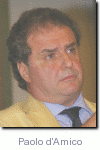
PAOLO d'AMICO


ASSEMBLEA
Roma, 18 marzo 2010


Signor Ministro, Onorevoli parlamentari, Autorità, Colleghi armatori, Signore e Signori,

è con grande emozione che prendo la parola per il mio primo discorso da Presidente di Confitarma in questa sala: una sala così ricca di arte e di storia del nostro Paese, e da tre lustri anche della storia della nostra industria armatoriale, che qui ha tenuto le sue Assemblee assieme ai vertici di Confindustria, ai rappresentanti dei Governi e ai parlamentari che si sono succeduti.

Proprio qui, nel 2001, si sono svolte le celebrazioni del nostro Centenario, cui volle essere presente anche il Presidente della Repubblica Ciampi.

Siamo una parte importante della storia e dell'economia del Paese.

E sono fiero ed orgoglioso di essere stato eletto dall'Assemblea di ieri alla guida di Confitarma per i prossimi tre anni.

Ringrazio quindi anzitutto gli amici e i colleghi che hanno riposto in me la loro fiducia.

Rivolgo un ringraziamento particolare a Nicola Coccia,

Ed ora tocca a me.

Come molti di voi sapranno, la mia famiglia opera da decenni nel mondo del mare.

Ricordo che mio padre Ciro assunse la carica di presidente della Confederazione nazionale degli armatori nel 1972, succedendo alla guida ultraventennale di Angelo Costa, l'indimenticato presidente sia di Confitarma che di Confindustria.

Fu proprio mio padre, convinto che dovesse essere finalmente superata la divisione della categoria, ad avviare con Ernesto Fassio ed Ercole Lauro, presidenti delle Associazioni degli armatori di Genova e Napoli, le trattative per la riunificazione che poi si realizzò nel 1976.

Un ricordo e un affetto altrettanto forte vanno a mio zio Antonio, che guidò la Confitarma per sei anni dal 1989: primo presidente armatore dopo oltre un decennio, seppe creare un nuovo spirito di coesione e di partecipazione fra le imprese di navigazione, rinvigorendo la vita associativa e rafforzando l'organizzazione confederale.

Grazie alla sua iniziativa il sistema marittimo italiano (quello che oggi si chiama cluster marittimo) si è unito nella Federazione del Mare e fu lui a volere la costituzione del gruppo Giovani armatori, convinto del valore e del contributo fondamentale delle nuove generazioni.

Colgo l'occasione per salutare Valeria Novella, nuova presidente dei Giovani armatori, che - insieme ai vicepresidenti confederali e ai presidenti di commissione che a giorni nomineremo, e ai consiglieri eletti ieri - farà parte della squadra di vertice della Confederazione.

La mia presidenza si inserisce quindi in una scia ben definita, di continuità della politica associativa volta a valorizzare concorrenza, rinnovamento e compattezza, prerequisiti indispensabili che già fanno parte della nostra cultura imprenditoriale e ci permettono di affrontare quotidianamente le sfide del mercato globale.


Le sfide da affrontare

Poco più di un anno e mezzo fa tutti noi raccoglievamo i frutti di uno dei momenti più felici del mercato marittimo.

Poi l'industria marittima mondiale, principale fornitore di servizi di trasporto al commercio internazionale, è stata colpita direttamente dalla crisi economico-finanziaria.

Lo shipping è un'attività ciclica.

Non è quindi per un ingenuo ottimismo che credo nella prossima ripresa. E credo anche che dobbiamo essere pronti per il momento in cui il vento sarà di nuovo favorevole.

Ci sono segnali all'orizzonte: il Fondo Monetario Internazionale prevede per il 2010 una crescita economica mondiale del 3,9%, con un miglioramento di 0,8 punti percentuali rispetto alle stime dell'ottobre scorso; mentre per il 2011 si attende un'ulteriore crescita del 4,2%.

Certo, la situazione resta ancora fragile e la ripresa procederà a diverse velocità: nelle economie avanzate sarà probabilmente debole, al 2%, e ancora legata al sostegno dei governi; per quelle emergenti si attende una crescita del 6%, con la Cina che farà ancora la parte del leone e avrà indici a doppia cifra.

Secondo le previsioni più accreditate, già nel 2010 l'economia statunitense dovrebbe ricominciare a trainare la ripresa dell'economia mondiale con un tasso di crescita positivo, per collocarsi vicino al 2% dal 2011.

Sul futuro dell'Europa le previsioni sono più incerte: nel 2010 ci sarà un miglioramento, ma solo dello 0,9%, e nel 2011 dell'1-1,5%.


Mercati marittimi

Anche per i mercati marittimi, che nel 2009 hanno subito un duro colpo con il crollo degli indici dei noli, le stime ufficiali prevedono per il 2010 una ripresa dei traffici mondiali ed un loro aumento del 2%.

Già negli ultimi mesi del 2009 abbiamo assistito ad una sostenuta crescita dei noli per navi bulk e gasiere, e ad una crescita più lieve ma progressiva per le navi petroliere.

Quest'ultimo settore ha risentito meno della crisi, con bassi livelli di disarmo, anche grazie all'utilizzo delle unità navali per lo stoccaggio del greggio.

Il settore delle navi portacontainer, invece, evidenzia ancora delle difficoltà, legate principalmente alla lenta ripresa dei consumi nei mercati avanzati.

Non è un caso che, ad una ripresa economica guidata dalle economie emergenti, corrisponda un migliore stato di salute dei traffici delle materie prime.

Sull'evoluzione dei traffici containerizzati peserà, nel prossimo futuro, la natura della crescita cinese: nei prossimi anni capiremo se essa verrà trainata dalla domanda interna o se invece, come in passato, solo ed esclusivamente dalle esportazioni.

Un simile cambiamento comporterebbe una rivoluzione nei flussi delle merci a più alto valore aggiunto trasportate nei container, andando a riequilibrare nei traffici est-ovest l'attuale sbilanciamento.

Senza contare la crescita dei mercati emergenti del continente africano. Uno scenario plausibile prevede per le principali correnti di traffico mondiale la circumnavigazione dell'Africa, proseguendo poi verso il Nord Europa o la costa orientale degli Stati Uniti senza entrare nel Mediterraneo, che potrebbe invece essere servito attraverso i porti hub di Algeciras o Tangeri.


Pirateria

Una tale ipotesi va valutata anche alla luce del problema pirateria al largo delle coste somale e nel golfo di Aden, la porta orientale del Mediterraneo.

Confitarma da sempre è attiva su questo fronte. Le nostre richieste di unità militari di scorta hanno portato nel 2005 e nel 2008 all'invio di due missioni militari; ricordo ancora le recenti pressioni per la partecipazione attiva dell'Italia alla missione europea “Atalanta”, nonché per il suo allargamento al “quadrante meridionale”.

Gli interessi nazionali coinvolti sono molto rilevanti: dei 22.000 transiti annuali attraverso il Canale di Suez, circa 2.000 sono connessi ad interessi italiani e ben 600 di questi, in media quasi due ogni giorno dell'anno, si riferiscono a navi di bandiera italiana.

Visto che oggi il 60% del commercio estero italiano viaggia per mare, appare evidente quanto sia importante che non solo l'industria, ma anche e soprattutto la politica si preparino per tempo a questi scenari, con scelte lungimiranti di strategia industriale e di logistica integrata.


Cosa ci aspetta

Sono molti i problemi sul tappeto e molte le possibili soluzioni.

Sono fermamente convinto che per far funzionare le cose è necessario adottare scelte il più possibile condivise. Solo così potremo porre in essere azioni concrete.

Di certo, la lista è lunga, ma credo che per sintetizzare il lavoro che dovremo portare avanti nei prossimi anni possano bastare tre parole: Bandiera, Investimenti e Occupazione. Non a caso la copertina della nostra relazione annuale si ispira proprio a questi concetti.


Bandiera

La Bandiera è quella italiana, che sventola sulle nostre 1.570 navi soprattutto grazie alla politica marittima di riduzione dei costi fiscali e parafiscali avviata nel 1998, seguendo l'impostazione europea.

Oggi la flotta italiana è all'avanguardia nel mondo e gioca un ruolo importante per l'economia nazionale: siamo al 12° posto nella graduatoria mondiale delle flotte di bandiera, con quasi 16milioni di tsl (tonnellate di stazza lorda): un aumento dell'8,7% rispetto al 2008.

Purtroppo, la legge finanziaria 2010 ha dimenticato di dedicare le risorse usuali al mare, sottovalutando uno strumento di competitività e di sviluppo quale è da circa dodici anni il Registro internazionale.

Inoltre, dopo dieci anni, per la prima volta non sono state rinnovate le misure per la riduzione degli oneri contributivi al cabotaggio, che nella liberalizzazione del mercato europeo rischia di perdere il confronto con le bandiere comunitarie più aggressive.

Da anni chiediamo una norma strutturale, che consenta di pianificare con tranquillità attività industriali e investimenti.


Privatizzazione del gruppo Tirrenia

La Bandiera italiana sventola su tutte le nostre navi, siano esse di imprese private o pubbliche: è la stessa Bandiera!

Con forza quindi mi auguro che venga finalmente posta la parola “fine” alla contrapposizione tra flotta privata e pubblica e la privatizzazione del Gruppo Tirrenia possa concludersi al più presto, in linea con le indicazioni comunitarie, ripristinando pienamente nel mercato le regole di concorrenza.

Più volte nel recente passato abbiamo manifestato perplessità in merito alle procedure di liberalizzazione e privatizzazione, lamentando un difetto di trasparenza dell'intero processo.

Non siamo mai stati invitati ai tavoli ministeriali di approfondimento e confronto in materia.

La scelta di procedere all'affidamento in blocco dei servizi marittimi a una stessa società di navigazione, invece che ad una pluralità di operatori attraverso gare linea per linea, certamente non aiuta, come pure non aiuta la prevista durata di 12 - 8 anni delle convenzioni ad esclusivo appannaggio delle società ex-regionali e della società Tirrenia.

Inoltre, ci pare non accettabile la commistione dei ruoli tra regolatore e gestore che si verrebbe a creare qualora fossero le Regioni, tramite partecipazioni in società, ad acquisire le ex-regionali del gruppo Tirrenia: sovrapposizione più volte oggetto di rilievo da parte della nostra Autorità Garante della Concorrenza e del Mercato.

Infine, il fatto che la materia sia stata oggetto di osservazioni da parte delle istituzioni comunitarie nel dicembre scorso, e ultimamente addirittura di una procedura di infrazione, conferma le perplessità che sussistono sull'intera procedura.


Investimenti

L'impegno dell'armamento italiano è testimoniato dallo sforzo profuso per il rinnovo della flotta.

Nel 2009, con quasi 1miliardo di euro, l'Italia è risultata il primo paese europeo per Investimenti in nuove navi.

E vorrei sottolineare che tutto ciò è avvenuto in coincidenza con il momento più difficile per l'economia mondiale!

Abbiamo continuato ad investire, nonostante la crisi, convinti che in un mercato sempre più concorrenziale gli alti standard qualitativi siano la carta vincente per affrontare la competizione globale.

Negli ultimi anni abbiamo investito oltre 27miliardi di euro in nuove navi ed oggi possiamo vantare una delle flotte più giovani del mondo, con il 64% del naviglio di età inferiore ai 10 anni ed il 35% ai 5 anni.

Accanto ad una flotta di navi da carico e per servizi ausiliari fortemente rinnovata, vantiamo navi da crociera nuove e bellissime, grazie alle quali nel 2009 nonostante la crisi abbiamo mantenuto la posizione dell'Italia quale prima destinazione europea di croceristi.

Il turismo che viene dal mare, rappresentato da navi da crociera e da traghetti, svolge un ruolo di traino per lo sviluppo del turismo di terra, così importante per il Paese.

Abbiamo lavorato per rendere le nostre navi più sicure per gli equipaggi e i passeggeri imbarcati, ed ancor più rispettose dell'ambiente.


La salvaguardia dell'ambiente

L'ambiente e la sua salvaguardia sono all'ordine del giorno di tutti i programmi di sviluppo industriale.

Lo shipping è parte della soluzione del problema: il trasporto marittimo è infatti la modalità meno inquinante, producendo la minore quantità di CO2 per unità di merce rispetto a tutte le altre modalità di trasporto impiegate sulle brevi e sulle lunghe distanze nel mondo.

Ciò naturalmente non vuol dire che non dobbiamo contribuire ancora di più a ridurre le emissioni globali.

Del resto, lo shipping è regolato da un gran numero di norme - internazionali, comunitarie e nazionali - dedicate soprattutto alla sicurezza e alla salvaguardia dell'ambiente.

L'armamento italiano risponde a tali disposizioni, talvolta non senza difficoltà tecniche, gestionali ed economiche.

Tuttavia, spesso non siamo messi in condizione di adempiere appieno a quanto ci viene richiesto, subendo danni non indifferenti.

Emblematico a tale riguardo è il caso della più recente normativa sui carburanti navali dell'organizzazione marittima mondiale (IMO), che impone una serie di limitazioni al tenore di zolfo presente nel combustibile delle navi. L'Unione europea, nel recepire tale normativa, ha deciso di inasprirne le prescrizioni, senza rendersi conto che così si determina una distorsione della concorrenza.

È vero infatti che qualunque nave voglia attraccare in un porto europeo deve sottostare a queste limitazioni, sia essa di bandiera europea o extracomunitaria. Ma è anche vero che i costi che ne derivano incidono maggiormente su chi opera prevalentemente in Europa rispetto alle altre aree.

Se vogliamo un'Europa che cresca al passo con le altre economie, dobbiamo evitare che tali situazioni si ripetano e, per quanto possibile, migliorare quelle esistenti.

Rivolgo pertanto al Governo un appello, affinché sia sostenuto a Bruxelles, in sede di revisione della normativa sul bunker in ambito europeo, il necessario riallineamento alla normativa internazionale, per esempio attraverso l'introduzione di misure transitorie per i casi in cui un'oggettiva difficoltà renda impossibile rispettare gli obblighi comunitari ed internazionali.


Leadership nel Mediterraneo

In questi mesi si fa un gran parlare di Mediterraneo: il rilancio dell'Italia quale asse strategico dei traffici nel bacino del Mediterraneo è tra i primi punti dell'agenda di Governo.

Non possiamo che condividere questo obiettivo, anche se devo dire che oggi la storica leadership italiana nel Mediterraneo è messa fortemente in discussione, soprattutto per quanto riguarda il settore marittimo-portuale.

I nostri diretti concorrenti sono la Francia e la Spagna, che rispettivamente hanno lanciato l'Unione per il Mediterraneo e potenziato i tre principali porti, grazie a massicci investimenti infrastrutturali.

Stiamo parlando di un mercato potenziale di 525 milioni di persone, previsto per il 2020. Un bacino nel quale circola il 30% dell'intero traffico marittimo mondiale: circa 1,4 miliardi di tonnellate di merci, delle quali oltre un terzo viene scaricata o caricata in Italia.

Non solo. A confermare l'importanza del bacino mediterraneo vi sono i dati dell'interscambio dell'Italia con i Paesi della sponda nord-africana: 25 miliardi di euro in export e 39 miliardi in import.

Appare chiaro che la perdita della nostra leadership nel “Mare Nostrum” non potrà che ripercuotersi su tali valori.

È pertanto necessario riaffermare il nostro ruolo nell'area, attraverso una concreta azione di valorizzazione dei fattori di sviluppo.

Gli incontri che si susseguono per tutta la penisola, a Roma, a Milano (che ricordo è il maggior centro economico-finanziario del bacino mediterraneo), mirano a questo.


Porti e riforma portuale

Purtroppo, anche a questo proposito devo sottolineare la nota dolente rappresentata dai porti italiani, spesso penalizzati da una normativa inadeguata e da povertà di finanziamenti.

Da un lato le infrastrutture portuali non risultano in linea con l'evoluzione della flotta: non solo unità italiane, ma navi di tutto il mondo spesso non vengono nei nostri porti perché non trovano scali adeguati a riceverle o, semplicemente, perché i fondali non sono abbastanza profondi.

Tutti avvertono l'esigenza di colmare il gap infrastrutturale del sistema portuale italiano per consentirgli di cogliere le opportunità che verranno offerte dalla futura ripresa economica, ma - mentre tutti sono d'accordo sulla diagnosi - sussistono molte perplessità circa la terapia da seguire.

Per di più, la crisi economica internazionale e l'esigenza di contenere il debito pubblico entro i parametri di Maastrich stanno fortemente condizionando le scelte in tema di sviluppo infrastrutturale della portualità.

Dall'altro lato, è da diversi anni che si sta lavorando per un aggiornamento della legge sui porti, aggiornamento ampiamente condiviso dal quale si attendono soluzioni a svariati problemi emersi nel corso dei sedici anni di vigenza.

I principi ispiratori seguiti nella revisione della legge sono principalmente quelli di una maggiore efficienza della nostra portualità, sia in termini di capacità progettuale che di snellezza delle procedure amministrative.

Nodo fondamentale resta però quello della realizzazione dell'autonomia finanziaria delle Autorità portuali, questione considerata strategica per lo sviluppo delle infrastrutture e per la futura ripresa dei traffici.

L'industria armatoriale sul punto ha condiviso il Protocollo sottoscritto la scorsa primavera dalle principali organizzazioni del cluster marittimo-portuale, nella convinzione che il Governo non possa ignorare il ruolo svolto dai porti e dalla flotta sull'economia nazionale.

Recentemente, anche il mondo finanziario ha lanciato una interessante proposta di sviluppo delle infrastrutture portuali attraverso il ricorso alla finanza partecipata, con la costituzione di società miste pubblico-privato: senza entrare nel merito di questa proposta, non si può non avvertire come appaia però scarsamente compatibile con l'attuale assetto normativo della portualità nazionale, che individua nelle Autorità portuali il centro nevralgico del sistema.

In conclusione, di fronte ad un panorama così confuso diventa difficile per l'armamento suggerire la soluzione migliore, che possa in tempi rapidi rispondere all'esigenza di sviluppo infrastrutturale della portualità nazionale. Ciò che non deve comunque avvenire è che dall'attuale confusione derivi una posizione di stallo sul piano delle scelte governative: non resta quindi che auspicare che quanto proposto nel protocollo del cluster marittimo-portuale possa in tempi brevi trovare accoglimento da parte del Parlamento e del Governo.


Autostrade del mare - ecobonus

Importante fattore di sviluppo sono sicuramente le Autostrade del Mare, che da noi hanno visto una crescita costante negli ultimi anni: con più di 400 partenze settimanali ed oltre 90 navi, disponiamo di una fitta rete di collegamenti tra i porti italiani e tra di essi e quelli esteri.

È una rete infrastrutturale che, a differenza di quella terrestre, ha il vantaggio di essere immateriale e di non richiedere investimenti faraonici e tempi biblici per la sua realizzazione: è sufficiente avere navi e porti efficienti.

Per quanto riguarda le navi, l'Italia può vantare la seconda flotta mondiale di traghetti RO/RO. In particolare, nel settore passeggeri registriamo il primato mondiale, trasportando ogni anno circa 55 milioni di passeggeri, tra persone che si spostano per lavoro e turisti.

Oggi le Autostrade del Mare sono una risorsa strategica per il Paese. Lo sono perché rappresentano un sistema che, quando correttamente integrato, consente di ridurre, oltre ai costi diretti del trasporto, anche quelli derivanti dal suo impatto sociale ed ambientale: tutti quelli che sono definiti costi esterni.

L'Italia, prima in Europa, ha adottato il cosiddetto ecobonus, al fine di incentivare il trasferimento via mare delle merci: uno strumento che ha trovato applicazione nel triennio appena concluso e che il Governo si è impegnato, da ultimo con il protocollo firmato con le associazioni dell'autotrasporto il 1° dicembre scorso, a prorogare nel cosiddetto decreto-legge “Milleproroghe”.

In realtà, non solo la norma inserita nel decreto e nella successiva legge di conversione non fa cenno alla proroga promessa, ma addirittura prevede la possibilità di utilizzare i fondi stanziati in passato ai fini del finanziamento dell'“ecobonus” per lo sviluppo del “ferrobonus”.

Tale provvedimento, Signor Ministro, crea a nostro parere un pericoloso precedente: sembra quasi che i sistemi di trasporto alternativi a quello stradale, cioè il

Né va dimenticato che i fondi stanziati ogni anno servono in realtà a coprire un fabbisogno che si è creato con l'utilizzazione del trasporto marittimo durante l'anno precedente: la mancanza di fondi a partire dal 2011 rende quindi in realtà l'ecobonus inesistente già per i trasporti effettuati quest'anno.

Ci auguriamo che il Governo riconsideri la situazione, eliminando ogni ambiguità.


Occupazione

Infine, l'Occupazione: le navi italiane hanno bisogno di ufficiali ed equipaggi qualificati. Nel corso degli ultimi anni, Confitarma ha contribuito più che mai a tante iniziative per la formazione di ufficiali e altre figure professionali a bordo e a terra. Dobbiamo proseguire su questa strada, per far capire sempre più ai giovani che la carriera marittima può dare grandi opportunità.

I rapporti con le organizzazioni sindacali dei marittimi sono da anni aperti e collaborativi, pur nell'ovvia diversità dei ruoli: sono certo che così si manterranno anche in occasione del prossimo rinnovo contrattuale, che per la prima volta darà applicazione nel nostro settore al nuovo assetto triennale.

Colgo l'occasione per ribadire l'attenzione dell'armamento privato al problema dell'occupazione dei marittimi che inevitabilmente scaturirà dalla privatizzazione della flotta Tirrenia.

L'armamento privato è pronto a farsi carico dell'intero personale.


Conclusioni

Signor Ministro, cari Colleghi,

dobbiamo impostare la nostra strategia rivolgendo la nostra attenzione soprattutto al mercato e alla concorrenza: due realtà con le quali gli armatori hanno da sempre dimestichezza e sulle quali chiediamo alle Istituzioni di seguirci con determinazione.

Abbiamo tutti un unico grande obiettivo: far sì che il nostro Paese sia forte e competitivo nel mondo e in Europa.

Anche nel settore marittimo, abbiamo grandi progetti e confido di poterli portare avanti con Lei, ma vorrei farlo sulla base di regole certe.

Lasciatemi però aggiungere un'ultima considerazione sui temi che oggi ho brevemente trattato: Passato e Futuro.

Noi armatori italiani la nostra storia la conosciamo e la ricordiamo bene.

Ricordiamo bene il lungo e faticoso percorso che - grazie alla riduzione dei costi armatoriali, prevista nell'89 per le navi italiane date in bare-boat charter all'estero e nel '98 per tutte le navi italiane iscritte nel neo-istituito Registro internazionale - la nostra industria ha saputo compiere per tornare ad essere competitiva, con l'appoggio del sindacato dei lavoratori del mare.

Vogliamo ora guardare al futuro con fiducia e con passione, ma abbiamo bisogno di capire se il Governo intenda proseguire sulla strada intrapresa anni fa, oppure se qualcosa è cambiato.

Vogliamo un'indicazione chiara sul Registro internazionale e se il Governo intenda mantenere i suoi impegni, prevedendo adeguate coperture finanziarie per tale istituto.

Vogliamo capire se il Governo ha valutato con attenzione il bilancio positivo del nostro settore nell'ultimo decennio:

  • investimenti pari a 27miliardi di euro in nuove navi
  • incremento della consistenza della flotta dell'81%,
  • incremento dell' occupazione del 65%,
In sostanza, indubbi benefici per tutto il sistema marittimo, un sistema di cui l'industria armatoriale rappresenta quasi la metà e che produce beni e servizi per 40miliardi di euro, risultando così fondamentale per la prosperità del nostro Paese.

Signor Ministro, anche un minimo segnale di arretramento sul Registro internazionale porterebbe indietro le lancette del tempo per il nostro settore, con il conseguente fallimento di quel disegno di qualificazione dell'occupazione marittima e di progressivo rilancio della flotta e delle attività indotte che per anni è stato perseguito con coerenza, indipendentemente dal colore dei Governi.

Signor Ministro, abbiamo bisogno che oggi lei ci rassicuri che tale scenario non sia nemmeno lontanamente ipotizzabile.

Grazie
›››File
FROM THE HOME PAGE
New attack on a ship transiting the Strait of Hormuz
Southampton
The container ship Ever Lovely was hit by a shell off the coast of Oman.
In 2025, 1,478 containers were lost at sea out of a total of 280 million transported by ships
Washington
On January 1st, the IMO regulation came into force which makes reporting of boxes lost at sea mandatory
BIMCO and ICS' latest report on the maritime workforce raises alarm over officer shortages
London/Bagsværd
In 2026, there will be a shortage of 39,100 STCW certified officers.
In 2025, intermodal traffic handled by Kombiverkehr decreased by -13.5%
Frankfurt am Main
Annual revenues down 8.3%
The government's proposal to update the rules on port governance raises more than one doubt
Rome
Costa: The lack of infrastructure planning cannot be solved with a joint stock company
MSC Cruises and Meyer Werft have not yet signed contracts for four new cruise ships plus two options.
Papenburg/Geneva
The companies expressed confidence that they could successfully conclude negotiations in the coming weeks.
The LSCI index of Italy's connection to the global network of containerized maritime services continues to grow.
Geneva
In the second quarter of 2026 it was equal to 290.0 (+2.3%)
AD Ports has completed the acquisition of an 81% stake in Global Feeder Shipping.
Abu Dhabi
In 2025, the company's ships carried 2.8 million containers
An evacuation plan has been established for ships still waiting to transit the Strait of Hormuz.
London/Muscat
Dominguez (IMO): The operation will be carried out in close cooperation with Iran, Oman, all other coastal states in the region, the USA and the maritime industry
Carnival Cruise Line Reports Record Revenue for March-May Quarter
Miami
Fuel costs rise to near-record levels in 2022
Reducing navigation speed and optimizing port calls are the key to decarbonizing shipping
Copenhagen
A new study by the Global Maritime Forum highlights this.
ECSA and A4E reiterate the need to allocate EU ETS revenues to the decarbonisation of ships and aircraft
Brussels
Essential to bridge the price gap between sustainable and conventional fuels
AD Ports' new bid to gain control of Egypt's ALCN rejected
Cairo
A new proposal worth approximately $580 million has been submitted.
John Denholm is the new president of the International Chamber of Shipping
Rome
He succeeds Emanuele Grimaldi, who has completed his four-year term
A ship was hit by a drone in the Black Sea
Odessa
One of the nine crew members died
Port of La Spezia: Dredging of the third port basin and navigable canal begins.
La Spezia
Yesterday, 25 ships passed through Hormuz, the highest daily number since April 18.
Singapore
Since March, the average has been 7.6 transits per day
Interferry calls on the EU to implement the EES pragmatically, or to suspend it
Victoria
The upcoming high summer season - the association denounced - risks suffering serious inconveniences
In the first three months of 2026, freight traffic in French ports increased by +3.8%
Paris
General cargo and solid bulk cargo are growing. Liquid bulk cargo remains stable.
BIMCO and Intertanko stress that there are still significant risks to the Hormuz crossing
Copenhagen/London
In April, freight traffic in the ports of Genoa and Savona-Vado Ligure grew by +1.7%
Genoa
The Boards of Directors of the Basins and Maritime Stations Authority have been renewed.
After more than 100 days in the Persian Gulf, Grimaldi's PCTC Grande Torino has passed through Hormuz
Naples
Transit authorized by the Ministry of Foreign Affairs of the Islamic Republic of Iran
US-Iran agreement signed to restore naval traffic through Hormuz
Islamabad/Tehran
Lifting of the American naval blockade and demining of the waters
Assocostieri, port governance reform should take into account the specific nature of strategic energy infrastructure in ports.
Confitarma rejects any form of toll in the Strait of Hormuz.
Naples
Zanetti: We reaffirm the fundamental principle of freedom of navigation.
Federagenti proposes to allocate the concession fees proportionally to Ports of Italy and the AdSPs to finance the new joint stock company
Rome
DP World in talks to build container terminal at Texas port of Corpus Christi
Charlotte/Los Angeles
Container traffic at the Port of Los Angeles grew by 17.2% last month.
Assarmatori criticizes Brussels, but also Rome, for what they are doing to decarbonize the shipping industry.
Rome
Messina: A return to normalcy in the Strait of Hormuz will not be immediate.
US firm Enstructure buys Logistec's US port terminal network
Wellesley/New York/Montreal
It operates a total of 84 terminals in the USA
Leveraging the revised Block Exemption Regulation to encourage private investment in ports
Constance
FEPORT urges it
The Antwerp-Bruges Port Authority will collaborate in the development of the port of Misrata.
Measured
Project for a new bulk terminal
Bimco, ICS, Intercargo and Intertanko condemn attacks on ships and seafarers in the Strait of Hormuz
London
Call for an immediate cessation of attacks
Container traffic at the Port of Long Beach grew by 31.7% last month.
Long Beach
The overall volume of containers remained unchanged in the first five months of 2026
The Swiss Federal Council proposes extending subsidies for rail freight traffic through the Alps until 2035.
Bern
From 2027 to 2035, 486 million francs would be paid out
So far the number of ships leaving the Persian Gulf is 6-7% of those transited a year ago
Paris
AXSMarine: No Signs of a Long-Term Reopening of the Strait of Hormuz
Global Ports Holding in talks to manage cruise port in St. Vincent and the Grenadines
Istanbul
The terminal currently records an annual traffic of approximately 200 thousand passengers
Investments in Taiwan's ports amounting to 1.8 billion dollars are planned for the period 2027-2031.
Taipei
At the end of the five-year period, annual container traffic is expected to be equal to 15.5 million TEUs
US forces hit a third vessel in the Gulf of Oman
Tampa
The "Jalveer" is said to be carrying a cargo of Iranian oil.
ALLRAIL, CER, ERFA, FEPORT, FTE, UIP and UIRR present their proposal for the European Railway Platform
Brussels
The aim is to ensure market representation from the very beginning of the new European rail capacity governance process.
US Central Command claims responsibility for attack on product tanker Settebello
Tampa/New Delhi/London
Condemnation by the Indian government and the International Maritime Organization
Product tanker hit in Strait of Hormuz region
Southampton/Muscat
One sailor was injured. Two other crew members are missing.
In the first quarter of this year, freight traffic in the port of Civitavecchia decreased by -1.0%.
Civitavecchia
Cruise passengers increase by +32.1%
A merchant ship was attacked in the Gulf of Aden
Southampton
Exchange of gunfire with the security team on board the ship
Gemini Cooperation increases cargo capacity on the Asia-Mediterranean route
Copenhagen
Sea-Intelligence adds additional weekly capacity of 22,402 TEUs
ESPO fully endorses the EU Council conclusions on the Maritime Industrial Strategy
Brussels
The central role of port facilities confirmed
CO2 capture and storage on ships is one of the most concrete and immediately available solutions for the decarbonisation of shipping.
London
This is highlighted in a report commissioned by ICS to Lloyd's Register Advisory.
Antitrust approves Messina Group's acquisition of Terminal San Giorgio
Rome
The Italian Competition Authority (AGCM) has also approved the acquisition by the MSC group of the Asso group's naval maintenance and repair activities (Jobson Italia and UASC UAE).
Rates for ships transiting the Suez Canal are expected to rise.
Ismailia
They will be applied from July 15th. Passenger ships excluded.
The Suez Canal Authority has announced that it will introduce surcharges on transit tariffs through the Egyptian canal for most major cargo vessels, effective July 15.
The Council of the EU accepts many of the requests put forward by the associations of the European maritime-port cluster
Luxembourg
However, necessarily, the text postpones the adoption of concrete measures to future legislative initiatives
ESPO calls for proactive use of the EES system to avoid congestion in European ports
Brussels
Ryckbost: Flexibilities activated promptly in exceptional but foreseeable circumstances
Rixi: It is necessary to overcome a maritime ETS that risks shifting traffic and investments to non-European ports.
Luxembourg
What is needed - highlights the vice minister - are incentives and flexibility, not new constraints
Houthis threaten to resume attacks on ships transiting the Red Sea
Sana'a
A total ban on navigation has been declared for all vessels linked to Israeli interests.
Global trade in goods may start to slow down
Geneva
This is reported by the latest reading of the WTO Goods Trade Barometer.
The new port road connection to Sampierdarena has been activated in Genoa.
Genoa
Paroli: the work now allows approximately 900-1,000 heavy vehicles per day to directly access the port's operational areas.
The rapporteurs of the Ports Bill defend the governance project centered on the Ports of Italy.
Rome
Ghio (PD) denounces that the governing bodies of this new company would be appointed entirely by the government. Ghirra (AVS): The objectives of national coordination could have been achieved by strengthening the National Conference of Port Authority Presidents.
US logistics companies WWEX Group and Auctane announce merger
Milan/Dallas/Austin
Artificial intelligence plays a leading role
Unexpected decline in European intermodal traffic in the first quarter of 2026
Brussels
UIRR: Infrastructure chaos caused by construction sites interrupting railway lines
Hanseatic Global Terminals acquires remaining 50% of Hanseatic Global Terminals Aracruz
Rotterdam/Aracruz
The company is building the new Brazilian container port of Imetame
Conftrasporto: The Ports Bill highlights clear operational, financial, and regulatory compliance issues.
Rome
Russo: the competences of Ports of Italy would overlap with those of the Port System Authorities, the Ministry of Transport and the Art
WoodMac believes decarbonisation rules could have a major impact on LNG-powered vessels
Edinburgh
According to the company, European regulations would put ships with DFDE engines out of the market
French MN will transport Avio's Vega C launcher between Italy and South America
Nantes
The French company will equip itself with a new vessel designed specifically for the transport of space equipment
EU methodology for calculating greenhouse gas emissions from transport services comes into force
Brussels
The system is based on the international standard EN ISO 14083:2023
The container ship MSC Sariska V was hit by two shells in the Persian Gulf on Monday.
Geneva/Rome
All crew members were unharmed.
In the first quarter, freight traffic in the port of Bremen/Bremerhaven grew by +5.8%
Bremen
Containers amounted to 1,245,515 teu (+4.4%)
MSC acquires 51% stake in Pivdennyi container terminal (Odessa)
Odessa
It has a traffic capacity of 400 thousand TEUs per year.
The IMO Convention on Liability and Compensation for Damage in Connection with the Carriage of Hazardous and Noxious Substances by Sea will enter into force on 19 November 2027.
London
Dominguez: a long-awaited achievement, which fills an important gap in the international regime
In April, ship transits through the Suez Canal increased by +13.9%
Cairo
In the first four months of 2026, an increase of +12.1% was recorded
In the first quarter, freight traffic in the port of Naples fell by -5.3%, while in Salerno it grew by +6.4%.
Naples
Container throughput in the two ports was 167,433 teu (-3.5%) and 101,509 teu (+7.8%) respectively.
Kerdjoudj (Feport): With the revision of the EU ETS, part of the proceeds should be allocated to ports.
Brussels
Call to carefully evaluate the risk of relocating transhipment traffic
With the new COSCO-PTP terminal, the port of Tarragona relaunches itself on the container market.
Tarragona
Construction work is expected to be completed in 2028 when the terminal will have a capacity of 680,000 TEUs.
In 2025, Egyptian ports set their new all-time container throughput record
Alexandria, Egypt
Strong growth in transhipment volumes, which had remained stable in 2024
The national contract for port mooring and boatmen has been renewed.
Rome
Filt-Cgil strengthens a regulatory framework essential for the sector
Annual growth of +6% in cruise traffic and +2% in ferry traffic is expected in the Adriatic
Venice
It is the only Mediterranean region to have recorded a decline in cruises in the period 2019-2025
PSA Padova established to develop and manage the Padua intermodal terminal
Padua
The shareholders of Interporto Padova and Padova Hall have approved the merger plan
The Federagenti assembly will be held in Civitavecchia on July 3rd.
Rome
Pessina: We will not discuss regulations, community relations, or the pursuit of theories and bureaucracy, but rather the challenges of Italian port infrastructure.
Spediporto has opened its own representative office in Hong Kong
Genoa
Giachero: the opening of this desk is also an opportunity for young people
Arcese, Conti and Cosulich establish a company for the port logistics of finished vehicles
Livorno
HMM orders eight bulk carriers and two gas carriers
Seoul
Investment of approximately 1.1 billion dollars
MPC Container Ships has purchased four 7,000 TEU containerships built between 2023 and 2024.
Oslo
Investment of 340 million dollars
FedEx posts record quarterly and annual revenue
Memphis
Total revenues in fiscal year 2026 amounted to $94.7 billion (+7.7%)
Geopolitical uncertainty has become the main risk for shipping
Munich
Evergreen purchases 140,500 new containers in China
Taipei
Investments totaling $358.9 million
Memorandum of Understanding for the Launch of Drone Use in the Port of Palermo
Palermo
Submission of the request for the establishment of U-Space
Yesterday, the Strait of Hormuz was crossed by 42 commercial vessels
Paris
For the first time since the beginning of the conflict, several LNG tankers entered the Persian Gulf
Saipem wins new $1 billion offshore contract in Angola
Milan
It was awarded by Azule Energy for the Greater PAJ project
Port of Ancona: Dredging work has begun on the seabed of quay 22.
Ancona
Approximately six thousand cubic meters of sediment will be removed
Confitarma welcomes clarifications regarding ship waste collection management.
Rome
The need for uniform application of the legislation throughout the country was highlighted.
The Tuscan Cooperation Development Fund invests in Uniport Livorno.
Livorno
Operation for a total of 880 thousand euros carried out together with co-investor Coopfond
Fit-Cisl, recognizing dock work as arduous is a priority
Genoa
Pagnotta: This is not a corporate claim, but a question of social justice.
Hupac increases weekly rotations between Antwerp and Busto Arsizio via France to four.
Noise
Two additional departures of the intermodal service introduced
SAILING LIST
Visual Sailing List
Departure ports
Arrival ports by:
- alphabetical order
- country
- geographical areas
From July, the tariff for naval transit through the Turkish Straits will increase by +14.9%.
Istanbul
It will be raised to $6.70 per net tonne
Fincantieri and Republikorp sign agreement to build multipurpose naval vessels in Indonesia.
Paris
The establishment of a joint venture is planned
Study on the divergences between the EU Ship Recycling Regulation and the Hong Kong Convention
Brussels/London
It has been published by ECSA and ICS
The 2026-2028 POT of the Southern Tyrrhenian and Ionian Sea Port Authority has been approved.
Gioia Tauro
Approval also granted to the 2026 budget forecast variation and to the update of the Port's Staffing Plan.
Autonomous Navigation: ABS, Polaris Shipping, HHI, and AVIKUS Sign Agreement
Athens
It will be tested on a VLOC under certain low-risk conditions
Tomorrow in Sant'Agnello (Naples) the inauguration event of the Italy Branch of The Nautical Institute
London
The topics of discussion will include energy transition in the maritime industry, maritime education and training.
The Municipality of Bologna is reconsidering the divestment of its stake in Interporto Bologna.
Bologna/Bentivoglio
An institutional delegation from Flanders visited the interport
Eni and Fincantieri sign agreement to develop innovative underwater monitoring technologies.
Milan/Trieste
Agreement focused on Eni's "Clean Sea" technology
In 2025, LNG consumption in Italy grew by +11% driven by industry and new uses, with the debut in the naval segment
Rome
Amadei (Federchimica LNG Group): Use ETS and FuelEU revenues to support investments and deployment of lower-carbon fuels.
RT&L partners with China's Guangzhou Salvage to strengthen its project cargo segment
Genoa
Bizzarri: the sector is characterised by wide margins for development and profitability
Last year, cargo traffic in Greek ports amounted to 140.8 million tons (-1.5%)
Piraeus
Goods volumes remained unchanged in the fourth quarter only
The International Container Study Center's board and governing body have been renewed.
Genoa
Filippo Gallo confirmed as president and Paolo Pessina as vice-president
Catani (GNV): allocate ETS proceeds to the development of synthetic fuel production chains.
Rome
Resources - he specified - also for port infrastructures and the reduction of the cost differential compared to traditional fuels
Consultation launched on plans to expand the port areas of Fos
Marseille
The goal is to involve residents and local stakeholders
Somec signs €60 million contract with Finnish shipyard
San Vendemiano
One of the most complex interventions ever entrusted to the Horizons division
Daniele Rossi, former president of the port of Ravenna, has passed away.
Rome
He led the port authority for over eight years
ONE will remove calls in Greece and Türkiye from its Adriatic Service 1 service.
Singapore
In Italy it touches the ports of Venice and Ancona
The first phase of the APM Terminals terminal in the port of Suape has been inaugurated.
Suape
It will become operational in the second half of this year
Container traffic increased in May at the ports of Singapore and Hong Kong
Singapore/Hong Kong
Singapore sets record bunkering levels for liquefied natural gas and pure B100 biodiesel
Vavassori confirmed as president of the Lombardy Association of Freight Forwarders and Haulers
Milan
Albertina Schiavoni and Mario Zini have been appointed vice-presidents
The president of Angopi receives the first professional certificate of competence as a mooring man.
Savona
The certificate must be renewed every five years.
Fincantieri has delivered the new cruise ship Mein Schiff Flow to TUI Cruises.
Hamburg/Monfalcone
With a gross tonnage of approximately 160,000 tons, it has a capacity of approximately 4,000 passengers.
In the first three months of 2026, freight traffic in the port of Palermo decreased by -6.3%
Palermo
Traffic also decreased in the ports of Termini Imerese, Trapani, and Licata. Increases occurred in Porto Empedocle and Gela.
The Antitrust Authority has not given its final approval for the acquisition of Armas' assets and activities by Baleària.
Barcelona
Set a series of conditions
Assarmatori's annual assembly will take place in Rome on Tuesday.
Rome
The event's theme is "Instructions for not navigating in the dark."
VARD to build a new generation fishing vessel
Trieste
It was ordered by the Norwegian company Rosund Drift
Royal Caribbean has taken delivery of its new Legend of the Seas cruise ship.
Miami
Built by Meyer Turku, it can accommodate 5,610 passengers
Concentration in the UK shipbuilding sector
London
Baleana buys APCL Group (A&P Tyne, Cammell Laird and A&P Falmouth and Falmouth Docks and Engineering)
Informal hearings of trade union representatives on port governance reform
Rome
At the heart of the critical issues highlighted - confirms Filt-Cgil - is the planned establishment of Porti d'Italia Spa
Venice, the DPSS confirms the need to build new offshore terminals outside the lagoon.
Venice
The Strategic System Programming Document has been approved by the AdSP Management Committee
The Spinelli Group has joined the Italian Association of Port Terminal Operators
Genoa
The company and Assiterminal expressed satisfaction with the resumption of an important association
In the first three months of 2026, freight traffic at UK ports fell by -2.6%
London
More significant decrease (-6.8%) in boarding loads
Mark Hindley is the new president of the European Motor Vehicle Logistics Association
Istanbul
Wolfgang Göbel was elected honorary president
At the Port of Genoa, a tugboat was stopped for irregularities in nitrogen oxide emissions.
Genoa
The vessel is used for the construction works of the new breakwater
In April, freight traffic in the port of Ravenna grew by +21.4%
Ravenna
An increase of +2.5% is expected in May
Sallaum Lines to launch dedicated China-Europe service in 2027
Nanjing
Two new 7,400 CEU PCTCs taken delivery
On June 12th in Naples, an initiative by Filt Cgil on governance in the port sector
Rome
Naval drone found in Romanian port of Constanta
Bucharest
The device self-destructed without causing any casualties.
HJSC receives approval in principle for the construction of a 10,000 TEU biofuel containership.
Athens
It was released from the Korean Naval Register
Global Ship Lease invests $917 million to purchase ten new container ships
Athens
They will be delivered between the fourth quarter of 2028 and the first quarter of 2030.
PORTS
Italian Ports:
Ancona Genoa Ravenna
Augusta Gioia Tauro Salerno
Bari La Spezia Savona
Brindisi Leghorn Taranto
Cagliari Naples Trapani
Carrara Palermo Trieste
Civitavecchia Piombino Venice
Italian Interports: list World Ports: map
DATABASE
ShipownersShipbuilding and Shiprepairing Yards
ForwardersShip Suppliers
Shipping AgentsTruckers
MEETINGS
The Federagenti assembly will be held in Civitavecchia on July 3rd.
Rome
Pessina: We will not discuss regulations, community relations, or the pursuit of theories and bureaucracy, but rather the challenges of Italian port infrastructure.
Tomorrow in Sant'Agnello (Naples) the inauguration event of the Italy Branch of The Nautical Institute
London
The topics of discussion will include energy transition in the maritime industry, maritime education and training.
››› Meetings File
PRESS REVIEW
World's first floating fusion reactor-powered vessel could become reality with new project
(Interesting Engineering)
Shipbuilding's Spring Illusion: Backbone Collapses
(The Chosun Daily)
››› Press Review File
FORUM of Shipping
and Logistics
Intervento del presidente Tomaso Cognolato
Roma, 19 giugno 2025
››› File
WASS (Fincantieri) and Magellan Agreement on Canada's Underwater Defense
Trieste
Industrial cooperation opportunities in the field of heavy torpedoes and countermeasures will be explored
Solutions to overcome the chronic staff shortage in the Italian maritime sector
Procida
Pagano (Maritime Labor Committee): Digitalization, simplification, and cooperation between training and businesses to overcome the crisis
Maritime training agreement signed by Gente di Mare (Cosulich) and Carnival
Genoa
Di Tizio: This collaboration allows us to bring an international project to the territory
Antipollution (V.Group) orders four eco-friendly vessels from ONEX Shipyards & Technologies
Athens
Option for four additional units
Luigi Merlo to lead MSC Cruises' Italian cruise terminal company
Geneva
Centrone (formerly Fincantieri) takes over as Director of Maritime Policies and Government Affairs for the group in Italy
Spinelli has ordered three new handling vehicles from FTMH
Genoa
A reach stacker for empty containers has already entered service in the group's Livorno depot
Greece's Skaramangas Shipyards and South Korea's HD Hyundai sign cooperation agreement
Athens
The aim is to collaborate in the construction of surface military vessels
AD Ports buys the Brazilian Corredor Logística e Infraestrutura
Sao Paulo/Abu Dhabi
The company handles the largest volume of agri-food bulk exports in the South American nation
The 2026-2028 Three-Year Operational Plan of the Northern Tyrrhenian Port Authority has been approved.
Livorno
Unanimous approval from the Management Committee
Chen Lichtenstein appointed president and CEO of ZIM
Haifa
He will replace the resigning Eli Glickman.
Gianluca Croce has been confirmed as president of Assagenti Genova.
Genoa
The members of the association's board for the two-year period 2026-2028
The Mega Serena ferry has joined the Corsica Sardinia Ferries fleet.
Vado Ligure
It has a capacity of up to 2,000 passengers and over 600 vehicles.
The first steel cutting of the Crystal Grace cruise ship took place in Marghera.
Miami
Fincantieri will deliver the vessel in spring 2028
Palumbo Superyacht awarded 13,048 square meters of mooring space to the Port of Ortona.
Ancona
Central Adriatic Port Authority, guidelines for issuing the single ZES authorization
Port of Livorno: Two new FHP MarterNeri warehouses inaugurated
Livorno
Investment exceeding 23 million euros
The Committee of the Central Northern Tyrrhenian Sea Port Authority has decided to close the institution's state of crisis.
Civitavecchia
New solution for exceptional transport on intermodal trains from FS Logistix and Van der Vlist
Verona
Two aerial platforms transported from Verona to Rostock
Port of Naples: Fire aboard GNV's Phoenix ferry
Naples
Flames broke out in the internal areas of deck 6 of the ship
Latrofa has chosen a trusted individual to lead an in-house company within the Lazio Port Authority.
Civitavecchia
The new sole director - he underlined - has been provided with particularly stringent management guidelines
In the first three months of 2026, MPC Container Ships' revenues decreased by -6.4%.
Oslo
Quarterly net income of $40.8 million (-31.8%)
The 2026-2028 Three-Year Operational Plan of the Sardinian Port Authority has been approved.
Olbia
Green light from the Management Committee
The environmental assessment process for the San Antonio Outer Harbor project has been completed.
Saint Anthony
The Viking Mira cruise ship was delivered at the Fincantieri shipyard in Ancona
Ancona/Los Angeles
It has a gross tonnage of 54,300 tons and a capacity of 998 passengers.
In 2025, RINA recorded revenues of over one billion euros (+11%)
Genoa
Net profit up 30%
The new railway bridge has been installed at the Port of Marina di Carrara.
Marina di Carrara
Pisano: A turning point in the port's logistics organization.
Ports, freight terminals, and corridors. Venice and the Upper Adriatic as a gateway to the East.
Venice
This is the theme of the event that will be held on Thursday in Venice
Estonian State Fleet orders electric-powered ferry from Polish shipyard Crist
Tallinn
Contract worth 49.93 million euros
In April, Spanish ports handled 1.7 million containers (+1.7%)
Madrid
Cruise passengers down by -18.4%
Container traffic in the port of Valencia decreased by 2.5% in April
Valencia
In the first four months of 2026, almost 1.8 million TEUs were handled (+0.2%)
Global Ship Lease posts record quarterly revenues again
Athens
Net profit down 24.0%
International cooperation between the Sardinian Port Authority and the Port of Tangier Ville for luxury yachting
Cagliari
Promotion of an integrated nautical circuit between Sardinia and Morocco
The new first aid medical center has been inaugurated in the port of Gioia Tauro
Gioia Tauro
Among the facilities, a first aid clinic and a CMR ambulance
BPER provides financing to Grimaldi Euromed for fleet modernization.
Milan/Naples
Resources used to partially cover the purchase of the ship "Grande Manila"
ASRY and Priya Blue establish ship recycling yard in Bahrain
Al Muharraq/Alang
First ship destined for dismantling has arrived in the Middle Eastern nation
SAAM Towage orders five new tugboats from Turkish shipyard Sanmar Shipyard
Santiago
They will have a pulling capacity of between 70 and 80 tons
Container traffic at the Port of Long Beach dropped 5.7% last month.
Long Beach/Singapore/Hong Kong
In Singapore, growth of +3.6% was recorded, while in Hong Kong containers decreased by -6.3%.
- Via Raffaele Paolucci 17r/19r - 16129 Genoa - ITALY
phone: +39.010.2462122, fax: +39.010.2516768, e-mail
VAT number: 03532950106
Press Reg.: nr 33/96 Genoa Court
Editor in chief: Bruno Bellio
No part may be reproduced without the express permission of the publisher
Search on inforMARE Presentation
Feed RSS Advertising spaces

inforMARE in Pdf
Mobile