testata inforMARE
Cerca
02 October 2026 - Year XXX
Independent journal on economy and transport policy
07:32 GMT+2
LinkedInXFacebook
FORUM of Shipping
and Logistics


Federazione Nazionale Agenti Raccomandatari Marittimi e Mediatori Marittimi


Trieste, 20 giugno 2014

Relazione all'assemblea del presidente
Michele Pappalardo

Signore e Signori, Autorità,

siamo a Trieste, siamo in una delle capitali dello shipping europeo, storico affaccio al mare di un impero. Qui si sono sviluppate grandi compagnie come il Lloyd triestino che hanno fatto la storia della marineria italiana; qui è cresciuto il più importante gruppo cantieristico europeo, quella Fincantieri che si appresta con l'ingresso in Borsa e con la riprova della leadership mondiale nella costruzione di navi passeggeri, a confermarsi come l'unica grande diga contro lo strapotere dei cantieri del Far East.

E proprio dal cantiere, come una nave , vorrei partire con questa mia sintetica relazione: Fincantieri è per molti aspetti il paradigma di come l'italianità sia in grado di uscire dalle crisi economiche e sociali anche più dure, più disperate. Quanti ricordano gli anni della cassa integrazione? Quanti il rischio di chiusura di unità produttive con conseguenze devastanti sui territori? Quanti la ricerca di nuove vocazioni produttive dopo che Giappone, Corea e quindi Cina avevano fatto piazza pulita del mercato tradizionale delle costruzioni navali.? Eppure Fincantieri ha saputo trovare una sua rotta unica lungo la quale ha costruito, migliorando giorno dopo giorno la sua specializzazione, una leadership mondiale.

E oggi i vertici del gruppo cantieristico che fu croce e delizia dell'Iri, annunciano come imminente la piena occupazione degli stabilimenti collocati strategicamente lungo le coste dell'intero paese.

Mi piace citare questo caso, in un momento come quello attuale in cui la crisi, al di là degli incitamenti del giovane Presidente del Consiglio, non sembra alimentare speranze di ripresa, di una inversione di marcia che deve essere rapida perché il paese non si può permettere di arretrare ancora sui mercati internazionali e perché, ed è questo il rischio che tutti temiamo, il suo tessuto sociale che ha retto mirabilmente sino ad oggi, non può iniziare o, peggio, continuare a sfilacciarsi.

Siamo uomini di mare e siamo abituati ad adattarci a un mercato che comunque cambia rapidamente, è ondivago, e ormai da anni è influenzato da pressioni speculative che replicano, in un deja vu perverso nelle modalità come nei risultati finali, fenomeni quali la corsa al gigantismo navale portatori in teoria di economie di scala, in pratica a detta di molti analisti di possibili danni all'intera filiera dei trasporti marittimi. Abbiamo assistito al gigantismo delle navi cisterna, con le conseguenze a voi tutti note, poi a quello delle bulkers, quindi a quello in atto delle navi portacontainer e delle unità passeggeri.

L'attenzione negli ultimi anni si è concentrata in modo quasi mo-maniacale sulle portacontainers, che, vorrei ricordarlo, rappresentano la chiave di lettura di una percentuale non maggioritaria dell'interscambio mondiale via mare ma che hanno assunto indubbiamente il valore simbolico di metro di valutazione sullo stato di salute dello shipping e dei porti.

Questo settore è indicativo delle tre grandi scelte compiute in questi anni. La corsa alle nuove costruzioni, che ha generato uno squilibrio non assorbibile fra domanda e offerta di trasporto container; la corsa al gigantismo navale, con compagnie che stanno ordinando colossi di portata superiore ai 18.000 teu; e, infine, il tentativo di trovare in grandi alleanze, come la P3 (Maersk, Msc e Cma-Cgm), bloccata in queste ore dalle autorità cinesi, che farebbero impallidire i cartelli o gli accordi di traffico contro i quali l'antitrust americano e la direzione concorrenza avevano adottato, al contrario di quanto accaduto oggi, atteggiamenti censori degni del Savonarola.

Il 2014 ha già registrato l'entrata in servizio sulle rotte da e per il Far East di 14 nuove navi da oltre 10.000 teu di portata e altre 47 scenderanno in campo entro fine anno. Nel 2013 complessivamente erano state consegnate 34 Ultra Large Containerships e 51 nel 2012. Quest'anno è già stata schierata, considerando anche le navi di 8000 teu, una potenza di fuoco di 339.329 teu, confermando – come sottolineato dai rapporti di Bimco e Alphaliner – un andamento ciclico nei ritmi di consegna anno dopo anno di nuove navi portacontainer. 2015 e 2016 non vedranno flessioni nella corsa al rinnovo della flotta, confermando anche un secondo fenomeno: un bassissimo tasso di demolizione e quindi la permanenza sul mercato anche di navi di dimensioni e portata minore che teoricamente avrebbero dovuto uscire di scena anche sotto la pressione di costi del carburante che continuano a salire.

Consentitemi, sempre a titolo di esempio (chi mi conosce bene sa che non sono mai stato sedotto dal fascino segreto dei container) di rimanere su questo settore per evidenziare altri due fenomeni venuti alla luce in modo sempre più convinto e pressante in questi anni.

Il primo fenomeno è relativo alla geografia dei traffici. I tempi delle compagnie delle Indie, capaci di influenzare preventivamente le scelte relative ai porti, alle navi, alle direttrici di traffico, sono spariti nelle nebbie della storia. Oggi gli equilibri della globalizzazione sono fragilissimi. Paesi che solo sei mesi fa venivano additati come astri nascenti dell'economia mondiale e in grado quindi di concentrare importanti flussi di interscambio, segnano il passo, si dimostrano più fragili del previsto. Anche la nuova colonizzazione, in primis quella cinese che ha caratterizzato negli ultimi anni, la conquista del continente Africa sta cambiando pelle. In un'Africa sempre più scossa da conflitti regionali, sempre più instabile socialmente e politicamente i poli di interesse economico si spostano rapidamente determinando anche per l'interscambio via mare equilibri ad altissimo tasso variabile. Termini come globalizzazione di ritorno rappresentano la prova tangibile di cambiamenti che non possono essere considerati come pure scosse di assestamento, ma come una sorta di terremoto continuo in un mondo in cui paesi come gli Stati Uniti conquistano l'autonomia energetica, altri come l'Europa soffrono sempre di più i condizionamenti (tangibili) del grande vicino dell'est, la Russia e dove le tigri della Cina, dell'India o dei paesi dell'ASEAN ruggiscono ogni giorno con toni (e minacce più o meno segrete) differenti.

Il secondo grande fenomeno è determinato dall'impatto dell'interscambio via mare sui territori. In positivo come elemento di fertilizzazione di grandi aree produttive e distributive (ed è per questo che la battaglia sino ad oggi troppo spesso combattuta a colpi di slogan per il lancio dell'Italia come piattaforma logistica del sud Europa, è più che legittima); in negativo come potere incontrollabile e incontrollato (in quanto in mano a una sempre più ristretta cerchia di player) in grado di determinare non solo il successo o l'insuccesso di importanti aree geografiche, ma anche di condizionarne, con un impatto operativo e ambientale tutt'altro che marginale, la qualità della vita.

Esiste poi un terzo elemento, figlio della corsa al potenziamento indiscriminato delle flotte e agli investimenti tutt'ora giustificati – si fa per dire – dal basso prezzo delle nuove costruzioni. E' la fragilità finanziaria, quella che il professor Bologna, ospite in questa nostra assemblea, definisce la grande bolla finanziaria determinata anche dalla progressiva perdita di ruolo delle grandi banche nord europee che hanno finanziato l'investimento in nuove navi e nello sviluppo rapidissimo delle flotte e dall'affermarsi di nuovi investitori speculativi, come i fondi di private equity, di fatto oggi (in virtù di un processo di riacquisto dei debiti e di conversione degli stessi in azioni) proprietari di una larga fetta dello shipping mondiale.

Secondo l'AlixPartners' 2014 Container Shipping Outlook, 26 miliardi di investimento in nuove navi nel 2012 e altri 20 nel 2013, con una prospettiva di sfiorare i 30 nell'anno in corso, non rappresentano certo, con un livello di noli che cresce solo se pompato artificialmente, per ripianare le perdite miliardarie di tutti i grandi carriers negli anni a partire dal 2009.

Per una Maersk che ha rinunciato (o ha spostato nel tempo la scelta) a costruire 10 nuove navi da 18.000 teu c'è sempre pronto un nuovo gruppo a mantenere alto lo squilibrio fra domanda di trasporto e offerta di stiva.

I mali e le incertezze del settore container, sono – come sapete molto bene voi che ogni giorno in banchina vi confrontate con questi problemi – sono analoghi negli altri settori dello shipping, in quello petrolifero che vede aumentare il coefficiente di inutilizzo delle Vlcc; in quello delle rinfusiere, in quello dei ro-ro.

In Italia le conseguenze della crisi si sono sentite, eccome. Provengo da una città che è stata duramente colpita nel suo polo armatoriale e dal crollo dei noli e dalle difficoltà di finanza. Eppure il cluster marittimo tiene duro. Continua a generare occupazione e a svolgere una funzione eccezionalmente importante anche per l'economia nazionale.

Vorrei ricordare – come da copione - i numeri. Le attività marittime annualmente producono beni e servizi per un valore di quasi 40 miliardi di Euro, pari a circa il 2,6% del PIL nazionale, di cui 9,7 miliardi esportati (3,3% dell'export nazionale) e dedicano a costi intermedi e investimenti fissi 13,9 miliardi di Euro (4,9% degli investimenti italiani), fornendo occupazione a circa 215.000 addetti direttamente e ad altri 265.000 nelle attività manifatturiere e terziarie indotte.

Vorrei anche ricordare la difficoltà cronica che questo settore incontra quotidianamente per affermare l'importanza che i numeri testimoniano solo in parte e il ruolo e le funzioni strategiche che svolge per il sistema paese. La torre d'avorio che in anni di grandi guadagni era un comodo riparo per tutte le categorie che formavano il circolo esclusivo dello shipping, è ormai da anni un muro di emarginazione in un paese come l'Italia che continua ostinatamente a non comprendere che navi, porti e logistica rappresentano gli anelli della catena che può determinare la ripresa. Che determina già oggi una larga fetta della competitività del sistema paese.

Il disinteresse e l'ignoranza allo sviluppo del settore, disinteresse e ignoranza che tutt'oggi rappresentano l'approccio al cluster marittimo non solo della politica e quindi del Palazzo, ma anche di gran parte del tessuto imprenditoriale e finanziario del paese, sono un rischio grande.

Nei porti si continua, purtroppo in modo sino ad oggi sterile, a parlare di riformare una riforma vecchia di vent'anni. Tanti sono trascorsi dal 1994 anno in cui fu varata la famosa legge 84. Ma in questi vent'anni è cambiato il mondo e invece di tentare di capire cosa il mercato esige veramente, si continua a dibattere dentro una clessidra che ha ormai esaurito la sua sabbia del tempo. Si parla di articolo 16 o articolo 17, di autonomie finanziarie marginali, di governance. Non si parla di cosa fare se per puro caso arrivassero navi da 18.000 teu e riversassero in 48 ore 5 o 6000 teu su autostrade già congestionate o su linee ferroviarie non adeguate. Non so se i porti hanno bisogno di processi di fusione come ipotizzato dal ministro Lupi; non so se sono i registi naturali della intera catena logistica che dalle banchine raggiunge gli interporti e quindi la grande distribuzione o i poli di produzione.

So per certo che abbiamo bisogno di fare qualcosa e farlo in fretta. Il che significa scegliere. Scegliere quali infrastrutture sono prioritarie. Scegliere dove serve costruire un terminal e dove no. Scegliere come organizzarsi per impattare il meno possibile sul territorio, sulle città, sulla qualità della vita, sull'ambiente.

Mi chiedo se effettivamente il dibattito sulla riforma portuale vada in questa direzione. Se le due priorità siano la ricerca di risposte rapide al mercato per aumentare la capacità di attrazione dell'Italia sull'interscambio mondiale via mare; e in parallelo, la capacità altrettanto importante, di non subire scelte imposte, di gestire il proprio territorio con razionalità e non con casualità, o peggio, sulla base di campanilismi o di convenienze pubbliche e private.

I porti cresciuti si a macchia di leopardo, talora su iniziativa e lungimiranza di gruppi privati, in altri casi per pura combinazione di elementi positivi coincidenti, hanno prodotto, nonostante tutto eccellenze. La Spezia con il record della produttività container in Europa, Gioia Tauro primo fra i terminal di transhipment, Civitavecchia leader nelle crociere… . Ognuno con una piccola perla positiva da giocare sul mercato.

Ma oggi non basta più. Lo provano i mutamenti che ha subito la nostra professione di agenti marittimi. Ormai da decenni non si corre più in porto con le polizze di carico sotto braccio. Il rapporto con la filiera logistica e con flussi di traffico che devono essere coordinati, sono il nostro pane quotidiano. Ciò richiede un'integrazione fra le professioni del mare, ma richiede e urgentemente anche un abbattimento delle barriere burocratiche, di quella selva di autorizzazioni e consensi scoordinati che continuano a dettare legge sulle banchine e nei terminal.

A ciglio banchina nessuno può più permettersi il lusso di ignorare che il sistema italiano di ferrovie cargo è stato di fatto quasi azzerato negli ultimi dieci anni e che solo da pochi mesi si torna a ragionarne dell'importanza.

A ciglio banchina nessuno può permettersi il lusso di ignorare che l'autotrasporto italiano sta morendo, soffocato da una crisi operativa e finanziaria, ma anche da una invasione quotidiana di mezzi e autisti low cost provenienti dall'est europeo.

Quando si parla di infrastrutture di collegamento fra porti e mercato di questo si deve anche ragionare. Altrimenti rischieremmo di pianificare e costruire opere di adduzione del traffico a porti già morti per asfissia.

Ho detto delle eccellenze, ma non ho parlato a fondo delle nuove opportunità che, grazie anche alla eccezionale capacità della nostra categoria di adattarsi al mercato e ai cambiamenti , si sono sviluppate.

Basti pensare alle crociere, che nel Mediterraneo, sono state trainate al successo proprio dalla portualità italiana e sul cui futuro bisogna interrogarsi con coraggio: ponendosi interrogativi sul caso delle grandi navi nella laguna di Venezia, ma interrogativi ancora più pressanti sulla riduzione progressiva degli itinerari e del numero di porti di scalo possibili in un bacino Mediterraneo, reso inquieto dalle tensioni sociali, politiche e religiose.

E ancora una volta ci troviamo sulla linea del fronte che prevede anche una maggiore nuova sensibilità rispetto alla difesa dell'ambiente, rispetto a tutto quanto comporti un utilizzo eco-friendly delle navi da crociera.

Lo stesso valga per il settore dei maxi yacht. In questo campo gli agenti marittimi hanno raggiunto livelli di specializzazione e standard qualitativi senza timore di confronto in altri paese. Ma la battaglia contro la burocrazia, contro norme (basti pensare alla cassa nave) assurde, ci vede impegnati in un confronto serrato per eliminare o smussare quelle normative (come la tassa di stazionamento) che producono solo due risultati: allontanare gli yacht dai porti italiani e ridurre, paradossalmente, il gettito fiscale.

Da parte nostra continueremo nel nostro impegno di attiva collaborazione sul fronte normativo con gli organi decisionali preposti e nella valorizzazione della nostra professione quale presenza indispensabile nella filiera marittima nazionale.
›››File
FROM THE HOME PAGE
European Corridors: Italy Faces the 2030 Challenge
Brussels
National infrastructure largely compliant, but timing and funding of key projects remain uncertain
Electrification of ports and airports: the electricity grid is the new bottleneck
Brussels
Transport & Environment calls for speeding up connections and moving beyond the "first come, first served" criterion.
Boluda manages the multipurpose terminal at the Príncep d'Espanya pier in the port of Barcelona
Barcelona
The concession contract will have a duration of 16 years
The current value of Aeroporto di Genova Spa is between 14.9 and 15.9 million euros.
Genoa
PwC's assessment presented
FEPORT: EU ETS should not push transhipment out of Europe
Brussels
The terminal operators' federation calls on the ENVI commission to strengthen measures against tax evasion and to allocate part of the ETS revenues to ports.
New series of attacks on ships in the Strait of Hormuz
Southampton/Tehran/Tampa
Three tankers hit by shells. Another vessel caught fire.
Eurokai, higher revenues but lower profits
Hamburg
Revenue up 14.4% and traffic up 8.3%, but net profit fell by 8.3% due to the lower share of Eurogate.
Genoa's boarding tax: the Regional Administrative Court rules in favor of the City Council.
Genoa
The appeal of shipowners and shipping agents was rejected
Carnival reports record revenues and profits in the June-August quarter despite a 36% increase in fuel costs.
Miami
Customer deposits are at their highest. Prices and occupancy are expected to record next year.
Winners and losers in port connectivity: the long journey of Italian ports' ups and downs.
Geneva
UNCTAD indices reveal a changing Mediterranean: Italy slips to seventh place, La Spezia, Trieste and Vado Ligure grow, while the South loses ground.
Electric trucks more affordable than diesel in six major EU markets
Brussels
According to T&E, in countries that account for 46% of European sales, electric vehicles have already become cheaper in five years. Italy, Spain, and Poland are lagging behind.
AP Moller Capital to acquire majority stake in Euroports
Copenhagen/Antwerp
R-Logitech will exit the capital, while PMV and SFPIM will remain shareholders
China, exports are growing but ports are slowing down
Beijing
In August, global foreign trade increased by +19.8%, but international goods handled by seaports decreased by -2.3%.
From Puertos del Estado to Ports of Italy: the same inspiration, an opposite outcome.
Genoa
For port reform, the government is referring to the Spanish model, but is building the exact opposite: yet another counter that the Italian corporate spirit knows how to invent so well.
Maritime ETS: Brussels opens up to hybrid and electric ferries, but Interferry demands more.
Brussels
The proposed revision strengthens the SMAP mechanism but leaves the issue of port networks and infrastructure to AFIR and FuelEU Maritime
Seafarer killed aboard bulk carrier attacked in the Strait of Hormuz
New Delhi/Southampton/Tehran
The other crew members were rescued.
Freight traffic in the ports of Genoa and Savona-Vado continues to oscillate between signs of recovery and slowdown
Genoa
In July, volumes increased in both Ligurian ports
Trasportounito offers an automatic system to adjust road haulage rates to the price of diesel.
Rome
Seafarers, five years after the Code of Conduct, the gap between policy and reality remains.
London
Shipping companies' compliance is growing, but issues remain regarding fatigue, psychological safety, complaints and recruitment fees.
Last month, ship traffic in the Suez Canal increased by +26.9%
Ismailia
In the first eight months of 2026, it was crossed by 9,602 ships (+17.4%)
Decision on crucial rail section of Scandinavian-Mediterranean Corridor in Germany postponed again
Hamburg
German port operators are calling for an acceleration of both new infrastructure and the upgrading of the existing line.
Kuehne+Nagel agrees to long-term strategic partnership with Amazon
Schindellegi
The agreement includes a call option on existing shares of the logistics group
MSC in talks to acquire German shipbuilding group Meyer Werft
New York
Currently, 80.73% of the capital is held by the German Federal Government and the State of Lower Saxony.
Trafigura creates a new shipping company dedicated to oil transport
Geneva
Initially Volare Shipping has a fleet of six VLCCs plus eight under construction
Shipowners are calling on EU member states to approve the inclusion of two Indian shipyards in the European list of ship recycling facilities.
Brussels
The new headquarters of the Italian Merchant Marine Academy has been inaugurated in Genoa.
Genoa
French ports see a balance between increases and decreases in the second quarter.
Paris
Total traffic reached 71.1 million tons (-0.2%). Containers increased by 8.1%.
The Genoa Port Master Plan, the Pra' dock, and the Multedo chemical depots are the thorniest issues in the discussions with operators and the local community.
Genoa
Crosetto: The Italian Navy will ensure the safe transit of Italian ships through the Strait of Bab el-Mandeb.
La Spezia
We have - the Minister of Defense underlined - the capabilities to protect its passage
Assiterminal: Seabed certainty and planned dredging are essential for port competitiveness.
Genoa
Mordeglia: We don't just need a simpler rule, we need a predictable one.
Germany is reforming VAT to make its ports more competitive.
Hamburg
The Conference of Finance Ministers approves the compensation model that should eliminate the pre-financing of the tax from 2030
Saudi Arabia denounces that the Houthis are pursuing a policy aimed at "strangling the Straits", holding the international community hostage
New York
The UN Security Council is divided between condemnations and calls for negotiations.
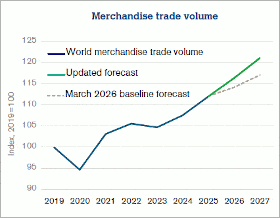
WTO: A reform of the trading system could increase global GDP by 3% by 2050
Geneva
The World Trade Report 2026 warns of the costs of fragmentation: up to 7% less global GDP in a world dominated by free trade agreements
One in ten containers is not up to standard
Washington
WSC publishes 2025 inspection data: out of 93,079 units inspected in seven countries, 9,645 had deficiencies
The World Shipping Council (WSC), the international association representing the world's leading container shipowners, has urged member states...
Maersk and Hapag-Lloyd to bring back four services on the Suez Canal route
Copenhagen/Hamburg
The lines connect Asia with Europe/Mediterranean
Neri and Nova Marine Carriers Groups to Control Calata Orlando Terminal
Lugano
The Livorno terminal will be the subject of a significant investment
Cavotec and EVIAS sign agreement for charging electric port vehicles on the move.
Stockholm
The Swedish company becomes the exclusive distributor and installer for the port sector of the French company's technologies
Hapag-Lloyd signs agreement with DP World to secure terminal capacity in Africa
Hamburg
The agreement concerns the ports of Dakar, Luanda, Dar es Salaam, Banana and Maputo
The threat to shipping in the Red Sea grows as Houthis seize Perim Island.
Sana'a/Hamburg
German shipowners warn that the possibility of returning to the Suez route is further removed
New attacks on ships in the Strait of Hormuz
Southampton/Tehran
IRGC Navy strikes US naval drone
Port of Long Beach reports record container traffic for August
Long Beach
In the first eight months of 2026, volumes grew by +1.3%
WSC reports that containers full of lithium batteries can be shipped without being identified as dangerous goods
Washington
Kramek: People, ports, ships and the marine environment at risk
T&E, the EU Commission's proposed revision of the ETS for shipping is a hesitant step forward.
Brussels
If the system is extended to small naval units - the association highlights - however, exemptions and derogations risk nullifying its climate impact.
Transalpine rail freight traffic still under pressure despite economic recovery
Bern
The road runs faster than the rail
Artificial intelligence drives global trade, despite Middle East and tariffs
Geneva
The WTO's barometer is rising. Demand for semiconductors and electronic components is offsetting geopolitical tensions.
Green light for €1.35 billion in investment in the port of Bremerhaven.
Bremen
It is the largest amount of funding the federal government has ever allocated to a project in the state.
APM Terminals Signs Agreement to Develop Nigeria's Badagry Port
Copenhagen
Four kilometers of docks with a draft of -18 meters would be built
Renaissance Partners has signed a binding agreement to acquire De Wave Group.
Genoa/Milan
The Genoese company will be sold by the American company Platinum Equity
Decarbonizing shipping: a €36 billion challenge and a €45 billion opportunity for Italy
Cernobbio
Without investments in ports, Italy risks losing 80 billion euros in added value by 2050.
Canadian unions want BC Ferries to build new ferries in British Columbia
Delta
The company's latest order was to Chinese company CMI Weihai
Filt, Fit, and Uilt should withdraw the amendment that puts port businesses and cooperatives at risk under Article 17.
Rome
The unions fear the progressive replacement of a structural function of the port with precarious forms of work
Norwegian Nor Cruises signs MoU with China's SWS for 2+3 new cruise ships
Shanghai
The units would have a gross tonnage of 84,000 tons
In July, ship traffic in the Suez Canal increased by +27%
Cairo
In the first seven months of this year, maritime traffic was 8,244 ships (+15.9%)
Tomorrow Kombiverkehr will launch an intermodal connection between Regensburg and the Interporto Quadrante Europa
IMO, the Net-Zero Framework remains stalemate: agreement on carbon pricing is still lacking.
London
38 states voted in favor and 17 against. Formal adoption postponed until December.
CMA CGM has finalized the acquisition of FedEx Supply Chain.
Marseille/Atlanta
With the transaction, CEVA Logistics' presence in North America has tripled.
Contships to order 10 feeder vessels with options for a further 10+10
Athens
Letter of intent with China's Hubei Guangji Green Energy Shipbuilding Group Co.
DP World signs agreement to develop deepwater port in Nigeria's Ogun State.
Dubai
The project includes approximately four kilometers of docks
New port regulations for Civitavecchia, Fiumicino, and Gaeta have been approved.
Civitavecchia
The procedural agreement with Interminal in Gaeta has been approved.
Kotug Acquires Majority Stake in Vortex Offshore
Rotterdam
The Dubai-based company provides maritime services to the offshore industry in the Middle East.
Over €1.9 billion in Spain to improve road and rail connections between ports
Madrid
Port authorities will contribute 875.1 million euros
Attica Holdings sold the ro-pax vessel Levka Ori for €8.3 million.
Kallithea
The ferry was built in 1987
DFDS's Trieste-Damietta ro-ro service will become bi-weekly in mid-October
Copenhagen
Inserting a second vessel into the route
The Italian Merchant Marine Academy increases cooperation with the Port of Durres.
Genoa
A memorandum of understanding has been signed
A volume on the history of the Tuscan port system will be presented in Livorno on Friday.
Livorno
A comparison of the key players in the port sector: from the reforms of the 1990s to the challenges of the future.
Suardiaz takes delivery of a 5,000-car LNG-powered car carrier
Madrid
A second PCTC vessel is expected in mid-2027
Hapag-Lloyd raises its 2026 outlook further
Hamburg
Strong demand and rising spot freight rates are pushing the company to significantly increase its EBITDA and EBIT forecasts.
UNIPORT's public meeting will be held in Rome on October 6th.
Rome
Debate on port reform and other relevant aspects of the sector
Pilot project for the production and use of green hydrogen at the port of Savona
Savona
Paroli (Western Ligurian Port Authority): a port area has been identified for work.
Tarros and Nurminen Logistics launch new Scandinavian-Mediterranean intermodal service
La Spezia/Helsinki
The land route connects Örebro, Parma and La Spezia
The first caisson of the breakwater protecting the regasification plant off the coast of Ravenna has been laid.
Ravenna
The maritime work will be approximately 900 metres long
Fincantieri and PT PAL sign agreement for the modernization of an Indonesian Navy vessel
Trieste
This is the "Kri Sriwijaya" unit (formerly "Giuseppe Garibaldi")
In Italy, the blue economy is worth 225 billion, and the nautical industry alone exceeds 10 billion in exports.
Rome
SACE's Focus On presented at the Genoa Boat Show
Fire aboard the Blue Star Ferries ro-ro vessel Blue Carrier 2
Kallithea
The 29 people on board were evacuated
Costs and timescales for the reconstruction of the four US Navy shipyards are rising exponentially.
Washington
If in 2018 21 billion dollars and 20 years of work were expected, today the estimate is 200 billion and at least 50 years.
Shipping faces its triple challenge: decarbonization, geopolitics, and the new geography of the automotive industry.
Chaff
At the Euromed Convention in Grimaldi, the sector is dealing with new environmental regulations, increasingly exposed routes and the shift of automotive production towards Southeast Asia.
Orizzonte Sistemi Navali signs a €3.7 billion contract for two destroyers
Trieste
The "Domenico Millelire" PPA has been delivered to the Navy.
Livorno: The Supreme Court of Cassation overturns the convictions in the Darsena Toscana docks affair.
Rome
The appeal ruling overturned the court's acquittal and convicted three defendants of ideological forgery.
The Port of Rijeka expects to close 2026 with a record container traffic of 800,000 TEUs.
River
With the new terminal on the island of Krk, traffic could rise to 1.7 million TEUs
Offshore wind energy funding: Pichetto reassures Taranto, but Taranto demands certainty.
Taranto
The 2026 funding for the Apulian port drops to €13.9 million. Gugliotti hopes for a formal confirmation of the remaining resources in 2027.
Port reform: The majority pushes ahead with Porti d'Italia SpA
Rome
The Chamber's Transport Committee rejects the opposition's suppressive amendments.
Gela's Porto Rifugio has received a favorable opinion for dredging the port's waters.
Palermo
Greenbrier Europe to produce NIK transshipment system for TX Logistik
Troisdorf/Berlin
Allows rapid loading of non-craneable semi-trailers onto trains
Maersk opens its own logistics center in the heart of Germany
Herleshausen
Located in Herleshausen, it has a surface area of 71,800 square meters
SAILING LIST
Visual Sailing List
Departure ports
Arrival ports by:
- alphabetical order
- country
- geographical areas
South Korea's HJ Shipbuilding & Construction Co. wins orders for four new 10,100 TEU containerships
Busan
The contract has a total value of approximately 500 million dollars.
Democratic Party: The government's port reform paves the way for privatization of Italian ports.
Rome
Ghio and Misiani: it also takes resources and skills away from the territories
Port self-production: The Council of State denies the segmentability of the authorization pursuant to Article 16, paragraph 3.
Rome
Cartour's "partial" authorization in the port of Salerno has been suspended.
Port of Miami closes fiscal 2026 with record cruise traffic
Miami
The threshold of ten million passengers has been exceeded, compared to 8.56 million in the previous financial year.
The Grimaldi Group has taken delivery of the new pure car and truck carrier Grande Egitto.
Naples
Its load capacity reaches 9,800 ceu
Port reform will be discussed in Genoa on October 2nd.
Genoa
Workshop organized by the AdSP and the Altero Matteoli association
Fratelli Cosulich strengthens its logistics network with the opening of Express Global Dubai
Dubai
Teresa Cosulich will be responsible for the new logistics office.
"A Sea of Switzerland" will be held in Lugano on October 9th
Lugano
Ninth edition of the International Forum on Transport and Infrastructure
Brullo Group orders three 40,800-ton deadweight oil/chemical tanker vessels
Rome
Order to the Chinese shipyard Anhui Shipyard
New attack on a ship in the Strait of Hormuz
Southampton
A bullet caused minor injuries to two crew members
A new megayacht production, maintenance, and storage hub opens in Trieste.
Trieste
Trieste Shipyards was founded by Seadock (Samer group) and Yachting Expertise and is owned by Friulia
Confitarma applauds the government's initiative to protect Italian ships in the Red Sea.
Rome
Zanetti: Maritime security is, in effect, a component of national economic security
Unions approve the platform for the single collective bargaining agreement for the shipping industry.
Rome
Filt, Fit and Uilt, is structured around three central elements such as salary, protection, participation and thirteen concrete requests
FHP Intermodal is increasing the frequency of its freight rail service between Fiorenzuola and Incoronata/Bari.
Milan
It goes up to five days a week
This year over 2,000 large yachts operated along the Italian coasts
Rome
Plus 10% for owned boats and a substantially stable trend for chartered ones
The event "Cyber-resilience in the maritime sector: defense, regulations, and European cooperation" will be held in Rome on Tuesday.
Rome
It is organized by Var Group and Confitarma
Smeup, with the acquisition of HTG, expands its portfolio in the logistics and transport sector
Erbusco
The Turin-based company specializes in the development of proprietary software
Saudi Arabian ports: Liquid bulk throughput to decline sharply in 2025
Riyadh
Total traffic fell to 298.3 million tonnes (-10.9%)
A delegation from the Lithuanian port of Klaipeda visited the port of Livorno
Livorno
In-depth comparison of their respective infrastructure development plans
New OOCL service between the Western Mediterranean and Canada
Hong Kong
Collaboration with Ocean Alliance companies and other carriers
The port's future is at the center of the event celebrating the 80th anniversary of Assosped Venezia and Asamar Veneto.
Venice
A conference on Friday will be the highlight of the festival
Increase in port workers at the ports of Monfalcone and Milazzo
Rome
Green light from the General Directorate for Ports, Logistics and Intermodality of the Ministry of the Interior.
Cargo traffic in Greek ports is sharply declining
Piraeus
Stagnation in passenger numbers
Mercitalia Shunting & Terminal has purchased eight Eurolight Dual bimodal locomotives
Rome
PORTS
Italian Ports:
Ancona Genoa Ravenna
Augusta Gioia Tauro Salerno
Bari La Spezia Savona
Brindisi Leghorn Taranto
Cagliari Naples Trapani
Carrara Palermo Trieste
Civitavecchia Piombino Venice
Italian Interports: list World Ports: map
DATABASE
ShipownersShipbuilding and Shiprepairing Yards
ForwardersShip Suppliers
Shipping AgentsTruckers
MEETINGS
UNIPORT's public meeting will be held in Rome on October 6th.
Rome
Debate on port reform and other relevant aspects of the sector
Port reform will be discussed in Genoa on October 2nd.
Genoa
Workshop organized by the AdSP and the Altero Matteoli association
››› Meetings File
PRESS REVIEW
Cosco Shipping arm readies China IPO to capitalise on global shipbuilding wave
(South China Morning Post)
Rosatom expects cargo traffic along Northern Sea Route to rise 14% in 2026 - CEO
(Interfax)
››› Press Review File
FORUM of Shipping
and Logistics
Intervento del presidente Tomaso Cognolato
Roma, 19 giugno 2025
››› File
Container traffic in the port of Hong Kong grew by 22.1% last month.
Hong Kong
Total for the first eight months of 2026 unchanged
AGV Expo, a new European trade fair dedicated to self-guided vehicles, will be held in Piacenza next month.
Genoa
The event will also host a rich program of conferences
Massive transnational fraud discovered in the road haulage sector
Chieti
Illegal employment of non-EU workers
Cargo traffic at the port of Singapore decreased by -4.9% in August
Singapore
In the first eight months of 2026, the port handled 30.7 million containers (+4.2%)
Cochin Shipyard and Drydocks World to jointly develop new international ship repair center in Cochin
Mumbai
An Iranian merchant ship was hit in the Strait of Hormuz
Tehran/Southampton
One sailor died and four other crew members were injured.
In July, freight traffic in the port of Ravenna grew by +6.7%
Ravenna
A sharp decline of -21.2% is expected for August
Giulio Stoppa is the new general secretary of Trasportounito
Rome
A choice of continuity that at the same time marks the beginning of a new phase
The launching ceremony of Viking Astrea took place at the Fincantieri shipyard in Ancona
Ancona/Los Angeles
Viking's Board has authorized a share buyback program of up to $1 billion.
Meyer Werft begins construction of the Carnival Tropicale cruise ship
Papenburg
With a gross tonnage of 180,000 tons, it will be able to accommodate over 6,000 passengers.
VTG sells its UK subsidiary VTG Rail UK to pension fund USS
Hamburg
The company operates in the railway freight wagon leasing sector.
The Genoa Coast Guard reaches its 100th Port State Control inspection of 2026.
Genoa
More than 250 deficiencies have been detected so far
ABB and Oceanly collaborate to integrate and optimize ship performance and operations
Genoa
Strategic agreement between Federlogistica and the Port of Xiamen
Genoa
Feasibility study for a maritime connection between the Chinese port and Genoa
Container traffic at the Port of Los Angeles remained stable in August
Los Angeles
The increase in empty garages has offset the decrease in full ones
Gulftainer to acquire stake in Thailand's Suksawat Terminal
Sharjah/Bangkok
It is located on the Chao Phraya River, in Bangkok
Robo.ai establishes a company specializing in maritime and submarine security
Abu Dhabi
Al-Mansory: We will produce locally and provide solutions for markets around the world
Kombiverkehr has taken full control of Spanish company Combiberia
Frankfurt am Main
The shares were acquired from the other 20 members
US forces hit five Iranian oil tankers
Tampa
Attacks in the Gulf of Oman and near Kharg Island
Conditions met for the acquisition of AD Ports by Abu Dhabi's sovereign wealth fund
Abu Dhabi
Construction of the above-ground section of Genoa's new breakwater has begun.
Milan
Construction of the wave barrier is underway
For the first time, a woman leads the Panama Canal Authority.
Balboa
Engineer Ilya Espino de Marotta's term will expire in 2033.
Blu Navy has acquired a stake in Banca dell'Elba
Portoferraio
Schenone: We are a group united by the desire to contribute to the economic and social development of the island.
HMM signs a contract worth approximately $3.5 billion with Vale
Seoul
It involves the maritime transport of iron ore on behalf of the Brazilian company
- Via Raffaele Paolucci 17r/19r - 16129 Genoa - ITALY
phone: +39.010.2462122, fax: +39.010.2516768, e-mail
VAT number: 03532950106
Press Reg.: nr 33/96 Genoa Court
Editor in chief: Bruno Bellio
No part may be reproduced without the express permission of the publisher
Search on inforMARE Presentation
Feed RSS Advertising spaces

inforMARE in Pdf
Mobile