Independent journal on economy and transport policy
12:10 GMT+2
This page has been automatically translated by Original news
Success of public to Genoa for the exhibition "Raffaele Rubattino" to Saint George Palace
About 13.000 visitors they have visited the exposure that will close down saturday
April 26, 2011
The exhibition is obtaining a remarkable success of public "Raffaele Rubattino - a genoese shipowner and the unit of Italy", than the Harbour Authority of Genoa it has promoted and prepared near own center to Saint George Palace from the November end and that next saturday will finish. The final budget - it has announced the harbour agency - will be of about 13.000 visitors.
The exposure has been organized in the within of the celebrations for the centenarian of the Unit of Italy and in the occasion of according to centenarian of the birth of Raffaele Rubattino, in order to introduce great the historical and human event of a genoese one, a protagonist of the Renaissance, passed to the history above all for the delivery of its steamboats to Garibaldi for the shipment of the Thousands, but in reality it anticipates in all the most meaningful economic and political events of the age.
Characteristic precipua of the exhibition is its innovation in an Italian scientific panorama, dealing topics that has not never found, neither to Genoa neither elsewhere, attention for the spreading to the great public. It is an only occasion for the visitor in order to approach themselves and to fully comprise from Liguria industrial culture, but also the history of the Italian marineria through excursus an unknown original and.
The preparation, cured by Paolo Piccione, anticipates, beside pictorial portraits and realized busts, between the others, from Rivalta, Morelli, Troubetzkoy, Cevasco, Nicolò Barabino, Dini and Civiletti, also many documents, letters, photo, manifestos, equipments of edge of the steamboats, jewels, coins and a figurehead. The exposure anticipates for the first time in absolute, by the Archaeological Supervision of the Tuscany, a real treasure in jewels and coins of gold that is recovered by the property left at death one of one of the steamboats of Rubattino: the Polluce, which collided with and sunk in 1841 to the wide one of the island of Elba after a collision with the Neapolitan steamboat Mongibello. Sources say that this treasure probably would be served to finance the risorgimentali revolutionary motions.
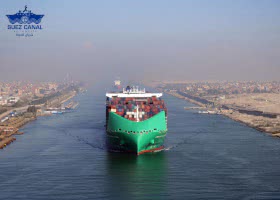
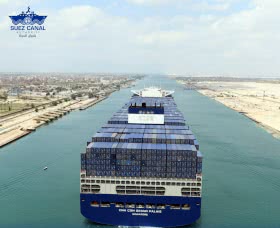
The Suez Canal Authority has announced that it will introduce surcharges on transit tariffs through the Egyptian canal for most major cargo vessels, effective July 15.
- Via Raffaele Paolucci 17r/19r - 16129 Genoa - ITALY
phone: +39.010.2462122, fax: +39.010.2516768, e-mail
VAT number: 03532950106
Press Reg.: nr 33/96 Genoa Court
Editor in chief: Bruno Bellio No part may be reproduced without the express permission of the publisher







 The exhibition is obtaining a remarkable success of public "Raffaele Rubattino - a genoese shipowner and the unit of Italy", than the Harbour Authority of Genoa it has promoted and prepared near own center to Saint George Palace from the November end and that next saturday will finish. The final budget - it has announced the harbour agency - will be of about 13.000 visitors.













 - Via Raffaele Paolucci 17r/19r - 16129 Genoa - ITALY


