testata inforMARE
Cerca
11 de junio de 2026 - Año XXX
Periódico independiente sobre economía y política de transporte
00:48 GMT+2
LinnkedInTwitterFacebook
FORUM de lo shipping y
de la logística

COMMISSION OF THE EUROPEAN COMMUNITIES

Brussels, 13 February 2001

Proposal for a

DIRECTIVE OF THE EUROPEAN PARLIAMENT AND OF THE COUNCIL

On Market Access to Port Services

(TEXT WITH EEA RELEVANCE)

EXPLANATORY MEMORANDUM


1. INTRODUCTION

The port services market covers services of a commercial value which are provided against payment to port users in a seaport and whose payment is not normally included in the charges collected for being allowed to call at or operate in a port. Although this service sector is essential for the functioning of the Community's ports and hence for its trade, there is at present no specific Community regulatory framework for port services.

However, national port services regimes have to be in conformity with the freedoms guaranteed by the Treaty (freedom of establishment, free movement of workers, goods and services) as well as the Treaty's competition rules. Problems with the application of these rules, where they arose, have been dealt with by the Commission on a case by case basis.

Ports play a crucial role in intra and extra Community trade. They will be called upon to play an increasing role in attempts to transfer more goods and passengers to the environmentally less damaging and less congested sea transport mode and to encourage intermodal transport and make it less costly; there is hence a need to ensure their effectiveness.

The liberalisation of the Community's internal maritime transport market took place over the last decade. In fact, transitional rules continue to allow restrictions in the Greek islands cabotage market. The situation in port services varies considerably: in many ports, restrictions are still in place regarding access and fair and equal treatment of potential service providers with consequences for quality and costs of services. It can nevertheless be observed that developments in the port services market are following those of maritime transport towards a more open market, albeit with a considerable time lag. Developments, however, vary considerably.

For these reasons, it is necessary, in the interests of operators, authorities and consumers, to introduce specific and clear rules on access to the port services market which will take account of its unique features.


2. THE NEED TO ESTABLISH A COMMUNITY LEGAL FRAMEWORK

Recent developments have made it necessary to replace the case by case approach in the application of the Treaty rules by a more systematic approach.

Competition between ports within the same Member State and between ports in neighbouring Member States has substantially increased since the completion of the internal market. Although, of course, all ports have to follow rules set by the competent national authorities, the diversity and complexity of these rules as well as a considerable degree of uncertainty in procedural matters continue to be of key interest to port users and port service providers. Price and quality of port services have become one of the key elements where port users choose a port; a set of basic rules applicable in all Community ports would ensure that the competition between and within ports would take place on a level playing field.

Recent years have seen a continuing, even increasing trend to shift the provision of port services from the public to the private sector in order to increase efficiency, make use of the know-how of the private sector and introduce, and increase, competition between service providers. Although this trend is far from uniform and, indeed, tends to vary considerably between the different port service sectors, all Member States have opted for the principle of opening up this sector to competition. The accompanying rules vary considerably. Indeed, in many cases it is not clear what these rules are, thus effectively rendering unnecessarily difficult the exercise of the Treaty's freedoms.

The heterogeneous nature of the port services and the diversity of the ports (in terms of status, ownership, size, function and geographical characteristics) remain important factors. It requires that appropriate account be taken of each port's specificity and its relevance for the port service providers. This may, in particular, be the case where space and capacity constraints exist in a port or where specific maritime safety and environmental considerations exist. In addition, ports have a particular role to play in the Community's customs procedures.

The principle of subsidiarity implies that Member States and their competent authorities be empowered to take account of considerations of local, regional or national specificities. These considerations, well-founded as they may be in many cases, must, however, not unduly restrict the rights of service providers derived from the basic freedoms of the Treaty. It is therefore necessary to lay down at Community level the conditions for the exercise of these freedoms: in particular, that limitations in the number of service providers, where they are deemed necessary, are objectively justified and that the procedure leading to their authorisation is transparent, non-discriminatory, objective, relevant and proportional.

A further characteristic of a substantial number of ports is the dual role of the managing body of the port both as a body (public but also sometimes private) responsible for the management of the port and its development, for which in many cases public funds are given, and as a provider of port services where other service suppliers are admitted. It is often unclear under what conditions public and private suppliers can compete with each other.

A Community framework on port services should not apply to ports of all sizes. It is acknowledged that the implementation of the framework by Member States will, in most cases, impose an additional burden on authorities which, for the smaller ports, appears to be disproportionate to the expected results since limited cargo and passenger volumes do not normally require a multitude of service providers.

Under these circumstances it is appropriate to establish a Community legal framework ensuring, on the one hand, access to the port services market in application of the Treaty rules whilst, on the other hand, allowing Member States and their competent authorities to fill in this framework with specific rules which take due account of the ports' geographic and other characteristics as well as of local, regional or national specificities.


3. THE COMMISSION'S PROPOSAL

3.1. The key principles
  • Member States shall take the necessary measures to ensure that providers of port services have access to the market for the provision of port services.

    This principle gives effect to the Treaty rules on the major freedoms and competition as regards this specific sector.

    The Commission believes that no port service of a commercial nature should a priori be excluded from the Community framework. A list of port services is annexed to the legislative proposal.
  • Member States may require that a provider of port services obtain prior authorisation.

    This principle acknowledges that, in order to ensure proper management of a port with its inherent constraints as well as to ensure a satisfactory level of professional qualifications, Member States may operate a system of prior authorisation for providers of port services.

    The Commission believes that the conditions for granting of authorisations must be transparent, non-discriminatory, objective, relevant and proportional. They may relate only to the provider's professional qualifications, his sound financial situation and sufficient insurance cover, to maritime safety or the safety of installations, equipment and persons as well as to environmental protection. Where public service obligations are considered appropriate, these may relate to safety, regularity, continuity, quality and price of the service in question.
  • The number of authorisations can only be limited for reasons of constraints relating to available space or capacity or, for technical-nautical services, maritime traffic related safety. These constraints must be justified and Member States must carry out a transparent, objective and non-discriminatory selection process of the service providers. Key aspects of the selection procedures will be harmonised.

    This principle reconciles the Treaty rules on the freedoms of establishment and the provision of services with the fact that in a number of ports and port services sectors, the above-mentioned constraints make a limitation unavoidable.
  • Ports in which no limitations exist, are not bound by the rules on limitations, selection procedure, duration of authorisations and on transitional measures.

    This principle acknowledges that the aim which this Directive strives to achieve has already been achieved in these ports.
  • Member States shall take the necessary measures to allow self-handling.

    This principle acknowledges that there are in fact no reasons why self-handling should not, in principle, be allowed in ports if operators believe that such action provides better use of their resources and gains in efficiency of their own services. It acknowledges furthermore that conditions and criteria for self-handlers must not be stricter than those set for providers of port services for the same or a comparable kind of service.
  • Where the managing body of the port provides, or wishes to provide, port services in competition with other service providers, it must be treated like any other competitor. This requires that the managing body must not be involved in the selection procedure of service providers, must not discriminate, in its function as managing body of the port, between service providers in which it holds an interest and other service providers and must, in particular, separate its port services accounts from the accounts of its other activities.

    This principle reflects general competition principles and standards of transparency.
  • Member States will have to ensure full transparency of all procedures in relation to the provision of port services, as well as the availability of appeal procedures, including a judicial review.

    This is the principle of good governance.
  • Where a selection of service providers is made, the period during which the chosen provider may operate will be limited in time.

    This principle reconciles the need to maintain the possibility of potential and future service providers to enter the port services market with legitimate expectations of current service providers. It does not allow a simple catch-all solution. Indeed, it is appropriate to treat those cases differently where, on the one hand, no or only insignificant investments were made by the service provider and, on the other hand, where the service provider had to make such investments; where investments were made in moveable or immovable assets; and, of course, the level of investments needs to be given due consideration.
  • Transitional measures take account of legitimate expectations of current service providers but, at the same time, require that within a reasonable time frame, existing authorisations which were not granted in conformity with the Directive's rules be reviewed.

    This principle ensures that the objectives of this Directive are attained within a reasonable period of time whilst respecting legitimate expectations of current service providers. This is done, in particular, by taking into account the same criteria to be used for determining the duration of authorisations where their number had to be limited.
  • The Directive and its implementation by Member States must not jeopardise safety in ports.

    This principle re-affirms the Commission's concerns about maritime safety; all measures aiming at regulating access to the port services sector must fully ensure the highest levels of safety, in particular maritime safety, in ports.
  • The Directive and its implementation by Member States must not jeopardise environmental protection rules in ports.

    This principle re-affirms the importance the Commission attaches to environmental protection.

The proposal does not contain rules on institutional structures of the ports and does not prevent Member States from deciding which bodies should act as competent authorities.

In application of article 295 of the Treaty the proposal in no way prejudices the rules in Member States governing the system of property ownership of, or in, ports.

The proposal does not contain harmonised or minimum standards for training and qualifications of the personnel and the equipment involved. Without prejudice to existing Community legislation and in application of the subsidiarity principle it allows Member States to maintain and set appropriate rules provided these are, in particular, transparent, non-discriminatory and objective.

Finally, the proposal does not include harmonised safety and environmental rules but relies on existing rules which may take appropriate account of national, regional and local specificities.

The approach is in line with the conclusions of the European Council of Lisbon of 28 March 2000 where the Commission, Council and the Member States, each in accordance with their respective powers, were asked to "speed up liberalisation in areas such as….. transport". It takes into account the views expressed by the European Parliament, the Committee of the Regions, the Economic and Social Committee, following the publication of the Commission's "Green Paper on Sea Ports and Maritime Infrastructure", and has considerable (although not unanimous) support among interested industry groups.

3.2. Outline of the proposed directive

Article 1 sets out the Directive's objectives.

Article 2 sets out the Directive's scope. It clarifies that only services provided within the port area and not, e.g. in rivers leading to ports, are covered by the Directive and it explains, by referring to an annex, what port services are covered and introduces a threshold for ports to which the Directive would apply.

Article 3 explains that the Directive does not replace any of the obligations to which authorities are already subject as a result of the public procurement Directives 92/50, 93/36, 93/37 and 93/38. In addition, where one of those Directives already requires a contract to be tendered, it will be those Directives rather than the proposed Directive that determine the manner in which this should be done. Paragraph 3 furthermore ensures application of Directives 89/48, 92/51 and 99/42 on mutual recognition of professional education and training, in particular where Member States issue authorisations based on a provider's professional qualifications.

Article 4 defines key terms.

Article 5 requires Member States to designate competent authorities for the purpose of implementing this Directive.

Article 6 establishes the basic rule that Member State may require an authorisation for the providers of port services. The conditions for granting an authorisation must be transparent, non-discriminatory, objective, relevant and proportional. They must be made public, as has to be the procedure for obtaining the authorisation. This article contains a restricted list of optional criteria on which the authorisation may depend, in particular a limited list of public service obligations. It contains furthermore an obligation for the competent authority to provide adequate training where local knowledge is indispensable for a potential service provider and the right of a service provider to employ the personnel of his choice.

Article 7 sets out the procedures to be followed where the number of service providers in a port is to be limited. It requires nevertheless that the highest possible number of service providers must be allowed and that in the sector of cargo handling generally at least two providers must be authorised. It requires furthermore that a decision on limitations must not be taken by the managing body of the port if it is, or wishes to become, a service provider in that port.

Article 8 requires that a selection procedure of service providers must be set up and requires that this procedure be transparent, objective and non-discriminatory using proportionate and relevant criteria. It sets out certain key procedural formalities which a selection procedure must comply with whilst at the same time allowing that full use be made of modern electronic communication means. It addresses furthermore the situation where the managing body of a port wishes to provide a service in competition with another provider. In this case it cannot be the authority responsible for the selection process but an independent body has to be appointed for this purpose.

Article 9 introduces the principle of a time limit to authorisations given as a result of a selection procedure and links its duration to the criterion of investment in assets: The duration varies according to whether no or only insignificant investments were made by the service provider and whether the assets in which investments were made are moveable or not. Maximum duration periods are given.

Article 10 introduces the requirement that service providers must have accounts for port service activities.

Article 11 sets out that the rules of this Directive equally apply to self-handling and that any criteria set for self-handling should not be stricter than those set for other providers of the same or a comparable port service.

Article 12 addresses the situation where the managing body of a port, in addition to its management role, acts as service provider. It requires, in particular, that it must separate the accounts of its port services activities from those of its other activities. Auditing is made mandatory, and the auditor's report must include information on financial flows between the managing body's different activities. This article equally addresses the situation where no provider for a specific service is found and the managing body of the port therefore considers it necessary to offer this service itself and sets out that the managing body of a port must not discriminate between service providers.

Article 13 ensures full transparency of the selection process and requires Member States to establish appeal procedures, including a judicial review.

Article 14 recalls that the Directive in no way affects the rights and obligations of Member States in respect of law and order, safety and security at ports as well as environmental protection.

Article 15 ensures the application of social legislation.

Article 16 contains transitional measures. It allows for existing authorisations to remain in force unchanged where the port is not limiting access to the port services market, even though new authorisations have to comply with the rules of the Directive. This article then addresses existing authorisations granted after a public tender or an equivalent procedure and which are in conformity with the rules of this Directive which do not require adjustments. All other authorisations will become the subject of new authorisation procedures within given transition periods which latter vary according to the level and kind of investments made by the service provider currently holding the authorisation.

Article 17 lays down obligations of Member States to report on the application of the Directive and of the Commission to draw up a report on the basis of these reports accompanied, where appropriate, by a proposal for a revision.

Article 18 contains Member States' obligation to implement the Directive.

Article 19 provides for the entry into force of the Directive.

Article 20 contains the addressees of the Directive.


4. JUSTIFICATION FOR ACTION AT COMMUNITY LEVEL

4.1. What are the objectives of the proposed action in relation to the Community's obligations ?

The proposal aims to ensure a more systematic application of Treaty rules (4 freedoms and competition rules) in the port sector. It introduces procedural rules guaranteeing that all service providers, actual and potential, have a fair chance of entering the port services market. This will in turn lead to improved port services and encourage better use of shipping as an alternative transport mode and of combined transport, both reducing the strain on the Community's transport network.

Without pronouncing itself, in line with Article 295 of the Treaty, on the ownership regime of port installations and port service providers, the proposal establishes a system of equal rights and opportunities between private and public service providers.

4.2. Does competence for the planned activity lie solely with the Community or is it shared with the Member States?

The action falls under shared competence (article 80(2))of the Treaty.

4.3. What is the Community dimension of the problem (for example, how many Member States are involved and what solution has been used up to now)?

The Directive concerns all coastal Member States. Although in recent years Member States have generally made considerable progress in ensuring free access to port services, there is presently a wide divergence of practice with regard both to the coverage of port services and the procedures followed to implement the Treaty rights.

In order to ensure access to the ports services market and, in doing so, avoid distortion of competition, it is necessary to improve and harmonise, to the extent necessary, national rules, regulations and practices.

4.4. What is the most effective solution taking into account the means available to the Community and those of the Member States?

Given the current uneven levels of access to the port services market in the Member States and even within a Member State, and generally unclear and unsatisfactory procedural rules, in particular where private and public service providers are concerned, there is a need to establish Community-wide basic rules. These allow Member States, in application of the principle of subsidiarity, considerable discretion, in particular in view of geographic characteristics of the ports with varying maritime safety/environmental protection requirements.

The proposal establishes common rules in particular for

  • The implementation of the principle of freedom to provide port services;
  • Member States' right to require prior authorisation;
  • Member States' right to limit the number of service providers;
  • Procedures to be followed in the processes, including transparency;
  • The implementation of the right to self-handle;
  • The duration of authorisations;
  • The rights and obligations of port managing bodies in their dual functions of authority and service provider;
  • Appeal procedures.

4.5. What real added value will the activity proposed by the Commission provide and what would be the cost of inaction?

In view of the current situation as a result of developments in recent years, it is highly unlikely that a satisfactory situation throughout the Community will evolve which guarantees the implementation of the freedom to provide port services and does not distort competition between service providers in different Member States. This is essentially due to the fact that Member States, although they are making progress in their efforts to enhance free access to the port services market, lack a common framework of Community rules with the result that developments are incoherent, irregular and unsatisfactory.

4.6. What forms of action are available to the Community (recommendation, financial support, regulation, mutual recognition, etc…)?

In view of the complexity of Member States' port regimes and the diversity of ports with regard to size and function and maritime safety and environmental protection requirements, a Directive is considered the most appropriate legal instrument leaving the implementation of the common framework at the level of the Member States.

4.7. Is it necessary to have a uniform regulation or is a directive setting out the general objectives sufficient, leaving the implementation at the level of the Member States?

See 4.6 above.


Proposal for a

DIRECTIVE OF THE EUROPEAN PARLIAMENT AND OF THE COUNCIL

on Market Access to Port Services

THE EUROPEAN PARLIAMENT AND THE COUNCIL OF THE EUROPEAN UNION,

Having regard to the Treaty establishing the European Community, and in particular Article [80(2)] thereof,

Having regard to the proposal from the Commission,

Having regard to the opinion of the Economic and Social Committee,

Having regard to the opinion of the Committee of the Regions,

Acting in accordance with the procedure laid down in Article 251 of the Treaty,

Whereas:

  1. The objective of Article 49 of the Treaty is to eliminate the restrictions on freedom to provide services in the Community; in accordance with Article 51 of the Treaty, that objective must be achieved within the framework of the common transport policy.
  2. Through Council Regulations (EEC) No 4055/86 of 22 December 1986 applying the principle of freedom to provide services to maritime transport between Member States and between Member States and third countries and (EEC) No 3577/92 of 7 December 1992 applying the principle of freedom to provide services to maritime transport within Member States (maritime cabotage) that objective has been attained with regard to maritime transport services as such.
  3. Port services are essential to the proper functioning of maritime transport since they make an essential contribution to the efficient use of maritime transport infrastructure.
  4. In the Green Paper on Sea Ports and Maritime Infrastructure of December 1997 the Commission indicated its intention of proposing a legislative framework in order to achieve access to the port services market in Community ports with international traffic. Therein, port services should be defined as those services of commercial value that are normally provided against payment in a port.
  5. Facilitatingaccess to the port services market at Community level should remove prevailing restrictions that hamper access for port service operators, improve the quality of service provided to users of the port, increase efficiency and flexibility, help reduce costs and thereby contribute to promoting short sea shipping and combined transport.
  6. Where the authorisation under this Directive takes the form of a contract falling within the scope of Directives 92/50/EEC, 93/36/EEC, 93/37/EEC and 93/38/EEC, these latter Directives apply. Equally, where applicable, Directives 89/48/EEC, 92/51/EEC and 99/42/EC on the mutual recognition of professional education and training apply.
  7. Diverse national legislations and practices have led to disparities in the procedures applied and have created legal uncertainty regarding the rights of providers of port services and the duties of competent authorities. It is in the Community's interest, therefore, to establish a Community legal framework which lays down basic rules on access to the port services market, the rights and obligations of current and prospective service providers, the managing bodies of the ports, as well as on the procedures accompanying the authorisations and selection processes.
  8. In accordance with principles of subsidiarity and proportionality as set out in Article 5 of the Treaty, the objectives of the proposed action, which is the access for any natural or legal person, established in the Community, to the market for port services, cannot be sufficiently achieved by the Member states because of the dimension of that action and can therefore be better achieved by the Community. This Directive confines itself to the minimum required in order to achieve that objective and does not go beyond what is necessary for that purpose.
  9. The Community legislation on access to port services does not exclude the application of other Community rules. Competition rules have already been applied to port services and are relevant in particular to monopoly situations.
  10. In the interest of an efficient and safe port management, Member States may require that service providers obtain authorisations. The criteria for granting such authorisations must be objective, transparent, non-discriminatory, relevant and proportional. They must be made public.
  11. Since ports are made up of limited geographical areas, access to the market may, in certain cases, meet capacity and available-space constraints and traffic-related safety constraints for technical-nautical services. In such cases it may therefore be necessary to limit the number of authorised providers of port services.
  12. The criteria for any limitation must be objective, transparent, non-discriminatory, relevant and proportional. In the case of cargo handling, and unless exceptional circumstances prevail, the number of service providers for each category of cargo handling must not be limited to fewer than two completely independent providers.
  13. Service providers should have the right to employ personnel of their own choice.
  14. Where the number of providers of port services is limited, these will need to be selected by the competent authority, according to a transparent, objective, open and fair selection procedure with non-discriminatory rules.
  15. In order to ensure that decisions and procedural measures under this Directive are taken, and are seen to be taken, by neutral bodies, the position of the managing body of a port which is itself, or wishes to become, a provider of a port service should be defined. It must be subject to the same conditions and procedures as other service providers whilst remaining in a position to ensure the functioning of the port. Therefore any decision on limiting the number of service providers and the selection itself must be entrusted to a neutral body and the managing body of a port shall not discriminate between service providers and between port users.
  16. It is therefore necessary to ensure non-discrimination between the managing body of the port and independent operators, as well as between managing bodies of different ports.
  17. In the financial field it is necessary to impose the obligation for managing bodies of ports covered by this Directive, which are also acting as service providers, to keep accounts for activities carried out in their function as managing bodies separate from those carried out on a competitive basis.
  18. Commission Directive n° 2000/52 of 26 July 2000 lays down, for a certain number of undertakings, the obligation to maintain separate accounts which only applies to undertakings whose total annual turnover for each of the last two years exceeded EUR 40 million.

    In the light of the introduction of the freedom to provide port services in the Community, it is necessary to ensure that the principle of separation of accounts applies to all ports falling within the scope of the present Directive and to impose on ports transparency rules that are not less strict than those laid down in the Commission Directive n° 2000/52.
  19. The requirement to keep accounts for port service activities should apply to all undertakings which have been selected to provide such services.
  20. Self-handling should be allowed and any criteria set for self-handlers should not be stricter than those set for providers of port services for the same or a comparable kind of service.
  21. Authorisations granted through a selection procedure should be limited in time. It is reasonable to take into account, when determining the period of authorisation, whether the provider has had to invest in assets or not and, where this is the case, whether these assets are moveable or not. Although such procedure should lead to an adequate outcome, it is nevertheless necessary to set maximum periods of authorisation.
  22. The current situation in the Community ports, with its multitude of authorisation and selection methods and periods, requires that clear transition periods be determined. These transition rules should distinguish between ports where the number of service providers is restricted and those ports where it is not.
  23. Where the number of service providers is not restricted, there is no reason to change the existing authorisations, whilst future ones should be granted in accordance with the Directive's rules.
  24. Where the number of service providers is restricted, the transitional periods should distinguish between authorisations granted in accordance with a public tender, or an equivalent procedure, or not; between situations where the service provider has made significant investments or not; and where these investments were made in moveable or immovable assets. The interests of legal certainty require that, in each case maximum periods be fixed, whilst leaving national authorities a substantial margin adequately to take into account the specificities of each case.
  25. Member States should determine the competent authorities responsible for the implementation of this Directive.
  26. Appeal procedures against decisions of the competent authorities should be in place.
  27. Member States must ensure an adequate level of social protection for the staff of undertakings providing port services.
  28. The provisions of this Directive in no way affect the rights and obligations of Member States in respect of law and order, safety and security at ports as well as environmental protection.
  29. This Directive does not affect the application of the rules of the Treaty; in particular the Commission will continue to ensure compliance with these rules by exercising, when necessary, all the powers granted to it by Article 86 of the Treaty.
  30. On the basis of Member States' reports on the application of this directive, the Commission should make an assessment accompanied, if appropriate, by a proposal for the Directive's revision,

HAVE ADOPTED THIS DIRECTIVE:

Article 1 - Objective

Freedom to provide port services shall apply to Community providers of port services under the provisions set out in this Directive. Providers of port services shall have access to port installations to the extent necessary for them to carry out their activities.

Article 2 - Scope

1. This Directive applies to those port services set out in the Annex which are provided inside the port area for users of the port.

2. This Directive applies to any sea port or port system located in the territory of a Member State and open to general commercial maritime traffic , provided that the port's average annual throughput over the last 3 years has not been less than 3 million tonnes or 500.000 passenger movements.

3. Where a port reaches the freight traffic threshold referred to in paragraph 2 without reaching the corresponding passenger movement threshold, the provisions of this Directive shall not apply to port services reserved exclusively for passengers. Where the passenger movement but not the freight traffic threshold is reached, the provisions of this Directive shall not apply to port services reserved exclusively for freight. The Commission shall publish for information, in the Official Journal of the European Communities and on the basis of information provided by Member States, a list of the ports referred to in this Article. The list shall first be published within three months following the entry into force of this Directive, and thereafter annually.

4. Member States may require that the providers of port services be established within the Community and that vessels used exclusively for the provision of port services shall be registered in, and fly the flag of a Member State.

Article 3

1. This Directive is without prejudice to the obligations for competent authorities which flow from Directive 92/50/EEC, Directive 93/36/EEC, Directive 93/37/EEC and Directive 93/38/EEC.

2. Where one of the Directives referred to in paragraph 1 makes the tendering of a service contract mandatory, Articles 8(1,2,3,4 and 5), 12(1and 2), and 13 of this Directive shall not apply to the award of that contract.

3. This Directive is without prejudice, where applicable, to the obligations of competent authorities which flow from Directives 89/48/EEC, 92/51/EEC and 99/42/EC on a mutual recognition among Member States of professional education and training.

Article 4 - Definitions

For the purposes of this Directive:

(1) 'sea port' (in this Directive referred to as 'port') is an area of land and water made up of such improvement works and equipment as to permit, principally, the reception of ships, their loading and unloading, the storage of goods, the receipt and delivery of these goods by inland transport, the embarkation and disembarkation of passengers;

(2) 'port system' means two or more ports grouped together to serve the same city or conurbation;

(3) 'port authority' or 'managing body of the port' (hereafter referred to as 'managing body of the port') means a body which, whether or not in conjunction with other activities, has as its objective under national law or regulation the administration and management of the port infrastructures, and the co-ordination and control of the activities of the different operators present in the port or port system concerned. It may consist of several separate bodies or be responsible for more than one port;

(4) 'port services' means the services of commercial value that are normally provided against payment in a port and which are listed in the Annex;

(5) 'provider of port services' means any natural or legal person providing, or wishing to provide, one or more categories of port services;

(6) 'public service requirement' is a requirement adopted by a competent authority in order to secure adequate provision of certain categories of port services;

(7) 'self-handling' means a situation in which a port user provides for itself one or more categories of port services and where normally no contract of any description with a third party is concluded for the provision of such services;

(8) 'authorisation' means any permission, including a contract, allowing a natural or legal person to provide port services or to carry out self-handling.

Article 5 - Competent authorities

Member States shall designate the competent authority or authorities for the purpose of implementing articles 6, 7, 8, 10, 11, 12 and 19 of this Directive.

Article 6 - Authorisation

1. Member States may require that a provider of port services obtains prior authorisation under the conditions set out in par. (2), (3), (4) and (5). Authorisation shall be automatically granted to service providers selected under Article 8.

2. The criteria for the granting of the authorisation by the competent authority must be transparent, non-discriminatory, objective, relevant and proportional. The criteria may only relate to the provider's professional qualifications, his sound financial situation and sufficient insurance cover, to maritime safety or the safety of installations, equipment and persons. The authorisation may include public service requirements relating to safety, regularity, continuity, quality and price and the conditions under which the service may be provided.

3. Where the required professional qualifications include specific local knowledge or experience with local conditions, the competent authority must provide adequate training for applicant service providers.

4. Criteria referred to in paragraph (2) shall be made public and providers of port services shall be informed in advance of the procedure for obtaining the authorisation. This requirement applies equally to an authorisation linking the provision of service to an investment into immobile assets which will revert to the port upon expiry of the authorisation.

5. The provider of port services has the right to employ personnel of his own choice to carry out the service covered by the authorisation.

Article 7 - Limitations

1. Member States may only limit the number of providers of port services for reasons of constraints relating to available space or capacity or, for technical-nautical services, to maritime traffic-related safety. The competent authority must:

(a) inform interested parties of the category or categories of port services and the specific part of the port to which the restrictions apply as well as the reasons for such restrictions;

(b) allow the highest number of service providers possible under the circumstances.

2. Where constraints relating to available space or capacity exist and, for as long as there are no exceptional circumstances in relation to the volume of traffic and categories of cargoes, the competent authority shall authorise at least two service providers for each category of cargo, which shall be completely independent of each other.

3. Where the competent authority deciding on limitations in relation to the port in question is the managing body of that port and where the managing body itself or a service provider over which it has direct or indirect control or is involved in, is, or wishes to become, also a service provider in that port, Member States shall designate a different competent authority and entrust it with the decision, or approval of a decision, on limitations. This newly designated competent authority must be independent of the managing body of the port in question and must not:

(a) provide port services similar to those provided by any of the service providers in the port in question; and

(b) have any direct or indirect control over, or be involved in, any of the service providers in the port in question.

Article 8 - Selection procedure

1. Where the number of providers of port services has been limited in application of Article 7, the competent authority shall take the necessary measures to ensure a transparent and objective selection procedure, through tendering, using proportionate, non-discriminatory and relevant criteria.

2. The competent authority shall publish in the Official Journal of the European Communities an invitation to interested parties to participate in the selection process.

This publication may refer to the competent authority's or the port's own internet web-site or, where there is no such web-site, any other appropriate manner which makes the necessary information available in a timely way to any person interested in the process.

3. The competent authority shall include in its publication

(a) authorisation and selection criteria that define the authority's minimum requirements;

(b) award criteria that define the grounds on which the authority will choose among offers meeting the selection criteria; and

(c) conditions setting out the service requirements that the contract will cover and identifying any assets to be placed at the disposal of the successful tenderer together with the relevant terms and applicable rules.

4. The procedure shall provide for an interval of at least 52 days between the dispatch of the call for proposals and the latest date for receipt of them.

5. The competent authority shall include in the information it supplies to potential providers all relevant information it holds.

6. Where the competent authority carrying out the selection procedure in relation to the port in question is the managing body of that port and where the managing body itself or a service provider over which it has direct or indirect control or is involved in, is, or wishes to become, a service provider in that port, Member States shall designate a different competent authority and entrust it with the selection procedure in question. This newly designated competent authority must be independent of the managing body of the port in question and must not:

(a) provide port services similar to those provided by any of the service providers in the port in question; and

(b) have any direct or indirect control over, or be involved in, any of the service providers in the port in question.

Article 9 - Duration

Providers of port services shall be selected for a limited period of time to be determined in accordance with the following criteria:

1. In cases where the service provider will make no or insignificant investments in order to carry out the provision of services, the maximum duration of its authorisation shall be 5 years.

2. In cases where the service provider will make significant investments in

(a) moveable assets, the maximum period shall be 10 years;

(b) immovable assets, the maximum period shall be 25 years, irrespective of whether their ownership will revert to the port.

Article 10 - Accounting provisions

The competent authority shall oblige the selected service providers to keep separate accounts for each port service in question. The compilation of the accounts must accord with current commercial practice and generally recognised accounting principles.

Article 11 - Self-handling

1. Member States shall take the necessary measures to allow self-handling to be carried out in accordance with this Directive.

2. Self-handling may be subject to an authorisation for which the criteria must not be stricter than those applying to providers of the same or a comparable port service.

Article 12 - Managing body of the port

1. Where the managing body of the port provides port services, it must fulfil the criteria set out in Article 6 and separate the accounts of each of its port service activities from the accounts of its other activities. The compilation of the accounts must accord with current commercial practice and generally recognised accounting principles to ensure that:

(a) the internal accounts corresponding to different activities are separate;

(b) all costs and revenues are correctly assigned or allocated on the basis of consistently applied and objectively justifiable cost accounting principles;

(c) the cost accounting principles according to which separate accounts are maintained are clearly identified.

2. The auditor's report on the annual accounts must indicate the existence of any financial flows between the port service activity of the managing body of the port and its other activities. The auditor's report must be kept by the Member States and made available to the Commission upon request.

3. Where as a result of a selection procedure under Article 8 no suitable service provider could be found for a specific port service, the competent authority may, under the conditions of paragraph (1) of this Article, reserve the provision of this service to the managing body of the port for a maximum period of 5 years.

4. The managing body of the port shall not discriminate between service providers. It shall in particular refrain from any discrimination in favour of an undertaking or body in which it holds an interest.

5. The provisions of this Directive in no way affect the rights and obligations of Member States in respect of the Transparency Directive n° 2000/52/EC.

Article 13 - Appeals

1. Member States shall ensure that any party with a legitimate interest has the right to appeal against the decisions or individual measures taken, under this Directive, by competent authorities or the managing body of the port.

2. Where an application for access to provide port services under this Directive is rejected, the applicant(s) shall be informed of the reasons for not having been authorised or selected. Such reasons must be objective, non-discriminatory, well-founded and duly substantiated. Appeal procedures must be made available to the applicant. It must be possible to bring the appeal before a national court or a public authority that is independent in its organisation, funding, legal structure and decision-making of the competent authority or managing body of the port concerned and from any service provider.

3. Member States shall take the necessary measures to ensure that decisions taken by appeal bodies are subject to judicial review.

Article 14 - Safety, security and environmental protection

The provisions of this Directive in no way affect the rights and obligations of Member States in respect of law and order, safety and security at ports as well as environmental protection.

Article 15 - Social protection

Without prejudice to the application of this Directive, and subject to the other provisions of Community law, Member States shall take the necessary measures to ensure the application of their social legislation.

Article 16 - Transitional measures

1. Where the number of providers of port services in a port is not limited by constraints relating to available space or capacity or maritime safety, existing authorisations may remain in force unchanged until such time as the number becomes limited. New authorisations must comply with the provisions of this Directive.

2. Where the number of providers of port services in a port is limited, the rules of points (a) to (e) apply.

a) Where an existing authorisation was granted after a public tender or an equivalent procedure and is otherwise in conformity with the rules of this Directive, the authorisation may remain in force unchanged.

b) Where an existing authorisation was not granted in conformity with the rules of this Directive and where the service provider has made no or insignificant investments, a new authorisation procedure in conformity with the rules of this Directive must be carried out within 2 years of the date of transposition of this Directive in the case of a sole service provider and within 4 years in all other cases.

c) Where in the context of an existing authorisation a service provider has made significant investments in moveable assets, the following shall apply:

(i) Where the authorisation was not granted in conformity with the rules of this Directive but was preceded by a public tender or an equivalent procedure, the maximum duration of the existing authorisation shall be 10 years;

(ii) Where the authorisation was not granted in conformity with the rules of this Directive and was not preceded by a public tender or an equivalent procedure, a new authorisation procedure in conformity with the rules of this Directive must be carried out within 3 years of the date of transposition of this Directive in the case of a sole service provider and within 5 years in all other cases.

d) Where in the context of an existing authorisation a service provider has made significant investments in immovable assets, the following shall apply:

(i) Where the authorisation was not granted in conformity with the rules of this Directive but was preceded by a public tender or an equivalent procedure, the maximum duration of the existing authorisation shall be 25 years;

(ii) Where the authorisation was not granted in conformity with the rules of this Directive and was not preceded by a public tender or an equivalent procedure, a new authorisation procedure in conformity with the rules of this Directive must be carried out within 5 years of the date of transposition of this Directive in the case of a sole service provider and within 8 years in all other cases.

e) Where in the context of an existing authorisation a service provider has made significant investments in moveable and immovable assets, point (d) shall apply.

Article 17 - Information report and revision

Member States shall send the Commission a report on the application of this Directive no later than 3 years after the date of transposition.

On the basis of the Member States' reports, the Commission will make an assessment of the implementation by Member States of the Directive accompanied, where appropriate, by a proposal for its revision.

Article 18 - Implementation

1. Member States shall bring into force the laws, regulations and administrative provisions necessary to comply with this Directive not later than one year from the date of its entrance into force. They shall forthwith inform the Commission thereof.

When Member States adopt those provisions, they shall contain a reference to this Directive or be accompanied by such a reference on the occasion of their official publication. Member States shall determine how such reference is to be made.

2. Member States shall communicate to the Commission the text of the main provisions of national law which they adopt in the field covered by this Directive.

Article 19

This Directive shall enter into force on the twentieth day following that of its publication in the Official Journal of the European Communities.

Article 20 - Addressees

This Directive is addressed to the Member States.

Done at Brussels, […]

For the European Parliament For the Council

The President The President

[…][…]

ANNEX

LIST OF PORTS SERVICES CONCERNED BY THIS DIRECTIVE

(1) Technical-nautical services

(a) Pilotage

(b) Towage

(c) Mooring

(2) Cargo handling including

(a) stevedoring, stowage, transhipment and other intra-terminal transport;

(b) Storage, depot and warehousing, depending on cargo categories;

(c) Cargo consolidation.

(3) Passenger services (including embarkation and disembarkation)

›››Archivo
DESDE LA PRIMERA PÁGINA
El Comando Central de Estados Unidos se atribuye la responsabilidad del ataque al buque cisterna Settebello.
Tampa/Nueva Delhi/Londres
Condena del gobierno indio y de la Organización Marítima Internacional
Un buque cisterna de productos petrolíferos choca en la región del estrecho de Ormuz.
Southampton/Mascate
Un marinero resultó herido. Otros dos miembros de la tripulación están desaparecidos.
En el primer trimestre de este año, el tráfico de mercancías en el puerto de Civitavecchia disminuyó un -1,0%.
Civitavecchia
El número de pasajeros de cruceros aumenta un +32,1%.
Un buque mercante fue atacado en el Golfo de Adén.
Southampton
Se produjo un intercambio de disparos con el equipo de seguridad a bordo del barco.
Gemini Cooperation aumenta la capacidad de carga en la ruta Asia-Mediterránea.
Copenhague
Sea-Intelligence añade una capacidad semanal adicional de 22.402 TEU.
ESPO respalda plenamente las conclusiones del Consejo de la UE sobre la Estrategia Industrial Marítima.
Bruselas
Se confirma el papel central de las instalaciones portuarias.
La captura y el almacenamiento de CO2 en los buques es una de las soluciones más concretas e inmediatamente disponibles para la descarbonización del transporte marítimo.
Londres
La autoridad antimonopolio aprueba la adquisición de Terminal San Giorgio por parte de Messina Group.
Roma
La Autoridad Italiana de Competencia (AGCM) también ha aprobado la adquisición por parte del grupo MSC de las actividades de mantenimiento y reparación naval del grupo Asso (Jobson Italia y UASC UAE).
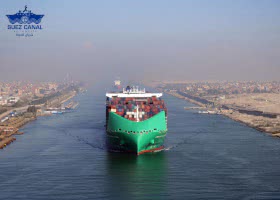
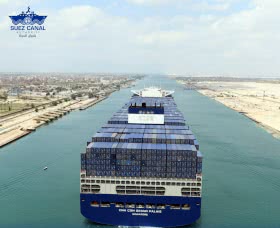
Se prevé un aumento en las tarifas para los barcos que transitan por el Canal de Suez.
Ismailia
Se aplicarán a partir del 15 de julio. Se excluyen los buques de pasajeros.
La Autoridad del Canal de Suez ha anunciado que introducirá recargos en las tarifas de tránsito a través del canal egipcio para la mayoría de los buques de carga importantes, a partir del 15 de julio.
El Consejo de la UE acepta muchas de las solicitudes presentadas por las asociaciones del clúster marítimo-portuario europeo.
Luxemburgo
Sin embargo, necesariamente, el texto pospone la adopción de medidas concretas a futuras iniciativas legislativas.
La ESPO pide un uso proactivo del sistema EES para evitar la congestión en los puertos europeos.
Bruselas
Ryckbost: Flexibilidad activada con prontitud en circunstancias excepcionales pero previsibles.
Rixi: Es necesario superar un sistema de comercio de derechos de emisión marítimo que corre el riesgo de desviar el tráfico y las inversiones hacia puertos no europeos.
Luxemburgo
Lo que se necesita —subraya el viceministro— son incentivos y flexibilidad, no nuevas restricciones.
Los hutíes amenazan con reanudar los ataques contra los barcos que transitan por el Mar Rojo.
Sana'a
Se ha declarado la prohibición total de navegación para todos los buques vinculados a intereses israelíes.
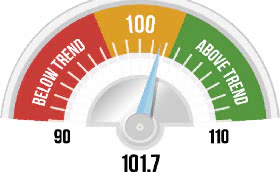
El comercio mundial de mercancías podría empezar a ralentizarse.
Ginebra
Así lo indica la última lectura del Barómetro del Comercio de Mercancías de la OMC.
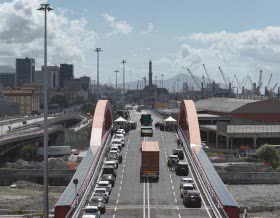
En Génova, se ha puesto en funcionamiento la nueva conexión por carretera del puerto con Sampierdarena.
Génova
Paroli: Las obras permiten ahora que entre 900 y 1000 vehículos pesados al día accedan directamente a las zonas operativas del puerto.
Los ponentes del proyecto de ley de puertos defienden el proyecto de gobernanza centrado en los puertos de Italia.
Roma
Ghio (PD) denuncia que los órganos rectores de esta nueva empresa serían designados íntegramente por el gobierno. Ghirra (AVS): Los objetivos de coordinación nacional podrían haberse logrado fortaleciendo la Conferencia Nacional de Presidentes de Autoridades Portuarias.
Las empresas logísticas estadounidenses WWEX Group y Auctane anuncian su fusión.
Caída inesperada del tráfico intermodal europeo en el primer trimestre de 2026.
Bruselas
UIRR: Caos en la infraestructura provocado por obras de construcción que interrumpen las líneas ferroviarias
Hanseatic Global Terminals adquiere el 50% restante de Hanseatic Global Terminals Aracruz.
Róterdam/Aracruz
La empresa está construyendo el nuevo puerto de contenedores brasileño de Imetame.
Conftrasporto: El proyecto de ley de puertos pone de manifiesto claros problemas operativos, financieros y de cumplimiento normativo.
Roma
Russo: las competencias de Puertos de Italia se superpondrían con las de las Autoridades del Sistema Portuario, el Ministerio de Transportes y el Art.
WoodMac cree que las normas de descarbonización podrían tener un impacto importante en los buques propulsados por GNL.
Edimburgo
Según la empresa, las regulaciones europeas dejarían fuera del mercado a los barcos con motores DFDE.
La flota francesa MN transportará el lanzador Vega C de Avio entre Italia y Sudamérica.
Nantes
La empresa francesa se equipará con un nuevo buque diseñado específicamente para el transporte de equipos espaciales.
Entra en vigor la metodología de la UE para calcular las emisiones de gases de efecto invernadero procedentes de los servicios de transporte.
Bruselas
El sistema se basa en la norma internacional EN ISO 14083:2023.
El buque portacontenedores MSC Sariska V fue alcanzado por dos proyectiles en el Golfo Pérsico el lunes.
Ginebra/Roma
Todos los miembros de la tripulación resultaron ilesos.
En el primer trimestre, el tráfico de mercancías en el puerto de Bremen/Bremerhaven creció un +5,8%.
Bremen
Los contenedores ascendieron a 1.245.515 TEU (+4,4%).
MSC adquiere una participación del 51% en la terminal de contenedores de Pivdennyi (Odesa).
Odesa
Tiene una capacidad de tráfico de 400 mil TEU al año.
El Convenio de la OMI sobre responsabilidad civil e indemnización por daños relacionados con el transporte marítimo de sustancias peligrosas y nocivas entrará en vigor el 19 de noviembre de 2027.
Londres
Domínguez: un logro largamente esperado que llena un vacío importante en el régimen internacional.
En abril, el tránsito de buques por el Canal de Suez aumentó un 13,9%.
El Cairo
En los primeros cuatro meses de 2026 se registró un aumento del +12,1%.
En el primer trimestre, el tráfico de mercancías en el puerto de Nápoles cayó un -5,3%, mientras que en Salerno creció un +6,4%.
Nápoles
El volumen de contenedores que se tramitaron en los dos puertos fue de 167.433 TEU (-3,5 %) y 101.509 TEU (+7,8 %) respectivamente.
Kerdjoudj (Feport): Con la revisión del RCDE UE, parte de los ingresos deberían destinarse a los puertos.
Bruselas
Llamar para evaluar cuidadosamente el riesgo de reubicar el tráfico de transbordo.
Con la nueva terminal COSCO-PTP, el puerto de Tarragona se relanza en el mercado de los contenedores.
Tarragona
Se prevé que las obras de construcción finalicen en 2028, momento en el que la terminal tendrá una capacidad de 680.000 TEU.
En 2025, los puertos egipcios establecieron un nuevo récord histórico de movimiento de contenedores.
Alejandría, Egipto
Fuerte crecimiento en los volúmenes de transbordo, que se habían mantenido estables en 2024.
Se ha renovado el contrato nacional para el amarre en puerto y los servicios de los barqueros.
Roma
Filt-Cgil refuerza un marco regulatorio esencial para el sector.
Un estudio explica cómo hacer que el uso de las instalaciones OPS en los puertos europeos sea más atractivo y eficaz.
Bruselas
También se necesitan tarifas más claras y comparables.
Federlogistica solicita enmiendas al proyecto de ley de gobernanza portuaria.
Génova
Falteri: la nueva estructura debe garantizar a la Autoridad del Sistema Portuario recursos financieros adecuados e instrumentos operativos eficaces.
La ESPO solicita modificaciones al RCDE UE para garantizar la competitividad de los puertos europeos.
Bruselas
También se destacó el impacto negativo en el transporte marítimo de corta distancia.
Nuevas medidas adoptadas en Suiza para reforzar la competitividad de la bandera marítima.
Berna
Un armador suizo podrá enarbolar la bandera suiza aunque la empresa propietaria tenga su sede en el extranjero.
Han concluido las pruebas marítimas del segundo crucero construido en China.
Llevar a la fuerza
El Adora Flora City realizará su viaje inaugural partiendo del puerto de Guangzhou el 22 de noviembre.
En el primer trimestre de 2026, el valor del tráfico de mercancías del G20 registró un crecimiento trimestral del +5,3%.
París
Mitigación del aumento del tráfico de mercancías en el puerto de Tánger Med
Tánger
En los tres primeros meses de 2026 se manipularon 38,8 millones de toneladas (+3,2%).
El tráfico de mercancías en los puertos marítimos chinos creció un 2,6% en abril.
Pekín
Las importaciones y exportaciones aumentaron un 0,6%. El total de contenedores ascendió a 26,9 millones (+4,8%).
Fermerci solicita al gobierno medidas urgentes para apoyar el transporte ferroviario de mercancías.
Roma
Las compañías ferroviarias se ven perjudicadas por las interrupciones en la infraestructura.
Puerto de Nápoles, primera operación de suministro de GNL de barco a barco en un crucero.
Nápoles
Axpo utilizó la barcaza de carga "Green Zeebrugge"
CMA CGM cerró el primer trimestre de 2026 con una ganancia neta de 250 millones de dólares (-78%).
Marsella
Los ingresos se mantienen estables, y la logística y otras actividades compensan la disminución de los envíos.
El Tribunal Supremo de Estados Unidos ha reabierto el caso entre Havana Docks y Carnival, Royal Caribbean, NCLH y MSC.
Se adopta un nuevo Código Internacional de Seguridad para Buques de Superficie Autónomos.
Londres
Entrará en vigor el 1 de julio y se aplicará de forma voluntaria durante al menos dos años.
UIRR: Los envíos combinados de transporte por carretera y ferrocarril aumentarán un 1,5 % en 2025.
Bruselas
La asociación puso de relieve los efectos desastrosos en el sector de la construcción ferroviaria en Alemania.
Fincantieri y Teijin Automotive Technologies firman un acuerdo para desarrollar mamparos de material compuesto para aplicaciones navales.
Trieste/Pouancé
Folgiero: Hacemos posible el desarrollo de unidades más ligeras y eficientes.
Tras ocho trimestres consecutivos de beneficios, ZIM registra pérdidas operativas.
Haifa
En los tres primeros meses de 2026, los volúmenes de carga transportados por barco también cayeron drásticamente (-8,3%).
Estados Unidos ha imputado a cuatro fabricantes chinos de contenedores y a siete de sus ejecutivos.
Washington
El 14 de abril se hizo pública la detención del director de marketing de Singamas en Francia.
El Parlamento Europeo y el Consejo alcanzan un acuerdo sobre el pacto arancelario entre la Unión Europea y los Estados Unidos.
Estrasburgo/Bruselas
Se han introducido una cláusula de vencimiento y una cláusula de suspensión.
FFS Cargo Switzerland está reorganizando su red de transporte de mercancías en vagones individuales.
Berna
Se espera una reducción de 50 de los 280 patios de clasificación actuales.
La OMI informa de un aumento del 17 % en los incidentes de piratería marítima en 2025.
Londres
La zona más afectada fue el estrecho de Malaca y Singapur, con 122 incidentes (+34%).
Hapag-Lloyd y CMA CGM han suspendido las reservas de envíos marítimos a Cuba.
París/Fráncfort/La Habana
Decisión tras la ampliación de las sanciones estadounidenses por parte de Trump
La licitación internacional para la nueva terminal de contenedores en el puerto de Klaipeda se celebrará a finales de año.
Klaipeda
Tendrá una capacidad de tráfico anual de 2,5 millones de TEU.
La ITF insta a los gobiernos a desmantelar de una vez por todas el sistema de banderas de conveniencia.
Londres
Es —denuncia el sindicato— la manzana podrida en el centro de la explotación de los marineros.
Los ingresos de Evergreen disminuyeron un 21,3% en el primer trimestre.
Taipéi
El beneficio operativo y el beneficio económico neto cayeron un -69,5% y un -68,8%, respectivamente.
Viking Holdings cerró el primer trimestre con una pérdida neta de -54,2 millones de dólares.
Los Ángeles
Los ingresos aumentaron un 17,5%.
En los tres primeros meses de 2026, el tráfico de contenedores en las terminales portuarias de Eurokai creció un +8,9%.
Bremen
Incrementos del 12,7% en Alemania y del 7,8% en Italia. Un descenso en el puerto de Tánger Med.
Norovirus en el crucero Ambition de Ambassador Cruise Line.
Purfleet/Vlissingen
Las autoridades sanitarias francesas han autorizado a la unidad a continuar con sus operaciones normales.
En los tres primeros meses de 2026, el tráfico de mercancías en el puerto de Hamburgo disminuyó un -2,0%.
Hamburgo
Los contenedores ascendieron a dos millones de TEU (-1,6%).
Los resultados financieros trimestrales de Yang Ming y WHL continúan deteriorándose.
Keelung/Taipéi
En los tres primeros meses de este año, los ingresos disminuyeron un -15,1% y un -9,3% respectivamente.
Hapag-Lloyd cerró el primer trimestre con una pérdida operativa de -218,6 millones de euros.
Hamburgo
Los ingresos disminuyeron un 16,8%.
En los tres primeros meses de 2026, los ingresos de HMM disminuyeron un -4,8%.
Seúl
El segmento de contenedores experimentó un descenso del 7,9%, mientras que el segmento de carga a granel registró un crecimiento del 20,1%.
Las terminales de cruceros de Global Ports Holding registraron un tráfico récord en el primer trimestre de este año.
Estanbul
Cinco millones de pasajeros casi llegaron
En los tres primeros meses de 2026, el tráfico de mercancías en los puertos de Génova y Savona-Vado cayó un -3,8%.
Génova
En marzo, se registró un descenso del -6,1%, con una fuerte contracción del -15,0% en las cargas en contenedores.
Federconsumatori insta al gobierno a tomar medidas para mitigar el impacto del aumento de los precios de los billetes de ferry.
Roma
Los aumentos de precios se sitúan en el +18% durante las semanas centrales de agosto.
En el primer trimestre de este año, el tráfico de mercancías en los puertos croatas creció un 14,6%.
Zagreb
Récord mensual en marzo
Prueba exitosa de combustible diésel HVO para la propulsión de cruceros.
San Donato Milanés
Experimento realizado conjuntamente por Eni y MSC Cruises.
Gioia Tauro ocupa el segundo lugar en la clasificación de los principales puertos italianos, superando a Génova.
Roma
Fincantieri registra un descenso en los ingresos y en los nuevos pedidos.
Roma
La cartera de pedidos del grupo alcanzó un valor récord de 74.200 millones de euros.
En los tres primeros meses de 2026, el tráfico marítimo en el Canal de Suez aumentó un +11,5%.
El Cairo
Solo en marzo, el crecimiento fue del +11,2%.
En los tres primeros meses de 2026, el tráfico de mercancías en los puertos tunecinos creció un +5,9%.
La Goulette
El número de pasajeros de ferry (+7,6%) y de cruceros (+54,2%) está aumentando.
Le Aziende informano
International Shipping Community to Gather in Genoa for Two Days of Maritime Dialogue and Networking
Iniciativa del gobierno estadounidense para introducir la energía nuclear en el transporte marítimo a gran escala.
Washington
Se solicitan propuestas para el desarrollo de un modelo de minirreactor.
El gobierno de Estados Unidos ha puesto en marcha una iniciativa para...
Con la última versión del proyecto de ley sobre puertos, la tarea de encontrar recursos para los Puertos de Italia se traslada a los AdSPs.
Roma
Así lo afirmó la vicepresidenta del grupo del Partido Demócrata en la Cámara, Valentina Ghio.
Carnival Corporation traslada su sede de Panamá a Bermudas.
Miami
Abandono de la empresa con doble cotización y creación de Carnival Corporation Ltd.
El Hondius llegará el domingo frente al puerto de Granadilla (Tenerife).
Vlissingen/Santa Cruz de Tenerife/Londres
Los pasajeros serán trasladados por mar al aeropuerto para su regreso a casa.
Nuevo récord trimestral de tráfico marítimo en los estrechos de Malaca y Singapur.
Puerto Klang
Los tránsitos de todos los principales tipos de buques están aumentando.
La propuesta normativa sobre gobernanza portuaria aprobada por el Quirinale reduce el tamaño de los Puertos de Italia.
Roma
Audiencias informales de representantes sindicales sobre la reforma de la gobernanza portuaria.
Roma
En el centro de los problemas críticos destacados —confirma Filt-Cgil— se encuentra la construcción prevista del Porti d'Italia Spa.
Venecia, el DPSS confirma la necesidad de construir nuevas terminales marítimas fuera de la laguna.
Venecia
El documento de programación del sistema estratégico ha sido aprobado por el Comité de Gestión de AdSP.
El Grupo Spinelli se ha unido a la Asociación Italiana de Operadores de Terminales Portuarias.
Génova
La empresa y Assiterminal expresaron su satisfacción por la reanudación de una importante colaboración.
En los tres primeros meses de 2026, el tráfico de mercancías en los puertos del Reino Unido cayó un -2,6%.
Londres
Disminución más significativa (-6,8%) en la ocupación de los embarques.
Mark Hindley es el nuevo presidente de la Asociación Europea de Logística de Vehículos a Motor.
Estanbul
Wolfgang Göbel fue elegido presidente honorario.
En el puerto de Génova, un remolcador fue detenido por irregularidades en las emisiones de óxido de nitrógeno.
Génova
La embarcación se utiliza para las obras de construcción del nuevo rompeolas.
En abril, el tráfico de mercancías en el puerto de Ravenna creció un 21,4%.
Rávena
Se espera un aumento del +2,5% en mayo.
Sallaum Lines lanzará un servicio exclusivo entre China y Europa en 2027.
Nanjing
Se han recibido dos nuevos centros de formación profesional de 7.400 créditos de formación continua (CEU PCTC)
El 12 de junio en Nápoles, una iniciativa de Filt Cgil sobre gobernanza en el sector portuario.
Roma
Un dron naval encontrado en el puerto rumano de Constanza
Bucarest
El dispositivo se autodestruyó sin causar víctimas.
HJSC recibe la aprobación preliminar para la construcción de un buque portacontenedores de biocombustible con capacidad para 10.000 TEU.
Atenas
Fue dado de baja del Registro Naval Coreano.
Global Ship Lease invierte 917 millones de dólares en la compra de diez nuevos buques portacontenedores.
Atenas
Se entregarán entre el cuarto trimestre de 2028 y el primer trimestre de 2030.
PROXIMAS SALIDAS
Visual Sailing List
Salida
Destinación:
- orden alfabético
- nación
- aréa geogràfica
Acuerdo entre WASS (Fincantieri) y Magellan sobre la defensa submarina de Canadá.
Trieste
Se explorarán las oportunidades de cooperación industrial en el ámbito de los torpedos pesados y las contramedidas.
Soluciones para superar la escasez crónica de personal en el sector marítimo italiano.
Procida
Pagano (Comité de Trabajo Marítimo): Digitalización, simplificación y cooperación entre formación y empresas para superar la crisis.
Acuerdo de formación marítima firmado por Gente di Mare (Cosulich) y Carnival
Génova
Di Tizio: Esta colaboración nos permite traer un proyecto internacional al territorio.
Antipollution (V.Group) encarga cuatro buques ecológicos a ONEX Shipyards & Technologies.
Atenas
Opción para cuatro unidades adicionales
Spinelli ha encargado tres nuevos vehículos de manipulación a FTMH.
Génova
Una carretilla elevadora para contenedores vacíos ya ha entrado en funcionamiento en el depósito del grupo en Livorno.
Luigi Merlo dirigirá la compañía de terminales de cruceros italianas de MSC Cruceros.
Ginebra
Centrone (anteriormente Fincantieri) asume el cargo de Director de Políticas Marítimas y Asuntos Gubernamentales del grupo en Italia.
Los astilleros griegos Skaramangas y la empresa surcoreana HD Hyundai firman un acuerdo de cooperación.
Atenas
El objetivo es colaborar en la construcción de buques militares de superficie.
AD Ports compra el Corredor Logística e Infraestrutura brasileño
São Paulo/Abu Dabi
La empresa gestiona el mayor volumen de exportaciones de productos agroalimentarios a granel en la nación sudamericana.
Se ha aprobado el Plan Operativo Trienal 2026-2028 de la Autoridad Portuaria del Norte del Tirreno.
Livorno
Aprobación unánime del Comité de Dirección
Chen Lichtenstein ha sido nombrado presidente y director ejecutivo de ZIM.
Haifa
Sustituirá a Eli Glickman, que ha dimitido.
Gianluca Croce ha sido confirmado como presidente de Assagenti Genova.
Génova
Los miembros de la junta directiva de la asociación para el período de dos años 2026-2028.
El ferry Mega Serena se ha unido a la flota de Corsica Sardinia Ferries.
Vado Ligure
Tiene capacidad para hasta 2.000 pasajeros y más de 600 vehículos.
El primer corte de acero del crucero Crystal Grace tuvo lugar en Marghera.
Miami
Fincantieri entregará el buque en la primavera de 2028.
Palumbo Superyacht cedió 13.048 metros cuadrados de espacio de amarre al Puerto de Ortona.
Ancona
Autoridad Portuaria del Adriático Central, directrices para la emisión de la autorización ZES única
Puerto de Livorno: Se inauguran dos nuevos almacenes de FHP MarterNeri.
Livorno
Inversión superior a 23 millones de euros
El Comité de la Autoridad Portuaria del Mar Tirreno Septentrional Central ha decidido levantar el estado de crisis de la institución.
Civitavecchia
Nueva solución para el transporte excepcional en trenes intermodales de FS Logistix y Van der Vlist.
Verona
Dos plataformas aéreas transportadas desde Verona a Rostock.
Incendio a bordo del ferry GNV Phoenix en el puerto de Nápoles.
Nápoles
Se desató un incendio en las zonas internas de la cubierta 6 del barco.
Latrofa ha elegido a una persona de confianza para dirigir una empresa interna dentro de la Autoridad Portuaria de Lazio.
Civitavecchia
El nuevo director único —subrayó— ha recibido directrices de gestión especialmente estrictas.
En los tres primeros meses de 2026, los ingresos de MPC Container Ships disminuyeron un -6,4%.
Oslo
Ingresos netos trimestrales de 40,8 millones de dólares (-31,8%)
Se ha aprobado el Plan Operativo Trienal 2026-2028 de la Autoridad Portuaria de Cerdeña.
Olbia
Luz verde del Comité de Dirección
Se ha completado el proceso de evaluación ambiental del proyecto del puerto exterior de San Antonio.
San Antonio
El crucero Viking Mira fue entregado en el astillero Fincantieri en Ancona.
Ancona/Los Ángeles
Tiene un tonelaje bruto de 54.300 toneladas y una capacidad para 998 pasajeros.
En 2025, RINA registró ingresos superiores a los mil millones de euros (+11%).
Génova
Beneficio neto aumentó un 30%.
Se ha instalado el nuevo puente ferroviario en el puerto de Marina di Carrara.
Marina di Carrara
Pisano: Un punto de inflexión en la organización logística del puerto.
Puertos, terminales de carga y corredores. Venecia y el Alto Adriático como puerta de entrada a Oriente.
Venecia
Este es el tema del evento que se celebrará el jueves en Venecia.
La Flota Estatal de Estonia encarga un ferry eléctrico al astillero polaco Crist.
Tallin
Contrato por valor de 49,93 millones de euros.
En abril, los puertos españoles gestionaron 1,7 millones de contenedores (+1,7%).
Madrid
El número de pasajeros de cruceros disminuyó un -18,4%.
El tráfico de contenedores en el puerto de Valencia disminuyó un 2,5% en abril.
Valencia
En los primeros cuatro meses de 2026, se gestionaron casi 1,8 millones de TEU (+0,2%).
Global Ship Lease vuelve a registrar ingresos trimestrales récord.
Atenas
El beneficio neto disminuyó un 24,0%.
Cooperación internacional entre la Autoridad Portuaria de Cerdeña y el Puerto de Tánger Ville para la navegación de lujo.
Cagliari
Promoción de un circuito náutico integrado entre Cerdeña y Marruecos.
Se ha inaugurado el nuevo centro médico de primeros auxilios en el puerto de Gioia Tauro.
Gioia Tauro
Entre las instalaciones, una clínica de primeros auxilios y una ambulancia de reanimación cardiopulmonar.
BPER proporciona financiación a Grimaldi Euromed para la modernización de su flota.
Milán/Nápoles
Recursos utilizados para cubrir parcialmente la compra del buque "Grande Manila".
ASRY y Priya Blue inauguran un astillero de desguace de buques en Bahréin.
Al Muharraq/Alang
El primer barco destinado al desguace ha llegado a la nación de Oriente Medio.
SAAM Towage encarga cinco nuevos remolcadores al astillero turco Sanmar Shipyard.
Santiago
Tendrán una capacidad de tracción de entre 70 y 80 toneladas.
El tráfico de contenedores en el puerto de Long Beach disminuyó un 5,7% el mes pasado.
Long Beach/Singapur/Hong Kong
En Singapur se registró un crecimiento del +3,6%, mientras que en Hong Kong los contenedores disminuyeron un -6,3%.
Carta (Fermerci): Se necesitan políticas urgentes para apoyar a las compañías ferroviarias.
Roma
En 2025, el transporte ferroviario de mercancías perdió aproximadamente un 3,5%, en términos de trenes/km.
Fratelli Neri encarga dos remolcadores nuevos en Egipto.
Ismailia
Contrato con la Compañía del Canal de Suez para la adquisición de embarcaciones modernas.
El tráfico de contenedores en el puerto de Barcelona creció un 17,4% en abril.
Barcelona/Algeciras
El puerto de Algeciras aumenta un 6,3%.
El gobierno de Islamabad ha aprobado la venta del 30% de las acciones de la Corporación Nacional de Transporte Marítimo de Pakistán.
Islamabad
La participación irá a parar a la empresa estatal de logística NLC, que también asumirá el control de gestión de PNSC.
En 2025, el sistema portuario español registró ingresos récord.
Madrid
El beneficio antes de impuestos fue de 349 millones de euros (+4,2%).
Leapmotor International refuerza su alianza con el grupo naviero napolitano Grimaldi.
Hoofddorp
En el primer trimestre, se transportaron aproximadamente 20.000 unidades desde China al mercado italiano.
El tráfico de cruceros en los puertos alemanes alcanzó un nuevo récord el año pasado.
Wiesbaden
Con 1,51 millones de pasajeros, el crecimiento fue del +4,1%.
La Federazione del Mare se suma a las celebraciones del Día Internacional de la Mujer en el Sector Marítimo 2026.
Roma
Mattioli: La economía marítima está perdiendo oportunidades y potencial.
Tras años de crecimiento sostenido, el transporte marítimo de corta distancia en España ha entrado en una fase de desaceleración estructural.
Madrid
Así lo revela el último informe del Observatorio Estadístico del Transporte Marítimo de Corta Distancia.
AD Ports comprará la empresa alemana de transporte de mercancías MBS Logistics.
Colonia
La empresa cuenta con más de 450 empleados y 26 oficinas en todo el mundo.
El Grupo Spinelli se ha unido a la Asociación de Logística Intermodal Sostenible.
Génova/Roma
Resumen: ALIS puede ofrecer a nuestro ecosistema un valor añadido estratégico.
Inversión de 200 millones de dólares para construir y equipar la nueva terminal multipropósito en Pointe-Noire.
Brazzaville/Abu Dabi
Encargué tres grúas de barco a tierra a ZPMC.
Evergreen confirma la compra de cinco nuevos buques portacontenedores con capacidad para 24.000 TEU.
Taipéi
Serán construidos por el astillero chino Guangzhou Shipyard International.
Corea lanzará en los próximos meses un servicio de transporte marítimo de contenedores entre Asia y Europa a través de la ruta ártica.
Busan
La licitación concluyó con la selección preliminar de la empresa PanStar.
El sindicato marítimo ha vuelto a dar la voz de alarma sobre el destino de los antiguos buques de ILVA.
Verona
Su posible demolición pone en riesgo 240 puestos de trabajo marítimos.
En el período de enero a marzo, el tráfico de mercancías en el puerto de Koper disminuyó un -3,9%.
Liubliana
En el sector de contenedores se manipularon 2,4 millones de toneladas (-1,7%).
Última oportunidad para reconocer algunos trabajos portuarios como extenuantes y establecer un fondo de pensiones.
Génova
Siemens adquirirá el negocio italiano de MERMEC.
Monje
La transacción incluirá la planta de producción de material rodante de Ferrosud en Matera.
Crecimiento del tráfico intermodal en el puerto intermodal de Nola.
Nola/Milán
Análisis económico y financiero del Centro de Investigación Fedespedi sobre empresas gestoras de terminales de carga.
Disminución trimestral del volumen de mercancías gestionadas por los puertos de Montenegro.
Podgorica
El aumento del volumen de carga con origen o destino en los puertos italianos continúa, aunque a un ritmo más lento.
Assarmatori denuncia la exclusión del transporte marítimo del Decreto-Ley II sobre Combustibles.
Roma
Messina: No se puede esperar que el sector absorba por sí solo el impacto del aumento de los precios del combustible.
HHLA registra una disminución del -5,3% en los contenedores gestionados en el primer trimestre.
Hamburgo
Eijsink: Un invierno inusualmente duro ha limitado significativamente nuestras operaciones diarias.
MSC Technology Italy pone en marcha un plan para contratar a 200 personas nuevas.
Turín/Ginebra
MSC Cruceros debuta en el mercado de Alaska.
La región de Las Marcas ha aprobado el nombramiento de Carloni como presidente de la Autoridad Portuaria del Adriático Central.
Ancona
A la espera de la opinión del Consejo Regional de Abruzzo.
Los ingresos trimestrales de la empresa griega Danaos Corporation se mantienen estables.
Atenas
Dos buques de la compañía siguen bloqueados en el Golfo Pérsico.
El tráfico de contenedores en el puerto de Los Ángeles aumentó un 5,7% en abril.
Los Ángeles/Puerto Newark
En los primeros tres meses de 2026, el Puerto de Nueva York gestionó casi 2,2 millones de TEU (-1,2%).
Cognolato fue confirmado como presidente de Assiterminal.
Roma
También fueron elegidos el nuevo comité de presidencia y la junta directiva.
En el primer trimestre de 2026, el tráfico de mercancías en el puerto de Ravenna aumentó un +0,8%.
Rávena
El crecimiento fue impulsado por la entrada en funcionamiento de la planta de regasificación.
PUERTOS
Puertos italianos:
Ancona Génova Rávena
Augusta Gioia Tauro Salerno
Bari La Spezia Savona
Brindisi Liorna Taranto
Cagliari Nápoli Trapani
Carrara Palermo Trieste
Civitavecchia Piombino Venecia
Interpuertos Italianos: lista Puertos del mundo: Mapa
BANCO DE DATOS
Armadores Reparadores navales y astilleros
Expedicionarios Abastecedores de bordo
Agencias marítimas Transportistas
MEETINGS
El 12 de junio en Nápoles, una iniciativa de Filt Cgil sobre gobernanza en el sector portuario.
Roma
Comparación del desarrollo logístico, industrial y de infraestructuras de los puertos.
Puertos, terminales de carga y corredores. Venecia y el Alto Adriático como puerta de entrada a Oriente.
Venecia
Este es el tema del evento que se celebrará el jueves en Venecia.
››› Archivo
RESEÑA DE LA PRENSA
World's first floating fusion reactor-powered vessel could become reality with new project
(Interesting Engineering)
Shipbuilding's Spring Illusion: Backbone Collapses
(The Chosun Daily)
››› Reseña de la Prensa Archivo
FORUM de lo shipping y
de la logística
Intervento del presidente Tomaso Cognolato
Roma, 19 giugno 2025
››› Archivo
MSC introduce escalas en Nápoles y Málaga en su servicio Dragon.
Ginebra
Se han cancelado las escalas en el puerto de Gioia Tauro.
La junta directiva del Fondo Marítimo Nacional ha sido renovada.
Génova
Permanecerá en el cargo durante tres años.
Contrato de red para el desarrollo conjunto de servicios intermodales en Emilia-Romaña
Bolonia
Fue firmado por Interporto Bologna, Dinazzano Po S, SAPIR y Rail Traction Company.
Messina (Assarmatori): La tecnocracia europea se muestra inflexible respecto al RCDE UE.
Bruselas
Subraya que es necesaria una mejora significativa de estas políticas.
Los resultados del primer trimestre de d'Amico International Shipping son positivos.
Luxemburgo
La empresa se benefició de los efectos de las tensiones geopolíticas.
Dos eventos de orientación en Livorno y Nápoles para presentar el curso de sobrecargo del ITS.
Génova
Reuniones programadas por la Academia Italiana de la Marina Mercante con el Grupo Grimaldi.
La sección de proa del Explora V fue botada en Palermo.
Ginebra
Fincantieri entregará el crucero a Explora Journeys en 2027.
El presidente de la Autoridad Portuaria del Adriático Oriental es el nuevo presidente de la Terminal de Pasajeros de Trieste.
Trieste
Sucede a Gianluca Madriz
Puerto de Olbia: Han comenzado los trabajos de restauración del lecho marino en el canal de acceso a Isola Bianca.
Cagliari
El objetivo es permitir de forma segura la entrada de grandes cruceros.
Damen renovará y operará el astillero de reparación de Dakar.
Dakar/Gorinkhem
Contrato de 20 años con la Société des Infrastructures de Réparation Navale
Savino Del Bene ha adquirido tres empresas del español Grupo Marítima Sureste
Florencia/Valencia
El acuerdo involucra a Marítima Sureste Shipping, Marítima Sureste España y Transportes Gaypemar
Fim-Cisl, la reunión con Fincantieri sobre las perspectivas del astillero Muggiano fue positiva.
La Spezia
Las inversiones anunciadas por la dirección, según señaló el sindicato, van en la dirección correcta.
El aumento de los costes energéticos lastra el último informe financiero trimestral de Finnlines.
Helsinki
Doepel: La implementación del RCDE UE aumenta aún más las cargas
Marabello es el nuevo secretario general de la Autoridad Portuaria del Estrecho de Messina.
Messina
La asignación dura cuatro años.
El buque de carga pesada HMM Namu fue encallado cerca del estrecho de Ormuz.
Seúl
El accidente no causó víctimas mortales.
El desempeño financiero trimestral de DFDS se deteriora.
Copenhague
La flota de vehículos está creciendo. El número de pasajeros ha disminuido un 18%.
Del 21 al 23 de mayo, Ravenna acogerá "Deportibus - El Festival de los Puertos que Conectan el Mundo".
Rávena
Kalmar registra un descenso trimestral en los nuevos pedidos.
Helsinki
En el período de enero a marzo, los ingresos aumentaron un +5%.
Las ofertas de empleo están aumentando en las empresas portuarias de Trieste y Monfalcone.
Trieste
Entrega de una placa de reconocimiento
En el primer trimestre de 2026, los ingresos de Costamare disminuyeron un -5,3%.
Monje
Se han confirmado los pedidos de 12 nuevos buques de 9.200 TEU y cuatro buques de 3.100 TEU.
ICTSI publica nuevos registros financieros y operativos trimestrales.
Manila
Los resultados se beneficiaron de la contribución de los nuevos terminales BACT y DGT.
MSC inaugurará un servicio entre el Mar Rojo y el norte de Europa a través del Canal de Suez.
Ginebra
Se planean conexiones de camiones y servicios de enlace con los puertos del Golfo Pérsico.
El primer lote de trabajos de planchado en frío se ha adjudicado al puerto de La Spezia.
La Spezia
La inversión total asciende a 41 millones de euros.
La facturación de Konecranes disminuyó un -7,7% en el primer trimestre de 2026.
Helsinki
El valor de los nuevos pedidos adquiridos en el período se mantuvo sin cambios.
Nueva disposición del ART sobre medidas reglamentarias para la adjudicación de servicios de cabotaje marítimo
Roma
Nuevos elementos en los procedimientos de condecoración por antigüedad
Nombramiento de los comisarios extraordinarios de la Autoridad Portuaria del Adriático Central y Sicilia Oriental
Roma
Salvini pide a los gobernadores de Marche y Abruzzo que lleguen a un acuerdo sobre Carloni, de la Liga Norte.
Confitarma celebra la aprobación del proyecto de ley para mejorar los recursos marinos.
Roma
Zanetti: un paso más en la dirección que la Confederación lleva tiempo señalando.
Se han aprobado los estados financieros de 2025 de las autoridades portuarias del Tirreno Septentrional y del Adriático Oriental.
Livorno/Trieste
Hoy fueron examinados por los Comités de Gestión.
- Via Raffaele Paolucci 17r/19r - 16129 Génova - ITALIA
tel.: +39.010.2462122, fax: +39.010.2516768, e-mail
Partita iva: 03532950106
Registrazione Stampa 33/96 Tribunale di Genova
Director: Bruno Bellio
Prohibida la reproducción, total o parcial, sin el explicito consentimento del editor
Búsqueda en inforMARE Presentación
Feed RSS Espacios publicitarios

inforMARE en Pdf
Móvil