testata inforMARE
Cerca
16 agosto 2026 - Anno XXX
Quotidiano indipendente di economia e politica dei trasporti
21:58 GMT+2
LinnkedInTwitterFacebook
FORUM dello Shipping
e della Logistica


The Shipbuilding market in 2002 (2)

Analysis by country
  Asia 

At the end of the year Japan boasts an orderbook of 25 million gt, its best performance since the oil shock of 1973. It may be recalled that in 1973 Japan recorded 33 million gt of new orders and that in 1974 the Japanese orderbook stood at 50 million gt, out of a world total of 120 million gt.

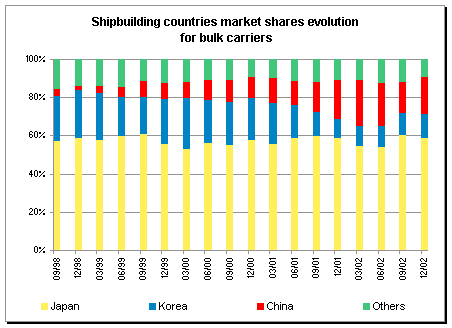
The level of orders contracted in 2002 surpasses 12 million gt according to the statistics of the Japanese Shipbuilders Exporters Association (JSEA). Japanese shipyards sign contracts for 201 bulk carriers, more than double last year's figure. Japan also manage to secure 9 out of the 16 orders for LNG carriers in 2002 whilst Korea succeeded in securing 20 out of 27 last year.

Its market share increases, going from 25 % to nearly 32 % of the world orderbook.

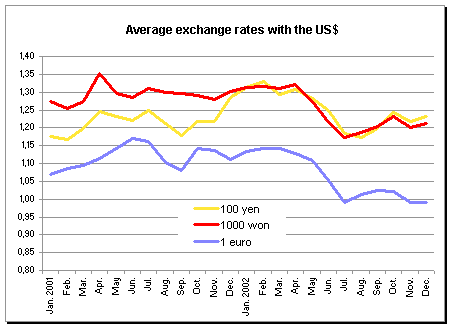
Once again, Japanese builders are able to take advantage of the weakness of the yen compared to the dollar. The Japanese currency goes over 135 yen/$ in January before appreciating to 115 yen/$ in July.
On October 1st 2002, NKK and Hitachi merge their shipbuilding activities by creating Universal Shipbuilding Corporation (USC) and initiate the way to the first major restructuring of shipbuilding in Japan. At a time when it is important to be large enough to benefit from economies of scale, USC becomes the second largest shipbuilder in Japan with Imabari, behind Mitsubishi Heavy Industries.

IHI and Sumitomo Heavy Industries formed IHI Marine United in October 2002.

Kawasaki Heavy Industries makes their shipbuilding an affiliated company, which could allow mergers with other shipyards in the near future.

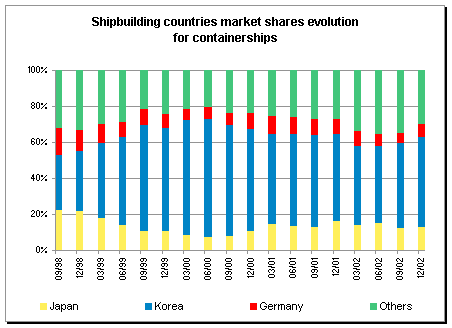
In 2002, Korea keeps its first place as world shipbuilder with 31 million gt. They announce to have exceeded $10 billion in exports in 2002, 33 years after having delivered their first contract, a fishing boat to a Taiwanese owner.

New orders reach 13.7 million gt this year against close to 11.5 million in 2001, despite a substantial drop in the first three quarters of the year when compared to the previous year. This performance was made possible thanks to the tripling of orders in the fourth quarter, according to the statistics given by the Korean Ministry of Commerce, Industry and Energy (MOCIE). Orders placed in November and December alone represent 44 % of the total demand for the year, according to the same source.

Korea reinforces its position in sectors, which it has recently targeted. 54 of the 94 shipbuilding contracts for product tankers (MR) made in 2002 were done in Korean yards, and likewise for 16 out of 18 Suezmaxes.
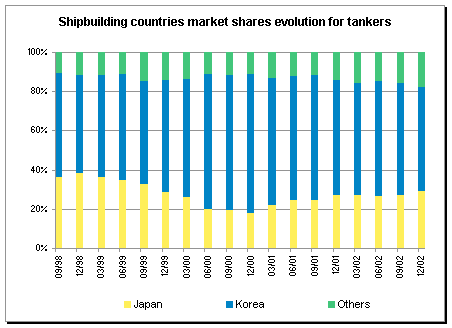
During the last quarter 2002, Korea was able to sign up for 21 containerships over 5,000 teu (41 out of an annual total of 51), of which the first ships having an official capacity of more than 8,000 teu.
On January 1st 2003, Samho Heavy Industries, ex Halla, changed its name to become Hyundai Samho, after having been taken over by Hyundai Heavy Industries in March 2002. This new entity now comprises three sites for shipbuilding: Hyundai Heavy Industries, Hyundai Mipo, and Hyundai Samho that consolidates its position as the world's largest shipbuilder.

The volume of new orders significantly progressed in 2002 by 22.9 %, despite a slow start to the year and the orderbook for Chinese yards increased from 7.4 million gt at the end 2001 to about 9.1 million gt one year later.
Expansion projects are nonetheless being pursued. To the 6 existing VLCC docks, the following should be added:

  • Dalian New Shipyard (DNS) : a new dock (total two)

  • Dalian Shipyard: one dock

  • Qingdao: four docks (two for newbuilding and two for repairs)

In comparison, Japan and Korea have respectively nine and twelve VLCC docks.

DNS and NACKS have each delivered their first VLCC this year, respectively to NITC and COSCO.

Hudong-Zhonghua signed an agreement for a transfer of technology with Chantiers de l'Atlantique and should be the shipyard finally chosen to build two LNG carriers (plus an optional three) of 147,200 cbm using the GTT membrane containment system, which will supply natural gas to the province of Guangdong. Other shipyards have shown interest in the building of these ships, such as DNS, NACKS and Jiangnan ' Waogaoqiao which should also take their share in this domestic market.

The Chinese orderbook increase clearly indicates their wish to rapidly achieve the 10 million tons mark, despite the revival of Japanese and South Korean competition, offering better delivery dates and benefiting from their excellent reputation.

The fixed parity of the yuan to the dollar could act as a handicap for Chinese shipyards, compared to their Japanese and Korean counterparts.

The rebirth of the China Shipbuilding shipyard, following a severe restructuring, has led to a return to profits. That yard could be privatised in 2003.
Due to a relatively light workload they were in a position to take orders for an important number of large containerships, Capesize and Panamax bulk carriers.

Europe

New orders are in sharp decline and market share of European shipyards is slowly being whittled down, going from over 11 % at the end of 2001 to 8.3 % at the end of 2002.

The striking point lays more in the decline in the orderbook of European shipyards than that of their market share. In practice, the former fluctuated within a range between 8 and 9 million tons right throughout the 90's. This year, it went from 8.5 million tons to 6.2 million tons.

This highlights the huge difficulties of European shipbuilders when confronted with a fall in prices. These same yards were able to notch up at the end of 2000 orders up to 3 years in circumstances much more favourable than in 2002. They then combined three advantages:

  • firmer levels of prices (a better economic climate and a stronger demand),

  • subsidies up to 9 % of the sales price,

  • a more favourable dollar/euro exchange rate in a market where ship's values are normally expressed in dollars.

Overall conditions are quite different today.
Demand for specialised ships, which comprises a large part of European production (cruise ships, ro-ros, ferries, chemical carriers, LNG carriers) has remained weak or has been displaced towards Far Eastern yards.

Thus, the major chemical tankers operators like Stolt-Nielsen or Jo Tankers who ordered series of ships built in Europe in the 90's, have turned towards Japanese shipyards. One should note however that European yards capable of building ships of this type are becoming more and more scarce. A large part of these orders for chemical carriers fitted with stainless steel tanks have been placed by Japanese owners, either on long-term employment with these European operators, or for domestic account. These chemical carriers have fewer tanks and segregations and generally speaking are less sophisticated than the ships ordered in the 90's, built by European yards. But the competition is so intense today that operators are obliged to reconsider their technical preferences.

Japanese shipyards have been pursuing for a number of years a path of standardising ships, better suited for the industrialisation and thus giving a better control over costs.


New orders are in sharp decline and market share of European shipyards is slowly being whittled down, going from over 11 % at the end of 2001 to 8.3 % at the end of 2002.

The striking point lays more in the decline in the orderbook of European shipyards than that of their market share. In practice, the former fluctuated within a range between 8 and 9 million tons right throughout the 90's. This year, it went from 8.5 million tons to 6.2 million tons.

This highlights the huge difficulties of European shipbuilders when confronted with a fall in prices. These same yards were able to notch up at the end of 2000 orders up to 3 years in circumstances much more favourable than in 2002. They then combined three advantages:

  • firmer levels of prices (a better economic climate and a stronger demand),

  • subsidies up to 9 % of the sales price,

  • a more favourable dollar/euro exchange rate in a market where ship's values are normally expressed in dollars.

Overall conditions are quite different today.
Demand for specialised ships, which comprises a large part of European production (cruise ships, ro-ros, ferries, chemical carriers, LNG carriers) has remained weak or has been displaced towards Far Eastern yards.

Thus, the major chemical tankers operators like Stolt-Nielsen or Jo Tankers who ordered series of ships built in Europe in the 90's, have turned towards Japanese shipyards. One should note however that European yards capable of building ships of this type are becoming more and more scarce. A large part of these orders for chemical carriers fitted with stainless steel tanks have been placed by Japanese owners, either on long-term employment with these European operators, or for domestic account. These chemical carriers have fewer tanks and segregations and generally speaking are less sophisticated than the ships ordered in the 90's, built by European yards. But the competition is so intense today that operators are obliged to reconsider their technical preferences.

Japanese shipyards have been pursuing for a number of years a path of standardising ships, better suited for the industrialisation and thus giving a better control over costs.

Cruise ship operators who made massive investments in 1999 and 2000 are waiting in the wings. Only three orders were placed in 2002 after only one in 2001.
European shipyards, with the exception of one, have not been able to get orders for LNG carriers despite a steady demand.

Several European shipyards have gone bankrupt or are in the process of going into liquidation : in Norway (Fosen ' Mjellem & Karlsen), in Germany (Flenderwerft ' SSW), in Italy (Fratelli Orlando), in Northern Ireland (Harland & Wolff), with continuation of their activities or not (Szczesin). Orskov (Denmark) announced that it will stop its newbuilding activities in the course of 2003. Others have announced partial unemployment or lays off to match their orderbooks.

The dispute between European shipyards and their Korean counterparts is still going on. The Brussels Commission has finally registered a complaint with the World Trade Organisation and has proposed to re-establish, as a temporary means of defence (awaiting the outcome of this action), subsidies for shipbuilding up to 6 % for a period of 18 months starting from October 1st 2002 for certain types of ships such as containerships, product tankers and chemical carriers.

The depreciation of the dollar against the euro of about 17 % unfortunately makes any such aid meaningless in a market largely dominated by dollar transactions.
European shipyards know today that they can only rely on themselves to survive. The strategies being adopted are various. More and more yards are trying to keep afloat by sub-contracting the construction of the hulls to East European countries or to Ukraine whilst remaining prime contractors and securing outfitting. Some shipyards like Aker, Damen, A.P. Moller have even invested in facilities in Romania, Ukraine or Lithuania. Other shipyards are counting on military orders (Izar, Fincantieri, HDW).
A further reduction in the production capacity in Europe is again foreseeable for this year.
  

The shipbuilding orderbook in France has gone from 670,000 tons end 2001 to 464,000 tons end 2002.

Chantiers de l'Atlantique had no orders for cruise ships in 2002, but got the order for the construction of a LNG carrier on account of Gaz de France. This is a first to the extent that the ship's propulsion is with a dual diesel gas-electric engine as opposed to all previous LNG carriers, which are equipped with steam-turbines. This method of propulsion offers two considerable advantages to the owner : important energy savings due to a much lower consumption and an increased cargo capacity for the same size of vessel.

Chantiers de l'Atlantique still enjoy a relatively healthy orderbook which runs through to 2004, with 5 cruise ships, a frigate for the Royal Moroccan Navy, and two LPD contracts for the DCN and the 74,000 cbm LNG carrier. In order to remain fully employed, new orders will however be necessary in 2003.

They delivered the following ships this year:

  • the 'Constellation', a cruise ship of 1,950 passengers to Celebrity Cruises,

  • the 'European Stars', a cruise ship of 1,506 passengers to Festival Cruises,

  • the 'Coral Princess', a cruise ship of 1,950 passengers for P&O Princess,

  • a frigate for the Royal Moroccan Navy.

Alstom Leroux Naval got an order to build a hydrographic vessel for Ifremer and a 56 m yacht for American account.

Chantiers Piriou have had orders for:

  • 2 fast intervention support vessels for Surf,

  • 1 versatile AHTS,

  • 1 port tug for Les Abeilles.

Only two years ago German yards had signed up for 46 containerships over 1,000 teu, totalling nearly 100,000 teu. In 2002 this figure was divided by three. The time when Aker-MTW and Kvaerner-Warnow were taking in orders for ships of 5,000 teu following the example of S.E. Asian yards seems now very distant.

Shipyards such as Flender Werft, SSW, Thyssen, Lindenau have registered hardly any significant orders. Meyer Werft had the two options of RCCL put back by 9 months, but nonetheless was able to get the order for a ferry for BAI and a passenger ship for the Indonesian government. Babcock Borsig sold its participation in HDW to Bank One Corporation. This shipyard is still deliberating about keeping its activity in merchant shipbuilding, given its predominance in the construction of diesel propelled submarines. In other matters, Thyssen-Bl'hm + Voss could acquire a 50 % participation in HDW in 2004.

The absence of new orders for ro-ros also had its effect. Deliveries of ferries by German yards are steadily declining. Six ships of over 15,000 gt were delivered in 2001, four in 2002, and two units should be delivered before 2004.

Smaller yards like J.J. Sietas or Peene Werft, specialised in building multipurpose cargo or heavylift ships are being hurt by Asian competition.

Fincantieri was able to sign up 2 of the 3 orders for cruise ships placed in 2002 and carries an orderbook for 11 cruise ships whose deliveries extend through to 2006.

Italian owners have now turned away from their domestic shipyards and the trend towards orders in Asian yards has been amplified. More than 30 product and chemical carriers were placed by Italian interests with Korean, Chinese, or Croatian shipyards during the course of the past two years.

Several shipyards are going through difficult times. Fratelli Orlando has gone bankrupt and is looking for a takeover bid. Mario Morini was sold to a group building yachts and could get out of building of merchant ships. Mariotti and Apuania have not taken in any new orders. Visentini continues to build ro-pax for the account of its own fleet operations.

The future is full of uncertainty for Italian shipyards too.

Spain

The majority of orders placed in 2002 with Spanish shipyards were for domestic account. It was principally for ro-ros. At the end of the year, IZAR was in negotiations with a Venezuelan owner for an order for three asphalt carriers of 27,000 dwt. IZAR has succeeded entering the dredging market by importing technology from Holland and Germany.

IZAR should deliver in 2003 the first of 5 LNG carriers ordered in 2000/2001 and hopes to carry on in this niche of the market despite very active Asian competition.

Finland

The two Finnish shipyards Aker Finnyards and Kvaerner Masa saw their mother companies merge in February 2002. Specialised in building ro-ros and cruise ships, these yards, after no orders in 2001, signed several contracts at the end of 2002.

Masa Yard won the order for a giant luxurious ferry of 75,000 gt for the Norwegian group Color Line. Aker Finnyards got the order for a cruise ship of 33,000 gt for Birka Line and a ferry sister to the 'Romantika' for Estonian account, 40,000 gt, both for delivery in 2004.

The last large Danish shipyard Odense Lindo continues its construction of giant containerships, of which the latest design should approach the 10,000 teu mark. These containerships are then managed by the shipping arm of the A.P. Moller group, also owner of the yard. This shipyard has not had any order for merchant ships this year and plans for reducing employees are being examined. Nonetheless there has been a diversification in the military shipbuilding following an order by the Danish Navy for two large multipurpose supply ships. The Orskov shipyard has announced that it will stop newbuildings in order to concentrate on ship repairs in 2003.

Holland is noted for producing small size ships (generally less than 10,000 dwt). The level of orders has however been less in 2002 and comprises multipurpose cargo ships, product and chemical tankers and dredgers. They are suffering from a fierce competition from Chinese shipyards who have plunged into this sector, abandoned by Korean yards chasing larger size ships, or the Japanese who are very reluctant to build specialised ships for the account of non'domestic owners. It is worth noting that the Bjilsma shipyard got an order for a 1,300 cbm LNG carrier to handle the distribution of natural gas on the Norwegian coastline.

  • Norway

The significant event in 2002 was the merger of the two old rivals Aker and Kvaerner giving rise to a group active in Norway, Finland, Germany, Romania, Brazil, and the U.S.. The new entity spreads over 12 sites in Europe and employs 13,500 people with a turnover of some 20 billion Norwegian kroners.

A long-standing specialist in the building of ships dedicated to the offshore oil industry, Norway has continued to register a satisfactory level of orders, even though in decline. Seventeen PSV or AHTS have been ordered in 2002. As a general rule, hulls for these units are built in Romania before being towed for outfitting in Norway. It is to be regretted that the Fosen shipyard, which built the cruise ship 'The World' for Residensea, has gone bankrupt.

  • Poland

As with their German counterparts, Polish shipyards suffered from a drastic reduction in containership orders. The Szczecinska shipyard, despite having a fairly substantial orderbook, had to declare bankruptcy since it could no longer meet its financial obligations. A re-capitalisation took place and activity continues under the name of Szczecinska Nowa. Some of the orders placed with the old shipyard have been cancelled, other renegotiated, as with the initial order for 8 stainless steel chemical carriers for account of Odfjell-Seachem, of which 6 at least have been reconfirmed. The other big Polish shipyard, Stocznia Gdynia, won an important order for car-carriers.

  • Croatia

The Croatian shipyards, which had managed to conclude an important volume of orders in 2001, could not offer any early delivery dates, because many existing options were exercised, and therefore did not sign this year as many contracts. Some product tankers orders were however placed for delivery in 2005. Croatia is also active in the car carriers sector.

  • Turkey

There has been some revamping within Turkish shipbuilding, which has become specialised in small product and chemical carriers (from 3,000 to 15,000 dwt). These shipyards have been able to sell an important number of units to European operators by way of direct orders, but also by way of resales of ships ordered by Turkish interests. Some 10 shipyards are currently active in this market.

United States

The American shipbuilding industry has maintained its position as number 8 in the world, with more than a million gt at the end of 2002. Who could have made such a prediction only several years ago ?

However as no contract for large size ships was concluded in 2002, and the American orderbook also reflects the time it takes to build two series of tankers of 140,000 and 185,000 dwt, which were ordered back in the period 1998-2001. The rest of American production is concentrated on small offshore units, which are built at a multitude of sites in great numbers.

Prospects

The 90's were characterised by a continuous growth in the worldwide orderbook encouraged by a continuous drop in newbuilding prices.

After the expansion of Korean production capacity in the middle of the 90's then that of China's currently, global shipbuilding capacity could expand at a rate in excess of ship demand in the years to come.

OECD estimates that today's surplus capacity is 15 % over demand and that it could reach 30 % by 2005, and they would like to see discussions which were abandoned in 1996 reactivated in an attempt to make the market healthier.

There is little chance that China will limit its ambitions and renounce at this stage what it considers its legitimate market share. Possibly in order to maintain 'reasonable' price levels, Korea and Japan will try not to transform their gain in productivity into supplementary production. But nothing can be taken for granted as the 90's showed.

It is therefore quite probable, given the chronic imbalance between supply and demand, that construction prices will continue to decline in the years to come, awaiting for the least efficient shipbuilders to give up and disappear. The world orderbook is being kept at record levels in 2002, but the gap between Europe and Asia has widened.

Despite a persistent drop in prices over time, rebounds are possible as we have seen in the years 1999-2000 or in 2002. There is a ray of hope therefore for shipbuilders.

This hope can be based on several objective criteria:

  1. Safer ships are necessary.

    The 'Prestige' catastrophe is still in all our minds and should provoke a renewed examination in our consciences on the risks of pollution linked to maritime transportation. It is true that the catastrophe of the 'Erika' led to a renewal of the fleet and a certain rise in prices, partly linked to a favourable economic climate.

    Regulation should be reinforced, thus contributing to new investments, initially for oil tankers but also for dry bulk carriers since for this type of vessel double-hulls should be required.

    A number of charterers are already imposing more drastic constraints that those being legislated. The combination of these measures should accelerate the need for renewals.

  2. New ship sizes and new technologies should be developed.

    The last ten years have seen the development of new sizes in bulk carriers and containerships.

    For instance the deadweight of Handysize bulk carriers has gradually gone from 35,000 to 55,000 dwt, the deadweight of Panamax from 52,000 to 75,000 dwt, and the deadweight of Capesize from 150,000 to 200,000 dwt. The capacity of containerships have also increased from 4,000 teu to over 8,000 teu.

    This trend is probably not finished.

    Needs in natural gas should favour orders of LNG carriers of very large sizes over and above the 147,000 cbm currently. Projects for LNG carriers of over 200,000 cbm are being studied. The adoption of dual diesel gas-electric propulsion on this type of ship should contribute to the replacement of the preceding generation equipped with steam turbines.

    Development of oil exports or of refined products from cold regions such as the Baltic, the Russian Arctic and Alaska could also provide future demand for ice-class tankers.

  3. Maritime transportation, remains the least polluting.

    Despite the catastrophes which are largely covered by medias and discredit the image of maritime transportation, this means of transport is the most economic in terms of energy consumption per ton transported and therefore the most ecological.

    It is also the solution to alternative transport being both the most economic and the easiest to put into place, in order to resolve the ever-increasing problem of congestion of the road network in Europe but also in other heavily industrialised zones.


Shipping and Shipbuilding Markets in 2002

I N D E X

›››Archivio
DALLA PRIMA PAGINA
Nel primo semestre del 2026 il traffico delle merci nel porto della Spezia è cresciuto del +2,0%
La Spezia
In decisa crescita il traffico delle merci nei porti tunisini
Nel trimestre aprile-giugno è stato di 7,4 milioni di tonnellate (+8,8%)
Il porto di Koper accusa una diminuzione del -5,6% del traffico trimestrale delle merci
Lubiana
A giugno la flessione è stata del -18,9%
La crisi dello Stretto di Hormuz ha un forte impatto sulle performance finanziarie e operative di DP World
Dubai
Nei primi sei mesi del 2026 il traffico dei container nei terminal di CK Hutchison è calato del -1%
Hong Kong
Con l'esclusione delle operazioni a Panama, i volumi sono aumentati del +5%
Nella prima metà del 2026 il traffico delle merci nel porto di Amburgo è calato del -3,1%
Amburgo
I container sono stati pari a quattro milioni di teu (-3,7%)
Nel secondo trimestre i ricavi della HMM sono aumentati del +29,7%
Seul
Utile netto in calo appesantito da minori proventi finanziari
Nel trimestre aprile-giugno l'utile netto di Evergreen ha registrato una crescita del +43,9%
Taipei
Maersk e Hapag-Lloyd beneficiano della ripresa del mercato del trasporto marittimo containerizzato
Copenaghen/Amburgo
La compagnia danese segna performance trimestrali migliori rispetto a quelle del partner tedesco della Gemini Cooperation
Stabile il traffico delle merci nei porti di Genova e di Savona-Vado nel secondo trimestre
Genova
Calo dei passeggeri in entrambi gli scali portuali
Nel secondo trimestre Yang Ming ha registrato un utile netto in crescita del +610,7%
Keelung
Stabili i ricavi nella prima metà del 2026
Attaccate due navi nel Golfo di Oman e al largo dello Yemen
Southampton
Una portacontainer sarebbe stata colpita da un elicottero americano
La Northern Sea Route non è affatto competitiva rispetto alla rotta marittima che attraversa Suez
Basilea
Studio di due ricercatori della Mokpo National Maritime University
Si attende l'asta del 28 agosto per una conferma dell'interesse di Rheinmetall-MSC per il cantiere romeno Mangalia
Bucarest
Nel secondo trimestre il traffico navale nel canale di Panama è cresciuto del +9,6%, ma si è ridotto notevolmente a giugno
Panamá/Balboa
L'ACP introduce nuove limitazioni al pescaggio delle navi e non esclude anche riduzioni del numero giornaliero dei transiti
In vigore il contratto con Fincantieri per la costruzione di una terza nave da crociera per Crystal
Monaco/Miami
La consegna è prevista nel 2034
Ancora esplosioni nell'area dello Stretto di Hormuz
Southampton/Teheran
Proseguono le trattative Iran-Oman, ma la riapertura ai transiti delle navi sembra ancora lontana
Le associazioni dello shipping ribadiscono il loro no a pedaggi e tariffe obbligatorie per il transito nello Stretto di Hormuz
Attaccate due navi nel Mar Rosso
Southampton/San'a'/Nuova Delhi
Affondata l'indiana “Faize Noore Oliya”, mentre gli Houthi rivendicano di aver colpito la “NCC Wafa”
Prologis avanza un'offerta da 18,8 miliardi di dollari per comprare la Segro
San Francisco
Dalla combinazione nascerà un colosso europeo nel settore della proprietà e gestione di immobili logistici
Nel trimestre aprile-giugno ONE registra un miglioramento delle performance finanziarie
Singapore
Nel periodo la flotta ha trasportato quasi 3,3 milioni di container (+2,9%)
Nel primo semestre di quest'anno i ricavi della Global Port Holdings sono cresciuti del +27%
Istanbul
Margine operativo lordo in aumento del +22%
Nel secondo trimestre il traffico navale nel canale di Suez è aumentato del +16,5%
Il Cairo
Nella prima metà del 2026 la crescita è stata del +14,0%
Nel secondo trimestre del 2026 lo Stretto del Bosforo è stato attraversato da 10.082 navi (+0,5%)
Ankara
Nella prima metà dell'anno il traffico navale è calato del -0,5%
Un rapporto dell'Assemblea nazionale francese prende atto del declino competitivo dell'ecosistema portuale statale
Parigi
Nella prima metà del 2026 il segmento del trasporto merci di FS ha registrato un calo del -2,7% dei ricavi operativi
Roma
I volumi di traffico sono stati pari a circa 8,8 miliardi di tonnellate-km (-7,3%)
L'Observatorio EU-ETS conferma che il sistema di scambio di quote di emissioni sta avendo un impatto negativo sui porti dell'UE
Madrid
I correttivi proposti sono l'ampliamento dei criteri per la designazione dei porti di trasbordo di container limitrofi e un fattore di riduzione percentuale applicato al volume di emissioni di CO2 delle navi
Nel secondo trimestre del 2026 i ricavi di Norwegian Cruise Line Holdings sono aumentati del +4,9%
Miami
Nuovo record storico dei passeggeri imbarcatisi sulle navi della flotta
Stabili i ricavi semestrali di Fincantieri
Trieste
Utile netto in crescita del +191,4%. Calo del -58,5% dei nuovi ordini
Nel secondo trimestre il traffico delle merci nei porti albanesi è cresciuto del +8,9%
Tirana
Il think tank statunitense Open Markets Institute propone l'istituzione di un vettore marittimo containerizzato pubblico
Washington
Rao: oggi gli Stati Uniti dipendono da un cartello di sei compagnie di navigazione straniere
Royal Caribbean registra ricavi record per il trimestre aprile-giugno
Miami
Nel primo semestre del 2026 nuovo picco storico del volume d'affari
Nel secondo trimestre i ricavi del gruppo CMA CGM sono aumentati del +19,2%
Marsiglia/New York/Los Angeles
Completata la creazione della joint venture United Ports con Stonepeak
PortXchange, per ridurre immediatamente le emissioni dello shipping è necessario concentrarsi sui porti
Rotterdam
Nel porto di Trieste crescono le rinfuse e diminuiscono le merci varie
Trieste
Nei primi sei mesi del 2026 a Monfalcone il traffico è crollato del 24,9%
Fermerci, quest'anno la produzione di trasporto dei treni merci in Italia potrebbe scendere ai livelli del 2015
Roma
Carta: siamo di fronte a un dato che supera ogni attesa
Il governo indiano delibera aiuti per 7,2 miliardi di dollari alla cantieristica navale nazionale
Nuova Delhi
Adottata oggi una strategia per rivitalizzare il settore
Inclusi due cantieri indiani nel nuovo elenco UE degli impianti di riciclaggio navale proposto dalla Commissione
Bruxelles/Washington
Soddisfazione di ECSA e World Shipping Council
Accordo HD Hyundai - Siemens per la costruzione navale basata sull'intelligenza artificiale
Washington
L'obiettivo è un sistema di produzione autonomo in cui tutti i processi, inclusi progettazione, produzione, logistica, ispezione e collaudo, siano connessi digitalmente
L'Unione Africana condanna gli attacchi alle navi cisterna nel Mar Rosso rivendicati dagli Houthi
Addis Abeba
Youssouf: la sicurezza delle rotte marittime nel Mar Rosso è di vitale importanza strategica per l'Africa
A Genova la Fincantieri ha consegnato la nuova nave da crociera Explora III alla Explora Journeys
Genova
Seguiranno “Explora IV” ed Explora V” nel 2027 ed “Explora VI” nel 2028
Nel secondo trimestre nel porto di Rotterdam sono cresciute le rinfuse e calate le merci varie
Rotterdam
Nella prima metà del 2026 movimentate 212,0 milioni di tonnellate di merci (+0,4%)
Nel secondo trimestre i porti spagnoli hanno movimentato 144,8 milioni di tonnellate di merci (+2,9%)
Madrid
Record delle merci convenzionali e dei container (in teu)
La Commissione UE avvia un'indagine approfondita sulla concentrazione Saipem-Subsea7
Bruxelles
Bruxelles ritiene particolarmente critici gli effetti dell'operazione in particolare nel mercato SURF
Medlog (gruppo MSC) entra nel capitale sociale di Interporto Bologna
Bologna
Caliandro: sviluppo industriale che ci consentirà di raggiungere i nostri obiettivi di traffico ferroviario merci
L'Autorità Portuale di Barcellona acquisirà il 40% di Terminal Intermodal de Navarra
Barcellona
Il restante 60% del capitale rimarrà alla Hutchison Ports Best
Nel primo semestre di quest'anno i porti marittimi cinesi hanno movimentato 5,87 miliardi di tonnellate di merci (+3,0%)
Pechino
Nuovi record storici di traffico semestrale e trimestrale dei container
Porti d'Italia, il nodo delle competenze divide la riforma
Roma
Al convegno di Confitarma Rixi difende la nuova cabina di regia nazionale, mentre esperti e operatori chiedono chiarezza sui rapporti con le AdSP e sulle risorse della nuova società
Revisione dell'EU ETS, il settore marittimo si spacca tra cauto favore e critiche
Bruxelles/Washington/
Copenaghen/Pireo/Rotterdam
Ennesimo attacco ad una nave nello Stretto di Hormuz
Southampton
Colpita una tanker che è stata abbandonata dall'equipaggio
ECSA ritiene la proposta di revisione dell'EU ETS un primo passo, a cui però dovrebbero seguirne molti altri
Bruxelles
Raptis: bene destinare gli introiti del sistema a livello UE e nazionale al sostegno ai combustibili sostenibili
ESPO, no all'abbassamento della soglia di applicazione dell'EU ETS dalle navi di 5.000 tsl a quelle di 400 tsl
Bruxelles
Apprezzamento per le misure volte a ridurre gli scali elusivi delle navi
T&E apprezza alcune nuove proposte di Bruxelles per l'EU ETS marittimo
Bruxelles
Più critica l'associazione per le misure studiate dalla Commissione UE per il settore aereo
Per Assarmatori la proposta della Commissione sull'EU ETS è timida, mentre erano attese misure più coraggiose
Bruxelles
EU ETS marittimo, la Commissione Europea accoglie in parte le istanze degli armatori
Bruxelles
Nuovo fondo da 110 milioni di quote per i carburanti puliti, deroghe non permanenti ma prorogate al 2035, meccanismo di deduzione IMO e stretta sui porti di trasbordo “elusivi”
Un'altra nave è stata colpita da un proiettile nello Stretto di Hormuz
Southampton/Tampa
Marines americani hanno effettuato un'ispezione a bordo di una petroliera sanzionata
Porto di Gioia Tauro, prima connessione di una grande portacontainer al sistema di cold ironing
Gioia Tauro
La nave “MSC Mirja” alimentata con una potenza complessiva di circa sette MW
Nel secondo trimestre del 2026 il traffico delle merci nel porto di Anversa-Bruges è diminuito del -2%
Anversa
Ripresa dei volumi di rinfuse secche e aumento dei rotabili. Calo negli altri settori
COSCO Shipping Ports segna nuovi record di traffico trimestrale e semestrale dei container
Hong Kong
Le forze statunitensi hanno colpito la VLCC Belma in navigazione verso l'isola iraniana di Kharg
Tampa
È operata dall'emiratense Max Maritime Solutions che soggetta a sanzioni degli USA
A maggio il traffico delle merci nel porto di Genova è risultato stabile, mentre a Savona-Vado è calato
Genova
Nei primi cinque mesi del 2026 i container sono stati pari a 1.199.914 teu (-2,8%), di cui 999.228 (-1,4%) e 200.686 (-9,2%) movimentati rispettivamente dai due porti
La turca GIH acquisisce quote della Royal Caribbean nei terminal crociere di Kusadasi e Lisbona
Istanbul
Partecipazioni salite rispettivamente al 99,99% e 60%
Nel primo semestre i porti russi hanno movimentato 451,5 milioni di tonnellate di merci (+5,8%)
San Pietroburgo
Traffico record nel secondo trimestre
Trump fa retromarcia sulla tassa del 20% applicata alle navi che attraversano Hormuz sotto la protezione USA
Washington/Southampton/Rotterdam
Intanto un'altra tanker, la “Stolt Magnesium”, è stata colpita da un missile nei pressi dell'Oman
Gli armatori europei chiedono deroghe permanenti all'EU ETS marittimo dopo il 2030
Bruxelles
Esenzioni per i collegamenti con isole e regioni ultraperiferiche, per le navi di classe polare, per gli obblighi di servizio pubblico transnazionali e per le attività di ricerca e soccorso
Il settore ferroviario chiede il riconoscimento del contributo del comparto alla decarbonizzazione nell'ambito della revisione del sistema EU ETS
Bruxelles
Due VLCC operate dall'emiratense ADNOC sono state attaccate nello Stretto di Hormuz
Abu Dhabi/Tampa
L'U.S. Central Command annuncia il ripristino del blocco del traffico marittimo in entrata e in uscita dai porti iraniani
Trump annuncia una tassa sulle merci che attraversano lo Stretto di Hormuz protette dagli USA
Washington/Portsmouth
Prevista pari al 20% del valore dei carichi trasportati
Traffico navale semestrale negli Stretti di Malacca e di Singapore in crescita del +3,7%
Port Klang
Nel solo secondo trimestre di quest'anno è stato registrato un calo del -0,5%
A maggio il traffico navale nel canale di Suez è cresciuto del +15,0%
Il Cairo
Nei primi cinque mesi del 2026 sono transitate 5.696 navi (+12,7%)
OOCL registra un forte aumento dei container trasportati dalla flotta
Hong Kong
Nel trimestre aprile-giugno i ricavi generati da questa attività sono cresciuti del +19,8%
Stretto di Hormuz, una portacontainer è stata attaccata nei pressi delle coste dell'Oman
Muscat/Portsmouth/Nuova Delhi/Tampa
Incendio a bordo. Un membro dell'equipaggio disperso. Tratti in salvo altri 23 marittimi
In crescita le performance finanziarie trimestrali della danese DFDS
Copenaghen
Nel trimestre aprile-giugno i rotabili trasportati dalla flotta sono aumentati del +1,1%. Calo del -8,9% dei passeggeri
Nel secondo trimestre il traffico dei container nei terminal di HHLA è diminuito del -8,0%
Amburgo
Ricavi in aumento del +2,5%. Costi operativi in crescita del +5,7%
L'AdSP di Livorno crea una task force interna per la Darsena Europa
Livorno
L'obiettivo è di assicurare un raccordo unitario con la struttura commissariale che segue il progetto
Costa Crociere, cambio ai vertici della direzione per la regione delle Americhe
Genova
Jorge Serrano Martín de Vidales subentrerà a Dario Rustico
MSC installa il sistema proattivo di pulizia dello scafo della Jotun sulla MSC Daniela
Sandefjord
Combina una tecnologia antivegetativa avanzata con un'ispezione e pulizia robotizzata
Wan Hai Lines registra un aumento del +965,6% dell'utile trimestrale
Taipei
La compagnia ordina sei nuove portacontainer da 11.000 teu
Nel secondo trimestre il traffico delle merci nei porti montenegrini è diminuito del -5,8%
Podgorica
I carichi da e per l'Italia sono calati del -40,6%
Il gruppo Grimaldi ha preso in consegna la Grande Pacifico
Napoli
La nave è la prima di cinque nuove PCTC gemelle della capacità di 9.800 ceu
Nel 2025 i ricavi del gruppo Fratelli Cosulich sono ammontati a 1,9 miliardi di euro (-11,5%)
Genova
Utile netto a 20,0 milioni di euro (-3,0%)
È deceduto il segretario generale di Trasportounito, Maurizio Longo
Roma
Si è spento a Roma dopo una lunga malattia
Terminal Investment Limited rinuncia all'acquisizione di Tercat
Bruxelles
Prevedeva il controllo congiunto con Hutchison Ports del terminal di Barcellona
Completati lavori connessi all'attivazione del cold ironing al terminal crociere di Porto Corsini, a Ravenna
Ravenna
Accelerazione del percorso per la riqualificazione dell'area dell'ex CIVAM nel porto di Vibo Valentia Marina
Vibo Valentia
L'area sarà trasformata in nuovi piazzali per la logistica commerciale
Il gruppo Maersk cede Maersk Training e Maersk H2S Safety Services
Copenaghen
Saranno vendute alla statunitense Open Gate Capital, specializzata in operazioni di carve-out industriale
Nel trimestre aprile-giugno il porto di Venezia ha movimentato 6,3 milioni di tonnellate di merci (-1,2%)
Venezia
Crocieristi in calo del -15,3%
Nel secondo trimestre il traffico delle merci nel porto di Ravenna ha segnato un deciso rialzo del +10,9%
Ravenna
Nei primi sei mesi del 2026 l'aumento è stato del +5,9%
DP World rileva sei siti logistici GXO nel Regno Unito
Dubai
186mila metri quadri e 2.000 dipendenti passano di mano: è la cessione imposta dall'Antitrust britannico per l'acquisizione di Wincanton
DHL vola nel secondo trimestre, ma non ovunque
Bonn
Ricavi ed EBIT in doppia cifra. Bene Express, meno bene Supply Chain e Post & Parcel Germania
Global Ship Lease registra ricavi trimestrali e semestrali record
Atene
L'aumento dei costi incide sui profitti
DP World realizzerà un hub logistico a temperatura controllata nel porto di Anversa
Dubai/Kallo
Sabato GNV attiverà un terzo servizio marittimo verso l'Algeria
Genova
La linea Civitavecchia-Annaba affiancherà le rotte già attive da Sète verso Algeri e Bejaia
Danaos Corporation registra ricavi trimestrali in crescita del +4,7%
Atene
Performance stabili nel segmento delle portacontenitori. Cresce l'apporto delle rinfusiere
Una rinfusiera colpita da un proiettile nello Stretto di Hormuz
Southampton/Londra
Un membro dell'equipaggio risulterebbe disperso
Quest'anno a Messina sono attesi 800mila crocieristi
Messina
I passeggeri realizzano in città una spesa diretta pari a quasi 16 milioni di euro
Nel secondo trimestre il traffico dei container nel porto di New York è cresciuto del +1,6%
New York
Nei primi sei mesi del 2026 sono stati movimentati 4,43 milioni di teu (+0,2%)
Joint venture per il trasporto intermodale di HZ Cargo e Railtrans
Zagabria
L'obiettivo è di attivare un traffico di oltre 500mila tonnellate tra i porti della Croazia e i mercati dell'Europa centrale
Nel secondo trimestre ICTSI registra un utile netto record di 363 milioni di dollari (+24,2%)
Manila
Un'altra nave della GasLog colpita mentre stava uscendo dal Golfo Persico
Pireo/Southampton
Danni alla sala macchine
Finnlines registra ricavi trimestrali record
Helsinki
Nel periodo aprile-giugno l'utile netto è stato di 42,9 milioni di euro (+64,7%)
Gruppo Spinelli, approvato il bilancio di sostenibilità 2025
Genova
Valore di produzione in crescita del +5%. Incremento del +48% delle nuove assunzioni
Fabrizio Marilli sarà il nuovo segretario generale dell'AdSP del Mare Adriatico Centrale
Ancona
Il Comitato di gestione ha approvato l'assestamento di bilancio dell'ente
AdSP del Mar Ligure Occidentale, adottato il Piano Organico del Porto 2026-2028
Genova
Le proiezioni al 2028 indicano una crescita di circa 150 addetti nei porti del sistema
AdSP del Tirreno Meridionale e Ionio, approvata la variazione di assestamento di bilancio
Gioia Tauro
Registra maggiori entrate e maggiori spese per 1,69 milioni di euro
Un milione e mezzo di euro per la formazione nei porti toscani
Livorno
L'AdSP del Tirreno Settentrionale ha presentato il piano formativo 2026-2028
Dal prossimo anno Terminali Italia gestirà il terminal intermodale di Orte
Roma
Dispone di circa 96.000 metri quadrati di piazzali e di tre binari
Italia e Tunisia sottoscrivono un accordo di collaborazione nel settore dei trasporti e della logistica
Roma
Un'altra nave della saudita Bahri attaccata dagli Houthi nel Mar Rosso
Southampton/San'a'/Riyadh
Il portavoce dei miliziani yemeniti ha rivendicato l'attacco contro la chimichiera “NCC Ghazal”
Abbattuto oggi l'ultimo diaframma delle due canne principali della Galleria di Base del Brennero
Bolzano
Collegati i due cantieri a circa 1.400 metri sotto il passo del Brennero
Nel secondo trimestre i ricavi della UPS sono aumentati del +7,6%
Atlanta
L'utile netto è ammontato a 604 milioni di dollari (-52,9%)
Nel 2025 i ricavi dell'azienda logistica italiana Nord Ovest sono cresciuti del +13,6%
Cuneo
Utile netto in calo del -8,3%
In crescita il traffico trimestrale delle merci nei porti di Algeciras e Barcellona. Calo a Valencia
Algeciras/Barcellona/
Valencia
Accentuato l'aumento dei container nello scalo catalano
Fincantieri, sottoscritto l'accordo con i soci reinvestitori di NextGeo
Trieste
L'operazione nell'ambito della strategia di sviluppo nel segmento della subacquea
Adottato l'aggiornamento al DPSS dei porti della Sardegna
Cagliari
Delibera del Comitato di gestione dell'Autorità di Sistema Portuale
ICTSI acquisisce i terminal per rinfuse ATU12 e ATU18 del porto brasiliano di Aratu
San Paolo/Manila
Saranno ceduti da SIMPAR per circa 355 milioni di dollari
PROSSIME PARTENZE
Visual Sailing List
Porto di partenza
Porto di destinazione:
- per ordine alfabetico
- per nazione
- per zona geografica
Konecranes registra un calo delle performance finanziarie trimestrali mentre aumentano gli ordini
Helsinki
Il valore delle commesse relative ai mezzi portuali è cresciuto del +17%
Quattordici regioni favorevoli e cinque contrarie al Ddl sulla riforma della governance portuale
Roma
Rixi: proseguiamo ora il percorso istituzionale con l'obiettivo di arrivare a una riforma equilibrata
Nel secondo trimestre il fatturato netto di Kuehne+Nagel è cresciuto del +8%
Schindellegi
Marcato il miglioramento delle performance nel segmento delle spedizioni aeree
Rinnovata la squadra direttiva di Assagenti
Genova
La composizione del comitato esecutivo e i presidenti delle commissioni
DP World sigla un accordo preliminare per realizzare due terminal nel porto di Fujairah
Dubai
Rinnovato il Cda di VIO - Interporto di Vado Ligure
Genova
Pierangelo Olivieri è stato nominato presidente
Nel secondo trimestre il fatturato della Kalmar è cresciuto del +14%
Helsinki
Stabile il valore dei nuovi ordini
Saipem, nuovo contratto di perforazione offshore al largo della Costa d'Avorio
Milano
È stato assegnato da Eni Côte d'Ivoire
Performance trimestrali della DSV in crescita e sospinte ancora dall'acquisizione della Schenker
Hedehusene
Nel periodo aprile-giugno del 2026 registrato un utile netto di 2,6 miliardi di corone danesi (+11,5%)
Falteri (Federlogistica) è stato cooptato nel Board dell'European Logistics Association
Genova
Protocollo di collaborazione internazionale sulla logistica integrata con ACLI Terra
Il GCC esorta la comunità internazionale a proteggere il trasporto marittimo contro le minacce degli Houthi
Riyadh
Reazione all'annuncio di un embargo marittimo contro l'Arabia Saudita
Fincantieri, accordo in Qatar per la gestione operativa del Training and Simulation Centre
Trieste
Il centro è destinato all'addestramento del personale navale della Marina Militare qatariota
Nel secondo trimestre Wärtsilä registra un deciso rialzo del valore dei nuovi ordini
Helsinki
Il fatturato netto ha segnato una flessione del -2%
Sequestrati oltre 770 chili di cocaina nel porto di Vado Ligure
Savona
Immessa sul mercato, la droga avrebbe assicurato alle organizzazioni criminali guadagni pari a 250 milioni di euro
Yang Ming ordina a Hanwha Ocean la costruzione di sei portacontainer dual-fuel da 13.000 teu
Keelung
Commessa del valore sino ad oltre 1,2 miliardi di dollari
Si aggrava il bilancio degli attacchi alle navi nel Mar Nero
Odessa
Dieci morti a bordo di una nave che stava partendo dal porto di Odessa
Oggi un nuovo attacco ad una nave nello Stretto di Hormuz
Southampton
La product tanker Kavomaleas della greca Dynacom Tankers Management si è incendiata
Confitarma delusa dalla proposta di revisione dell'EU ETS presentata dalla Commissione
Roma
Zanetti: il grande assente è il tema della competitività dell'industria armatoriale italiana ed europea
ALIS, bene le proposte della Commissione sull'EU ETS, ma permangono forti criticità
Roma
MIT, adottate le linee guida sul cold ironing
Roma
L'obiettivo è di garantiti criteri chiari, uniformi e trasparenti per tutte le Autorità di Sistema Portuale
Nel primo semestre il traffico dei crocieristi nei terminal portuali di GPH è cresciuto del +10,1%
Istanbul
Nel solo secondo trimestre l'aumento è stato del +2,8%
AdSP della Liguria Occidentale, via libera all'aggiornamento del bilancio di previsione 2026
Genova
Assiterminal precisa le sue perplessità sulle competenze assegnate alla Porti d'Italia Spa
Genova
ABB compra la britannica Rotork
Zurigo/Londra
L'azienda di Bath è specializzata nel controllo del flusso e nell'automazione industriale
AdSP dell'Adriatico Centrale, rifinanziati i 100 milioni di euro del decreto Infrastrutture
Ancona
I fondi interessano sette interventi strategici del sistema portuale
Nella prima metà del 2026 il traffico dei container nel porto di Los Angeles è aumentato del +3,4%
Los Angeles
Nel secondo trimestre la crescita è stata del +11,5%
Appelli dell'IMO e dell'ITF alla cessazione degli attacchi contro i marittimi e i lavoratori dei trasporti
Londra
Recrudescenza degli incidenti nel Mar Nero e Mar d'Azov e nella regione dello Stretto di Hormuz
Nel secondo trimestre del 2026 il traffico dei container nel porto di Hong Kong è cresciuto del +0,2%
Hong Kong
A giugno registrato un incremento del +6,5%
PORTI
Porti italiani:
Ancona Genova Ravenna
Augusta Gioia Tauro Salerno
Bari La Spezia Savona
Brindisi Livorno Taranto
Cagliari Napoli Trapani
Carrara Palermo Trieste
Civitavecchia Piombino Venezia
Interporti italiani: elenco Porti del mondo: mappa
BANCA DATI
ArmatoriRiparatori e costruttori navali
SpedizionieriProvveditori e appaltatori navali
Agenzie marittimeAutotrasportatori
MEETINGS
Il primo luglio a Genova la conferenza “Accordo UE-Mercosur: il ruolo dell'economia marittima”
Genova
È organizzata da Fondazione Casa America ETS e dall'AdSP della Liguria occidentale
Il prossimo 3 luglio a Civitavecchia si terrà l'assemblea di Federagenti
Roma
Pessina: non ci confronteremo su norme, rapporti comunitari, inseguimento di teorie e di burocrazia, bensì sulle sfide della portualità italiana
››› Archivio
RASSEGNA STAMPA
Empire buys back: After Tata, Adani can rewrite India's colonial past
(The Economic Times)
Govt does not interfere in port management appointments - Loke
(Bernama)
››› Archivio
FORUM dello Shipping
e della Logistica
Intervento del presidente Tomaso Cognolato
Roma, 19 giugno 2025
››› Archivio
La Uiltrasporti è fortemente contraria all'istituzione della Porti d'Italia Spa
Roma
Verzari e Gulli: le AdSP devono essere coordinate da un soggetto pubblico che possa tutelare le lavoratrici e i lavoratori dei porti
CMPort segna nuovi record di traffico mensile, trimestrale e semestrale dei container
Hong Kong
Nel primo semestre del 2026 ne sono stati movimentati 78,3 milioni (+4,6%)
Nella prima metà di quest'anno il porto di Singapore ha movimentato 22,7 milioni di container (+4,7%)
Singapore
Record storico di vendite semestrali di bunker
Nel secondo trimestre il traffico dei container nel porto di Long Beach è aumentato del +10,3%
Long Beach
Nel primo semestre del 2026 è stata registrata una crescita del +1,7%
Nominato il nuovo consiglio di amministrazione di Ferrovie dello Stato Italiane
Roma
Tommaso Tanzilli confermato presidente. Il nuovo CEO è Gianpiero Strisciuglio
Porto di Gioia Tauro, avviata la gara per il completamento delle attività di dragaggio
Gioia Tauro
La durata prevista dell'appalto è di 60 giorni
Nella prima metà del 2026 il traffico delle merci nei porti turchi è stato di 279,1 milioni di tonnellate (+1,5%)
Ankara
I soli carichi con l'Italia sono ammontati a 23,4 milioni di tonnellate (-2,5%)
Taglio della prima lamiera della nave da crociera Carnival Destiny
Monfalcone
Fincantieri e Carnival celebrano il trentesimo anniversario della loro collaborazione
NatPower Marine acquisisce Aqua superPower per accelerare l'elettrificazione di porti e marine
Monaco
Opera la più estesa rete internazionale di punti di ricarica elettrica in Europa
Istituito l'European Logistics Observatory
Bruxelles
L'obiettivo è di rafforzare competitività, resilienza e sostenibilità della logistica europea
Raggiunta al Mimit l'intesa con JSW per rilancio polo siderurgico di Piombino
Roma/Livorno
Gariglio: rafforzamento dell'integrazione tra le banchine portuali e le aree industriali
Accordo tra Fincantieri e i cantieri navali croati Brodotrogir Cruise e Iskra Shipyard
Trieste
Iniziativa nell'ambito del programma per due corvette promosso dal Ministero della Difesa croato
Tornano a crescere i ricavi trimestrali di Evergreen, Yang Ming e WHL
Keelung/Taipei
Alle spalle quattro trimestri consecutivi di flessione
Progetto per un collegamento ferroviario diretto tra il porto di Gioia Tauro e l'Interporto D'Abruzzo
Pescara
Frode fiscale sulla manodopera nel settore della logistica
Milano
Sequestro di 28 milioni di euro a quattro società milanesi
PSA Genova Pra', revocato lo stato di agitazione con l'esito positivo della procedura di raffreddamento
Genova
- Via Raffaele Paolucci 17r/19r - 16129 Genova - ITALIA
tel.: 010.2462122, fax: 010.2516768, e-mail
Partita iva: 03532950106
Registrazione Stampa 33/96 Tribunale di Genova
Direttore responsabile Bruno Bellio
Vietata la riproduzione, anche parziale, senza l'esplicito consenso dell'editore
Cerca su inforMARE Presentazione
Feed RSS Spazi pubblicitari

inforMARE in Pdf Archivio storico
Mobile