testata inforMARE
Cerca
16 giugno 2026 - Anno XXX
Quotidiano indipendente di economia e politica dei trasporti
03:24 GMT+2
LinnkedInTwitterFacebook
FORUM dello Shipping
e della Logistica


The Shipbuilding market in 2003 (2)


Analysis by country

Asia 

- Korea

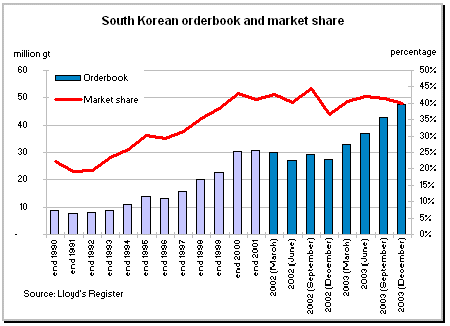
2003 was a new record year for Korea, which asserts its world leadership in the shipbuilding industry. The Korean shipbuilders' orderbook went from 25 to 48 million tons between end 2002 and end 2003. Sale targets of shipyards set at the beginning of 2003 were already met by the third quarter and then surpassed


Korea's progress is extraordinary when compared with the figures of the world orderbook, which ten years earlier stood at 36 million gt, or again with their orderbook at that time which was 10.9 million gt. It shows the impressive vitality of the Korean shipbuilding and its response to the evolution in demand.

Unlike China, there have been no new docks recently installed, but an optimisation in their production capacities has contributed to this dramatic growth. Docks designated for offshore units have been partly used to build cargo vessels. Bottlenecks in the building chain are constantly examined with special attention and appropriate measures are taken to remedy the situation. Recourse to outsourcing and especially of hull blocks is growing.

Builders are also opting for other methods, used especially in the offshore and in certain Chinese shipyards, by constructing ships on open land.

The big Korean shipyards (Hyundai Heavy Industries, Daewoo Shipbuilding and Marine Engineering, Samsung Heavy Industries, Hanjin Heavy Industries) hesitated throughout the year to commit their docks over and above a period of three years but the pressure was too strong. They gave priority to the very big ships, essentially containerships, tankers and LNG carriers, and abandoned the bulk carriers, even Capesize, apart from some exceptions.

The three shipyards specialising in building product tankers of 37,000 dwt, 47,000 dwt, and Panamax (Hyundai Mipo, STX, Shina) accumulated a record number of orders.

The small Korean shipyards also attracted a number of Western owners who at other times would have ordered in Europe. In this respect there was the order of two stainless-steel chemical carriers by the Danish owner Wonsild with INP.

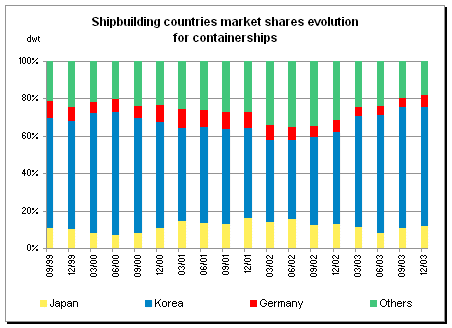
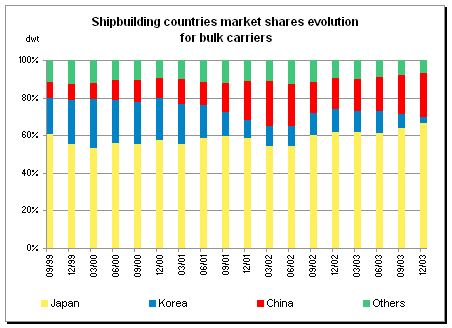
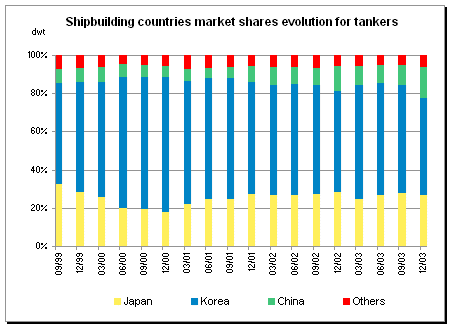
Korea's market share in the three types of ship is respectively 3% for the bulk carriers, 50% for tankers, and 64% for containerships.


- Japan

2003 was also a new record year for Japan confirming its second place in the world ranking.

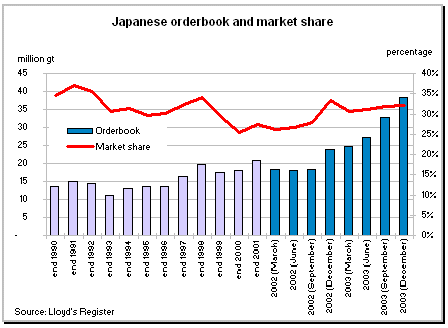
Japanese shipbuilders' orderbook went from 24 to nearly 38 million tons between end-2002 and end-2003. New orders represented more than 26.7 million tons this year as against 15.1 in 2002.


In 2002 Japanese builders kept pace with Korean builders in terms of new orders due to their dominant position in the bulk carrier market.

2003 figures underline the dynamism of Japanese shipbuilders but also of Japanese owners who are their main and often exclusive clients, which drive this island nation's ambition not only to maintain but also to develop their shipbuilding industry in a highly industrialised country. They show that it is still possible to build standard ships at market prices with a work force even more expensive than those of their competitors (Korea and China).

Japanese shipyards are looking to adjust to demand and to free themselves from constraints that were imposed in the past to limit overcapacity. Some shipyards have been given authorisation to build ships of bigger tonnage and to expand their docks. Japan has at hand a number of sites which were mothballed during the crisis of the 1970s and 1980s that can now be reactivated.

It is very likely that this practice could be extended in the case of sustained demand.


- China

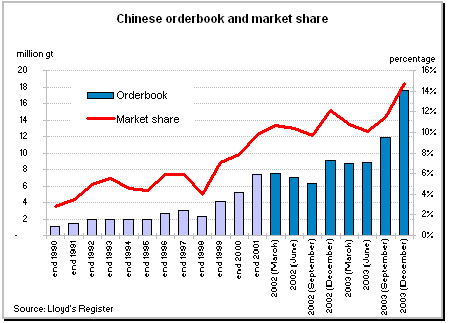
2003 was also a record year for China which confirms its third place in the world ranking. The orderbook of Chinese shipbuilders went from 9.1 at the end of 2002, to more than 15 million tons one year later. .


Chinese shipbuilders surpassed their objective of 10 million gt before the date that they had fixed (2005), despite the SARS epidemic, which hit the country in the second quarter of the year and slowed down numerous projects.

Expansion in Chinese shipbuilding is continuing. New large shipyards are under construction (e.g. Nantong Rongshen), while existing yards are expanding or modernising their production facilities. Some yards located in urban areas are being displaced where facilities are modernised and capacity increased (e.g. Shanghai Shipyard to Chong Ming island, Jiangnan Shipbuilding to Chang Xing island, Qingdao Beihai to Haixiwan, etc.).

Finance for this capacity expansion is coming from various sources. Funds provided or loans guaranteed by central, provincial or city governments seem to account for a significant amount of the investment in shipbuilding, however direct foreign investment and private domestic funds are now becoming more and more active, especially in the privatising of former government controlled shipyards.

China is thus becoming equipped with gigantic shipbuilding facilities, capable of competing in the future with the largest Japanese and Korean shipyards. China's ambition is to become number one in world shipbuilding before 2015, which is tomorrow.


China has even surpassed its own expectations and surprised its previous critics. Chinese yards today build almost every type of ship, even if they are, from time to time, delivered with some delay. The latest ships produced in China, which can be sometimes extremely complex, are trading well worldwide and are witness to the progress achieved over the last few years.

Chinese shipbuilding has however seen some failures, the best known being the case of the Jiang Yang shipyard but even in this case the new wave of private investment has illustrated the trend of the private sector taking over where previous government management failed. The year 2003 saw a new identity, 'Yangzhou Dayang Shipbuilding' rising from the ashes of the defunct Jiang Yang shipyard.

Shipyards have been able to enjoy a great degree of liberty over the last years, but some have at the same time encountered some losses, hence a closer scrutiny from the highest levels in the commercial policy of these yards is being implemented.

Perhaps, more than elsewhere, due to a lack of some 'old clients', Chinese shipyards have been more opportunistic, which has sometimes irritated some owners.

The fixed exchange rate between the yuan and the dollar has clearly been a considerable advantage this year for Chinese builders, offering them a distinct competitive edge over their Japanese and Korean rivals. Nonetheless, this fixed parity does not completely protect them when the yen, euro, and won appreciate against the dollar as they need to buy numerous supplies and base products outside China. This is why Chinese builders are pressing the authorities to develop domestic production of ships' design and equipment, as Japan and Korea did in the past. The very strong growth in the Chinese economy and the enormous demand for steel products have produced a cascade of price hikes for steel-plates and steel sections, increasing builders' costs and reducing their margins.

Confronted with the trade imbalance between the US and China, Washington is pressing Beijing to re-value its money. The depreciation of the dollar compared to other main currencies might lead the Chinese authorities to consider raising the exchange rate of the yuan against the dollar or to let their currency float, even partially, which of course would have an impact on Chinese shipbuilding.
 

- Taiwan

Like other shipyards in the Far East, Taiwan's state shipbuilding group, CSBC, following a deep and painful restructuring programme, has filled up its orderbook in 2003 particularly with containerships and some Panamax or Capesize bulk carriers. The CSBC orderbook (split between two sites located in Kaohsiung and Keelung) has almost doubled to achieve roughly 2 million tons (1.2 million tons end 2002) allowing Taiwan to hold sixth place in the world.

The privately controlled Ching Fu Shipbuilding is also holding a full orderbook and has establishing itself as one of the emerging leaders in fishing vessels and other specialised types below 15,000 dwt.


- Other countries in the Indo-Asian zone

We should mention the renewed interest this year for shipbuilding, in countries that should be able to benefit from the huge demand and higher prices. History shows that in such periods owners generally go out to encourage new suppliers in order to obtain reduced prices or simply earlier deliveries.

To illustrate this point we can cite emerging capacity and further development of shipbuilding in Vietnam, India and Iran, the latter founded for domestic requirements is now attracting international buyers.

In the Philippines, where the Japanese shipyard Tsuneishi established the subsidiary base at Cebu in 1994 to concentrate on the construction of Handymax bulk carriers, production rose from 7 deliveries per year in 2001 to 10 deliveries achieved in 2003 of the Cebu standard design 'Tess 52'. With this full orderbook, an investment programme is already being implemented to reach an annual production of 14 newbuildings in the next few years.
 

Europe

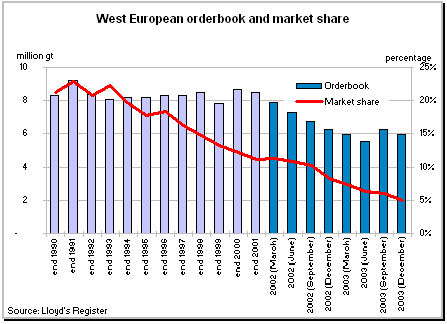
New orders are in sharp decline. The total orderbook for Western Europe is still shrinking, dropping from 6.7 million gt in December 2002 to 6 million gt by the end of 2003. The fall in market share of West-European shipyards from 8 % to about 5 % is even more spectacular, but it is also proportionally due to the considerable increase of the Asian shipyards' orderbooks.

West European shipbuilding at the beginning of this decade underwent a downscale compared to the 1990's, when the orderbook was hovering between 8 and 9 million gt.

By simply drawing a straight line, we could forecast that European shipbuilding would disappear in the coming years, but nothing is as uncertain as extrapolation.

If we try to analyse this evolution we can see that from the beginning of the 1990's most European shipyards have implemented cost-reduction schemes:

  • production outsourcing (carpentry, electricity, air systems, pipes, outfitting, assembly),

  • reducing their management staff and often buying their designs,

  • rationalising procurement,

  • sub-contracting steel blocs, or consigning entire hulls to East European countries, such as Poland, Romania, Turkey, Russia, Ukraine, complicating at the same time the management of this sub-contracting,

  • sub-contracting to the same yards the outfitting of ships, which are now almost completely built abroad.

They have done away with the superfluous but sometimes also with the essential skill, and particularly human resources that make up the intellectual capital of shipyards.

Today European yards are organised to build ships of small and medium sizes (less than 40,000 dwt), which have been progressively abandoned by the large Korean and Japanese shipyards, and are being battered by the strength of Chinese yards now interested in building all types and sizes of ships.

To a large extent, European shipyards have also lost their subsidies. At the end of 2000, they had filled up their orderbooks for three years in order to benefit from the maximum authorised in the EU, up to 9 %. The end of this mechanism increased the price differential with Asian shipyards and, whereas some clients were still prepared to pay a little more to stay in Europe, they progressively left the area due to an ever-growing disparity. For some shipowners building in Europe became an unaffordable luxury item.

European shipyards have also more recently been handicapped by the level of the euro, in a market where ships' values are most of the time expressed in dollars.

Certainly there are areas of excellence in Europe, such as the building of cruise-ships, ferries or other passenger ships, but will there be a sufficient number of orders in these sectors to allow full employment of these facilities?


European shipyards have unfortunately today structural handicaps compared to their Korean, Japanese, and Chinese counterparts. For political, social or economical reasons, they have not been able to restructure their facilities. Newbuilding sites remain widespread all over Europe and can not compete with the Korean giants. Fincantieri and Izar, which have several domestic sites, have not even merged or closed any facilities. For lack of means, they have not been able to invest in their yards as the Koreans and Chinese builders have done on a massive scale. On top of that, the tax burden, social costs and administrative constraints add some weight to the bill.

In industrialised countries like Japan and Korea, net salaries are on a par or even higher than those of European workers, however, differences in social expenses and the number of working hours make man-hour cost much more expensive. Therefore, on the basis of identical costs for procurement and equal man-hours to build a ship, there still would be a gap between Korean or Japanese and European builders to the detriment of the latter.

An alternative policy could have been to favour the closure of some sites in Europe and the merger of some of the remaining capacities.

Will there be a turnaround? One must hope so and also that it comes quickly as European shipyards are continuously laying off workers and even some closing down. A further new reduction of West European production capacity is again to be envisaged for this year.

Notwithstanding the above, West European shipbuilders have today good cards up their sleeves, as they could offer earlier delivery dates and should obtain a premium above current market prices on that basis.
 

- France 

The orderbook of the major French shipbuilders has dropped from 553,000 tons end 2002 to 380,000 tons end 2003.

After having signed a contract for the construction of a LNG carrier of 74,000 cbm with Chantiers de l'Atlantique in 2002, Gaz de France decided this year to order another LNG carrier of 153,000 cbm, which will as well be a membrane type, equipped with an advanced propulsion based on a combined diesel-gas-electric engine. This propulsion offers two advantages to the owner: important energy savings due to a lower consumption and an additional cargo capacity for similar dimensions.

Chantiers de l'Atlantique have also received an order for a ferry of 1,900 passengers, 700 cars and 2,000 lane-meters for the account of Sea France.

Demand for cruiseships remained weak over the last three years and prospects remain modest in the short term. Chantiers de l'Atlantique are currently taking measures to adjust to this new environment, not having been able to obtain any new cruiseship orders since 2000. They have delivered four cruiseships in 2003, including the 'Queen Mary 2', the biggest liner ever built, demonstrating the excellent performance of the yard.

Chantiers de l'Atlantique hope to be able to build military ships like other shipyards elsewhere in Europe. Without a special agreement, this is a rare event in France since military shipbuilding is restricted to naval yards. However a joining of forces could benefit all the parties: Chantiers de l'Atlantique possess a highly efficient organisation and can propose economically viable solutions which should in co-operation with naval yards, reduce the cost of their ships. The French Navy could thus satisfy its needs more easily and the French government would reduce its expenses.

With the progressive downsizing of the deep-sea fishing fleet, planned by Brussels, we should note that since the delivery of the 'Ulysse', Piriou Shipyards in Concarneau, have managed to diversify and propose a large range of products from AHTS, PSV, tugs and some others innovative service ships, either for some French interests or foreign clients.

Piriou Shipyards still propose their traditional trawler, seiner and other fishing boat designs. In this highly competitive context, the yard has been able to develop its client base and sign a number of new contracts. They also developed a new building facility on Mauritius which reinforces their presence in the region.

The situation at Constructions Mecaniques de Normandie in Cherbourg is rather different as they still have a strong workforce of about 400 employees and an order backlog which suffers from a lack of private clients. The latest order for a series of 6 corvettes from the Emirates Navy at the end of the year, of which only the first one will be built at Cherbourg, has brought some fresh life to the shipyard until 2007. The French Coast Guard has a 52 metres long patrol boat on order at the yard. Some yachts and sailing ships have to be added to this orderbook which is still not completely full.
 

- Germany

German shipyards have benefited from the tremendous demand for containerships. Whilst Korean shipyards were concentrating on very large container carriers, German yards received orders for 54 new ships mainly in the 2 500 / 3 500 teu size range as well as feeders of smaller size. For reference, in 2001, German yards signed up orders for 46 containerships of over 1 000 teu. In 2002, this figure was divided by three.

They have benefited from the lack of interest for these smaller sizes from Korean yards, but also from the proximity with their buyers (all Germans), and finally from an overflow of orders from Asia onto Europe, which, despite higher prices, has been able to offer earlier delivery dates in the second half of 2003.

Meyer Werft received two orders for cruiseships of 93,000 tons for the account of their traditional clients Star Cruises / NCL as well as a new passenger-ferry for Indonesia.

Flensburger has been specialising more and more in ro-ros and Lindenau continued its success in the tanker sector securing orders for 5 product tankers of 32,000 to 34,000 dwt.

As to the other shipyards which diversified in other types of ships, times are becoming more difficult. Flender Werft and SSW have closed down. Elsewhere, reduction of personnel and other plans (early retirements and layoffs) are going on.

Germany occupies the second place in Europe behind Poland and ranks number 5 in the world.
 

- Italy 

Italian builders were penalised by the prevailing weak demand for cruiseships and passenger liners.

Nevertheless, Fincantieri was awarded one of the 4 orders for cruiseships placed in 2003 and carry in their orderbook 8 cruiseships to be built in three different construction sites. They have also received orders for ro-ros and ferries for their Ancona, Napoli and Palermo facilities from Italian owners. Italy occupies 4th rank in Europe and 8th in the world.
 

- Spain 

In 2003, Izar, the Spanish state shipbuilding group, successfully delivered their first three 138,000 cbm LNG carriers and should deliver this year the two remaining ones, out of an order for five ships signed in 2000. Izar clearly hopes to continue in this niche against very fierce competition from Asia. 

Unfortunately with the exception of Barreras, Spanish shipyards succeeded in taking very few new orders in 2003. In addition, European authorities have requested Spanish authorities to put an end to certain arrangements favouring shipping investment, which were considered to be contrary to the Community regulations.
 

- Finland 

Finnish shipbuilders also suffered from the poor demand for cruise and passengers ships.

Kvaerner-Masa Yards have however gained the order for the biggest cruiseship ever to be built (160,000 gt) for the account of Royal Caribbean. They have also landed the order for very sophisticated ice-breaker ships for Russian account.

Finnish shipyards have an indisputable expertise in building ships capable of navigating in ice conditions and their geographical position is an advantage. They should benefit from the Russian growth and renew their links with an economic partner who had rewarded them before the fall of the Soviet Union with numerous orders.

They could also take advantage from the economic development of the Baltic states which are about to join the European Union.
 

- Denmark 

Odense Lindo, the last major Danish shipyard, continues to build a series of large containerships, of which the last version should approach the 10 000 teu size. These containerships will then be operated by the shipping branch of the A.P. Moller group, which was the first owner to invest in large containerships. Together with MSC, they are the sole owners in the world who have their own private terminal capable of discharging ships with beams up to 21 / 22 rows of containers
 

- Netherlands

2003 was a particularly difficult year for Dutch shipyards. After the closure of Tille at the beginning of 2003, van der Giessen-de Noord, specialised in the building of ferries, decided to cease their activities in shipbuilding, just after the delivery of the French ro-pax 'Pascal Paoli'. One of the building sites of another yard, Bijlsma, also had to close down.

Dutch shipyards, still very active in the sector of small ships, owe their survival to their capacity for innovation. Hulls are largely subcontracted out to Romania or Ukraine, before being repatriated for outfitting. Dutch yards are still strong in the building of offshore support ships, dredgers, small cargo vessels and small petroleum product and chemical carriers.

Dutch shipbuilders have suffered badly from the aggressive competition of Chinese shipyards for similar types of ships. With only slighlty more than 300,000 tons on order at the end of 2003, the Dutch shipyards are now close to the bottom of the world ranking.
 

- Norway 

The merger in 2002 of two old rival yards Aker and Kvaerner gave birth to a group with twelve yards in Norway, Finland, Germany, Romania, Brazil and the USA, employing 13 500 people and having a turnover of around 20 billion Norwegian crowns.

2003 was a very difficult year and the orderbook of Norwegian shipyards dropped significantly. The shipyards suffered from the appreciation of their currency. Now specialised in the offshore sector, the overall tonnage on order at Norwegian shipyards does not weigh much in the world shipbuilders' ranking despite that the value of each ship is often very high.
 

- Poland

Polish yards which had encountered important financial difficulties in 2002 necessitating restructuring and recapitalisation, were on the rebound in 2003. Their production is largely orientated on containerships, open-hatch bulk carriers, car-carriers and ro-ros.

Poland occupies the first rank in Europe and fourth rank in the world with about 2.5 million gt at the end of 2003. Poland's entry into the European Union could be a new stimulus to growth but the shipyards will probably have to face a progressive increase in their salary costs.
 

- Croatia

Croatian shipyards have largely taken advantage from the demand for product tankers and car-carriers. The five main shipyards Split, Trogir, Kraljevica, 3 Maj and Uljanik are full up until 2007. They place themselves often with ships slightly more innovative than those built in Asia. Trogir is finishing a series of 6 product tankers of 47,000 dwt fitted with a two-engine propulsion and one crankshaft. Split has been awarded the order from Stena for a series of 6 P-Max type tankers.

At the end of 2003, Croatian shipyards occupy 7th place in the world with about 1.5 million gt on order.
 

- Turkey

Turkish shipbuilding with its numerous shipyards benefited from the demand for small oil product carriers and chemical carriers from domestic and European owners. Domestic owners are also very dynamic. Turkish yards are also used to take subcontracting works from West European shipyards. With nearly 300,000 dwt on order, Turkish shipyards are now at a level comparable to the Netherlands shipbuilding industry.
 

- Romania

Romanian shipyards have benefited from significant direct foreign investment and management from experienced international shipbuilders (Aker, Daewoo, Damen, etc.) and have been able to take advantage of the overflow from Asian yards. They managed to attract orders which could have gone to Korea in other circumstances. Thus, Constanza signed contracts for two product tankers of 37,000 dwt and Daewoo Mangalia for two Panamax tankers. In the meantime 2003 saw a significant increase in both volume and value of the subcontracting of hulls of a diverse range of vessel types including offshore and container vessels for a number of West European shipbuilders.
 

- Russia

Russian shipbuilding should also logically draw benefits from the world demand and the congestion of Asian yards, with sites being able to offer earlier delivery dates. They could also take on domestic orders in view of the predictable increase in oil exports from this zone, and the pressing need for ships of suitable ice class. Its industrial infrastructure however needs to be enhanced.
 

United States

The American shipbuilding industry has consolidated its position this year and has maintained its 9th place in the world with around 0.7 million tons at the end of 2003. However, American yards protected by the Jones Act, are not really able to be in the market at competitive prices.  

In 2003 the Aker-Kvaerner group saw its first newbuilding delivery from their Philadelphia shipyard of a 2,600 teu containership for the US flag owner MatsonNavigation Company. This is the first of a two-ship order and each vessel was reportedly priced at $ 110 million (owner's costs included). There was originally a lot of hope that by taking on the Philadelphia shipyard that the Aker-Kvaerner group could bring it back into the international shipbuilding market, but today it is unable to ensure a sufficient workload, due to the pricing distortions of the Jones Act environment (US built - US flag - US crew). 

Nassco of San Diego is still working on 4 Suezmax tankers of 185,000 dwt for the account of BP, bound to trade between Alaska and the US West Coast, also under the Jones Act regulation. However it should be noted that this activity is secondary to Nassco's many contracts for the US Navy.
 

Prospects

The very strong demand for new tonnage in 2003 and the reversal of what has traditionally been a 'buyers' market to a 'sellers' one was hardly anticipated. Will this trend continue?

We can reasonably think it will, at least for 2004 and this is for several reasons:

  • Inflation often breeds on itself: the enormous demand is causing at the moment substantial increases in procurement costs and especially in steel plate prices. Despite increases in the price of ships, it is not certain that yards will improve their margins. In these conditions, it is likely that shipbuilders will maintain a policy of price increases, which in turn could motivate owners to invest today rather than tomorrow.

  • These owners may also consider that prices from the yards, for a large variety of ships, are still below the historical highs reached at the beginning of the 1990s, and thanks to low interest rates it is reasonable to invest.

  • Prices have broken through new limits, rendering the reference benchmark prices of the past five years obsolete. The former equilibrium has been broken and we have entered a new cycle. Given the current situation with shipyards, suppliers, raw materials and energy, it is fairly certain that newbuilding prices will remain at high levels for several years.

There will be however a correction to this trend as these price increases pose several problems as to the real value of the assets and their financing. Owners can ask themselves if it is reasonable to order ships for delivery in four years time. The ratios of ships on order versus active fleet may also be a cause for concern: how will the market absorb this overflow of tonnage?

The enormous shipbuilding capacity that China is putting on the market and its ambition to become the leading shipbuilder in the world within 2015, will certainly meet some strong resistance from Japan and Korea.

All of this is part of the 'common' history of the shipping industry, euphoric periods being often followed by more or less deep depressions. We can see some similarities between the current dry bulk freight market evolution and the stock exchanges excesses in the 1999 to 2000 period, before the bubble burst!

Adjustments are already taking place, since the cost of shipping becomes a significant element in the price of some goods, especially of raw materials. Industries always have the possibility to seek out alternative solutions, which will minimise their costs, they will switch to other types of energy, for example, or will purchase their raw materials from closer sources.

However, it is true also that, despite these price increases (assets, freight rates), transportation by sea remains extraordinary cheap and has contributed to a remarkable development in international trade.


Shipping and Shipbuilding Markets in 2003

I N D E X

›››Archivio
DALLA PRIMA PAGINA
La statunitense Enstructure compra la rete di terminal portuali americani della Logistec
Wellesley/New York/Montreal
Opera complessivamente 84 terminal negli USA
Sfruttare la revisione del regolamento di esenzione per categoria per incoraggiare gli investimenti privati nei porti
Costanza
Lo sollecita FEPORT
L'Autorità Portuale di Anversa-Bruges collaborerà allo sviluppo del porto di Misurata
Misurata
Progetto per un nuovo terminal per rinfuse
Bimco, ICS, Intercargo e Intertanko condannano gli attacchi a navi e marittimi nello Stretto di Hormuz
Londra
Esortazione a cessare immediatamente gli attacchi
Lo scorso mese il traffico dei container nel porto di Long Beach è cresciuto del +31,7%
Long Beach
Invariato il volume complessivo dei contenitori nei primi cinque mesi del 2026
Il Consiglio federale elvetico propone la proroga al 2035 dei contributi al traffico merci su rotaia attraverso le Alpi
Berna
Dal 2027 al 2035 verrebbero erogati 486 milioni di franchi
Sinora il numero di navi che escono dal Golfo Persico è il 6-7% di quelle transitate un anno fa
Parigi
AXSMarine, nessun segnale di una riapertura duratura dello Stretto di Hormuz
Global Ports Holding in trattative per la gestione del porto crociere di Saint Vincent e Grenadine
Istanbul
Attualmente il terminal registra un traffico annuo di circa 200mila passeggeri
Nel periodo 2027-2031 sono programmati investimenti nei porti taiwanesi pari a 1,8 miliardi di dollari
Taipei
Alla fine del quinquennio previsto un traffico annuo dei container pari a 15,5 milioni di teu
Le forze statunitensi hanno colpito una terza nave nel Golfo di Oman
Tampa
La “Jalveer” avrebbe a bordo un carico di petrolio iraniano
ALLRAIL, CER, ERFA, FEPORT, FTE, UIP e UIRR presentano la loro proposta per la Piattaforma Ferroviaria Europea
Bruxelles
Lo scopo è di assicurare la rappresentanza del mercato fin dall'inizio del nuovo processo di governance della capacità ferroviaria europea
L'U.S. Central Command rivendica l'attacco alla product tanker Settebello
Tampa/Nuova Delhi/Londra
Condanna del governo indiano e dell'International Maritime Organization
Colpita una product tanker nella regione dello Stretto di Hormuz
Southampton/Muscat
Ferito un marittimo. Altri due membri dell'equipaggio risultano dispersi
Nel primo trimestre di quest'anno il traffico delle merci nel porto di Civitavecchia è calato del -1,0%
Civitavecchia
Crocieristi in aumento del +32,1%
Un mercantile è stato attaccato nel Golfo di Aden
Southampton
Gemini Cooperation incrementa la capacità di stiva sulla rotta Asia-Mediterraneo
Copenaghen
Sea-Intelligence, immessa un'ulteriore capacità settimanale pari a 22.402 teu
ESPO promuove a pieni voti le conclusioni del Consiglio dell'UE sulla strategia industriale marittima
Bruxelles
Confermato il ruolo centrale degli scali portuali
La cattura e lo stoccaggio della CO2 sulle navi è una delle soluzioni più concrete e immediatamente disponibili per la decarbonizzazione dello shipping
Londra
Via libera dell'Antitrust all'acquisizione di Terminal San Giorgio da parte del gruppo Messina
Roma
Ok dell'AGCM anche all'acquisizione da parte del gruppo MSC delle attività del gruppo Asso nel settore della manutenzione e riparazione navale (Jobson Italia e UASC UAE)
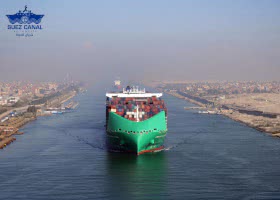
In vista rincari delle tariffe per il transito delle navi nel canale di Suez
Ismailia
Saranno applicati dal 15 luglio. Escluse le navi passeggeri
L'Autorità del Canale di Suez ha annunciato l'applicazione di supplementi alle tariffe di transito nel canale egiziano per la gran parte delle principali tipologie di navi che trasportano merci, che entreranno in vigore dal prossimo 15 luglio.
Il Consiglio dell'UE accoglie molte delle richieste avanzate dalle associazioni del cluster marittimo-portuale europeo
Lussemburgo
Tuttavia, necessariamente, il testo rinvia l'adozione di misure concrete a future iniziative legislative
ESPO chiede un uso proattivo del sistema EES per evitare congestione nei porti europei
Bruxelles
Ryckbost: flessibilità attivate tempestivamente in circostanze eccezionali ma prevedibili
Rixi: necessario superare un ETS marittimo che rischia di spostare traffici e investimenti verso porti extraeuropei
Lussemburgo
Servono - evidenzia il vice ministro - incentivi e flessibilità, non nuovi vincoli
Gli Houthi minacciano una ripresa degli attacchi alle navi in transito nel Mar Rosso
Sana'a
Proclamato un divieto totale alla navigazione per tutte le navi riconducibili a interessi israeliani
Il commercio mondiale di merci potrebbe iniziare a rallentare
Ginevra
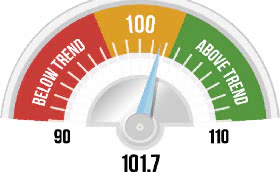
Lo segnala l'ultima lettura del Goods Trade Barometer della WTO
Attivato a Genova il nuovo collegamento della viabilità portuale a Sampierdarena
Genova
Paroli: l'opera consente oggi a circa 900-1.000 mezzi pesanti al giorno di accedere direttamente alle aree operative del porto
I relatori del Ddl sui porti difendono il progetto di governance imperniato sulla Porti d'Italia
Roma
Ghio (PD) denuncia che gli organi di vertice di questa nuova società verrebbero nominati interamente dal governo. Ghirra (AVS): gli obiettivi di coordinamento nazionale avrebbero potuto essere perseguiti con un rafforzamento della Conferenza nazionale dei presidenti delle AdSP
Fusione nel settore della logistica tra le statunitensi WWEX Group e Auctane
Milano/Dallas/Austin
Un ruolo di primo piano all'intelligenza artificiale
Inatteso calo del traffico intermodale europeo nel primo trimestre del 2026
Bruxelles
UIRR, caos infrastrutturale causato dai cantieri che interrompono le linee ferroviarie
Hanseatic Global Terminals acquisisce il rimanente 50% della Hanseatic Global Terminals Aracruz
Rotterdam/Aracruz
La società sta realizzando il nuovo porto container brasiliano di Imetame
Conftrasporto, dal Ddl Porti emergono evidenti criticità operative, finanziarie e di coerenza normativa
Roma
Russo: le competenze della Porti d'Italia si sovrapporrebbero a quelle delle Autorità di Sistema Portuale, del Mit e dell'Art
WoodMac ritiene che le norme sulla decarbonizzazione potrebbero avere un forte impatto sulle navi a GNL
Edimburgo
Secondo la società, le norme europee porrebbero fuori mercato le navi con motori DFDE
La francese MN trasporterà il lanciatore Vega C della Avio tra l'Italia e il Sud America
Nantes
La compagnia francese si doterà di una nuova nave progettata specificamente per il trasporto di attrezzature spaziali
In vigore la metodologia dell'UE per calcolare le emissioni di gas serra dei servizi di trasporto
Bruxelles
Il sistema è basato sullo standard internazionale EN ISO 14083:2023
Lunedì nel Golfo Persico la portacontainer MSC Sariska V è stata colpita da due proiettili
Ginevra/Roma
Illesi tutti i membri dell'equipaggio
Nel primo trimestre il traffico delle merci nel porto di Brema/Bremerhaven è cresciuto del +5,8%
Brema
I container sono stati pari a 1.245.515 teu (+4,4%)
MSC acquisisce il 51% del container terminal del porto di Pivdennyi (Odessa)
Odessa
Ha una capacità di traffico di 400mila teu all'anno
Il 19 novembre 2027 entrerà in vigore la Convenzione IMO sulla responsabilità e il risarcimento dei danni connessi al trasporto di sostanze pericolose e nocive via mare
Londra
Dominguez: traguardo atteso da tempo, che colma un'importante lacuna nel regime internazionale
Ad aprile i transiti di navi nel canale di Suez sono aumentati del +13,9%
Il Cairo
Nel primo quadrimestre del 2026 è stato registrato un aumento del +12,1%
Nel primo trimestre il traffico delle merci nel porto di Napoli è calato del -5,3%, mentre a Salerno è cresciuto del +6,4%
Napoli
I container nei due scali sono stati pari rispettivamente a 167.433 teu (-3,5%) e 101.509 teu (+7,8%)
Kerdjoudj (Feport): con la revisione dell'EU ETS destinare parte dei proventi ai porti
Bruxelles
Esortazione a valutare attentamente il rischio della delocalizzazione del traffico di transhipment
Con il nuovo terminal di COSCO-PTP il porto di Tarragona si rilancia sul mercato dei container
Tarragona
Si prevede che i lavori di costruzione terminino nel 2028 quando il terminal avrà una capacità di 680mila teu
Nel 2025 i porti egiziani hanno stabilito il loro nuovo record storico di traffico dei container
Alessandria d'Egitto
Forte crescita dei volumi in trasbordo, che nel 2024 erano risultati stabili
Rinnovato il contratto nazionale di ormeggiatori e barcaioli dei porti
Roma
Filt-Cgil, irrobustisce un impianto regolatorio indispensabile per il settore
Uno studio spiega come rendere più attrattivo ed efficace l'uso degli impianti OPS nei porti europei
Bruxelles
Necessarie, tra l'altro, tariffe più chiare e comparabili
Federlogistica chiede l'introduzione di correttivi al disegno di legge sulla governance portuale
Genova
Falteri: il nuovo assetto garantisca alle AdSP adeguate risorse finanziarie e strumenti operativi efficaci
ESPO torna a chiedere correttivi all'EU ETS per assicurare la competitività dei porti europei
Bruxelles
Evidenziato anche l'impatto negativo sul trasporto marittimo a corto raggio
In Svizzera adottate nuove misure per rafforzare la competitività della bandiera marittima
Berna
Un armatore elvetico potrà battere bandiera svizzera anche se la società proprietaria ha sede all'estero
Concluse le prove in mare della seconda nave da crociera costruita in Cina
Shanghai
La Adora Flora City effettuerà il viaggio inaugurale con partenza il 22 novembre dal porto di Guangzhou
Nel primo trimestre del 2026 il valore del traffico delle merci del G20 ha segnato una crescita congiunturale del +5,3%
Parigi
Attenuazione della crescita del traffico delle merci nel porto di Tanger Med
Tangeri
Nei primi tre mesi del 2026 sono state movimentate 38,8 milioni di tonnellate (+3,2%)
Ad aprile il traffico delle merci nei porti marittimi cinesi è cresciuto del +2,6%
Pechino
L'import-export ha registrato un aumento del +0,6%. I container sono stati 26,9 milioni (+4,8%)
Fermerci chiede al governo misure urgenti per sostenere il trasporto ferroviario delle merci
Roma
Imprese ferroviarie penalizzate dalle interruzioni infrastrutturali
Porto di Napoli, prima operazione di bunkeraggio ship-to-ship di GNL su una nave da crociera
Napoli
Axpo ha impiegato la bettolina “Green Zeebrugge”
CMA CGM ha archiviato il primo trimestre 2026 con un utile netto di 250 milioni di dollari (-78%)
Marsiglia
Ricavi stabili, con logistica e altre attività che hanno compensato il calo nel settore dello shipping
La Corte Suprema USA ha riaperto il caso che contrappone Havana Docks e Carnival, Royal Caribbean, NCLH e MSC
Adottato il nuovo codice internazionale di sicurezza per le navi di superficie autonome
Londra
Entrerà in vigore il prossimo primo luglio e applicato su base volontaria per almeno due anni
UIRR, nel 2025 le spedizioni di trasporto combinato strada-rotaia sono aumentate del +1,5%
Bruxelles
L'associazione ha sottolineato gli effetti disastrosi sul comparto dei lavori alle linee ferroviarie in Germania
Accordo Fincantieri - Teijin Automotive Technologies per lo sviluppo di paratie in materiali compositi per applicazioni navali
Trieste/Pouancé
Folgiero: rendiamo possibile lo sviluppo di unità più leggere ed efficienti
Dopo otto trimestri di utili, ZIM registra una perdita d'esercizio
Haifa
Nei primi tre mesi del 2026 in marcato calo (-8,3%) anche i volumi di carichi trasportati dalle navi
Gli USA hanno incriminato quattro produttori cinesi di container e sette loro dirigenti
Washington
Reso noto l'arresto lo scorso 14 aprile in Francia del direttore marketing della Singamas
Intesa di Parlamento e Consiglio UE sull'accordo sui dazi tra Unione Europea e USA
Strasburgo/Bruxelles
Introdotte una clausola di scadenza e una clausola di sospensione
FFS Cargo Svizzera riorganizza il network dei servizi di trasporto a carro singolo
Berna
Prevista una riduzione di 50 degli attuali 280 scali di smistamento
L'IMO segnala un incremento del +17% dei casi di pirateria marittima nel 2025
Londra
L'area più colpita quella degli Stretti di Malacca e Singapore con 122 incidenti (+34%)
Hapag-Lloyd e CMA CGM hanno sospeso le prenotazioni per le spedizioni marittime con Cuba
Parigi/Francoforte/L'Avana
Decisione dopo l'ampliamento delle sanzioni USA ordinato da Trump
Entro fine anno la gara internazionale per il nuovo container terminal del porto di Klaipeda
Klaipeda
Avrà un capacità di traffico annua pari a 2,5 milioni di teu
ITF chiede ai governi di smantellare una volta per tutte il sistema delle bandiere di comodo
Londra
È - denuncia il sindacato - la mela marcia al centro dello sfruttamento dei marittimi
Nel primo trimestre i ricavi della Evergreen sono diminuiti del -21,3%
Taipei
Risultato operativo e risultato economico netto sono calati del -69,5% e -68,8%
Viking Holdings ha chiuso il primo trimestre con una perdita netta di -54,2 milioni di dollari
Los Angeles
Ricavi in crescita del +17,5%
Nei primi tre mesi del 2026 il traffico dei container nei terminal portuali di Eurokai è cresciuto del +8,9%
Brema
Aumenti del +12,7% in Germania e del +7,8% in Italia. Calo nel porto di Tanger Med
Norovirus sulla nave da crociera Ambition della Ambassador Cruise Line
Purfleet/Vlissingen
Le autorità sanitarie francesi hanno autorizzato l'unità a continuare le normali operazioni
Nei primi tre mesi del 2026 il traffico delle merci nel porto di Amburgo è diminuito del -2,0%
Amburgo
I contenitori sono stati pari a due milioni di teu (-1,6%)
Prosegue il deterioramento dei risultati finanziari trimestrali di Yang Ming e WHL
Keelung/Taipei
Nei primi tre mesi di quest'anno i ricavi sono diminuiti rispettivamente del -15,1% e -9,3%
Hapag-Lloyd ha chiuso il primo trimestre con una perdita d'esercizio di -218,6 milioni di euro
Amburgo
Ricavi in calo del -16,8%
Nei primi tre mesi del 2026 i ricavi della HMM sono diminuiti del -4,8%
Seul
Calo del -7,9% nel segmento dei container e crescita del +20,1% in quello delle rinfuse
Nel primo trimestre di quest'anno i terminal crociere della Global Ports Holding hanno registrato un traffico record
Istanbul
Sfiorati i cinque milioni di passeggeri
Le Aziende informano
International Shipping Community to Gather in Genoa for Two Days of Maritime Dialogue and Networking
Nei primi tre mesi del 2026 il traffico delle merci nei porti di Genova e Savona-Vado è calato del -3,8%
Genova
A marzo flessione del -6,1%, con una forte contrazione del -15,0% dei carichi containerizzati
Federconsumatori chiede al governo misure per attenuare l'impatto dell'aumento del prezzo dei biglietti dei traghetti
Roma
Rincari sono al +18% per le settimane centrali di agosto
È deceduto Daniele Rossi, ex presidente del porto di Ravenna
Roma
Ha guidato l'ente portuale per oltre otto anni
ONE rimuoverà gli scali in Grecia e Turchia dal servizio Adriatic Service 1
Singapore
In Italia tocca i porti di Venezia e Ancona
Inaugurata la prima fase del terminal di APM Terminals nel porto di Suape
Suape
Diventerà operativo nella seconda metà di quest'anno
A maggio traffico dei container in crescita nei porti di Singapore e Hong Kong
Singapore/Hong Kong
A Singapore record dei bunkeraggi di gas naturale liquefatto e di biodiesel puro B100
Vavassori confermato presidente dell'Associazione Lombarda Spedizionieri e Autotrasportatori
Milano
Albertina Schiavoni e Mario Zini sono stati nominati vicepresidenti
PROSSIME PARTENZE
Visual Sailing List
Porto di partenza
Porto di destinazione:
- per ordine alfabetico
- per nazione
- per zona geografica
Al presidente dell'Angopi il primo certificato professionale di competenza da ormeggiatore
Savona
L'attestato deve essere rinnovato ogni cinque anni
Fincantieri ha consegnato la nuova nave da crociera Mein Schiff Flow alla TUI Cruises
Amburgo/Monfalcone
Con una stazza lorda di circa 160.000 tonnellate, ha una capacità di circa 4.000 passeggeri
Nei primi tre mesi del 2026 il traffico delle merci nel porto di Palermo è diminuito del -6,3%
Palermo
Calo anche nei porti di Termini Imerese, Trapani e Licata. Aumenti a Porto Empedocle e Gela
Ok non definitivo dell'Antitrust all'acquisizione di attività e beni della Armas da parte della Baleària
Barcellona
Imposte una serie di condizioni
Martedì a Roma l'assemblea annuale di Assarmatori
Roma
L'evento ha per tema “Istruzioni per non navigare nel buio”
VARD costruirà un peschereccio di nuova generazione
Trieste
È stato ordinato dalla società norvegese Rosund Drift
Royal Caribbean ha preso in consegna la nuova nave da crociera Legend of the Seas
Miami
Costruita da Meyer Turku, può ospitare 5.610 passeggeri
Concentrazione nel settore della cantieristica navale del Regno Unito
Londra
Baleana compra la APCL Group (A&P Tyne, Cammell Laird e A&P Falmouth and Falmouth Docks and Engineering)
Audizioni informali dei rappresentanti dei sindacati sulla riforma della governance portuale
Roma
Al centro delle criticità evidenziate - conferma la Filt-Cgil - c'è la prevista costituzione di Porti d'Italia Spa
Venezia, il DPSS conferma la necessità di realizzare nuovi terminal offshore fuori dalla Laguna
Venezia
Il Documento di Programmazione Strategica di Sistema è stato approvato dal Comitato di gestione dell'AdSP
Il gruppo Spinelli ha aderito all'Associazione Italiana Terminalisti Portuali
Genova
L'azienda e Assiterminal hanno espresso soddisfazione per la ripresa di un importante sodalizio associativo
Nei primi tre mesi del 2026 il traffico delle merci nei porti del Regno Unito è calato del -2,6%
Londra
Diminuzione più accentuata (-6,8%) dei carichi all'imbarco
Mark Hindley è il nuovo presidente dell'associazione europea della logistica degli autoveicoli
Istanbul
Wolfgang Göbel è stato eletto presidente onorario
Porto di Genova, fermato un rimorchiatore per irregolarità sulle emissioni degli ossidi di azoto
Genova
Il mezzo nautico è utilizzato per i lavori di realizzazione della nuova diga foranea
Ad aprile il traffico delle merci nel porto di Ravenna è cresciuto del +21,4%
Ravenna
A maggio atteso un incremento del +2,5%
Nel 2027 Sallaum Lines attiverà un servizio dedicato Cina-Europa
Nanchino
Prese in consegna due nuove PCTC da 7.400 ceu
Il 12 giugno a Napoli un'iniziativa della Filt Cgil sulla governance nella portualità
Roma
Rinvenuto un drone navale nel porto rumeno di Costanza
Bucarest
L'ordigno di è autodistrutto senza causare vittime
Approvazione di principio alla HJSC per la costruzione di portacontainer a biocarburanti da 10.000 teu
Atene
È stata rilasciata dal Registro Navale Coreano
Global Ship Lease investe 917 milioni di dollari per comprare dieci nuove portacontainer
Atene
Saranno prese in consegna tra il quarto trimestre del 2028 e il primo trimestre del 2030
Accordo WASS (Fincantieri) e Magellan nel campo della difesa subacquea del Canada
Trieste
Verranno esplorate opportunità di cooperazione industriale nel settore dei siluri pesanti e delle contromisure
Soluzioni per superare la cronica carenza di personale del comparto marittimo italiano
Procida
Pagano (Comitato del Lavoro Marittimo): digitalizzazione, semplificazione e intesa fra formazione e imprese per superare la crisi
Accordo per la formazione marittima siglato da Gente di Mare (Cosulich) e Carnival
Genova
Di Tizio: questa collaborazione ci permette di portare sul territorio un progetto internazionale
Antipollution (V.Group) ordina quattro imbarcazioni ecologiche a ONEX Shipyards & Technologies
Atene
Opzione per ulteriori quattro unità
Spinelli ha ordinato tre nuovi mezzi di movimentazione alla FTMH
Genova
Un reach stacker per container vuoti è già entrato in servizio nel deposito livornese del gruppo
Luigi Merlo alla guida della società italiana per i terminal crociere di MSC
Ginevra
Centrone (ex Fincantieri) subentra quale direttore Politiche Marittime e Affari Governativi per il gruppo in Italia
Accordo di cooperazione tra la greca Skaramangas Shipyards e la sudcoreana HD Hyundai
Atene
Lo scopo è di collaborare alla costruzione di navi militari di superficie
AD Ports compra la brasiliana Corredor Logística e Infraestrutura
San Paolo/Abu Dhabi
La società gestisce il maggior volume di esportazioni di rinfuse agroalimentari della nazione sudamericana
Approvato il Piano Operativo Triennale 2026-2028 dell'AdSP del Tirreno Settentrionale
Livorno
Via libera unanime del Comitato di gestione
Chen Lichtenstein è stato nominato presidente e amministratore delegato della ZIM
Haifa
Subentrerà al dimissionario Eli Glickman
Gianluca Croce è stato confermato presidente di Assagenti Genova
Genova
I componenti del consiglio dell'associazione per il biennio 2026-2028
Il traghetto Mega Serena è entrato far parte della flotta della Corsica Sardinia Ferries
Vado Ligure
Ha una capacità fino a 2.000 passeggeri e oltre 600 veicoli
A Marghera il taglio della prima lamiera della nave da crociera Crystal Grace
Miami
Fincantieri consegnerà l'unità nella primavera del 2028
Porto di Ortona, alla Palumbo Superyacht aggiudicata un'area di 13.048 metri quadrati
Ancona
AdSP dell'Adriatico Centrale, atto di indirizzo per il rilascio della autorizzazione unica ZES
Porto di Livorno, inaugurati due nuovi magazzini della FHP MarterNeri
Livorno
Investimento superiore ai 23 milioni di euro
Il Comitato dell'AdSP Tirreno Centro Settentrionale delibera la chiusura dello stato di crisi dell'ente
Civitavecchia
Nuova soluzione per trasporti eccezionali su treni intermodali di FS Logistix e Van der Vlist
Verona
Trasportate due piattaforme aeree da Verona a Rostock
Porto di Napoli, incendio a bordo del traghetto Phoenix della GNV
Napoli
Fiamme divampate nei locali interni del ponte 6 della nave
Latrofa sceglie una persona di sua fiducia alla guida di una società in house dell'AdSP laziale
Civitavecchia
Al nuovo amministratore unico - ha rimarcato - sono stati forniti indirizzi gestionali particolarmente stringenti
Nei primi tre mesi del 2026 i ricavi della MPC Container Ships sono diminuiti del -6,4%
Oslo
Utile netto trimestrale di 40,8 milioni di dollari (-31,8%)
Approvato il Piano Operativo Triennale 2026-2028 dell'AdSP della Sardegna
Olbia
Via libera del Comitato di gestione
Concluso l'iter di valutazione ambientale del progetto del Porto Esterno di San Antonio
San Antonio
Nel cantiere Fincantieri di Ancona è stata consegnata la nave da crociera Viking Mira
Ancona/Los Angeles
Ha una stazza lorda di 54.300 tonnellate e una capacità di 998 passeggeri
Nel 2025 RINA ha registrato ricavi pari ad oltre un miliardo di euro (+11%)
Genova
Utile netto in crescita del +30%
Porto di Marina di Carrara, posato il nuovo ponte ferroviario
Marina di Carrara
Pisano: svolta decisiva nell'organizzazione logistica del porto
Porti, interporti e corridoi. Venezia e l'Alto Adriatico come porta dei traffici verso l'Est
Venezia
È il tema dell'evento che si terrà giovedì a Venezia
PORTI
Porti italiani:
Ancona Genova Ravenna
Augusta Gioia Tauro Salerno
Bari La Spezia Savona
Brindisi Livorno Taranto
Cagliari Napoli Trapani
Carrara Palermo Trieste
Civitavecchia Piombino Venezia
Interporti italiani: elenco Porti del mondo: mappa
BANCA DATI
ArmatoriRiparatori e costruttori navali
SpedizionieriProvveditori e appaltatori navali
Agenzie marittimeAutotrasportatori
MEETINGS
Martedì a Roma l'assemblea annuale di Assarmatori
Roma
L'evento ha per tema “Istruzioni per non navigare nel buio”
Il 12 giugno a Napoli un'iniziativa della Filt Cgil sulla governance nella portualità
Roma
Confronto sullo sviluppo logistico, industriale e infrastrutturale dei porti
››› Archivio
RASSEGNA STAMPA
World's first floating fusion reactor-powered vessel could become reality with new project
(Interesting Engineering)
Shipbuilding's Spring Illusion: Backbone Collapses
(The Chosun Daily)
››› Archivio
FORUM dello Shipping
e della Logistica
Intervento del presidente Tomaso Cognolato
Roma, 19 giugno 2025
››› Archivio
Estonian State Fleet ordina un traghetto a propulsione elettrica al cantiere navale polacco Crist
Tallinn
Commessa del valore di 49,93 milioni di euro
Ad aprile i porti spagnoli hanno movimentato 1,7 milioni di contenitori (+1,7%)
Madrid
Crocieristi in calo del -18,4%
Ad aprile il traffico dei container nel porto di Valencia è diminuito del -2,5%
Valencia
Nei primi quattro mesi del 2026 sono stati movimentati quasi 1,8 milioni di teu (+0,2%)
Ancora ricavi trimestrali record per Global Ship Lease
Atene
Utile netto in calo del -24,0%
Cooperazione internazionale tra AdSP sarda e porto di Tanger Ville per la nautica di lusso
Cagliari
Promozione di un circuito nautico integrato tra Sardegna e Marocco
Nel porto di Gioia Tauro è stato inaugurato il nuovo presidio di primo intervento medico-sanitario
Gioia Tauro
Tra le dotazioni, un ambulatorio di primo soccorso e un'ambulanza CMR
Da BPER un finanziamento a Grimaldi Euromed per l'ammodernamento della flotta
Milano/Napoli
Risorse utilizzate per coprire parzialmente l'acquisto della nave “Grande Manila”
ASRY e Priya Blue istituiscono un cantiere di riciclaggio navale nel Bahrein
Al Muharraq/Alang
Arrivata nella nazione mediorientale una prima nave destinata ad essere smantellata
SAAM Towage ordina cinque nuovi rimorchiatori al cantiere navale turco Sanmar Shipyard
Santiago
Avranno una capacità di tiro compresa fra 70 e 80 tonnellate
Lo scorso mese il traffico dei container nel porto di Long Beach è calato del -5,7%
Long Beach/Singapore/Hong Kong
A Singapore è stata registrata una crescita del +3,6%, mentre ad Hong Kong i contenitori sono diminuiti del -6,3%
Carta (Fermerci): servono politiche urgenti per sostenere le imprese ferroviarie
Roma
Nel 2025 il cargo ferroviario ha perso circa il 3,5%, in termini di treni/km
Fratelli Neri ordina altri due nuovi rimorchiatori in Egitto
Ismailia
Contratto con la Suez Canal Company for Modern Boats
Ad aprile il traffico dei container nel porto di Barcellona è cresciuto del +17,4%
Barcellona/Algeciras
Aumento del +6,3% nello scalo portuale di Algeciras
Ok del governo di Islamabad alla vendita del 30% della Pakistan National Shipping Corporation
Islamabad
La quota andrà alla società logistica statale NLC che assumerà anche il controllo gestionale della PNSC
Nel 2025 il sistema portuale spagnolo ha registrato entrate record
Madrid
L'utile ante imposte è stato di 349 milioni di euro (+4,2%)
Leapmotor International rafforza la partnership con il gruppo armatoriale napoletano Grimaldi
Hoofddorp
Nel primo trimestre trasportati dalla Cina circa 20.000 destinati al mercato italiano
Lo scorso anno il traffico delle crociere nei porti tedeschi ha raggiunto un nuovo record
Wiesbaden
Con 1,51 milioni di passeggeri, la crescita è stata del +4,1%
Federazione del Mare si unisce alle celebrazioni dell'International Day for Women in Maritime 2026
Roma
Mattioli: l'economia del mare sta perdendo occasioni, opportunità e potenziale
Dopo anni di crescita sostenuta, in Spagna lo short sea shipping è entrato in una fase di rallentamento strutturale
Madrid
Lo rileva l'ultimo rapporto dell'Observatorio Estadístico del Transporte Marítimo de Corta Distancia
AD Ports comprerà la casa di spedizioni tedesca MBS Logistics
Colonia
L'azienda ha oltre 450 addetti e 26 uffici in tutto il mondo
Il gruppo Spinelli ha aderito all'Associazione Logistica dell'Intermodalità Sostenibile
Genova/Roma
Sommariva: ALIS può offrire al nostro ecosistema un valore aggiunto strategico
Investimento di 200 milioni di dollari per costruire e attrezzare il nuovo terminal multipurpose di Pointe-Noire
Brazzaville/Abu Dhabi
Ordinate tre gru ship-to-shore alla ZPMC
Evergreen conferma l'acquisto di cinque nuove portacontainer da 24.000 teu
Taipei
Saranno costruite dal cantiere navale cinese Guangzhou Shipyard International
Nei prossimi mesi la Corea avvierà un servizio marittimo containerizzato Asia-Europa sulla rotta artica
Busan
Gara conclusa con la selezione preliminare della compagnia PanStar
Nel periodo gennaio-marzo il traffico delle merci nel porto di Koper è diminuito del -3,9%
Lubiana
Nel settore dei container sono state movimentate 2,4 milioni di tonnellate (-1,7%)
Nuovo allarme dell'Unione Marittimi per il destino delle navi ex ILVA
Verona
La loro possibile demolizione mette a rischio 240 posti di lavoro marittimi
Ultima chance per riconoscere alcune mansioni portuali come usuranti e per istituire il fondo pensione
Genova
Siemens acquisirà attività dell'italiana MERMEC
Monaco
La transazione includerà lo stabilimento di produzione di materiale ferroviario rotabile Ferrosud a Matera
Crescita del traffico intermodale all'interporto di Nola
Nola/Milano
Analisi economico-finanziaria del Centro Studi di Fedespedi sulle società di gestione degli interporti
Calo trimestrale delle merci movimentate dai porti del Montenegro
Podgorica
Prosegue,anche se più attenuato, l'aumento dei volumi di carichi da e per i porti italiani
Assarmatori denuncia l'esclusione del trasporto marittimo dal decreto-legge Carburanti-bis
Roma
Messina: non si può pretendere che il settore assorba da solo l'impatto dell'aumento del carburante
HHLA registra una flessione del -5,3% dei container movimentati nel primo trimestre
Amburgo
Eijsink: un inverno insolitamente rigido ha limitato significativamente le nostre operazioni quotidiane
MSC Technology Italy avvia un piano per 200 nuove assunzioni
Torino/Ginevra
MSC Crociere debutta nel mercato dell'Alaska
Ok della Regione Marche alla nomina di Carloni a presidente dell'AdSP dell'Adriatico Centrale
Ancona
Atteso il parere della giunta regionale dell'Abruzzo
Stabili i ricavi trimestrali della greca Danaos Corporation
Atene
Due navi della compagnia sono ancora bloccate nel Golfo Persico
Ad aprile il traffico dei container nel porto di Los Angeles è aumentato del +5,7%
Los Angeles/Port Newark
Nei primi tre mesi del 2026 il porto di New York ha movimentato quasi 2,2 milioni di teu (-1,2%)
Cognolato è stato confermato presidente di Assiterminal
Roma
Eletto anche il nuovo comitato di presidenza e il consiglio direttivo
Nel primo trimestre del 2026 il traffico delle merci nel porto di Ravenna è aumentato del +0,8%
Ravenna
La crescita è stata determina dall'entrata in funzione del rigassificatore
MSC introduce scali a Napoli e Malaga nel servizio Dragon
Ginevra
Cancellate le toccate allo scalo portuale di Gioia Tauro
Rinnovato il consiglio del Fondo Nazionale Marittimi
Genova
Rimarrà in carica per tre anni
Contratto di rete per lo sviluppo congiunto dei servizi intermodali in Emilia-Romagna
Bologna
Lo hanno siglato Interporto Bologna, Dinazzano Po S, SAPIR e Rail Traction Company
Messina (Assarmatori): la tecnocrazia europea appare inflessibile sull'EU ETS
Bruxelles
Necessario - sottolinea - un miglioramento significativo di queste politiche
Positiva la prima trimestrale della d'Amico International Shipping
Lussemburgo
La compagnia ha beneficiato degli effetti delle tensioni geopolitiche
Due eventi di orientamento a Livorno e Napoli per presentare il corso ITS Commissario di Bordo
Genova
Incontri programmati dall'Accademia Italiana della Marina Mercantile con il gruppo Grimaldi
A Palermo è stato varato il troncone di prua della Explora V
Ginevra
Fincantieri consegnerà la nave da crociera ad Explora Journeys nel 2027
Il presidente dell'AdSP dell'Adriatico Orientale è il nuovo presidente di Trieste Terminal Passeggeri
Trieste
Subentra a Gianluca Madriz
Porto di Olbia, iniziati i lavori di ripristino dei fondali nel canale di accesso all'Isola Bianca
Cagliari
Lo scopo è di fare entrare in sicurezza le navi da crociera di grandi dimensioni
Damen risanerà e gestirà il cantiere di riparazione navale di Dakar
Dakar/Gorinchem
Contratto della durata di 20 anni con la Société des Infrastructures de Réparation Navale
Savino Del Bene ha acquisito tre società della spagnola Grupo Marítima Sureste
Firenze/Valencia
L'accordo riguarda Marítima Sureste Shipping, Marítima Sureste Spain e Transportes Gaypemar
Fim-Cisl, positivo l'esito dell'incontro con Fincantieri sulle prospettive del cantiere di Muggiano
La Spezia
Gli investimenti annunciati dal management - ha rilevato il sindacato - vanno nella direzione giusta
L'aumento dei costi dell'energia pesa sull'ultimo conto economico trimestrale di Finnlines
Helsinki
Doepel: oneri appesantiti anche dall'applicazione dell'EU ETS
Marabello nuova segretaria generale dell'Autorità di Sistema Portuale dello Stretto
Messina
L'incarico ha durata quadriennale
- Via Raffaele Paolucci 17r/19r - 16129 Genova - ITALIA
tel.: 010.2462122, fax: 010.2516768, e-mail
Partita iva: 03532950106
Registrazione Stampa 33/96 Tribunale di Genova
Direttore responsabile Bruno Bellio
Vietata la riproduzione, anche parziale, senza l'esplicito consenso dell'editore
Cerca su inforMARE Presentazione
Feed RSS Spazi pubblicitari

inforMARE in Pdf Archivio storico
Mobile