testata inforMARE
Cerca
13. Juni 2026 - Jahr XXX
Unabhängige Zeitung zu Wirtschaft und Verkehrspolitik
23:12 GMT+2
LinnkedInTwitterFacebook
FORUM über Shipping
und Logistik

COMMISSION OF THE EUROPEAN COMMUNITIES

Brussels, 13 February 2001


COMMUNICATION FROM THE COMMISSION TO THE EUROPEAN PARLIAMENT AND THE COUNCIL

Reinforcing Quality Service in Sea Ports: A Key for European Transport


INTRODUCTION

The Commission's Green Paper on Seaports and Maritime Infrastructure sparked a lively and knowledgeable debate with stakeholders and European institutions.

This was not surprising. The Green paper was the first attempt by the Commission to move towards a coherent policy on ports and maritime infrastructure and could, for this reason alone, expect a wide audience. In addition, the perception was fast gaining ground that seaports played a key role in the operation of intermodal door-to-door transport chains, that their functioning was essential for both intra- and extra-Community trade and that, with the apparently inexorable growth of transport demand, maritime transport and hence seaports would have to be called upon to shoulder increasingly more of the burden placed on transport infrastructure.

The soon to be published White Paper on the Common Transport Policy will focus, inter alia, on the increasing role seaports will have to play in order to alleviate current land transport constraints and to ensure a better functioning of the Community's transport market.

Whilst it is understandable that stakeholders would place particular emphasis on areas of direct concern to them, the key issues emerging from the debate can be categorised as follows:

  • The inclusion of seaports in Trans-European Transport Network;
  • The systematic approach to regulate access to the market of port services; and
  • Public financing of seaports and ports infrastructures.


1. SEAPORTS AND TEN-T

Decision No. 1692/96/EC on Community guidelines for the development of the Trans-European transport Network (TEN) provides a broad framework for the establishment of an integrated, multimodal infrastructure network. Seaports obviously play an important role in such a network.

Although the TEN Decision set out the conditions for the categories of port and port-related projects of common interest, the specific aims of projects as well as the specific conditions to be met, agreement could not be reached on an identification, and inclusion in the TEN outline plans (maps), of the seaports in question, essentially because volume and/or type of traffic criteria could not be agreed.

In line with a previously made commitment the Commission re-assessed the situation. It was concluded that the position of seaports (and that of inland ports and intermodal terminals) needed to be specified more clearly in the guidelines in order to help achieve the multimodal objectives of the TEN.

In fact, since the TEN is intended as a multimodal infrastructure network, which should progressively combine and integrate the different transport modes and national networks, a continued exclusion of seaports would not be justified.

As a result, the Commission proposed the identification of, inter alia, some 300 seaports, using objective criteria, for inclusion in the outline plans and sought to improve the definition of relevant projects of common interest relating to seaports. Reactions to the Green Paper were unanimous in requesting that seaports be given their appropriate place in the TEN.

The Commission's proposal has not yet been adopted by Parliament and Council. At the moment an agreement is being sought by the institutions and a satisfactory solution appears close. The Commission has proved its willingness actively to work towards a solution and can be counted on continuing to do so.


2. ACCESS TO THE MARKET OF PORT SERVICES

'Port services' are services of a commercial nature that are provided, for payment, to port users, and this payment is not normally included in the charges collected for being allowed to call at or operate in a port.

It is self-evident that the quality, efficiency and price-performance ratio of port services are essential for the overall quality of service provided by the port. These factors have become key elements in the competition at play between Community ports in order to attract customers.

Historically port services have been provided within frameworks characterised by exclusive rights and/or legal or de facto monopolies of a public or a private nature. Discussions following the publication of the Green Paper have shown that the conventional structures are being eroded and that considerable developments are taking place in all Member States.

In the area of cargo handling the traditional structures have often been successfully challenged, with the result that restrictions have been gradually removed from many markets which have become more commercially oriented with increasing participation of the private sector and, as is generally recognised, increased efficiency accompanied by more market-oriented pricing.

This general development is welcome. It is, however, far from uniform in all Community ports. In addition, it has been pointed out on many occasions that it must be accompanied by clear and reliable procedural rules setting out the rights and obligations of current and potential service providers, as well as those of the competent national authorities involved in overseeing the ports and/or the selection of service providers.

Other port services have not experienced the same level of development; restrictions and private and public monopolies are still prevalent in particular in port pilotage and, albeit to a lesser extent, in towing and mooring. Ports are conscious of the fact that one of the consequences of this situation has been that the supply of these services often represents a disproportionate cost factor to port users and that this, in turn, has become an important element in competition between ports.

Despite the varying levels of market openness in Member States, and even between different ports within the same Member State, all Member States have opted for the principle of gradually opening up this sector to competition.

Nobody is contesting that all port services of a commercial nature are governed by the competition rules of the Treaty as well as the rules on the major freedoms: the freedom of establishment, the free movement of workers, of goods and services.

However, a number of port-specific facts cannot be ignored. Ports may only be able to offer limited space; they have a well-defined role to play in the Community's customs procedures. Ports bear specific responsibility for maritime as well as on-shore safety and environmental protection. These considerations may constitute legitimate grounds for restrictions in the access to the market for the provision of certain port services. However, no restrictions can be unconditionally justified. Furthermore, the diversity of the Community ports requires a differentiated approach. Since no two ports are identical, it has rightly been pointed out that a number of decisions with regard to the level of market access in port services will be influenced by the individual characteristics of the port in question.

The Commission has so far addressed problems in the application of the Treaty rules on a case-by-case basis and will continue to exercise this obligation. Consultations have, however, shown widespread support for the establishment of a regulatory framework at Community level aiming at more systematic rules on access to the port services market in ports with international traffic, while taking into due consideration the maritime safety and environmental requirements and, where appropriate, public service obligations as well as recognising the diversity of the ports in question. This framework should accompany and guide national measures which continue to further eliminate existing restrictions in the port services market whilst ensuring, on grounds of subsidiarity, that this process adequately respects local, regional and national port specificities.

Support for such an approach is not unanimous. The view was expressed that access restrictions to the cargo handling market have been largely eliminated and that therefore no new regulatory framework was necessary. However, this assessment does not reflect the situation in the Community as a whole and, in any case, does not take into account the widely felt inadequacy of procedural rules in connection with the award of authorisations. The port pilots and, considerably less strongly so, towage operators oppose a regulatory framework; they wish to maintain the current structures on the grounds that it has in the past served well to ensure high safety standards . The boatmen, responsible for mooring services, maintain a neutral position. Whereas the pilots' and towage operators' contribution to port safety is appreciated, this in itself is not sufficient ground to exempt these services a priori from the application of the Treaty rules or a new regulatory framework at Community level, although this framework will have to ensure that due account be taken of safety and specific local considerations.

The challenge, therefore, is to combine maritime safety and environmental imperatives and, where necessary, public service obligations with a regulatory structure compatible with competitive patterns. On the basis of extensive consultations, the Commission proposes the enclosed (annex 1) legislative framework on access to the port services market.

In view of the complexity of Member States' port regimes and of the diversity of ports with regards to size, status and function and maritime safety and environmental protection requirements, a Directive is considered the most appropriate legal instrument leaving the implementation of the framework at the level of the Member States.


3. PUBLIC FINANCES AND SEAPORTS

The ownership, organisation and administration of ports vary between and within Member States, thus leading to great diversity in the port sector. While accepting that it should be left to the Member States to decide upon the ownership and organisation, a key issue from a competition point of view is the financial flows between the public authorities, the port operators and the users of the port facilities and services.

Whilst in the past, ports and ports facilities were expected to be paid for by the taxpayer, a discernible trend has developed towards greater private participation in their financing. As a result, financing of many port facilities is increasingly becoming the responsibility of the private sector, while the port authorities tend to restrict themselves more and more to their "landlord" role and the financing and operation of those facilities which are essential to the safe and efficient operation of the port as a whole.

At the same time, more and more ports are seeking to develop a more active commercial role, in cooperation with private partners inside and outside the port. Indeed, some ports are operating entirely on a commercial basis.

3.1. The Report on Public Financing and Charging Practices in the Community Sea Port Sectors ("Inventory")

Under these circumstances, it is not surprising that the competition between the ports, intensified by the completion of the internal market, is influenced by the implementation of Member States' port policies, varied as they are. This may or may not require initiatives at Community level. However, before the debate could be moved forward, it was felt, by all institutions alike, that a satisfactory level of information be established with regard to such key issues as the organisational and managerial structures in Community ports, the financial flows from the public sector to the various types of ports as well as charging practices in these ports.

The Commission therefore gathered, with the help and active involvement of Member States, information in the form of an inventory on public financing and charging practices in Community ports. The Commission committed itself to publish the findings; the inventory is found in annex 2.

Although Member States' information was on the basis of previous facts and data and considerable developments have since taken place, it is nevertheless considered that the information remains in substance valid and should be seen as a useful basis for further work.

The inventory is self-explanatory, its details need not be repeated here. Nevertheless it is appropriate to focus on some key conclusions.

  • Despite the growing role of private involvement in port developments, 90% of the Community's maritime trade is estimated to be handled in ports where investments and other policy and managerial decisions, e.g. charging, are, to varying extents, dependent or, at least, influenced by public bodies.
  • Public investments in port projects represent between 5 and 10% of all Community transport infrastructure investments. Throughout the Community the main emphasis of these investments varies: the Baltic region shows important funding in start-up investments, whilst the North Sea and Mediterranean regions register strong investments in modernisation schemes.
  • The transparency of public financial flows is unsatisfactory: the accounting tools cannot normally deliver aggregate information on public investments going into a port, nor can they retrace satisfactorily flows and use of public monies within ports which are, at the same time, engaged in public infrastructure management and commercial activities.
  • Charging and cost recovery systems vary considerably; cost recovery is not always the main objective.
  • The port services sector is developing and access possibilities to the market are clearly increasing. However, procedural rules which should ensure fair and open selection procedures where the number of service providers is limited are unclear and unsatisfactory.

3.2. Transparency

The inventory has confirmed the view previously expressed by the Commission and others that the current levels of transparency in the ports sector are inadequate to ensure information on aggregated public money flows going into the ports, where this is happening under national schemes, and to retrace flows and use of public monies within port entities, which are, at the same time, engaged in both port management, including port infrastructure management, and commercial activities within ports.

Readily available information on public money flows, from whatever source, would help the Commission in dealing with state aid cases. Under the Treaty rules, Member States are obliged to notify to the Commission any aid they grant and, where, for whatever reason, a state aid case has to be investigated, the Commission normally requests information on public money flows which, under national budget rules, should be readily available.

The principle of neutrality of Article 295 of the Treaty ensures that the Treaty in no way prejudices the rules in Member States governing the system of property ownership. Competition between private and public operators, however, must not be distorted by financial flows from public authorities which would allow the public operator to reduce its own costs. Currently, due to the complexity of the institutional and financial regimes for ports, port management and maritime infrastructure in the Community, the financial relationships between the public sector, the ports and other undertakings working within them are often not clear.

Work on the inventory has shown that at least three major accounting systems are being applied in ports.

First, port management may use an accounting system generally comparable to those used in the private sector and relying on generally accepted accounting principles of the respective Member State and audits through independent bodies. This system is being increasingly used, although its prime purpose is not to show up, as a general rule, the influx, or not, of public monies but rather as an operating tool for the port management and as a benchmarking instrument for its shareholders.

The second system can be described as the public accounting or 'budget' approach. It is intended to record the use of public monies.

The third type of accounting system is employed in certain ports which are part of a wider public body (e.g. at municipal level) and, as a consequence, do not maintain separate accounts. Expenditures such as investments are executed under the authority of the public body and are recorded as an integral part of the public accounting system of the municipality. This approach, termed as 'bundled' accounts, is designed to monitor and control the financial affairs of the wider public body as a whole.

When analysing these three key accounting models, it is clear that none is in a position, by its very nature, to provide transparent and clear information on the public money flows into ports and the use made of them by the port management in the accomplishment of its many tasks. This is not surprising because the systems used were simply not devised to record the information now required and to distinguish between commercial activities and public port and infrastructure management. Indeed, the public budget accounting system practised by certain municipal ports with its inherent principle of universality, i.e. the non-dedication of expenses and income, precludes a clear identification of money flows for specific activities.

The consultations following the publication of the Green Paper have pointed to this unsatisfactory situation. It gives rise to suspicion and recrimination between ports, be it justified or not. It does not allow satisfactory control, where warranted, of state aid rules by the Commission and generally risks to impede competition at a time when Member States and port authorities introduce more and more private initiative, competition and capital into ports.

The Commission believes that application of "Commission Directive 2000/52/EC on the transparency of financial relations between Member States and public undertakings as well as on financial transparency within certain undertakings" (the "Transparency Directive") combined with a legal requirement to keep separate accounts to be introduced as part of the proposed "Directive on market access to port services" will lead to considerable improvements.

3.2.1. Transparency Directive.

The Transparency Directive [article 1(1)] acknowledges that public undertakings continue to play an important role in the economies of the Member States, but requires that the financial relations between public authorities and public undertakings are transparent so as to help ensure fair competition between public undertakings and between public and private undertakings and an effective application of the Treaty's competition rules. The appropriate level of transparency should be achieved if the following emerge clearly:

  • public funds made available directly by public authorities to the public undertakings concerned;
  • public funds made available by public authorities through the intermediary of public undertakings or financial institutions;
  • the use to which these public funds are actually put.

and shall apply in particular to the following aspects of financial relations between public authorities and public undertakings:

(a) the setting-off of operating losses;

(b) the provision of capital;

(c) non-refundable grants, or loans on privileged terms;

(d) the granting of financial advantages by foregoing profits or the recovery of sums due;

(e) the foregoing of a normal return on public funds used;

(f) compensation for financial burdens imposed by the public authorities.

These rules apply to publicly owned ports. The legal structure of the port is irrelevant. Indeed, a public port does not even have to have a legal personality distinct from that of the state because otherwise Member States could decide whether or not a port is covered by the Transparency Directive by choosing a specific legal status or by not granting a port a legal status at all. It is observed in this regard that the fact that a body carrying out economic activities of an industrial or commercial nature is integrated into the state administration and does not have legal personality separate therefrom does not prevent the existence of financial relations between the state and that body. Through the mechanism of budgetary appropriations, the state has by definition the power to influence the economic management of the undertaking, permitting it to grant compensation for operating losses and to make new funds available to the undertaking. It may therefore permit that undertaking to carry out its activities independently of the rules of normal commercial management, which is precisely the situation which the Directive seeks to make transparent.

The Transparency Directive furthermore acknowledges [article 1(2)] that in certain sectors Member States often grant special or exclusive rights to particular undertakings, or make payments or give some other kind of compensation to particular undertakings entrusted with the operation of services of general economic interest which are common occurrences in the Community's ports sector. These undertakings are often also in competition with other undertakings and may be public, private or of a mixed public-private nature.

The appropriate level of transparency should be achieved if the following emerge clearly:

  • the costs and revenues associated with different activities;
  • full details of the methods by which costs and revenues are assigned or allocated to different activities.

and if the following is carried out:

(a) the internal accounts corresponding to different activities are separate;

(b) all costs and revenues are correctly assigned or allocated on the basis of consistently applied and objectively justifiable cost accounting principles;

(c) the cost accounting principles according to which separate accounts are maintained are clearly established.

As with Article (1), the obligations apply to undertakings irrespective of their legal structure or whether or not the activities in question are carried out by a distinct body.

The Transparency Directive does not apply without exceptions. It is of particular relevance for the ports sector that its obligations only apply to undertakings whose total annual net turnover for each of the last two years exceeded € 40 million. In cases where the compensation for the fulfilment of services of general economic interest has been fixed for an appropriate period following an open, transparent and non-discriminatory procedure the Transparency Directive does not require such undertakings to maintain separate accounts.

3.2.2. Proposed Directive concerning market access to port services.

The Commission proposes (in Article 12) that where the managing body of a port provides port services, it must separate the accounts of its ports services activities from the accounts of its other activities, in accordance with current commercial practice and generally recognised accounting principles. This should ensure that:

(a) the internal accounts corresponding to different activities are separate;

(b) all costs and revenues are correctly assigned or allocated on the basis of consistently applied and objectively justifiable cost accounting principles;

(c) the cost accounting principles according to which separate accounts are maintained are clearly established.

The auditor's report on the annual accounts must indicate the existence or, of course, non-existence, of financial flows between port services activity of the managing body of a port and its other activities.

The same rules should apply where, in application of the rules of the proposed Directive, the managing body of a port is the sole supplier of a specific port service.

The Commission has considered whether the level of transparency should be enhanced either by an appropriate modification of the 'Transparency Directive' or by proposing a regulation similar to Regulation 1107/70 on the granting of aid to transport by rail, road and inland waterway, which contains certain information requirements.

An appropriate modification of the Transparency Directive would have been, and remains, a feasible option because prior modifications of it were made in order to take account of sectoral specificities, and there is no reason why a similar approach could not be made for the ports sector.

Equally, a regulation comparable to Regulation 1107/70 with appropriate transparency rules remains an option, all the more so since ports are, contrary to the land transport modes, not covered by specific legislation on aid.

However, the Commission believes that a combination of the application of the modified Transparency Directive and the introduction of accounting requirements in the port services sector will significantly increase the transparency levels in ports. Under these circumstances it has been decided not to propose a change of Directive 80/723/EEC (as amended). This option, and the other one described above, remain and recourse may be had to them if the levels of transparency in the sector are not enhanced as a result of the above measures.

3.3. State aids to ports .

The debate following the publication of the Green Paper and work on the inventory have confirmed that the financing of ports and maritime infrastructure in the Community continues to vary considerably, reflecting the considerable differences in the way in which their ownership and organisation has been approached.

The Commission has been requested to issue guidelines on port state aids for the construction of port infrastructures.

The key reason given to support this request is that in other sectors the Commission has issued a series of guidelines dealing essentially with the conditions under which state aid may be authorised. Equally, certain categories of aid exist which the Commission has said it will authorise and which, subject to exclusions, may well apply in the ports sector as well. The existence of guidelines in other sectors is not a sufficient reason for issuing formal Commission guidelines on state aid in ports, all the more since stakeholders in favour of state aid guidelines explicitly oppose state aid to ports.

On the other hand the Commission is fully aware that guidance and clarification of existing rules would be of help both to Member States, the port authorities and, indeed, the Commission itself. However, such clarification, apart from relying on the Treaty rules, has to be built up from case law. With regard to ports there is little case law. And as clarifications of the Treaty rules should not be built up from theoretical situations whilst reality is different and not always transparent, any attempt on clarification must be qualified, for the time being, as a theoretical exercise: the Commission will continue to carry out case-by-case examinations where the facts and specificities of each case alone determine the outcome.

State aid is defined by article 87(1) of the Treaty as "aid granted by a Member State or through State resources in any form whatsoever".

State aid can therefore take any one of a number of forms, e.g. grants; loans at less than a commercial rate of interest and guarantees; total or partial exemption from charges, taxes or social contributions; fiscal advantages resulting from accelerated or enhanced depreciation schemes; contributions to operating or training costs; benefits in kind such as free provision of services.

Article 87(1) further stipulates that only selective aid, i.e. aid given to specific undertakings or sectors of undertakings constitutes state aid; genuinely non-selective and non-discriminatory measures are outside the scope of state aid.

Any selective state aid which distorts or threatens to distort competition shall, insofar as it affects trade between Member States, be incompatible with the common market.

Article 87(2) lists three categories for aid which, as a matter of law, are considered as being compatible with the common market. Article 87(3) lists five categories which, on examination by the Commission, may be found to be compatible with the common market.

Not only private undertakings are subject to the state aid rules of the Treaty, but also public undertakings and undertakings to which Member States grant special or exclusive rights (article 86(1)) or which Member States entrust with the operation of services of general economic interest (article 86(2)).

Article 88 of the Treaty obliges Member States to notify any plans to grant or alter aid to the Commission to obtain approval.

Although in the port sector interested parties have come to distinguish between investments in port infrastructure, superstructure, mobile assets and operational services, this distinction cannot replace the key criterion set out by the Treaty for the definition of state aid, namely that of selectivity under Article 87(1). This criterion remains the only benchmark for deciding whether a concrete investment measure, no matter whether it is categorised as port infrastructure, superstructure, mobile asset or operational service, constitutes an aid or not.

As regards infrastructure a subdivision into 'public (general)' and 'user-specific' infrastructure is seen as helpful by interested parties.

'Public (general)' infrastructure is open to all users on a non-discriminatory basis. It includes maritime access and maintenance (e.g. dikes, breakwaters, locks and other high water protection measures; navigable channels, including dredging and ice-breaking navigation aids, lights, buoys, beacons; floating pontoon ramps in tidal areas); public land transport facilities within the port area, short connecting links to the national transport networks or TENs; and infrastructure for utilities up to the terminal site. Investments in such infrastructure are normally considered by the Commission as general measures, being expenditures incurred by the state in the framework of its responsibilities for planning and developing a transport system in the interests of the general public provided the infrastructure is de jure and de facto open to all users, actual or potential, in accordance with Community legislation. However, the characteristics of a specific case may show that such infrastructure benefits a specific undertaking and may therefore warrant the conclusion of aid despite its prima facie appearance as public infrastructure..

'User-specific' infrastructure includes yards, jetties, pipes and cables for utilities on the terminal sites of a port; works that make the terminal site "ripe for construction" (i.e. rough levelling and - if necessary - the demolition of existing buildings and structures). In general, if public authorities prepare land in their possession for development and sell it or lease it at market rates (following the kind of procedures indicated in the land sales communication) the Commission would not regard such investments in infrastructure as state aid. This would be different if, for example, the development were done with a particular end-user in mind.

Two particular investment areas, namely docks and quay walls do not easily fit into either of the above-mentioned groups. Indeed, whereas for each of the above examples situations could be envisaged where the general conclusions would not apply , the specificities of any development and the variety of options make it impossible even to draw conclusions of a very general nature for works concerning docks and quay walls. It is therefore clear that the factual situation, potential and/or concrete beneficiaries, size and measurements of the installations and their actual and/or potential users will play a key role in any assessment by Member States and/or the Commission.

Investments in superstructures may include all types of buildings (warehouses, workshops, offices) and all types of fixed or semi-mobile equipment such as cranes and ramps. Such investments normally favour certain undertakings and thus constitute aid which may, however, where the conditions are fulfilled, benefit from the exemptions provided for in the Treaty.

It has been claimed that an investment in superstructure should not be considered a state aid where there will be full cost recovery from the user.

However, the Commission cannot accept such a general conclusion. An undertaking which is given the money for an investment in infrastructure or equipment or financed on favourable terms, or provided with the assets themselves for use by itself or its clients, is certainly advantaged in a number of ways. Its balance sheet will be improved (net assets, debt/equity) as will its profit and loss account and flow of funds by comparison with a port undertaking which has to finance the investment from its own resources or to borrow. Cost recovery from users does not remove these advantages which in themselves constitute a distortion of competition, unless the choice of the beneficiary and the terms on which it obtained the use of the facilities were reached as a result of an open and non-discriminatory procedure. However, in particular cases where the exemptions of the Treaty apply, such distortion may be considered compatible with the Treaty.

Public support to investments in mobile assets and operational services, e.g. those of individual port service providers, generally favours certain undertakings and it is difficult to foresee a situation where this is not the case.

Such support would be a state aid, again with the possible application of the exemption rules of the Treaty.

›››Archiv
AB DER ERSTE SEITE
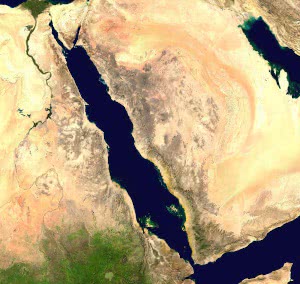
Bimco, ICS, Intercargo und Intertanko verurteilen die Angriffe auf Schiffe und Seeleute in der Straße von Hormuz.
London
Forderung nach einem sofortigen Stopp der Angriffe
Der Schweizer Bundesrat schlägt vor, die Subventionen für den Schienengüterverkehr durch die Alpen bis 2035 zu verlängern.
Bern
Von 2027 bis 2035 würden 486 Millionen Franken ausgezahlt.
Bislang liegt die Zahl der Schiffe, die den Persischen Golf verlassen, bei 6-7 % der Zahl der Schiffe, die ihn vor einem Jahr passiert haben.
Paris
AXSMarine: Keine Anzeichen für eine langfristige Wiedereröffnung der Straße von Hormuz
Global Ports Holding führt Gespräche über die Leitung des Kreuzfahrthafens in St. Vincent und den Grenadinen
Istanbul
Das Terminal verzeichnet derzeit ein jährliches Passagieraufkommen von rund 200.000 Passagieren.
Für den Zeitraum 2027-2031 sind Investitionen in Taiwans Häfen in Höhe von 1,8 Milliarden Dollar geplant.
Taipeh
Am Ende des Fünfjahreszeitraums wird der jährliche Containerverkehr voraussichtlich 15,5 Millionen TEU betragen.
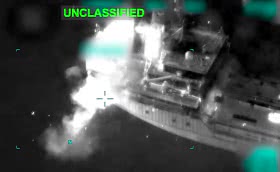
US-Streitkräfte haben im Golf von Oman ein drittes Schiff getroffen.
Tampa
Die "Jalveer" soll eine Ladung iranisches Öl transportieren.
ALLRAIL, CER, ERFA, FEPORT, FTE, UIP und UIRR präsentieren ihren Vorschlag für die Europäische Eisenbahnplattform
Brüssel
Ziel ist es, von Beginn des neuen europäischen Prozesses zur Steuerung der Eisenbahnkapazitäten an eine angemessene Marktrepräsentation zu gewährleisten.
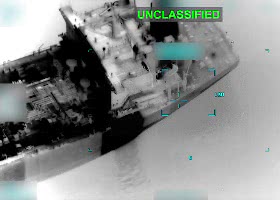
Das US-Zentralkommando bekennt sich zu dem Angriff auf den Produktentanker Settebello.
Tampa/Neu-Delhi/London
Verurteilung durch die indische Regierung und die Internationale Seeschifffahrtsorganisation
Produktentanker in der Straße von Hormuz gerammt
Southampton/Muscat
Ein Matrose wurde verletzt. Zwei weitere Besatzungsmitglieder werden vermisst.
Im ersten Quartal dieses Jahres ging der Güterverkehr im Hafen von Civitavecchia um 1,0 % zurück.
Civitavecchia
Die Zahl der Kreuzfahrtpassagiere stieg um 32,1 %.
Im Golf von Aden wurde ein Handelsschiff angegriffen.
Southampton
Die Gemini-Kooperation erhöht die Frachtkapazität auf der Asien-Mittelmeer-Route.
Kopenhagen
Sea-Intelligence erweitert die wöchentliche Kapazität um 22.402 TEU.
ESPO unterstützt die Schlussfolgerungen des EU-Rates zur maritimen Industriestrategie uneingeschränkt.
Brüssel
Die zentrale Rolle der Hafenanlagen bestätigt
Die CO2-Abscheidung und -Speicherung auf Schiffen ist eine der konkretsten und unmittelbarsten Lösungen für die Dekarbonisierung der Schifffahrt.
London
Kartellbehörde genehmigt Übernahme des Terminal San Giorgio durch die Messina-Gruppe
Rom
Die italienische Wettbewerbsbehörde (AGCM) hat außerdem die Übernahme der Marinewartungs- und Reparaturaktivitäten der Asso-Gruppe (Jobson Italia und UASC UAE) durch die MSC-Gruppe genehmigt.
Es wird erwartet, dass die Frachtraten für Schiffe, die den Suezkanal passieren, steigen werden.
Ismailia
Sie gelten ab dem 15. Juli. Passagierschiffe sind ausgenommen.
Die Suezkanalbehörde hat angekündigt, ab dem 15. Juli Zuschläge auf die Transitgebühren für die Durchfahrt durch den ägyptischen Kanal für die meisten großen Frachtschiffe einzuführen.
Der Rat der EU akzeptiert viele der von den Verbänden des europäischen Seehafenclusters vorgebrachten Forderungen.
Luxemburg
Der Text verschiebt die Verabschiedung konkreter Maßnahmen jedoch notwendigerweise auf zukünftige Gesetzesinitiativen.
ESPO fordert den proaktiven Einsatz des EES-Systems, um Staus in europäischen Häfen zu vermeiden.
Brüssel
Ryckbost: Flexibilitäten, die in außergewöhnlichen, aber vorhersehbaren Umständen umgehend aktiviert werden
Rixi: Es ist notwendig, ein maritimes Emissionshandelssystem zu überwinden, das die Gefahr birgt, dass Verkehr und Investitionen in außereuropäische Häfen verlagert werden.
Luxemburg
Was nötig sei – betont der Vizeminister – seien Anreize und Flexibilität, nicht neue Beschränkungen.
Die Huthis drohen, ihre Angriffe auf Schiffe, die das Rote Meer durchfahren, wieder aufzunehmen.
Sana'a
Für alle Schiffe mit Verbindungen zu israelischen Interessen wurde ein vollständiges Schifffahrtsverbot verhängt.
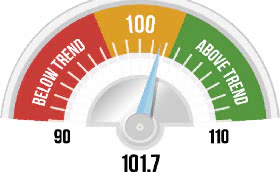
Der globale Warenhandel könnte sich verlangsamen
Genf
Dies geht aus der jüngsten Auswertung des WTO-Warenhandelsbarometers hervor.
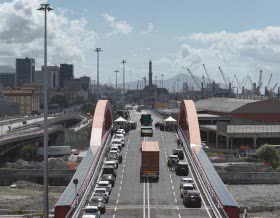
Die neue Hafenstraßenverbindung nach Sampierdarena wurde in Genua in Betrieb genommen.
Genua
Paroli: Die Arbeiten ermöglichen es nun täglich etwa 900 bis 1000 schweren Fahrzeugen, die Betriebsbereiche des Hafens direkt zu erreichen.
Die Berichterstatter des Hafengesetzes verteidigen das auf die italienischen Häfen ausgerichtete Governance-Projekt.
Rom
Ghio (PD) kritisiert, dass die Leitungsorgane dieses neuen Unternehmens ausschließlich von der Regierung ernannt würden. Ghirra (AVS): Die Ziele der nationalen Koordinierung hätten durch eine Stärkung der Nationalen Konferenz der Hafenbehördenpräsidenten erreicht werden können.
Die US-Logistikunternehmen WWEX Group und Auctane kündigen Fusion an
Mailand/Dallas/Austin
Künstliche Intelligenz spielt eine führende Rolle
Unerwarteter Rückgang des europäischen intermodalen Verkehrs im ersten Quartal 2026
Brüssel
UIRR: Infrastrukturchaos durch Baustellen, die Bahnstrecken unterbrechen
Hanseatic Global Terminals erwirbt die restlichen 50 % von Hanseatic Global Terminals Aracruz.
Rotterdam/Aracruz
Das Unternehmen baut den neuen brasilianischen Containerhafen Imetame.
Conftrasporto: Der Gesetzentwurf zu den Häfen verdeutlicht klare operative, finanzielle und regulatorische Compliance-Probleme.
Rom
Russo: Die Zuständigkeiten der italienischen Häfen würden sich mit denen der Hafenbehörden, des Verkehrsministeriums und der Kunstbehörde überschneiden.
WoodMac ist der Ansicht, dass die Dekarbonisierungsregeln einen erheblichen Einfluss auf LNG-betriebene Schiffe haben könnten.
Edinburgh
Laut dem Unternehmen würden europäische Vorschriften Schiffe mit DFDE-Motoren vom Markt verdrängen.
Die französische Fluggesellschaft MN wird die Vega C-Startrakete von Avio zwischen Italien und Südamerika transportieren.
Nantes
Das französische Unternehmen wird sich mit einem neuen Schiff ausstatten, das speziell für den Transport von Weltraumausrüstung entwickelt wurde.
EU-Methodik zur Berechnung der Treibhausgasemissionen aus Verkehrsdienstleistungen tritt in Kraft
Brüssel
Das System basiert auf der internationalen Norm EN ISO 14083:2023
Das Containerschiff MSC Sariska V wurde am Montag im Persischen Golf von zwei Granaten getroffen.
Genf/Rom
Alle Besatzungsmitglieder blieben unverletzt.
Im ersten Quartal stieg der Güterverkehr im Hafen Bremen/Bremerhaven um 5,8 %.
Bremen
Die Containermenge betrug 1.245.515 TEU (+4,4 %).
MSC erwirbt 51% Beteiligung am Containerterminal Pivdennyi (Odessa)
Odessa
Es verfügt über eine Umschlagkapazität von 400.000 TEU pro Jahr.
Das IMO-Übereinkommen über die Haftung und Entschädigung für Schäden im Zusammenhang mit der Beförderung gefährlicher und schädlicher Stoffe auf See tritt am 19. November 2027 in Kraft.
London
Dominguez: ein lang ersehnter Erfolg, der eine wichtige Lücke im internationalen System schließt.
Im April stieg der Schiffsverkehr durch den Suezkanal um 13,9 %.
Kairo
In den ersten vier Monaten des Jahres 2026 wurde ein Anstieg von +12,1 % verzeichnet.
Im ersten Quartal ging der Güterverkehr im Hafen von Neapel um 5,3 % zurück, während er in Salerno um 6,4 % zunahm.
Neapel
Der Containerumschlag in den beiden Häfen betrug 167.433 TEU (-3,5 %) bzw. 101.509 TEU (+7,8 %).
Kerdjoudj (Feport): Mit der Überarbeitung des EU-ETS sollte ein Teil der Einnahmen den Häfen zugewiesen werden.
Brüssel
Aufruf zur sorgfältigen Bewertung des Risikos einer Verlagerung des Umschlagverkehrs
Mit dem neuen COSCO-PTP-Terminal startet der Hafen von Tarragona eine Neuausrichtung auf dem Containermarkt.
Tarragona
Die Bauarbeiten werden voraussichtlich im Jahr 2028 abgeschlossen sein; dann wird das Terminal eine Kapazität von 680.000 TEU haben.
Im Jahr 2025 erreichten die ägyptischen Häfen einen neuen Allzeitrekord beim Containerumschlag.
Alexandria, Ägypten
Starkes Wachstum der Umschlagmengen, die im Jahr 2024 stabil geblieben waren.
Der nationale Vertrag für Hafenliegeplätze und Bootsmänner wurde erneuert.
Rom
Filt-Cgil stärkt einen für den Sektor unerlässlichen Regulierungsrahmen.
Eine Studie erklärt, wie die Nutzung von OPS-Anlagen in europäischen Häfen attraktiver und effektiver gestaltet werden kann.
Brüssel
Es bedarf außerdem klarerer und besser vergleichbarer Tarife.
Federlogistica fordert Änderungen am Hafengovernance-Gesetz.
Genua
Falteri: Die neue Struktur muss der Hafenbehörde ausreichende finanzielle Mittel und effektive operative Instrumente garantieren.
Die ESPO fordert Änderungen am EU-ETS, um die Wettbewerbsfähigkeit der europäischen Häfen zu gewährleisten.
Brüssel
Die negativen Auswirkungen auf die Küstenschifffahrt wurden ebenfalls hervorgehoben.
In der Schweiz wurden neue Maßnahmen zur Stärkung der Wettbewerbsfähigkeit der Seeflagge verabschiedet.
Bern
Ein Schweizer Reeder kann die Schweizer Flagge hissen, auch wenn das Eigentümerunternehmen seinen Sitz im Ausland hat.
Die Seeerprobung des zweiten in China gebauten Kreuzfahrtschiffs ist abgeschlossen.
Shanghai
Die Adora Flora City wird am 22. November ihre Jungfernfahrt vom Hafen von Guangzhou aus antreten.
Im ersten Quartal 2026 verzeichnete der Wert des Güterverkehrs der G20 ein vierteljährliches Wachstum von +5,3 %.
Paris
Eindämmung des Wachstums des Güterverkehrs im Hafen von Tanger Med
Tanger
In den ersten drei Monaten des Jahres 2026 wurden 38,8 Millionen Tonnen umgeschlagen (+3,2 %).
Der Güterverkehr in den chinesischen Seehäfen wuchs im April um 2,6 %.
Peking
Importe und Exporte stiegen um 0,6 %. Der Containerumschlag belief sich auf 26,9 Millionen (+4,8 %).
Fermerci fordert die Regierung zu dringenden Maßnahmen zur Unterstützung des Schienengüterverkehrs auf.
Rom
Eisenbahnunternehmen werden durch Infrastrukturstörungen bestraft
Hafen von Neapel, erste LNG-Bunkerungsoperation von Schiff zu Schiff auf einem Kreuzfahrtschiff
Neapel
Axpo nutzte das Frachtschiff "Green Zeebrugge"
CMA CGM schloss das erste Quartal 2026 mit einem Nettogewinn von 250 Millionen US-Dollar (-78 %) ab.
Marseille
Die Umsätze blieben stabil, wobei Logistik und andere Aktivitäten den Rückgang im Schifffahrtsbereich ausglichen.
Der Oberste Gerichtshof der USA hat den Fall zwischen Havana Docks und Carnival, Royal Caribbean, NCLH und MSC wieder aufgenommen.
Neuer internationaler Sicherheitskodex für autonome Überwasserschiffe verabschiedet
London
Es tritt am 1. Juli in Kraft und gilt zunächst für mindestens zwei Jahre auf freiwilliger Basis.
UIRR: Kombinierter Straßen- und Schienengüterverkehr soll bis 2025 um 1,5 % steigen.
Brüssel
Der Verband hob die verheerenden Auswirkungen auf den Eisenbahnbausektor in Deutschland hervor.
Fincantieri und Teijin Automotive Technologies unterzeichnen eine Vereinbarung zur Entwicklung von Verbundwerkstoff-Schottwänden für Marineanwendungen.
Triest/Pouancié
Folgiero: Wir ermöglichen die Entwicklung leichterer und effizienterer Einheiten.
Nach acht Quartalen mit Gewinn meldet ZIM einen operativen Verlust
Haifa
In den ersten drei Monaten des Jahres 2026 ging das per Schiff transportierte Frachtvolumen ebenfalls stark zurück (-8,3 %).
Die USA haben Anklage gegen vier chinesische Containerhersteller und sieben ihrer Führungskräfte erhoben.
Washington
Die Verhaftung des Marketingdirektors von Singamas in Frankreich am 14. April wurde öffentlich bekannt gegeben.
Das EU-Parlament und der Rat erzielen eine Einigung über ein Zollabkommen zwischen der Europäischen Union und den Vereinigten Staaten.
Straßburg/Brüssel
Es wurden eine Ablaufklausel und eine Aussetzungsklausel eingeführt.
FFS Cargo Switzerland reorganisiert ihr Ein-Waggon-Frachtnetz.
Bern
Es wird erwartet, dass 50 der derzeit 280 Rangierbahnhöfe abgebaut werden.
Die IMO prognostiziert einen Anstieg der Piraterievorfälle auf See um 17 % im Jahr 2025.
London
Am stärksten betroffen war die Straße von Malakka und Singapur mit 122 Vorfällen (+34%).
Hapag-Lloyd und CMA CGM haben die Buchungen für Seetransporte nach Kuba ausgesetzt.
Paris/Frankfurt/Havanna
Entscheidung nach Trumps Ausweitung der US-Sanktionen
Die internationale Ausschreibung für das neue Containerterminal im Hafen von Klaipeda wird bis Ende des Jahres stattfinden.
Klaipeda
Es wird eine jährliche Umschlagkapazität von 2,5 Millionen TEU haben.
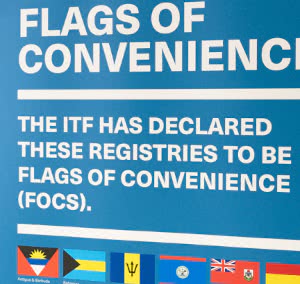
Die ITF fordert die Regierungen auf, das System der Billigflaggen ein für alle Mal abzuschaffen.
London
Die Gewerkschaft prangert an, dass sie der schwarze Schaf im Zentrum der Ausbeutung von Seeleuten sei.
Die Umsätze von Evergreen sanken im ersten Quartal um 21,3 %.
Taipeh
Das operative Ergebnis und der Nettogewinn sanken um -69,5 % bzw. -68,8 %.
Viking Holdings schloss das erste Quartal mit einem Nettoverlust von -54,2 Millionen Dollar ab.
Los Angeles
Umsatzanstieg um 17,5 %
In den ersten drei Monaten des Jahres 2026 wuchs der Containerumschlag an den Terminals des Eurokai-Hafens um 8,9 %.
Bremen
Zuwächse von 12,7 % in Deutschland und 7,8 % in Italien. Ein Rückgang im Hafen von Tanger Med.
Norovirus auf dem Kreuzfahrtschiff Ambition der Ambassador Cruise Line
Purfleet/Vlissingen
Die französischen Gesundheitsbehörden haben der Einheit die Genehmigung erteilt, den normalen Betrieb fortzusetzen.
In den ersten drei Monaten des Jahres 2026 ging der Güterverkehr im Hamburger Hafen um 2,0 % zurück.
Hamburg
Die Containermenge betrug zwei Millionen TEU (-1,6 %).
Die Quartalsfinanzergebnisse von Yang Ming und WHL verschlechtern sich weiter.
Keelung/Taipei
In den ersten drei Monaten dieses Jahres sanken die Umsätze um -15,1 % bzw. -9,3 %.
Hapag-Lloyd schloss das erste Quartal mit einem operativen Verlust von -218,6 Millionen Euro ab.
Hamburg
Umsatzrückgang um 16,8 %
In den ersten drei Monaten des Jahres 2026 sanken die Umsätze von HMM um -4,8 %.
Seoul
Das Containersegment verzeichnete einen Rückgang von 7,9 %, das Schüttgutsegment hingegen ein Wachstum von 20,1 %.
Die Kreuzfahrtterminals von Global Ports Holding verzeichneten im ersten Quartal dieses Jahres einen Rekordverkehr.
Istanbul
Fast fünf Millionen Passagiere erreichten
Le Aziende informano
International Shipping Community to Gather in Genoa for Two Days of Maritime Dialogue and Networking
In den ersten drei Monaten des Jahres 2026 ging der Güterverkehr in den Häfen von Genua und Savona-Vado um 3,8 % zurück.
Genua
Im März ein Rückgang von -6,1 %, wobei der Containerverkehr um deutliche 15,0 % einbrach.
Federconsumatori fordert die Regierung auf, Maßnahmen zu ergreifen, um die Auswirkungen der steigenden Fährticketpreise abzumildern.
Rom
Die Preissteigerungen betragen in den mittleren Augustwochen +18%.
Im ersten Quartal dieses Jahres stieg der Güterverkehr in den kroatischen Häfen um 14,6 %.
Zagreb
Monatsrekord im März
Erfolgreicher Test von HVO-Dieselkraftstoff für den Antrieb von Kreuzfahrtschiffen
San Donato Milanese
Das Experiment wurde gemeinsam von Eni und MSC Cruises durchgeführt.
Gioia Tauro belegt den zweiten Platz im Ranking der wichtigsten italienischen Häfen und überholt damit Genua.
Rom
Fincantieri verzeichnet einen Rückgang bei Umsatz und Neuaufträgen
Rom
Der Auftragsbestand des Konzerns erreichte einen Rekordwert von 74,2 Milliarden Euro.
Der Präsident von Angopi erhielt das erste professionelle Befähigungszertifikat als Festmacher.
Savona
Das Zertifikat muss alle fünf Jahre erneuert werden.
Fincantieri hat das neue Kreuzfahrtschiff Mein Schiff Flow an TUI Cruises ausgeliefert.
Hamburg/Monfalcone
Mit einer Bruttoraumzahl von rund 160.000 Tonnen verfügt es über eine Kapazität von rund 4.000 Passagieren.
In den ersten drei Monaten des Jahres 2026 ging der Güterverkehr im Hafen von Palermo um 6,3 % zurück.
Palermo
Auch in den Häfen Termini Imerese, Trapani und Licata ging der Verkehr zurück. In Porto Empedocle und Gela kam es zu Zuwächsen.
Die Kartellbehörde hat der Übernahme der Vermögenswerte und Aktivitäten von Armas durch Baleària noch nicht ihre endgültige Zustimmung erteilt.
Barcelona
Legen Sie eine Reihe von Bedingungen fest
Die jährliche Versammlung von Assarmatori findet am Dienstag in Rom statt.
Rom
Das Motto der Veranstaltung lautet: "Anleitung, wie man nicht im Dunkeln navigiert".
VARD wird ein Fischereifahrzeug der neuen Generation bauen
Triest
Es wurde von der norwegischen Firma Rosund Drift in Auftrag gegeben.
Konzentration im britischen Schiffbausektor
London
Baleana kauft die APCL-Gruppe (A&P Tyne, Cammell Laird und A&P Falmouth sowie Falmouth Docks and Engineering)
Royal Caribbean hat sein neues Kreuzfahrtschiff Legend of the Seas in Empfang genommen.
Miami
Das von Meyer Turku gebaute Schiff bietet Platz für 5.610 Passagiere.
Informelle Anhörungen von Gewerkschaftsvertretern zur Reform der Hafenverwaltung
Rom
Im Zentrum der hervorgehobenen kritischen Punkte – bestätigt Filt-Cgil – steht die geplante Errichtung des Porti d'Italia Spa.
Venedig, die DPSS bestätigt die Notwendigkeit, neue Offshore-Terminals außerhalb der Lagune zu bauen.
Venedig
Das strategische Systemprogrammierungsdokument wurde vom AdSP-Managementkomitee genehmigt.
Die Spinelli-Gruppe ist dem italienischen Verband der Hafenterminalbetreiber beigetreten.
Genua
Das Unternehmen und Assiterminal zeigten sich zufrieden mit der Wiederaufnahme einer wichtigen Zusammenarbeit.
In den ersten drei Monaten des Jahres 2026 ging der Güterverkehr in den britischen Häfen um 2,6 % zurück.
London
Deutlicherer Rückgang (-6,8 %) der Passagierzahlen
Mark Hindley ist der neue Präsident des Europäischen Verbandes für Kraftfahrzeuglogistik.
Istanbul
Wolfgang Göbel wurde zum Ehrenpräsidenten gewählt
Im Hafen von Genua wurde ein Schlepper wegen Unregelmäßigkeiten bei den Stickoxidemissionen gestoppt.
Genua
Das Schiff wird für die Bauarbeiten am neuen Wellenbrecher eingesetzt.
Im April stieg der Güterverkehr im Hafen von Ravenna um 21,4 %.
Ravenna
Für Mai wird ein Anstieg von +2,5 % erwartet.
Sallaum Lines wird 2027 einen eigenen China-Europa-Service einführen
Nanjing
Zwei neue PCTCs mit je 7.400 CEU wurden in Empfang genommen
Am 12. Juni fand in Neapel eine Initiative von Filt Cgil zum Thema Governance im Hafensektor statt.
Rom
Marinedrohne im rumänischen Hafen Constanta gefunden
Bukarest
Das Gerät zerstörte sich selbst, ohne dass es zu Opfern kam.
HJSC erhält grundsätzliche Genehmigung für den Bau eines 10.000 TEU Biofuel-Containerschiffs.
Athen
Es wurde aus dem koreanischen Schiffsregister freigegeben.
Global Ship Lease investiert 917 Millionen Dollar in den Kauf von zehn neuen Containerschiffen
Athen
Die Auslieferung erfolgt zwischen dem vierten Quartal 2028 und dem ersten Quartal 2030.
NÄCHSTE ABFAHRSTERMINE
Visual Sailing List
Abfahrt
Ankunft:
- Alphabetische Liste
- Nationen
- Geographische Lage
WASS (Fincantieri) und Magellan-Abkommen über Kanadas Unterwasserverteidigung
Triest
Es werden Möglichkeiten der industriellen Zusammenarbeit im Bereich schwerer Torpedos und Gegenmaßnahmen ausgelotet.
Lösungsansätze zur Überwindung des chronischen Personalmangels im italienischen Schifffahrtssektor
Procida
Pagano (Komitee für Seearbeit): Digitalisierung, Vereinfachung und Zusammenarbeit zwischen Ausbildungseinrichtungen und Unternehmen zur Bewältigung der Krise
Maritimes Ausbildungsabkommen zwischen Gente di Mare (Cosulich) und Carnival unterzeichnet
Genua
Di Tizio: Diese Zusammenarbeit ermöglicht es uns, ein internationales Projekt in das Gebiet zu bringen.
Antipollution (V.Group) bestellt vier umweltfreundliche Schiffe bei ONEX Shipyards & Technologies
Athen
Option für vier zusätzliche Einheiten
Spinelli hat drei neue Umschlagfahrzeuge bei FTMH bestellt.
Genua
Ein Reachstacker für leere Container ist bereits im Depot des Konzerns in Livorno in Betrieb genommen worden.
Luigi Merlo wird die Leitung des italienischen Kreuzfahrtterminals von MSC Cruises übernehmen
Genf
Centrone (ehemals Fincantieri) übernimmt die Position des Direktors für maritime Politik und Regierungsangelegenheiten der Gruppe in Italien.
Die griechische Skaramangas-Werft und der südkoreanische Konzern HD Hyundai unterzeichnen ein Kooperationsabkommen.
Athen
Ziel ist die Zusammenarbeit beim Bau von militärischen Überwasserschiffen.
AD Ports kauft den brasilianischen Corredor Logística e Infraestrutura
São Paulo/Abu Dhabi
Das Unternehmen wickelt den größten Export von Agrar- und Lebensmittel-Massengütern in dem südamerikanischen Land ab.
Der Dreijahres-Betriebsplan 2026-2028 der Hafenbehörde des nördlichen Tyrrhenischen Meeres wurde genehmigt.
Livorno
Einstimmige Zustimmung des Managementausschusses
Chen Lichtenstein wird zum Präsidenten und CEO von ZIM ernannt
Haifa
Er wird den zurücktretenden Eli Glickman ersetzen.
Gianluca Croce wurde als Präsident von Assagenti Genova bestätigt.
Genua
Die Mitglieder des Vorstands des Vereins für den zweijährigen Zeitraum 2026-2028
Die Fähre Mega Serena ist nun Teil der Flotte von Corsica Sardinia Ferries.
Vado Ligure
Es bietet Platz für bis zu 2.000 Passagiere und über 600 Fahrzeuge.
Der erste Stahlschnitt für das Kreuzfahrtschiff Crystal Grace fand in Marghera statt.
Miami
Fincantieri wird das Schiff im Frühjahr 2028 ausliefern.
Palumbo Superyacht hat dem Hafen von Ortona 13.048 Quadratmeter Liegeplatzfläche zur Verfügung gestellt.
Ancona
Zentrale Adriatische Hafenbehörde, Richtlinien für die Erteilung der einheitlichen ZES-Genehmigung
Hafen von Livorno: Zwei neue FHP MarterNeri-Lagerhallen eingeweiht
Livorno
Investitionen von über 23 Millionen Euro
Der Ausschuss der Hafenbehörde des zentralen und nördlichen Tyrrhenischen Meeres hat beschlossen, den Krisenzustand der Institution zu beenden.
Civitavecchia
Neue Lösung für außergewöhnliche Transporte auf intermodalen Zügen von FS Logistix und Van der Vlist
Verona
Zwei Hubarbeitsbühnen wurden von Verona nach Rostock transportiert
Feuer an Bord der Fähre GNV Phoenix im Hafen von Neapel
Neapel
Im Inneren von Deck 6 des Schiffes brachen Flammen aus.
Latrofa hat eine vertrauenswürdige Person ausgewählt, die ein hauseigenes Unternehmen innerhalb der Hafenbehörde von Latium leiten soll.
Civitavecchia
Der neue alleinige Geschäftsführer – so betonte er – habe besonders strenge Managementrichtlinien erhalten.
In den ersten drei Monaten des Jahres 2026 sanken die Umsätze von MPC Container Ships um -6,4%.
Oslo
Quartalsnettogewinn von 40,8 Millionen US-Dollar (-31,8 %)
Der Dreijahres-Betriebsplan der sardischen Hafenbehörde für den Zeitraum 2026-2028 wurde genehmigt.
Olbia
Grünes Licht vom Managementausschuss
Das Umweltverträglichkeitsprüfungsverfahren für das Projekt "San Antonio Outer Harbor" ist abgeschlossen.
Heiliger Antonius
Das Kreuzfahrtschiff Viking Mira wurde auf der Fincantieri-Werft in Ancona ausgeliefert.
Ancona/Los Angeles
Es hat eine Bruttoraumzahl von 54.300 Tonnen und eine Kapazität von 998 Passagieren.
Im Jahr 2025 verzeichnete RINA einen Umsatz von über einer Milliarde Euro (+11 %).
Genua
Nettogewinn um 30 % gestiegen
Die neue Eisenbahnbrücke wurde im Hafen von Marina di Carrara errichtet.
Marina di Carrara
Pisano: Ein Wendepunkt in der Logistikorganisation des Hafens.
Häfen, Güterterminals und Verkehrskorridore. Venedig und die obere Adria als Tor zum Osten.
Venedig
Dies ist das Thema der Veranstaltung, die am Donnerstag in Venedig stattfinden wird.
Estnische Staatsflotte bestellt elektrisch betriebene Fähre bei der polnischen Werft Crist
Tallinn
Vertrag im Wert von 49,93 Millionen Euro
Im April wurden in den spanischen Häfen 1,7 Millionen Container umgeschlagen (+1,7 %).
Madrid
Kreuzfahrtpassagiere um -18,4 % gesunken
Der Containerverkehr im Hafen von Valencia ging im April um 2,5 % zurück.
Valencia
In den ersten vier Monaten des Jahres 2026 wurden fast 1,8 Millionen TEU umgeschlagen (+0,2 %).
Global Ship Lease meldet erneut Rekordquartalsumsatz
Athen
Nettogewinn um 24,0 % gesunken
Internationale Zusammenarbeit zwischen der sardischen Hafenbehörde und dem Hafen von Tanger Ville im Bereich Luxusyachten
Cagliari
Förderung einer integrierten Schifffahrtsroute zwischen Sardinien und Marokko
Im Hafen von Gioia Tauro wurde das neue medizinische Erste-Hilfe-Zentrum eingeweiht.
Gioia Tauro
Zu den Einrichtungen gehören eine Erste-Hilfe-Klinik und ein Rettungswagen.
BPER stellt Grimaldi Euromed die Finanzierung für die Flottenmodernisierung zur Verfügung.
Mailand/Neapel
Mittel, die zur teilweisen Deckung des Kaufs des Schiffes "Grande Manila" verwendet wurden
ASRY und Priya Blue gründen eine Schiffsrecyclingwerft in Bahrain
Al Muharraq/Alang
Das erste zur Verschrottung bestimmte Schiff ist in dem Land im Nahen Osten eingetroffen.
SAAM Towage bestellt fünf neue Schlepper bei der türkischen Werft Sanmar Shipyard
Santiago
Sie werden eine Zugkraft zwischen 70 und 80 Tonnen haben.
Der Containerumschlag im Hafen von Long Beach ging im letzten Monat um 5,7 % zurück.
Long Beach/Singapur/Hongkong
In Singapur wurde ein Wachstum von +3,6 % verzeichnet, während in Hongkong die Container um -6,3 % zurückgingen.
Carta (Fermerci): Es bedarf dringender politischer Maßnahmen zur Unterstützung der Eisenbahnunternehmen.
Rom
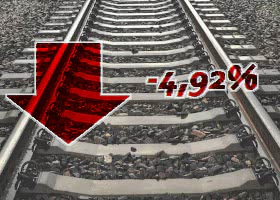
Im Jahr 2025 ging der Schienengüterverkehr um etwa 3,5 % zurück (Züge/km).
Fratelli Neri bestellt zwei weitere neue Schlepper in Ägypten
Ismailia
Vertrag mit der Suezkanalgesellschaft für moderne Boote
Der Containerumschlag im Hafen von Barcelona stieg im April um 17,4 %.
Barcelona/Algeciras
Der Hafen von Algeciras wächst um 6,3 %.
Die Regierung von Islamabad hat den Verkauf einer 30-prozentigen Beteiligung an der Pakistan National Shipping Corporation genehmigt.
Islamabad
Die Anteile gehen an das staatliche Logistikunternehmen NLC, das auch die Managementkontrolle über PNSC übernehmen wird.
Im Jahr 2025 verzeichnete das spanische Hafensystem Rekordeinnahmen.
Madrid
Der Gewinn vor Steuern betrug 349 Millionen Euro (+4,2 %).
Leapmotor International stärkt seine Partnerschaft mit der neapolitanischen Schifffahrtsgruppe Grimaldi.
Hoofddorp
Im ersten Quartal wurden rund 20.000 Einheiten von China auf den italienischen Markt transportiert.
Der Kreuzfahrtverkehr in deutschen Häfen erreichte im vergangenen Jahr einen neuen Rekord.
Wiesbaden
Mit 1,51 Millionen Passagieren betrug das Wachstum +4,1 %.
Federazione del Mare beteiligt sich an den Feierlichkeiten zum Internationalen Tag der Frauen in der Seefahrt 2026.
Rom
Mattioli: Die maritime Wirtschaft verliert Chancen und Potenzial.
Nach Jahren anhaltenden Wachstums ist die Kurzstreckenseeschifffahrt in Spanien in eine Phase struktureller Verlangsamung eingetreten.
Madrid
Das geht aus dem neuesten Bericht des Observatorio Estadístico del Transporte Marítimo de Corta Distancia hervor.
AD Ports übernimmt den deutschen Spediteur MBS Logistics
Kolonie
Das Unternehmen beschäftigt über 450 Mitarbeiter und unterhält 26 Niederlassungen weltweit.
Die Spinelli-Gruppe ist der Sustainable Intermodal Logistics Association beigetreten.
Genua/Rom
Zusammenfassung: ALIS kann unserem Ökosystem einen strategischen Mehrwert bieten.
200 Millionen Dollar Investition für den Bau und die Ausstattung des neuen Mehrzweckterminals in Pointe-Noire
Brazzaville/Abu Dhabi
Drei Schiff-zu-Land-Krane bei ZPMC bestellt
Evergreen bestätigt den Kauf von fünf neuen 24.000-TEU-Containerschiffen
Taipeh
Sie werden von der chinesischen Werft Guangzhou Shipyard International gebaut.
Korea wird in den kommenden Monaten einen Containerdienst zwischen Asien und Europa auf der Arktisroute einführen.
Busan
Die Ausschreibung wurde mit der vorläufigen Auswahl des Unternehmens PanStar abgeschlossen.
Die Seemannsgewerkschaft hat erneut Alarm wegen des Schicksals ehemaliger ILVA-Schiffe geschlagen.
Verona
Ihr möglicher Abriss gefährdet 240 Arbeitsplätze in der Schifffahrt.
Im Zeitraum Januar-März ging der Güterverkehr im Hafen von Koper um -3,9 % zurück.
Ljubljana
Im Containersektor wurden 2,4 Millionen Tonnen umgeschlagen (-1,7 %).
Letzte Chance, einige Hafenjobs als anstrengend anzuerkennen und einen Pensionsfonds einzurichten.
Genua
Siemens übernimmt das italienische Unternehmen MERMEC
Mönch
Die Transaktion umfasst auch das Ferrosud-Werk zur Herstellung von Schienenfahrzeugen in Matera.
Wachstum des intermodalen Verkehrs am Nola-Interport
Nola/Mailand
Wirtschafts- und Finanzanalyse des Fedespedi-Forschungszentrums zu Güterterminal-Managementunternehmen
Quartalsrückgang des Güterumschlags in den Häfen Montenegros
Podgorica
Der Anstieg des Frachtaufkommens von und zu italienischen Häfen setzt sich fort, wenn auch in einem langsameren Tempo.
Assarmatori prangert den Ausschluss des Seeverkehrs aus dem Brennstoffgesetz II an.
Rom
Messina: Es kann nicht erwartet werden, dass der Sektor die Auswirkungen der Kraftstoffpreiserhöhungen allein auffangen kann.
Die HHLA verzeichnete im ersten Quartal einen Rückgang des Containerumschlags um 5,3 %.
Hamburg
Eijsink: Ein ungewöhnlich strenger Winter hat unseren täglichen Betrieb erheblich eingeschränkt.
MSC Technology Italy startet einen Plan zur Einstellung von 200 neuen Mitarbeitern.
Turin/Genf
MSC Cruises debütiert auf dem Alaska-Markt
Die Region Marken hat Carlonis Ernennung zum Präsidenten der Zentralen Adriatischen Hafenbehörde genehmigt.
Ancona
Wir warten auf die Stellungnahme des Regionalrats der Abruzzen.
Die Quartalsumsätze des griechischen Unternehmens Danaos Corporation bleiben stabil.
Athen
Zwei Schiffe des Unternehmens sind weiterhin im Persischen Golf blockiert.
Der Containerverkehr im Hafen von Los Angeles stieg im April um 5,7 %.
Los Angeles/Port Newark
In den ersten drei Monaten des Jahres 2026 wurden im Hafen von New York knapp 2,2 Millionen TEU umgeschlagen (-1,2 %).
Cognolato wurde als Präsident von Assiterminal bestätigt.
Rom
Das neue Präsidium und der neue Vorstand wurden ebenfalls gewählt.
Im ersten Quartal 2026 stieg der Güterverkehr im Hafen von Ravenna um 0,8 %.
Ravenna
Das Wachstum wurde durch die Inbetriebnahme der Regasifizierungsanlage angetrieben.
HÄFEN
Italienische Häfen:
Ancona Genua Ravenna
Augusta Gioia Tauro Salerno
Bari La Spezia Savona
Brindisi Livorno Taranto
Cagliari Neapel Trapani
Carrara Palermo Triest
Civitavecchia Piombino Venedig
Italienische Logistik-zentren: Liste Häfen der Welt: Landkarte
DATEN-BANK
ReedereienWerften
SpediteureSchiffs-ausrüster
agenturenGüterkraft-verkehrs-unternehmer
MEETINGS
Die jährliche Versammlung von Assarmatori findet am Dienstag in Rom statt.
Rom
Das Motto der Veranstaltung lautet: "Anleitung, wie man nicht im Dunkeln navigiert".
Am 12. Juni fand in Neapel eine Initiative von Filt Cgil zum Thema Governance im Hafensektor statt.
Rom
Vergleich der logistischen, industriellen und infrastrukturellen Entwicklung von Häfen
››› Archiv
NACHRICHTENÜBERBLICK INHALTSVERZEICHNIS
World's first floating fusion reactor-powered vessel could become reality with new project
(Interesting Engineering)
Shipbuilding's Spring Illusion: Backbone Collapses
(The Chosun Daily)
››› Nachrichtenüberblick Archiv
FORUM über Shipping
und Logistik
Intervento del presidente Tomaso Cognolato
Roma, 19 giugno 2025
››› Archiv
MSC bietet mit seinem Dragon-Service Anläufe in Neapel und Malaga an.
Genf
Die Anläufe im Hafen von Gioia Tauro wurden abgesagt.
Der Vorstand des National Maritime Fund wurde erneuert.
Genua
Er wird drei Jahre im Amt bleiben.
Netzwerkvertrag zur gemeinsamen Entwicklung intermodaler Dienste in der Emilia-Romagna
Bologna
Es wurde von Interporto Bologna, Dinazzano Po S, SAPIR und der Rail Traction Company unterzeichnet.
Messina (Assarmatori): Die europäische Technokratie zeigt sich beim EU-Emissionshandelssystem unflexibel.
Brüssel
Er betont, dass eine deutliche Verbesserung dieser Maßnahmen notwendig ist.
Die Ergebnisse des ersten Quartals von d'Amico International Shipping sind positiv.
Luxemburg
Das Unternehmen profitierte von den Auswirkungen geopolitischer Spannungen.
Zwei Orientierungsveranstaltungen in Livorno und Neapel zur Vorstellung des ITS Purser-Lehrgangs.
Genua
Von der italienischen Handelsmarineakademie geplante Treffen mit der Grimaldi-Gruppe
Der Bugbereich der Explora V wurde in Palermo zu Wasser gelassen.
Genf
Fincantieri wird das Kreuzfahrtschiff im Jahr 2027 an Explora Journeys ausliefern.
Der Präsident der Hafenbehörde der östlichen Adria ist der neue Präsident des Passagierterminals Triest.
Triest
Er übernimmt von Gianluca Madriz.
Hafen von Olbia: Im Zufahrtskanal zur Isola Bianca haben die Arbeiten zur Wiederherstellung des Meeresbodens begonnen.
Cagliari
Ziel ist es, großen Kreuzfahrtschiffen die sichere Einfahrt zu ermöglichen.
Damen wird die Schiffsreparaturwerft in Dakar renovieren und betreiben.
Dakar/Gorinchem
20-Jahres-Vertrag mit der Société des Infrastructures de Réparation Navale
Savino Del Bene hat drei Unternehmen der spanischen Grupo Marítima Sureste übernommen
Florenz/Valencia
An der Vereinbarung sind Marítima Sureste Shipping, Marítima Sureste Spain und Transportes Gaypemar beteiligt
Fim-Cisl, das Treffen mit Fincantieri bezüglich der Perspektiven der Muggiano-Werft verlief positiv.
La Spezia
Die von der Geschäftsleitung angekündigten Investitionen – so die Gewerkschaft – gehen in die richtige Richtung.
Steigende Energiekosten belasten den jüngsten Quartalsfinanzbericht von Finnlines.
Helsinki
Doepel: Die Belastungen werden durch die Umsetzung des EU-ETS weiter erhöht.
Marabello ist der neue Generalsekretär der Hafenbehörde der Straße von Messina.
Messina
Die Aufgabe dauert vier Jahre.
Schwergutfrachter HMM Namu in der Nähe der Straße von Hormuz auf Grund gelaufen
Seoul
Bei dem Unfall gab es keine Verletzten oder Tote.
Die vierteljährliche Finanzperformance von DFDS verschlechtert sich.
Kopenhagen
Der Fahrzeugbestand der Flotte wächst. Die Fahrgastzahlen sind um 18 % gesunken.
Vom 21. bis 23. Mai findet in Ravenna das "Deportibus – Festival der Häfen, die die Welt verbinden" statt.
Ravenna
Kalmar verzeichnet im Quartal einen Rückgang der Neuaufträge
Helsinki
Im Zeitraum Januar-März stiegen die Umsätze um 5 %.
Die Zahl der offenen Stellen in den Hafenunternehmen von Triest und Monfalcone steigt.
Triest
Übergabe einer Anerkennungsplakette
Im ersten Quartal 2026 sanken die Umsätze von Costamare um -5,3 %.
Mönch
Aufträge für 12 neue Schiffe mit einer Kapazität von 9.200 TEU und vier Schiffe mit einer Kapazität von 3.100 TEU bestätigt
- Via Raffaele Paolucci 17r/19r - 16129 Genua - ITALIEN
tel.: +39.010.2462122, fax: +39.010.2516768, e-mail
Umsatzsteuernummer: 03532950106
Registrazione Stampa 33/96 Tribunale di Genova
Verantwortlicher Direktor: Bruno Bellio
Jede Reproduktion, ohne die ausdrückliche Erlaubnis des Herausgebers, ist verboten
Suche in inforMARE Einführung
Feed RSS Werbeflächen

inforMARE in Pdf
Handy