Independent journal on economy and transport policy
19:22 GMT+2
This page has been automatically translated by Original news
TRANSPORTATION
Electrification of ports and airports, the electricity network is the new bottleneck
Transport & Environment asks to speed up connections and to overcome the criterion "first as, first served"
Bruxelles
September 30, 2026
The process of electrification of ports and airports is likely to be strongly braked from the bottleneck consisting of connections to the electricity grid and the available electrical capacity. It highlights Transport & Environment (T&E) in the briefing "Grid connection at European ports and values: Bottleneck and solutions to accelerate transport electrification", published today, underlining that if on the one hand the European Union is imposing on ports and airports to speed up the electrification of its activities, on the other hand the electricity network is likely not to be ready to provide the necessary capacity. The problem, according to T&E, is particularly evident because the regulatory obligations of electrification do not correspond to a similar adaptation of electrical infrastructure.
The core of the problem, found by T&E, is that the European network has been designed to a large extent for a system characterized by a relatively small number of large power stations and by a slower and predictable demand growth, not for an economy in which hundreds of ports, airports, industrial plants and fleets are simultaneously passing to the electrician. To this are added the times of realization: a new connection or strengthening of an existing connection can take from four to ten years, about half of which can be absorbed by authorization procedures before laying cables.
Another problem is how the available capacity is assigned. According to T&E, many developers require more skills than they actually expect to use, to be careful about future needs. In many countries, requests are still processed according to the principle "first as, first served". This mechanism - T&E observes - can prevent giving priority to a strategic investment in a port or airport of the TEN-T trans-European transport network compared to a project that, although having submitted the application previously, remained firm. The briefing defines these last projects "zombie projects", i.e. speculative or no longer operational demands that continue to occupy a position in the queue.
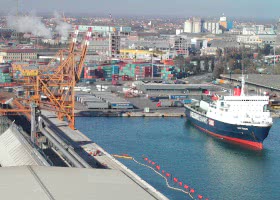
In relation to the ports the briefing of the association, whose objective is the reduction of the impact of the transports on the environment, dwells on the problem constituted from the traffic of the ferries finding that, if the power supply of a ship in the dock for lighting, refrigeration and services of board determines a relatively contained and predictable question, instead the rapid charging of a hybrid or electric ferry can demand a capacity of network several times greater than that necessary to power. The briefing estimates that up to 52% of existing ferries could use battery electric drive by 2035, significantly increasing the need for charging capacity in ports.
A particularly significant example of T&E is represented by the ports of Dover and Calais. According to a study of the association, to electrify the fleets of the ferries the two ports would need approximately 379 GWh and 284 GWh of electricity per year respectively. Together they would represent 14% of the entire energy demand of ferries planned for 2035, while serving only 12 ships. Moreover, the demand for peak power could reach tens of MW to a single dock, a requirement equivalent to more than 67 fast charge columns of 150 kW working simultaneously.
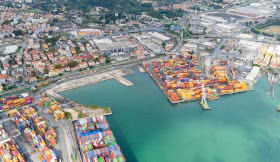
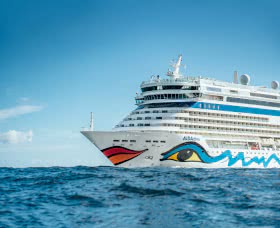
To further complicate the sizing intervenes seasonality. crocieristico traffic and traffic of the ferries reach the peak during the summer, while the container terminals have different operating cycles. The network operators must therefore dimension the infrastructure considering the day of maximum demand and not the average, increasing both the capacity required by the ports and the costs of investments.
A similar problem concerns airports. The progressive electrification of Ground Power Units (GPU) and Ground Support Equipment equipment (GSE) requires that the network be sized for maximum peak demand, but - T&E emphasizes - existing connections have often not been designed for these levels of consumption. The Heathrow case is indicated as an emblematic example. The English airport, the busiest in Europe, already needs double the power it used ten years ago for its existing activities and must now wait nine years to get a direct connection to the national network. The previous estimate was even 18 years. According to the briefing, the new nine-year term was also judged unsatisfactory by the airport CEO, Thomas Woldbye, who asked for a clear priority in assigning connections.
To avoid the congestion of the network becoming an obstacle to decarbonization, T&E proposes first of all to map and plan the needs of electrification of ports and airports at TSO level, that is the operator of the electricity transmission network, and DSO, which is the manager of the distribution network. According to the association, today public decision makers do not have a sufficiently clear map of the areas in which the queues for connections are longer and of the ports most exposed to the risk of not complying with the obligations set for 2030. TSO, DSO, port and airport authorities and national energy authorities should therefore coordinate their investment programmes.
A second proposed solution concerns the use of electrical production on site, storage systems and smart charging. For T&E, the integration of port and airport infrastructures with renewable plants and storage systems nearby, through a shared connection point, could reduce the new capacity to withdraw from the public electricity grid. The intelligent management of charging could also reduce the peaks of demand and therefore the necessary additional capacity, with applications for airport assistance means, terminalistic shuttles, port trucks and fleets of employees.
Finally, T&E proposes to overcome the principle of "first come, first served" by introducing a greater priority for strategic infrastructure and flexible connection agreements. The idea is to allow ports and airports to connect to the network first, even with a variable initial capacity that can increase or decrease over time, instead of waiting for years the availability of a "stop" connection to the maximum capacity required. According to T&E, this flexibility could also have a value for the network manager, because it would allow to use the consumption of ports and airports as a balancing instrument. For this reason the association proposes to accompany flexible connections with flexible electric rates, lower when available production exceeds demand. According to the briefing, Germany and Belgium are already experiencing such reforms.
- Via Raffaele Paolucci 17r/19r - 16129 Genoa - ITALY
phone: +39.010.2462122, fax: +39.010.2516768, e-mail
VAT number: 03532950106
Press Reg.: nr 33/96 Genoa Court
Editor in chief: Bruno Bellio No part may be reproduced without the express permission of the publisher







 The process of electrification of ports and airports is likely to be strongly braked from the bottleneck consisting of connections to the electricity grid and the available electrical capacity. It highlights Transport & Environment (T&E) in the briefing "Grid connection at European ports and values: Bottleneck and solutions to accelerate transport electrification", published today, underlining that if on the one hand the European Union is imposing on ports and airports to speed up the electrification of its activities, on the other hand the electricity network is likely not to be ready to provide the necessary capacity. The problem, according to T&E, is particularly evident because the regulatory obligations of electrification do not correspond to a similar adaptation of electrical infrastructure.












 - Via Raffaele Paolucci 17r/19r - 16129 Genoa - ITALY


