Independent journal on economy and transport policy
13:48 GMT+1
This page has been automatically translated by Original news
SHIPPING
Safety at sea, ETS, flag and work at the center of the report of the President of Confitarma
Zanetti calls for a European alliance for freedom of navigation, a national pact for transition and less bureaucracy for the Italian flag
Roma
October 27, 2026
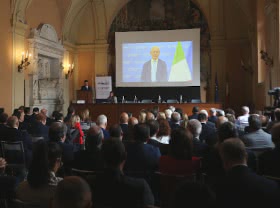
There are currently four priorities for Italian armament: Community policy, economic and social cohesion. Today in Rome, the president of the Italian Confederation Armatori (Confitarma), Mario Zanetti, during the assembly of the organization that celebrated the hundred and twenty-five years since its foundation, which took place in 1901. The event was attended by the President of the Republic, Sergio Mattarella.
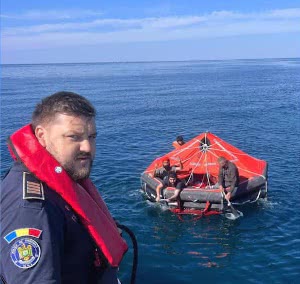
The first priority reported by Zanetti concerns the safety of those who work at sea, put at risk by conflicts and tensions in the Black Sea, the Red Sea and the Strait of Hormuz, as well as the recrudescence of piracy in the Horn of Africa and the Gulf of Guinea. The president of Confitarma has denounced that attacks on ships and crews cannot be tolerated, nor arbitrary restrictions or tolls in international straits and therefore asked the government to promote in Europe an alliance for safety and freedom of navigation, with a more coordinated presence of the European military Marines, adequate means and operational continuity.
The second priority is the energy transition, to be achieved by bringing together environmental objectives and investment capabilities of enterprises. For Confitarma the European ETS review proposal, the EU's emissions trading system remains insufficient on the competitiveness level. The association asks for shared rules, without overlap, and a clear path to overcome the European levy on the emissions of ships when a global system equivalent in IMO will be adopted, to avoid a double taxation. According to the estimates of Confitarma, the ETS will cost to the European armament over 16 billion euros in the three years 2024-2026 and about ten billions a year from 2027, while to the field will return only 10% of these resources between 2030 and 2040. Zanetti has called on the European Commission to provide adequate resources for decarbonization and the Italian government to permanently reinvest the proceeds of the ETS in the marine field.
On the front of the technologies for the decarbonization of the shipping, Zanetti has invited not to narrow the options: biofuels, methanol, ammonia, hydrogen, electric and, in the long term, also nuclear. In this regard, it proposed a national pact for the marine energy transition, which brings together institutions, shipowners, energy producers, motor industry and shipbuilding, and a new green naval credit, on the model of the eighties.
Zanetti also reported a risk of retracing the modal transfer, and recalled that, according to the study center Blue Horizons of Confitarma, in the two years 2024-2025 about 70 thousand Tir have chosen the whole road, going over 82 million kilometers avoidable.
The third priority is the competitiveness of Italian weapons. Zanetti has remembered that in the last decade the tonnage of flag has reduced by about 30% and that today less than 60% of the tonnage controlled by the Italian shipowners beats Italian flag. To weigh - it has explained - is also the recent extension of the fiscal and social benefits to the ships of other European flags. Evidencing that, according to the estimates of Confitarma, the bureaucracy of the Italian flag can cost up to 400 thousand euros per year per ship, Zanetti has emphasized that the International Register and Tonnage Tax remain unreliable tools but are no longer enough alone. The president of Confitarma has found that a first result has arrived from the norms on simplifications of 2025 and the valorization of the sea resource of 2026, which have transposed several proposals of the association, and of the new plan of the Sea 2026-2028, and has judged strategic renewal until 2033 of the International Register and Tonnage Tax, asking clear rules also on the activities that can benefit. It also called for the overcoming of administrative fragmentation, the conclusion of the updating of the marine health system and the certainty and uniformity of application in relations with the Agency of the Entry.
The fourth priority concerns people. Zanetti recalled the dialogue with the trade union organizations, at the base of the renewal in course of the national collective contract of work, and the role of the Maritime Labour Convention of 2006, of which the twenty years recur. He asked for a regulatory framework that enhances collective autonomy and gives certainty to enterprises and workers, respecting the competences of the institutions and the autonomy of the judiciary. For young people, Confitarma focuses on more accessible and attractive sea professions, overcoming "sometimes anachronistic" norms and strengthening collaboration with nautical institutes, ITS and universities. Energy transition and artificial intelligence - he added - require new skills and continuing training.
Zanetti also dwelt on the reform in course of the norms for the harbour sector, specifying that Confitarma supports three priorities: a national direction fully public, with clear competences regarding the Authorities of Harbour System; no new burden for business and traffic; an effective representation of the national armament in the governance of the ports. "They are the needs of the ships and the traffics - it has emphasized - to have to orientate the infrastructural choices, not the contrary".
- Via Raffaele Paolucci 17r/19r - 16129 Genoa - ITALY
phone: +39.010.2462122, fax: +39.010.2516768, e-mail
VAT number: 03532950106
Press Reg.: nr 33/96 Genoa Court
Editor in chief: Bruno Bellio No part may be reproduced without the express permission of the publisher







 There are currently four priorities for Italian armament: Community policy, economic and social cohesion. Today in Rome, the president of the Italian Confederation Armatori (Confitarma), Mario Zanetti, during the assembly of the organization that celebrated the hundred and twenty-five years since its foundation, which took place in 1901. The event was attended by the President of the Republic, Sergio Mattarella.









 - Via Raffaele Paolucci 17r/19r - 16129 Genoa - ITALY


