Independent journal on economy and transport policy
23:17 GMT+2
This page has been automatically translated by Original news
SHIPPING
Sails in the tail, wasted fuel: how wait at anchor can become saving
The Global Maritime Forum publishes the results of Cargill tests on 16 real trips. Slow down and arrive when the mooring is free reduces consumption and emissions
Copenaghen
October 7, 2026
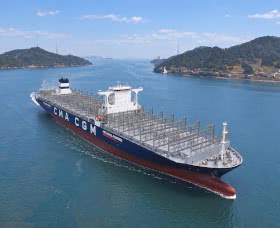
A little more than three months from the publication of a study on the advantages from the reduction of the speed of navigation and from the optimization of the harbour ports ports for the purposes of decarbonization of the marine transport(of 23 June 2026), today the Global Maritime Forum has presented a new report that shows, with data from real commercial operations, how much can be saved by transforming the waiting times in sea of the ships in lower consumption and emissions. The new document highlights that the commercial ships spend between 4% and 6% of the operating year to wait outside the ports, pairs to approximately 15-22 days of inactivity, and emphasizes that it is one of the most obvious inefficiencies of the marine transport: navigate fast and then stay at anchor, burning fuel without any advantage.
The report proposes to reverse the logic and to overcome this inefficiency with the optimization of the ports of call: the ship slows down and arrives when its mooring is ready. The trip lasts as soon as possible, no additional ships are needed and less fuel is consumed.
To see if the idea holds out of theoretical models, the American Cargill Ocean Transportation conducted three studies in real commercial operations. The results are collected in the report "Turning waiting time into savings: Lessons from Cargill's port call optimisation pilot", published today by the Global Maritime Forum. The document therefore acts as a concrete test bench compared to the previous study of the same forum, which had examined the theoretical potential of the combination between speed reduction and optimization of the touched to the ports.
The relationship is based on the data of 16 marine journeys centered on three ports, the Brazilian one of Santarém and the Australian ones of Newcastle and Albany, and on three mechanisms. In the Cereal Terminal of Cargill in the Brazilian river port on the Amazon Rio, an internal scheme of virtual notice of readiness (VNoR): the ship is considered arrived for contractual purposes while it is still in navigation. On ten trips in zavorra, with the adoption of the VnoR procedure the arrival is postponed on average of 18,5 hours (in a range between zero and 74 hours). The estimated saving is about 222 tons of total CO2, equal to 3% of the emissions of the zavorra routes, without any disturbance to the programming of the terminal. The data is however conditioned by the fact that the ships, already optimized, traveled near the minimum speed limit and no one was able to navigate in ultra-slow regime.
A mandatory system based on the VNoR principle has been analysed for the port of Newcastle since 2010. On five trips, three have produced estimated savings of 107, 97 and 53 tonnes of CO2 (between 6% and 11% of the emissions of the zavorra route), while two had no margins because the mooring was already free on arrival. The average is 51 tons of CO2 per trip. Specifying that a distinctive feature of the port of Newcastle is that ships cannot remain at the bottom for more than 48 hours before the expected arrival time, the precise report that an important contribution came from the ocean current of Eastern Australia: where the required speed would descend under the continuous minimum load of the ships' engines, the ships were left dragging from the current to the port, with the support of weather routing indications to plan the route according to weather conditions.
Regarding the port of Albany, the report explains that the Blue Visby Solution platform is used at the CBH Group terminal. A Kamsarmax refugee traveling from Zhoushan, China, already slow to 8.6 knots, was invited to slow down to 7.4 knots delaying the arrival of about two days. The saving was 10.73 tons of fuel, about 33.4 tons of CO2 and 9.6% of the emissions of the period. The bunker savings were shared between terminal and shipowner, which was also compensated for the effects of delay on the counterstallie.
The authors of the report warn that the differences between these results should not be read as a classification of mechanisms. The most important factor is the amount of waiting time you can absorb: where the mooring was free there was nothing to save, while the more congested cases gave the best results. They then count the local conditions, like the currents, and the characteristics of the ship. Moreover, the authors emphasize that the sample is reduced, and the case of Albany, based on only one trip, is indicative more than representative.
Another indication concerns estimates. In Santarém the speed reduction would have made predict, with the empirical rule of the power proportional to the cube of the speed, a saving of about 11%; that obtained was 3%. For this reason the report recommends using the specific characteristics of each ship, starting from the minimum power of the engine, not to overestimate the potential.
Based on real data from Kamsarmax able to navigate at very low speed, Cargill then analyzed efficiency at reduced navigation speed. The result is that the benefits are significantly reduced beyond normal slow navigation, well below what the cubic rule provides. Among the causes: the increased use of auxiliary generators to feed auxiliary blowers, the use of auxiliary boiler, constant daily auxiliary consumption on longer trips, the accumulation of deposits in low-load engines and the lower performance of the main engine.
The report points out that the interdependence relationship between the two levers emerges here. Without optimizing the ports of call, further slowing risks only to produce a later arrival followed by a longer wait, or to request more ships to carry the same cargo. By optimizing, the time gained is taken away from the wait to the anchor, also reducing auxiliary consumption. At the same time, optimization can only take advantage of the slowing margin that the ship possesses. In the segment of the bulk carriers the ultra-slow steaming remains uncommon until the Kamsarmax and Panamax, and requires clauses in the rental contracts and, often, additional spare parts.
To encourage the combined model based both on the optimization of the steps and the reduction of the speed, the report emphasizes the need to remove four main obstacles. The first is constituted by the imbalance of the incentive to adopt the model, as the effort falls on the port or on the harbour terminal, while the saving of fuel goes to the shipowner. In Newcastle the port supports the cost of the scheme without obtaining direct advantages. According to the report, savings sharing mechanisms, such as Blue Visby, solve the problem but require an agreed reference value, with risk of litigation.
The report then notes that sales and rental contracts are not written for this purpose: some provide for the physical arrival of the ship to present the notice of readiness. Contracts which explicitly require the physical arrival of the ship for the presentation of the notice of readiness should therefore be properly modified.
Regarding the ability to slow down ships, the report indicates that it is advisable to choose ships and trips with real margins of reduction of speed.
The fourth obstacle is given by variability, being the savings dependent on waiting times, weather, currents and characteristics of the ships. In this respect - it detects the report - also the model counts: in Newcastle ships can slow down only in the seven days prior to arrival, which limits savings and, in theory, could push operators to speed up navigation at the beginning of the journey.
Reaffirming that the results are estimates on a limited sample and should not be transformed into reduction targets, the report emphasizes that, however, it also demonstrates that the barriers to use this model are practical and not basic, and evidences that a result as modest but well quantified is more useful to the industry of a theorist.
The report concludes by pointing out that the reduction of speed is one of the largest decarbonization levers available for the marine sector in this decade and that the optimization of the ports of call is what makes it feasible commercial benefits.
- Via Raffaele Paolucci 17r/19r - 16129 Genoa - ITALY
phone: +39.010.2462122, fax: +39.010.2516768, e-mail
VAT number: 03532950106
Press Reg.: nr 33/96 Genoa Court
Editor in chief: Bruno Bellio No part may be reproduced without the express permission of the publisher







 A little more than three months from the publication of a study on the advantages from the reduction of the speed of navigation and from the optimization of the harbour ports ports for the purposes of decarbonization of the marine transport












 - Via Raffaele Paolucci 17r/19r - 16129 Genoa - ITALY


