Independent journal on economy and transport policy
12:00 GMT+1
This page has been automatically translated by Original news
SHIPPING
Malta Maritime Forum, the current EU maritime ETS is wrong and causes damage
A proposed correction: apply the ETS to cargo, whether containerized or not, rather than to the ship carrying it. The MBB proposes exemptions for island connections
Floriana/Bruxelles
November 17, 2026
If yesterday the Greek shipowners' association accused the EU of
rigidity within the framework of negotiations at the International
Maritime Organization for the decarbonization of shipping
(
of the 16th
November 2026), today the Malta Maritime Forum, an organization
representative of the Maltese maritime cluster, has taken on a
an even more critical position, expressing a full rejection
of the ETS, the Union's emissions trading system
European, as applied to the maritime sector.
In a statement, the MMF argued "that the ETS
of the EU was designed inadequately." The Forum
Maltese denounced that "it was approved on time of
record, without adequate and broad consultation with the industry
maritime" and that "the result is a system
impassable that creates unfair competition to the detriment of ports
Europeans."
According to the MMF, moreover, the EU ETS "is not producing the
promised climate outcomes. The EU - highlighted the organization
- cannot apply its own laws outside its own
territory. Commercial activities, investments, and connections
are moving towards North Africa, where the ETS is being applied
differently or is not applied at all. Emissions do not
decrease: they simply move elsewhere, carrying with them
jobs and investments."
The Malta Maritime Forum emphasized that "Malta is
hit harder than other countries: it does not have - it has
specified - alternatives such as rail transport or roads
inland navigable and is the most open economy
within the EU-27."
For the MMF, "the ETS must be adjusted so that the
EU ports, and Malta in particular, do not undergo a
unfair treatment. We must - the organization emphasized -
ensuring equal conditions." According to the MMF, "a
key proposal is to apply the ETS to the load, which is
containerized or not, rather than to the ship transporting it."
Warning «against compromise solutions that
would pose unnecessary risks for Malta and the rest
of Europe," the Malta Maritime Forum expressed support for
the approach considered constructive both by the Maltese government and
of the opposition and expressed its intention to support the
upcoming discussions with the European Commissioner for Climate, Wopke
Hoekstra, in order to present the EU with a unified national voice.
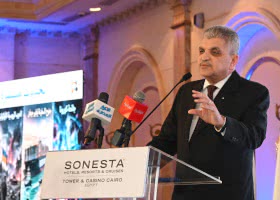
During a discussion with Union institutions and politicians
European in recent days in Brussels, Mario Xuereb, administrator
delegate of the Malta Business Bureau, the organization representing
the Malta Chamber of Commerce to the EU, had adopted a
softer approach to the issue by emphasizing the
need to find a proper balance for the ETS between
connectivity, competitiveness, and the challenges posed by
climate change. "About 70% of imports
Maltese - he had recalled - passes on the route between Italy and
Malta. Therefore, the application of the EU maritime ETS affects
on Maltese businesses and families through the costs of
transport. The MBB supports the ETS and its 2030 targets and the
2040. Our concern concerns proportionality:
on a route without alternative modes of transport -
Xuereb explained - the full application of a burden on
carbon emissions may not change behaviors, but
it only risks driving prices up."
The political advisor of the Malta Business Bureau, Nigel Caruana,
had outlined the proposed amendments to the ETS made
by the organization, which include a 50% exemption from the ETS, without
expiration date, for ro-ro ships, ro-pax ships, and those
container ships connecting a port located in a Member State
with a port on an island belonging to a Member State having a
area less than 10,000 square kilometers and lacking
road or rail connections with the mainland, the application
charges exclusively on the cargo actually transported,
excluding empty return trips, and the maintenance of
safeguard measures for transshipment operations, based on
on the 50% threshold and on the 150 nautical mile rule, at
in order to protect the Malta Freeport container port from
competition from neighboring North African port hubs. Furthermore, the
MBB proposes the allocation of free ETS allowances covering 50%
of ETS obligations for flights to and from islands with surface
less than 10,000 square kilometers and lacking connections
road or fixed rail and, finally, greater support for
sustainable aviation fuels (SAF).
- Via Raffaele Paolucci 17r/19r - 16129 Genoa - ITALY
phone: +39.010.2462122, fax: +39.010.2516768, e-mail
VAT number: 03532950106
Press Reg.: nr 33/96 Genoa Court
Editor in chief: Bruno Bellio No part may be reproduced without the express permission of the publisher







 If yesterday the Greek shipowners' association accused the EU of
rigidity within the framework of negotiations at the International
Maritime Organization for the decarbonization of shipping
 (







 - Via Raffaele Paolucci 17r/19r - 16129 Genoa - ITALY


