Independent journal on economy and transport policy
18:39 GMT+1
This page has been automatically translated by Original news
PORTS
Italian ports, finding qualified personnel is increasingly difficult
An analysis of Randstad Research on 13 professional profiles also highlights a marked gender imbalance
Napoli
October 29, 2026
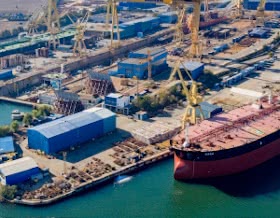
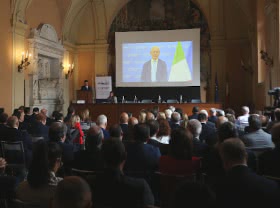
The Italian ports are in deep evolution because of the effect of digitization and the green transition, but the harbour and logistics chain must make the accounts with difficulty in finding the skills. In addition, the sector has an almost only male labour force (86% of employment is composed of men), with average-low education levels (four out of ten have the average license) and an advanced average age: a third of workers is between 45 and 54 years and just one out of five less than 35. It is this photo, not really comforting, of the national harbour sector that emerges from the search "the human capital in the Italian harbour field: structure, demography and skills needs for the future" of Randstad Research, the Randstad Group research centre. The research was presented today in Naples as part of Blue Connect, the initiative created by Clickutility Team and realized with the support of Randstad Italy, to connect the professionals of the blue economy with the students, organized during the Naples Shipping Week 2026.
The research shows that the need for generational replacement is accompanied by adequate skills to cover constantly changing roles, but the companies have strong difficulties in finding staff, both among the specialized technical figures and among the operators of the means of transport. "To face the lack of competences in the harbour field - it has found Antonio Lampugnani, associate director of Randstad Operational Intempo, in occasion of the present presentation - it serves a structural intervention on several fronts. It is necessary to invest in training, both in order to strengthen the link between enterprises, schools and universities with routes increasingly adhered to the needs of the labour market, and in order to update the skills of those already operating in the field. It is necessary to make the harbour professions more attractive for young people and to foster greater female participation, exceeding the image of a sector exclusively linked to traditional and physical tasks. The future of the Italian ports will not only depend on investments in infrastructure and technologies, but also on the ability to train, attract and value the people who will have to manage them".
The survey analysed the human capital and labour market dynamics based on 13 key profiles emerging from the mapping of the sector: commanders and officers of board, technicians of the organization of the harbour traffic, shippers and technicians of the distribution, in the management of the warehouses, in the administrative management of the goods transports, vigilances of the fire, conductors of heavy means and trucks, conductors of forklift trucks, deck sailors, conductors of boilers, conductors of boats and motor boats, facchini, operators to move goods.
The Randstad Research survey analysed the demographic structure of employees, based on the analysis of the Istat data relating to the total basin of the 13 profiles in question (equal to 1,07 million workers). In this respect, the sector is characterized by a profound structural imbalance: 85.9% of the workforce is composed of men, only 14.1% of women. From the point of view of schooling, almost half of the employed (49.4%) is in possession of a higher secondary school diploma, 41.4% has at most the average license or has completed the school obligation. Graduates are only 9.2% of employees.
The average age is advanced: the largest anagram band is between 45 and 54 years, which absorbs 32.6% of the total, while between 35 and 44 years 23.1% and between 55 and 64 years 21%. The young people with less than 35 years are only 21.4% of the employed. 86.9% of the workforce is Italian; foreigners are 13.1%, of which 8.5% extra-EU citizens. The geographical distribution sees a clear concentration of the figures in the north: the north-west absorbs 31.4% and the north-east 25.5%, followed by the center (19.3%), the south (16.8%) and the islands (7%).
The analysis based on the recruitment forecasts of the Excelsior Information System of the 13 professions makes it clear that the labor market linked to the harbour activities and to the annexed logistics is marked by criticality of emphasized findings, which affect both the technical figures with high specialization and the operators of the means of transport. The most emblematic data concerns the technicians of the organization of the harbour traffic, for which there is a rate of difficulty of finding pairs to 100% of the occupational forecasts. But high intake difficulties are also found for firefighters (62.5% of difficulty) and shippers and distribution technicians (60.9%), for which there is a chronic shortage of profiles with integrated competences in digital, customs and negotiating.
The shortage is confirmed for industrial and managerial engineers, for which almost 60% of the expected revenue is difficult to find, mainly due to the inadequacy of the preparation of candidates or their numerical scarcity. Heavy vehicle and truck drivers are the profession with the highest entry volume (over 232 thousand assumptions), but the difficulty of finding exceeds 56.7%. A similar phenomenon is observed in the strictly marine and nautical professions: boat and motor boats conductors show a difficulty rate of 50.5%, forklift drivers of 45.4%, deck sailors of 44.5% and commanders and officers of 36.7%.
On the contrary, the difficulty of finding is more contained for office operating profiles and for general warehouse labor. For the employees to the administrative management of the goods transports and the employees to the management of the warehouses, the difficulty of finding stops little under 28% and is further reduced for the facchini and the operators to the movement goods, central figure of the logistic and harbour system, that with a rate of 23.2% turns out the professional figure less complex to recruit between the 13 mapped.
- Via Raffaele Paolucci 17r/19r - 16129 Genoa - ITALY
phone: +39.010.2462122, fax: +39.010.2516768, e-mail
VAT number: 03532950106
Press Reg.: nr 33/96 Genoa Court
Editor in chief: Bruno Bellio No part may be reproduced without the express permission of the publisher







 The Italian ports are in deep evolution because of the effect of digitization and the green transition, but the harbour and logistics chain must make the accounts with difficulty in finding the skills. In addition, the sector has an almost only male labour force (86% of employment is composed of men), with average-low education levels (four out of ten have the average license) and an advanced average age: a third of workers is between 45 and 54 years and just one out of five less than 35. It is this photo, not really comforting, of the national harbour sector that emerges from the search "the human capital in the Italian harbour field: structure, demography and skills needs for the future" of Randstad Research, the Randstad Group research centre. The research was presented today in Naples as part of Blue Connect, the initiative created by Clickutility Team and realized with the support of Randstad Italy, to connect the professionals of the blue economy with the students, organized during the Naples Shipping Week 2026.








 - Via Raffaele Paolucci 17r/19r - 16129 Genoa - ITALY


