Independent journal on economy and transport policy
12:13 GMT+1
PORTS
T&E, emissions from ships docked in European ports cause damages of 2.5 billion euros per year
Rotterdam is the port with the highest health and environmental costs, followed by Antwerp. Genoa is in fifth place. A letter from the Clean Port Coalition calls for accelerating the electrification of ports and ships
Bruxelles
November 24, 2026
Pollutant emissions produced by ships during the
Stay in European ports generate healthcare costs every year and
estimated at 2.53 billion euros. This is supported by a study
published today by Transport & Environment (T&E), according to the
what the current European provisions on electrification of
quays still leave a share without adequate regulation
of emissions generated by ships stationed in
port.
The analysis, titled "Plugging the AFIR gaps:
the true cost of in-port emissions," examines the
Emissions produced by auxiliary engines and ship boilers
during stops at the 100 largest European ports, using data
of 2024 relating to ship emissions monitoring (MRV) and
AIS data on port stays. To quantify the damages
sanitary and environmental aspects, T&E applied the methodology contained
in the Handbook on the External Costs of Transport of the institute of
Dutch research CE Delft.
The study explains that of the 2.53
billion euros in estimated annual external costs, 1.72 billion
are attributable to damage caused by air pollution,
while 812 million relate to costs associated with mitigation
of greenhouse gas emissions. According to the study, therefore, 68%
of the overall economic impact is linked to the consequences
of pollution on health, while the remaining 32% is
associated with climate-altering emissions.
Among the main ones
pollutants considered include sulfur oxides (SOx),
nitrogen oxides (NOx) and particulate matter, substances that contribute
the onset of respiratory and cardiovascular diseases. In
2024, in the 100 ports analyzed, ship emissions have
reached a total of six million tons of CO2, 3,206
tons of SOx, 54,941 tons of NOx, and 1,463 tons of
PM10. A particularly significant fact concerns oxides of
sulfur: according to T&E, a large ship emits on average during
a quantity of SOx equivalent to that
produced in one year by 19,300 cars. The 11,796 large ships that
called at European ports in 2024 would generate,
overall, sulfur emissions equivalent to those of 228
millions of cars.
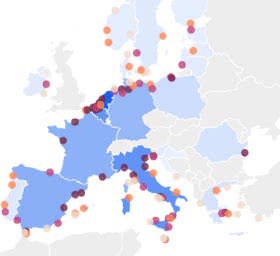
The study presents a ranking of European ports
most affected by health and environmental costs, which sees
Rotterdam ranks first with 338.8 million euros per year, followed
from Antwerp with 216.1 million. Next are Marseille with 123.4 million,
Hamburg with 120.4 million and the port of Genoa with 110.6 million
euros. The Ligurian port is therefore the leading Italian port in the
ranking, ahead of Livorno, for which the study estimates costs
annual totals of 59.2 million euros. Next are Naples with 51.3 million
million, Civitavecchia with 49.8 million, and Trieste with 40.4
millions.
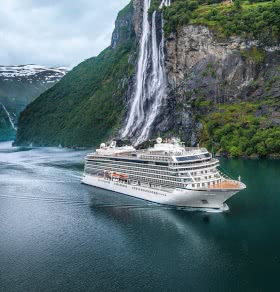
T&E ranks Genoa and Livorno among the ports at
predominantly passenger vocation, since the ships of this
segment represent the main source of pollution damage
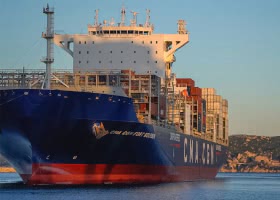
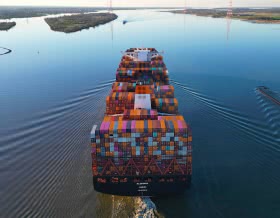
atmospheric at their respective stops. Otherwise, Rotterdam, Antwerp, and
Hamburg is classified as ports with a predominantly cargo focus. A
European level - according to the organization, which promotes
Decarbonization of transport - freight ports record
on average health damages of 28.8 million euros per year, against
9.5 million for those with predominant passenger traffic and 8.1 million
millions for specialized ports in related activities
to oil companies.
According to T&E, at the root of the pollution problem
generated by ships in European ports, the exclusions provided for
from the Alternative Fuels Infrastructure Regulation (AFIR), the
European regulation on fuel infrastructure
alternative that introduced obligations for the implementation and
the use of ships' electrical power systems by
land. The provisions mainly concern large ships
container ships, ferries, and gross tonnage cruise ships
more than 5,000 tons. In the ports of the TEN-T network that
meet certain traffic thresholds, by 2030 it will have to
the availability of electrical connections must be ensured
at the dock for at least 90% of the ports of the ships involved. The
The FuelEU Maritime regulation also provides for the obligation to
connection for categories of ships subject to the regulation. The
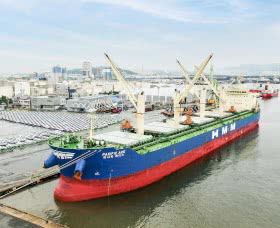
study highlights that, however, several types of
naval units, including oil tankers, gas carriers, bulk carriers, ships
ro-ro, general cargo ships, and offshore and
service. Ships with a tonnage between 400 and
5,000 tons, while the current provisions concern only
the replacement with electricity of the energy produced by
auxiliary engines and not that generated by boilers of
edge.
According to T&E, considering all categories of ships
and emission sources currently not contemplated, the provisions
currently in force cover less than 40% of external costs
total generated by emissions from ships in port. The share
uncovered amounts to about 1.56 billion euros per year.
For T&E, extend the electrical connection obligation to
types of large ships currently excluded would allow
avoiding health and climate costs by about 500 million euros
per year, and a further saving of 714 million could result
from the electrification of boilers. The latter represent
in fact, a significant source of emissions, especially for
oil tankers and gas carriers, which use heat to maintain the
Load at the required temperature. According to the study, boilers
of large ships generate a total of 640 external costs
million euros per year, of which 331 million are attributable
only to oil and gas carriers.
The study also
emphasizes that even smaller ships have a
electrification potential. Units between 400 and 5,000
gross tonnage generates health and climate costs
estimated at 168 million euros per year in the ports analyzed and,
thanks to generally lower energy consumption and
the regularity of coastal routes, they could
represent candidates particularly suitable for use
of ground-based power supply.
Another aspect highlighted by the analysis concerns the
economic convenience of electrification. Apparently, for the
Owners continue to use auxiliary engines powered by
fossil fuels during port stay may
be less expensive than purchasing electricity
from the internet. However – the study notes – this comparison does not
takes into account the health and environmental damage that is transferred
on port communities and public budgets. Considering
even these external costs, T&E concludes that the use of
fossil fuels to produce energy on board during layover
in port, it is overall twice as expensive
compared to the use of electricity supplied from the ground.
According to the organization's calculations, if the shipowners were to
fully support the health and climate costs of
own emissions, the additional cost would be 0.25 euros for
kWh of electricity produced by auxiliary motors, equivalent
to 1,318 euros per ton of marine diesel consumed.
In light of the study results, and in view of the review
of the AFIR regulation, T&E asks the European Commission to
progressively expand the scope of the obligations to
electrification, introducing a binding timetable for
include all types of ships. In particular, it proposes to
prioritize ro-ro ships and offshore units,
to extend the obligations to vessels between 400 and 5,000 GRT and to
introduce specific requirements for charging infrastructure
of electrically powered ships.
The organization also calls for an evaluation of the
possibility of electrification of onboard boilers,
supporting the implementation of pilot projects and studies of
feasibility, and calls on Member States and authorities
port authorities are required to prepare electrification programs
that allow anticipating future energy demand and
necessary investments in networks.
The call for greater regulatory certainty is shared
also by the Clean Port Coalition (CPC), which brings together
representatives of industry, civil society, and
maritime and energy sectors. In a joint letter today
addressed to the European Commission, signed among others by
DFDS and Green Transition Denmark, the coalition urges
the introduction of predictable deadlines for the extension
of shore power supply to all ships, the adoption of
provisions for battery charging and acceleration of
procedures for accessing the electrical grid.
The CPC's letter, in addition to supporting T&E's position,
also highlights the issue of energy availability and
of the capacity of the electrical grids. According to the signatories,
electrification represents the most effective solution for
decarbonize ports and maritime transport, including not
only large passenger ships and container ships, but also
tugboats, port service vehicles, oil tankers, and ships
used in short-sea shipping connections. The appeal
electricity would allow for improved quality
reduce greenhouse gas emissions during the stay
in port and reduce the dependence of the European maritime industry
from imported fossil fuels, thus strengthening the
energy security and the competitiveness of the airports.
The coalition also recalls the ongoing transformation of the
role of ports, destined to become not only industrial hubs
and infrastructure for commercial and passenger traffic, but also
clean energy production, storage, and distribution centers,
where transport decarbonization processes converge
maritime, rail, and road transport. The letter recalls,
in this context, the European Ports Strategy and the subsequent
Electrification action plan, Commission initiatives
EU that recognize the strategic role of port infrastructure
in the energy transition.
The Clean Port Coalition
however, it emphasizes that the transition to zero-emission ports must
to face various structural obstacles. Among these are
regulatory gaps, uncertainty about future energy demand
electricity, the lack of adequate financing mechanisms,
delays in grid connection, differences in levels of
energy taxation and the limited spread of
energy storage. To overcome these obstacles, the coalition
calls on the European Commission to provide, within the framework of the
revision of AFIR, a certain and predictable timetable for
the extension of shore power supply to all ships
that scale EU ports, starting with the categories for which
Technology adoption is already easier
from an operational point of view. It also calls for the introduction of requirements
specific for battery charging infrastructures of
electric ships, thus ensuring adequate capacity
to the development of this fleet.
Another request concerns strengthening the role of ports
as energy hubs through grid access procedures
faster and more prioritized electric power, accelerating
Implementation of storage systems and introduction of mechanisms
of flexibility that allow efficient integration of
new port facilities in the general electricity grid. The
coalition also urges the definition of objectives
infrastructure beyond 2030, essential for
allow port authorities and energy operators
to plan the investments necessary for the expansion of the
network capacity.
- Via Raffaele Paolucci 17r/19r - 16129 Genoa - ITALY
phone: +39.010.2462122, fax: +39.010.2516768, e-mail
VAT number: 03532950106
Press Reg.: nr 33/96 Genoa Court
Editor in chief: Bruno Bellio No part may be reproduced without the express permission of the publisher






 Pollutant emissions produced by ships during the
Stay in European ports generate healthcare costs every year and
estimated at 2.53 billion euros. This is supported by a study
published today by Transport & Environment (T&E), according to the
what the current European provisions on electrification of
quays still leave a share without adequate regulation
of emissions generated by ships stationed in
port.











 - Via Raffaele Paolucci 17r/19r - 16129 Genoa - ITALY


