Independent journal on economy and transport policy
04:55 GMT+2
This page has been automatically translated by Original news
PORTS
The EU-ETS Observatorium confirms that the emissions trading system is having a negative impact on EU ports
The proposed correctives are the extension of the criteria for the designation of the ports of transhipment of neighboring container and a factor of reduction percentage applied to the volume of CO2 emissions of the ships
Madrid
July 31, 2026
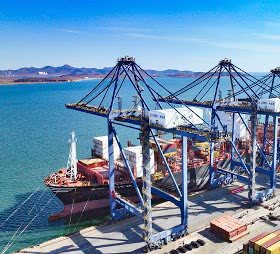
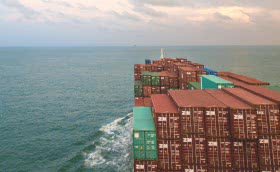
The extension to the marine sector of the EU ETS, the system of exchange of quotas of emissions of the European Union that from the first January 2024 is applied to the merchant ships with gross tonnage greater than 5.000 tons, is determining in the segment of the containerized traffic a loss of connectivity between the European ports and the neighboring countries, trend that from September 2025 is intensifying. It highlights the second relationship of the EU-ETS Observatorium, the initiative promoted by the Spanish public agency Puertos del Estado to monitor the effects of the extension of the ETS system to the shipping, in particular on the competitiveness of the Spanish and European ports, identifying any phenomena of carbon leakage, that is to relocalization of the emissions, that involve the move of marine traffics to extra-EU ports not subject to the environmental obligations of the EU.
The publication of the second report of the Spanish observatory follows for a few days the presentation by the European Commission of its proposal to review the EU ETS(of 17 July 2026).
The new relationship of the Observatorium, which analyzes the evolution of the scenario from 2023 to March 2026, integrates the tracking of the container with that of the ships to evaluate what happens to the cargo once arrived in the extra ports EU, and also analyzes the ro-ro traffic between Spain and Italy. The main conclusion of the analysis is that there is a decline in direct connectivity of the main European ports, with a reduction that in northern Europe is five percentage points and extends to 18 percentage points in the eastern Mediterranean (from 68% to 50%).
The report notes that, for a container in transit between Europe and Asia through the maritime route that surrounds the Cape of Good Hope, the EU ETS can add between 400 thousand and 500 thousand euros to the cost of a single journey and emphasizes that this figure, multiplied by hundreds of annual trips, represents a huge incentive for the shipping companies that can be induced to change the programming of the ports in order to avoid incurring in the certain ETS charges. The report estimates that, for example, an ultra large container vessel that comes directly from Asia, without tranships via the ports of Rotterdam or Antwerp, in the United Kingdom, whose ports are excluded from the scope of application of the EU ETS, can arrive to save approximately one million euros per journey, encouraging therefore the companies has bypass the harbour hubs of the European Economic Area to serve the market of the United Kingdom.
In particular, the observatory identifies two main modes with which the shipowners can attenuate the impact of the legislation. The first previews the change of the marine route (route transformation), with the ships that continue to operate as a single service, but the first or last European port of call is moved to a port of a neighboring non-EU country without interrupting the continuity of the marine service. This is the case, for example, of Felixstowe instead of Rotterdam as a gateway to Northern Europe. The precise relationship that this practice could be discouraged by designing ports located in third nations such as ports of transhipment of neighboring containers, type of ports in which currently the rules of execution of the European Commission makes fall the only Moroccan port of Tanger Med and the Egyptian port of Port Said East.
The second mode consists in the splitting of the route (route splitting), with the transoceanic service that is divided into two distinct trunks and with the great oceanic ships that make stop only in a harbour hub located in a neighboring country, from which the cargo is then moved towards the ports EU through smaller feeder ships. The report notes that this strategy is particularly insidious because it brings out the entire transoceanic segment from the scope not only of the EU ETS, but of the entire legislative package "Fit for 55", and cannot be neutralized by designing the neighboring ports as ports of transhipment neighboring within the meaning of the European Directive n. 87 of 2003.
The report also notes that to complicate the picture is added a third phenomenon, that of the possible modal transfer from the sea to the road, with the ro-ro marine traffic that risks to return to the transport on rubber since the latter is not subject to an equivalent charge.
The Observatorium emphasizes that these are scenarios not at all theoretical, but rather plausible for structural reasons of the market: the strong competitiveness on the hires, the intrinsic mobility of transhipment traffic that has little connection with the local import-export and can therefore move easily; the limited availability of low-emission fuels and, above all, the growing investment in the ports of neighboring countries to the EU which has increased both the ability to welcome the large portacontainer and the development of transhipment hubs outside the Community borders.
To distinguish the market dynamics considered "organic" from a real elusion of the norms of the EU, the Observatory has developed a methodology centered on two phases of "relevance" and "attribution", with the first that analyzes the great flows of harbour traffic to aggregate level and examines the structural metrics of the transport network, also descending to detail of the individual routes and navigation companies, and with the second with which it tries to isolate the EU economic trend, operating costs, port infrastructure, congestion, geopolitical events. This is accompanied by a discrete choice model, an econometric model to quantify the relative weight of each factor.
The synthesis of the relationship is clear and evidences that the market share of the main European ports-gateway on the long-range routes, measured by multiplying the ability of the ships in teu for the nautical miles traveled, is dropped from 67% of the first trimester 2023 to 57% of the first trimester 2026. Erosion covers all three macroregions analyzed - North Europe, Eastern Mediterranean and Western Mediterranean - although with very different intensity and mechanisms.
For the Observatorium, the trend is even more eloquent if you take into consideration the infrastructural investments, as between 2021 and 2030 are announced investments for 14,9 billion euros and for 41,7 million teu of new port capacity in the area Euromed, of which well 9,3 billion euros (the 62% of the total capacity, pairs to 25,7 million teu) are destined to ports extra-EU only According to the report, it is a structural signal, and not cyclical, and once services, terminals and contracts consolidate around the extra-EU port hubs, the phenomenon becomes difficult to reverse.
The document focuses, in particular, on the case of the United Kingdom, considered the most emblematic, whose quota of long-range marine transport between the ports of Northern Europe, measured in thousands of TEU-Best, is passed from 17% in 2022, to 31% in 2025 and to 36% in 2026, with an increment almost perfectly corresponding to the combined loss of Holland and Germany. In the same period the share of the Netherlands fell from 36% to 25%. The report notes that what makes the UK case interesting is that this growth is not accompanied by a corresponding increase in transhipment: the transhipment activity in the British ports has in fact remained stable around 13-14% of total traffic. It is not therefore a phenomenon of route splitting, but of route transformation, with ships that simply insert or move a British port within rotations for the rest unchanged. In this regard, the report mentions the example of a service Asia-North Europe which in 2023 used the port of Rotterdam as a gateway both in and out and in 2025, maintaining the same ports of call, reversed the order by making a British port of call gateway.
The attribution phase applied in the Observatorium analysis excludes the most obvious alternative explanations: gross domestic product and UK commercial volumes have not grown significantly since 2022, so the increase in connectivity is not driven by demand. Moreover, there are no evidence of a reduction of operating costs in the British ports than competitors like Rotterdam or Antwerp. On the contrary, ports like Felixstowe, London Gateway and Southampton are investing heavily in dredges and cranes, a sign that, paradoxically, they were not yet fully equipped to receive the large container ships. The port of London Gateway, for example, has expanded its capacity from 2,4 to 3.5 million annual teu between 2021 and 2024, with the objective of reaching 5,25 million teu within 2029.
The relationship also dwells extensively on the scenario in the eastern Mediterranean, observing that the phenomenon of the impact of the EU ETS assumes even more net contours and is complicated by the crisis of the Red Sea, with the attacks of the Houthi that from the end of 2023 have forced many companies to move their ships from the route that crosses the Suez Canal to that around the Cape of Good Hope, adding 2-3 weeks of navigation and overturning the entire network of Asia. The analysis notes that, in this context, Egypt has become the great regional winner being its share of long-range shipping in the eastern Mediterranean climbed from 29% of 2023 to 45% of 2026. Specular is the collapse of Greece, where the port of Piraeus, once dominant hub of the region with about a third of the gateway traffic, fell from about 34% to 13-14%, surpassed by the Egyptian port of Port Said.
Unlike the British case, the report points out that in the case of the eastern Mediterranean it is a real break, since the data of container tracking show that the activity of transhipment has actually moved from the EU ports to the extra-EU ones, with the non-Community hubs that from March 2025 have exceeded the European ones, shortly after the start of the operations of the new marine alliance Gemini Cooperation that sees the collaboration of the companies MaLerslo Line and Hapag-. Between 2023 and 2025 the direct connectivity ratio to EU destinations has collapsed from 68% to 50%, a much more marked erosion than extra-EU ports (from 48% to 41%).
Also for this regional area the report illustrates a concrete example, that of a service line that in 2023 used the port of Piraeus as the first Mediterranean hub and that, after being transferred on the route around the Cape of Good Hope, it maintained the Greek port but with reduced frequency, to attribute in 2025 the role of hub to the Egyptian port of Port Said and to connect the Pireo to the original service only indirectly through a feeder service. Here too the attribution phase excludes alternative explanations: the growth of the Egyptian GDP - it observes the document - is not enough to justify the impennata of harbour traffic; no significant reductions of the costs of management in the Egyptian ports compared to Piraeus; Piraeus has free capacity, so congestion is not the cause. The data on the costs of the EU ETS remains relevant: for a single rotation of an ultra large container vessel on the Singapore-Pireo route the cost has risen from 225 thousand to 500 thousand euros with the hijacking on the Cape of Good Hope (+120%), doubling the incentive to make the first stop in an extra-EU port. At the same time, Egypt has planned investments that will bring total harbour capacity from 10,6 to 19,2 million teu per year between 2023 and 2026.
The analysis then takes into account the scenario of the western Mediterranean, where the picture is more nurtured. In this field the total distribution of the performances of transport, on the basis of the ability to transport weighted for the distance, remains relatively stable, with the ports EU that hold about 60% of the thousands of teu-better on the long-range routes, a data well different from the collapse observed in the eastern Mediterranean. According to the Observatorium, however, the erosion signal is concentrated on a specific segment, that of the pure transhipment (relay), that is the traffic that uses a European port exclusively as a transhipment point between two remote regions, without origin or local destination. In this last area - emphasizes the relationship - the picture is clearly: from 2023 to 2026 the traffic of pure relay in the ports EU of the western Mediterranean has halved (-51%), while the Moroccan port of Tanger Med has held (+5%). The total volume of the basin is passed from 1,87 to 1,33 million teu per trimester, with the entire contraction to cargo of the ports EU and with the European quota of the market of the relay that has collapsed from 51% to 26%.
The report brings for example the most documented case, that of the MECL service of the Maersk that connects the east coast of the United States with the Middle East and India, historically bordered on the port of Algeciras as a European hub in both directions. The Red Sea crisis, forcing the route via Cape of Good Hope, doubled the exposure of the service to the EU ETS to 33 million euros a year. The report notes that the response was rapid and at the end of 2024 the port of call west of the service was moved from Algeciras to Tanger Med, halving the cost of the ETS. In 2025 the route to the east also became direct and the remaining stop at Algeciras was eliminated. The result is that a service that generated between 16 and 33 million euros per year of ETS costs today no longer has any exposure to this European legislation, while maintaining unaltered course and frequency. In this case the allocation to factors other than the ETS is weak: the growth of Moroccan GDP (between 3.7% and 4.6% annually in 2023-2025) is too modest to justify an increase of 64% of the volumes of Tanger Med, and the trade/Pil ratio of Morocco has remained stable.
In this regional context the relationship dedicates a specific chapter to the ro-ro corridor between Spain and Italy, where - the document - the risk is not the delocalization towards extra-EU ports, but the return of the rotten to the transport on rubber. The modal share of the ro-ro on this corridor has passed from 49.4% in 2023 to an estimate of 44.5% for 2025, a decrease that, according to the statistical analysis of the relationship, exceeds the threshold of two standard deviations, making it unlikely that it is simple random fluctuation. The report points out that this phenomenon could be linked to the inclusion of maritime transport in the EU ETS, in the absence of an equivalent measure for road transport.
On the basis of the results of the analysis, the Spanish observatory proposed two measures to correct the distortions created by the EU ETS. The first previews the widening of the criteria for the designation of the ports of transhipment of neighboring container. The report recalls that currently an extra-EU port can be excluded from the application only on the basis of its share of transhipment and emphasizes that this is a difficult parameter to verify and that it does not intercept ports equipped with infrastructures suitable to the great ships but with low incidence of transhipments. The proposal of the Observatorium is to introduce a double criterion based on the ability to manage ships of the ability beyond 10,000 teu and on a "Deep-Sea Ratio" (quota of thousands of teu-mill generated by long-range routes) pairs or greater than 60%. The observatory explains that, applied to current data, the criterion would add six ports to the existing list - three in the United Kingdom (Felixstowe, London Gateway and Southampton), two in Egypt (Damietta and Abu Qir) and one in Israel (Ashdot) -, bringing under the umbrella of the EU ETS approximately 4,4 million tons of CO2 and 355 million euros of additional annual jetty in the scenario with operating
The second measure consists of a Carbon Leakage Factor (CLF) for long-range routes at risk of splitting, i.e. a percentage reduction factor applied to the volume of CO2 emissions for which a ship must return ETS shares. The document explains that, since it tightens the criteria of designation of the ports as foreseen by the first measure risks paradoxically to increase the incentive to split the routes, the second measure proposes a mechanism of discount on the emissions to be returned, calibrated according to the distance traveled from each ship and applicable at the level of single journey and not of entire service, for practical reasons of verification. The discount factor is built so that, when applied to the set of ships of a given service, statistically replicate the calculated economic discount at the service level.
The Observatorium has explained that the two measures are designed to compensate each other: in the scenario of Suez Canal reopens the jet lost due to the second measure, calculated pairs to 272 million euros, would be roughly balanced by the additional jet generated by the first measure (257 million euros). According to the observatory, this package of measures would significantly reduce the risk of both elusion strategies, with a nearly neutral impact on EU ETS system revenue.
- Via Raffaele Paolucci 17r/19r - 16129 Genoa - ITALY
phone: +39.010.2462122, fax: +39.010.2516768, e-mail
VAT number: 03532950106
Press Reg.: nr 33/96 Genoa Court
Editor in chief: Bruno Bellio No part may be reproduced without the express permission of the publisher







 The extension to the marine sector of the EU ETS, the system of exchange of quotas of emissions of the European Union that from the first January 2024 is applied to the merchant ships with gross tonnage greater than 5.000 tons, is determining in the segment of the containerized traffic a loss of connectivity between the European ports and the neighboring countries, trend that from September 2025 is intensifying. It highlights the second relationship of the EU-ETS Observatorium, the initiative promoted by the Spanish public agency Puertos del Estado to monitor the effects of the extension of the ETS system to the shipping, in particular on the competitiveness of the Spanish and European ports, identifying any phenomena of carbon leakage, that is to relocalization of the emissions, that involve the move of marine traffics to extra-EU ports not subject to the environmental obligations of the EU.












 - Via Raffaele Paolucci 17r/19r - 16129 Genoa - ITALY


