Independent journal on economy and transport policy
01:58 GMT+2
This page has been automatically translated by Original news
SHIPPING
The US think tank Open Markets Institute proposes the establishment of a public containerized maritime carrier
Rao: Today the United States depends on a sign of six foreign shipping companies
Washington
July 29, 2026
The results of the analysis could be the same for many other world nations, while until some time ago we would not have expected that the nation under investigation would even consider one of the advanced proposals to address the critical aspects highlighted by the report. I wonder today.
The relationship is of the Open Markets Institute, the think tank established in 2017 in Washington that it has among its primary intent to denounce the dangers of monopolization, and constitutes an analysis of the containerized marine transport market that evidences how today the United States are dependent on a "cartel of the container" formed by six shipping companies that control more than 90% of the U.S. trade enlivened on the main marine routes.
One of the proposals of the Open Markets Institute to cope with this oligopolistic maritime structure, that certainly more unexpected, is to establish a public service of marine transport of the container in order to assure the USA a fair access to the global markets that is managed by the Maritime Administration and that is realized with American crews.
A proposal that until some time ago, if not considered inadmissible, would certainly be rejected by a federal nation considered the paradigm of private economy. Not that in the USA there are, and there have not been, public transport society, also in the marine field. But it is generally a matter of state or city public authorities with a limited range of action, and not of national state companies on the European model, except for temporary companies created during war conflicts, or of entities owned by the federal government, such as the National Defense Reserve Fleet, set up to manage crisis phases in case of war, national emergencies, humanitarian crisis or serious interruptions in marine transport
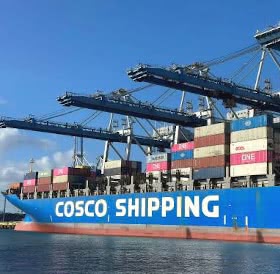
In its report entitled "Creating a Publicly Accountable Ocean Supply Chain", the think tank notes that a too small number of foreign shipping companies deals with freight transport globally, and six of them control almost 80% of the global capacity of containerized shipping, creating risks for consumers and American companies and national security. Most maritime carriers are organized into three alliances of ship sharing, which the report considers unregulated, which coordinate capacity, routes and times on almost all major commercial routes. These are the Gemini alliances (Maersk and Hapag-Lloyd), Ocean Alliance (CMA CGM, COSCO, OOCL and Evergreen) and Premier Alliance (ONE, HMM and Yang Ming), while the company MSC, although not being part of a formal alliance, has a close partnership agreement with ZIM. In the United States, the three alliances together with the MSC/ZIM partnership manage approximately 93% of imports and 97% of exports on transpacific routes.
The document also points out that this sector operates largely out of public view and with limited supervision, as a result of fifty years of deregulation, consolidation and progressive American disinvestment from the marine sector, so that the U.S. flag portacontainer fleet has reduced to only 58 units, equal to less than 1% of the total world. Also expanding the definition to the control of ships owned by U.S. corporations but registered under "comfort flags" like Liberia and Panama - it observes the report - the United States remain firm about 1% of the value of the global fleet, against the over 90 billion dollars of China alone.
"The marine transport of container - it has emphasized Arnav Rao, analyst of transport policy at the Open Markets Institute and author of the relationship - constitutes a critical infrastructure. Yet, still today, the United States depends on a sign of six foreign shipping companies not only to supply shops and support businesses, but also more often to ensure the ability of military marine transport during national emergencies. This should make an alarm bell ring for anyone who cares about economic resilience, national security or fair competition."
The Open Markets Institute report argues that dominant navigation companies use practices such as secret contracts, discriminatory prices, departure cancellations, delays in deliveries of goods and surcharges excessive to increase profits at the expense of small businesses and consumers.
To counter these practices, the Open Markets Institute recommends first of all to intensify the vigilance on the activity of global alliances in the field of containerized maritime transport. Surveillance that is exercised by the Federal Maritime Commission (FMC), the U.S. federal agency responsible for regulating the international shipping line from and to the U.S. The agency has often occupied the field, and indeed in recent years has raised the level of surveillance on the containerized shipping, as when last 6 March, with its order on investigation, has concluded the procedure started in June 2025 towards the World Shipping Council (WSC), the association that represents the main world containerized shipping companies. The WSC, in fact, had deposited a very wide agreement (the "Cooperative Working Agreement") that authorized its associates to cooperate on numerous subjects, while the Federal Maritime Commission had established that a part of such activities did not concern the operativity of the marine transport, but the typical activity of a category association, thus resize in a meaningful way the perimeter of the activities that can benefit from the antitrust immunity previewed from the U.S. Shipping Act. With the order on investigation the FMC has cancelled large portions of the cooperation agreement of the WSC, giving the association 60 days of time to deposit a modified agreement, with a restricted scope to the only strictly operational subjects. With the decision, the commission has reiterated therefore that the antitrust immunity previewed from the Shipping Act for the agreements between shipping companies exclusively covers the operating activities of the shipping, and can not be used as a generic vehicle to exempt from antitrust liability initiatives of policy or avocacy wider than the WSC had progressively incorporated in the agreement.
A decision, that of last March of the FMC, that in perspective could affect not only on the World Shipping Council, but also on other agreements deposited at the FMC, causing the American commission to re-examine them in the light of the same restrictive interpretation, especially in a field characterized by a high concentration of the market and the presence of great alliances between the companies of navigation.
All this within the framework of an intensification of the activity of vigilance on the containerized shipping, hoped by the Open Markets Institute, whose start can be traced back to the epoch of the Covid-19 when the companies of navigation of the field had recorded extraordinary profits, completely out of scale regarding the though relevant peaks of the economic cycles of the field. It was the then president Joe Biden to invite the FMC to verify the strict respect of the American regulations on the marine transport from the containerized navigation companies(of 9and 9July 2021 and 1 March 2022).
In addition to recommending that the FMC do what, in fact, seems to be already doing, the Open Markets Institute also recommends to restore protection against discrimination to protect shippers and to increase support to U.S. flag ships and U.S. seafarers, expanding the "cargo preference" for U.S. flag ships and increasing operational subsidies through the Maritime Security Program.
According to the report, only a combination of greater vigilance, fair competition and reconstructed national capacity can transform the containerized marine transport from element of pillar vulnerability of economic resilience and the national force of the United States.
- Via Raffaele Paolucci 17r/19r - 16129 Genoa - ITALY
phone: +39.010.2462122, fax: +39.010.2516768, e-mail
VAT number: 03532950106
Press Reg.: nr 33/96 Genoa Court
Editor in chief: Bruno Bellio No part may be reproduced without the express permission of the publisher







 The results of the analysis could be the same for many other world nations, while until some time ago we would not have expected that the nation under investigation would even consider one of the advanced proposals to address the critical aspects highlighted by the report. I wonder today.










 - Via Raffaele Paolucci 17r/19r - 16129 Genoa - ITALY


