Independent journal on economy and transport policy
17:40 GMT+2
This page has been automatically translated by Original news
SHIPPING
European shipowners are calling for permanent derogations from the EU maritime ETS after 2030
Exemptions for connections with islands and outermost regions, for polar class vessels, for transnational public service obligations and for search and rescue activities
Bruxelles
July 14, 2026
European shipowners are asking that, as part of the review
ETS (Emissions Trading System), the
of EU emissions that is applied to the maritime sector
from the beginning of 2024, the derogations already provided for, now in force
only until 31 December 2030, become structural and permanent
in relation to five areas of intervention, namely for islands,
outermost regions, polar-class ships, for the
public service activities and for the
search and rescue, in order to safeguard competitiveness
European maritime transport and the connectivity of
local economies. For European Shipowners - ECSA, the derogations provided for
EU ETS should also apply
automatically and no longer be subordinate to the choice
Member States, but become mandatory and
across the Union at the time of transposition of the
directive into national legislation.
In addition, ECSA recommends improvements to
make derogations fit for purpose. In particular, according to
association, for islands the derogation should be extended to
all EU islands, including those with more than 200,000
permanent residents and island states, and for the transport of both
passengers and goods. Today, the derogation covers routes between ports
of a Member State and its islands, but only for ships
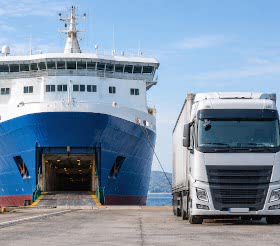
passengers (excluding cruise ships) and ro-pax ferries, and
only for islands with less than 200,000 permanent residents without
road or rail connections with the mainland. ECSA considers
that this demographic threshold is arbitrary and does not reflect reality
degree of energy and transport isolation, and therefore proposes to
extend the derogation to all EU islands and all types of
ship, passengers and cargo. The document also proposes to
include Ceuta and Melilla, Spanish autonomous cities with no
land connections with mainland Spain, thus aligning itself with the
to what is already provided for by the European FuelEU regulation
Maritime, applied to the maritime sector from 2025.
According to ECSA, then, the derogation should cover all journeys from,
to and between the outermost regions and all Member States
and, in some cases, travel to countries and territories
overseas countries that share the same critical issues of remoteness
geographical. This - the association highlights - is
essential to ensure basic connectivity for goods and
passengers to these regions, maintaining a level playing field
and supporting territorial cohesion.
With regard to polar class ships, the association notes
that, since the higher emissions of these ships are not a choice
rather, reflecting safety and security requirements
Sailing in particularly harsh winter conditions, the
derogation from the EU ETS should be made permanent and aligned
equivalent provision in the FuelEU Regulation
Maritime, which covers navigation in the presence of ice. Today, and
Until 2030, these ships can give up 5% less allowances
compared to verified emissions.
The association notes that the
derogation for transnational public service obligations, which
today exempts passenger ships and ro-pax ferries operating on
transnational public service routes between Member States without
land border and which should - in ECSA's view - become a
permanent and automatic, aligning with the treatment already
reserved by national public service obligations under
of FuelEU Maritime.
Finally, ECSA calls for a specific derogation for
search and rescue (SAR), arguing that ships engaged in such
activities act within the scope of a binding legal obligation
and not a normal commercial activity, and should not
therefore be required to surrender emission allowances for the
emissions directly related to these operations.
The presentation of the revision of the EU ETS by the
The European Commission is expected next Friday.
- Via Raffaele Paolucci 17r/19r - 16129 Genoa - ITALY
phone: +39.010.2462122, fax: +39.010.2516768, e-mail
VAT number: 03532950106
Press Reg.: nr 33/96 Genoa Court
Editor in chief: Bruno Bellio No part may be reproduced without the express permission of the publisher







 European shipowners are asking that, as part of the review
ETS (Emissions Trading System), the
of EU emissions that is applied to the maritime sector
from the beginning of 2024, the derogations already provided for, now in force
only until 31 December 2030, become structural and permanent
in relation to five areas of intervention, namely for islands,
outermost regions, polar-class ships, for the
public service activities and for the
search and rescue, in order to safeguard competitiveness
European maritime transport and the connectivity of
local economies. For European Shipowners - ECSA, the derogations provided for
EU ETS should also apply
automatically and no longer be subordinate to the choice
Member States, but become mandatory and
across the Union at the time of transposition of the
directive into national legislation.
European shipowners are asking that, as part of the review
ETS (Emissions Trading System), the
of EU emissions that is applied to the maritime sector
from the beginning of 2024, the derogations already provided for, now in force
only until 31 December 2030, become structural and permanent
in relation to five areas of intervention, namely for islands,
outermost regions, polar-class ships, for the
public service activities and for the
search and rescue, in order to safeguard competitiveness
European maritime transport and the connectivity of
local economies. For European Shipowners - ECSA, the derogations provided for
EU ETS should also apply
automatically and no longer be subordinate to the choice
Member States, but become mandatory and
across the Union at the time of transposition of the
directive into national legislation.












 - Via Raffaele Paolucci 17r/19r - 16129 Genoa - ITALY


