Independent journal on economy and transport policy
16:34 GMT+2
PORTS
The government's proposal to update the rules on port governance raises more than one perplexity
Costa: the absence of infrastructural planning cannot be solved with a Spa
Roma
June 24, 2026
On the need to take action to update the rules
on port governance, there is consensus
Almost unanimously, but the solutions proposed by the government
raise more than one perplexity, indeed many. In the
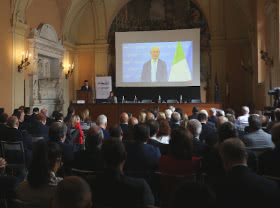
Two days of informal hearings concluded today at the
Transport Committee of the Chamber of Deputies in the context of
of the examination of the bill C. 2925 of "Reorganization of the
Law no. 84 of 28 January 1994 on port governance and
relaunch of investments in strategic infrastructure
maritime transport of general interest" the most
criticism was that of Paolo Costa, former president
of the Venice Port Authority and former president
of the Transport Committee of the European Parliament.
Specifying that the bill is based on a diagnosis
Costa pointed out that Italy does not agree with the substance of the
has had an infrastructure planning system for a long time
and, in the port sector, there was a loss
market share system in favour of the large ports of the North
Europe, but also of the Spanish and Greek ones. "The design of
law - Costa observed in his brief submitted to the
Commission - recognises both of these problems. And on this
recognition builds its proposal: a society for
actions - Porti d'Italia S.p.A. - which concentrates the
strategic functions now dispersed among sixteen authorities.
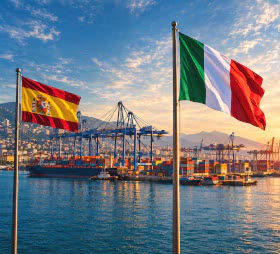
The inspiration is the Spanish model: Puertos del Estado. It is a
National plan of port infrastructure interventions defined for
decree". The topic - Costa observed again - has its own
internal logic. If fragmentation is the problem,
The answer is concentration. If there is no unified vision,
a single subject is created. If resources are dispersed,
centralizes the cash register. It is a linear reasoning, almost
mechanical. But it is wrong on four distinct levels."
Costa, meanwhile, criticized the action of the Minister of Agriculture
Infrastructure and Transport, Matteo Salvini, who - he recalled -
in 2023, as minister, he signed "Article 39 of the Code
of Public Contracts which has suppressed the General Plan of Public Contracts
Transport and Logistics, the instrument that since 1986 has guided -
with all its limitations - the infrastructure planning of
national transports'. In addition, Salvini has recently affixed
a second signature, the one on the port reorganization bill
which "introduces in Article 5 (which amends 4-ter) a
National Port Infrastructure Investment Plan. A patch
- Costa denounced - to the hole that he himself had opened.
Industrious repentance? - he asked himself - perhaps. The patch - has
Costa specified, however, - reveals the problem without solving it.
The Pandora's box that the Bill opens wide - admitting that the
Strategic infrastructures require planning - no need to
closes with a sectoral programme. Not with a port plan
decided by decree of the President of the Council of Ministers,
after hearing the Conference of Port System Authorities. E
least of all with an instrument that structurally excludes the voice
of those who use the infrastructures and pay for them: the question. If the
principle is that strategic infrastructures require
planning - and the Bill, by opening that box, has implicitly
Allowed - applies to railways, roads, airports, ports.
This applies even more strongly to infrastructures from which
the productivity of the economic system in its
complex: electrical networks, fiber backbones, water systems. A
port plan without connection with railway planning is
already technically senseless: the competitiveness of a
depends for 40-60% of its overall efficiency on the
quality of inland port accesses. A plan of the
transport infrastructures that ignore energy and energy networks.
telecommunications is short-sighted with respect to the challenges of
transition that ports must face in the next decade. The
Salvini's industrious repentance is not a solution. È
Proof that the problem is bigger than the reform
port sector".
For Costa, the first weak point of the reform is its
Inspiration from the Spanish model focused on the government agency
Puertos del Estado. "It works," he said, "because the
Spanish ports form a geographically unitary system,
all overlook the western Mediterranean and serve the same
internal market'. "Italian ports - added Costa
- do not form a unitary system: they are divided into at least six
port systems operating on two distinct seas - Tyrrhenian and Adriatic
- serving radically different European and Italian markets".
According to Costa, the second mistake is that the new Spa is not
resolves the fragmentation: "the Bill," he explained, "does not
it abolishes the sixteen Port Authorities. He keeps them, but empties them. Transfers to
Porti d'Italia S.p.A. the strategic functions; deprives the Port Authorities of a
share between 15 and 25 percent of the revenue from the
port charges on goods and taxes for
authorizations referred to in art. 16 L. 84/1994, which merges into a
State Fund for Strategic Infrastructure; authorizes the
transfer to the PdI of a quota of staff not exceeding 25
percent of the workforce - about 385 employees out of 1,540. The fees
concessionaires remain entirely with the Port Authorities, after the Accounting Department
General of the State had contested the levy provided for in the
version of the Council of Ministers. But the Port Authorities
remain standing as ordinary management structures, deprived of the
strategic functions that justified its autonomy. The result
- he pointed out - is not less fragmentation: it is more
bureaucracy".
For Costa, then, the new Ports of Italy makes it more
the contribution of private capital is complicated. The authorities
- he recalled - "were born in 1994 precisely
to attract private capital through the instrument of
construction and management concession pursuant to Article 18 of Law 84/1994:
the Territorial Authority negotiates with the potential
terminal operator, offers an area and a concession of adequate duration, the
private sector assumes the risk of building the infrastructure and
manage it by recovering costs from terminal operations. È
structured project finance: the State does not spend, the private sector invests
because it has operational control for a duration sufficient to
repay the investment. It is the main lever through which
Law 84/1994 had attracted private capital in the
port infrastructure. The bill resets this lever for PSAs to
strategic works. If the competence on infrastructural works
strategic transition to PdI, the Port Authority can no longer offer
a potential new terminal operator the construction of the infrastructure
as a condition of the concession: that decision belongs to PdI
and MIT".
Finally, for Costa, "the most serious problem is the
fourth. The absence of infrastructure planning - he noted
- it cannot be solved with a Spa. It is resolved with an institution
Independent with method, analytical resources and legitimacy
institutional to define verifiable priorities and defend them
over time, regardless of the alternation of governments. The article
5 (amendment of 4-ter) of the Bill - he observed - attempts to fill
this void by establishing a National Plan of Interventions
port infrastructure. But the Plan is drawn up on
proposal of the Ministry of Infrastructure, after consulting the Conference
of the Port Authorities and the CIPOM, and the agreement of the Unified Conference. No
technical criterion made explicit for the formation of priorities.
No public economic and financial analysis. No role for
demand - shippers, importing manufactory and
Italian exporter. No mechanism
of parliamentary accountability on the selection method. It is the
same discretionary ministerial logic that produced the deficit
infrastructure, with the addition of a corporate screen.
The form changes, not the substance. The Prince's caprice does not
disappears: it hides behind the business plan of a Spa".
Professor Francesco Munari, Professor of Law
of the European Union at the University of Genoa, evaluated
the overall structure of the reform, but raised the
relevant technical issues including that of the need for
to broaden the definition of "infrastructural work
contained in Article 1-bis of the Bill, for
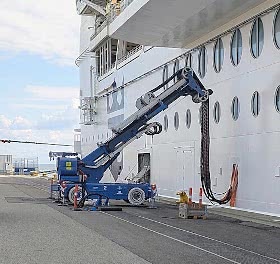
explicitly include energy infrastructure (cold
ironing, LNG, renewables) and digital ones (Port Community
Systems, connectivity), "all infrastructures -
underlined - without which Italian ports will not be able to
comply with EU legislation on emission reductions
maritime ". Munari also recalled the need to
public-private partnerships to alleviate the burden of
public financial needs for Porti d'Italia Spa.
Davide Maresca, an expert in port law, instead focused on the
analysis of the legal tensions within the text.
Noting that the qualification of Porti d'Italia Spa as a manager
of a service of general economic interest (SGEI) within the meaning of
Article 106 of the EU Treaty is as a whole
appreciable, however, - he explained - creates a contradiction:
port and anchorage fees that should finance its activity
are qualified by the text, in Article 6, paragraph 9-ter, as
"not attributable to economic activities",
while a company concessionaire of an SGEI by definition
carries out an economic activity. "Because the choice
of the bill seems to be markedly entrepreneurial - he pointed out
Maresca - it is necessary to intervene by strengthening the link between the
built and resources generated by the work itself (port fees
specifications or availability fee) in order to comply with the
Altmark criteria and the well-known "user pays" principle,
then leaving cases of "market failure",
allowed by European law, the intervention with a contribution
public non-repayable grant (according to the normal procedures of
Authorisation of State aid provided for by the law
European Union)'.
Much more tranchant than the previous ones is the judgment of
Luigi Robba, former secretary general of Assoporti, according to whom "the
complex "system" of the government design
corresponds to the real needs of the port". "The
hypothesized new governance, strongly centralist and not in line
with the provisions of Article 117 of the Constitution -
highlighted Robba - through the creation of Porti d'Italia Spa
it takes away functions, economic resources and personnel from the Authorities
of the Port System, undermines its responsible autonomy and deprives them of
to mere peripheral offices, also negatively affects the
respective territories and probably on the development of
port operations".
«The PdI Spa (focus of the reform), to which the Ministry
entrusts some of its tasks - continued Robba - will be a
a company with broad and special powers, with
limited compared to other public companies; it will have
a very long concession of 99 years (!); the same is not
will apply the provisions for subsidiaries
aimed at reducing public spending; which seems excessive
(there is no equal all over the world). In addition, qualify the
tasks carried out exclusively by PdI Spa as a "service of
general public interest" does not, in my view, solve the
doubts of compatibility with EU law. Not to be found
outline in the bill aimed at definitively resolving the issue of the
taxation of AdSP revenue following the judgment of the General Court
EU December 2023".
For Robba, the one presented by the government "is a
Reformist vision that overturns the architecture of Law 84/94
(so far not contested or criticized), risking adding new
bureaucratic steps, inefficiencies, possible litigation and new
costs in the planning and administration of ports".
Among the other interventions, that of Fermerci, the association of
rail freight operators, highlighted that the
The text presented does not explicitly regulate the coordination between
port planning and railway planning. Remembering
that, during the institutional debate on the reform, the Network
Ferroviaria Italiana together with ANAS has been indicated as
model to inspire the new port system, in view of the
the management efficiency recognized to both managers,
specifying that he agrees with this approach, Fermarci noted that
however, the operational link between the infrastructure manager
RFI railway and the new port governance "must be
explicitly regulated by the text and not left to a
coordination only implicit"
In his speech Andrea Appetecchia, head of
of the National Observatory on Freight Transport and Logistics of
ISFORT, focused on the theme of port work,
noting that workers in Italian ports have decreased by
about a quarter from 1984 to today, going from 21,000 to a little more
of 16,000 employees, while the volumes handled have grown. The
The result - he pointed out - is a system that has "worn out"
the remaining workers, many of whom are still waiting for activation
of the Early Retirement Fund provided for by law by
2021 and the recognition of port work among the weary ones.
Stressing that "to make more competitive and
resilient national port system, a
greater coordination and homogeneity of intervention not only for
strengthen the infrastructural framework of Italian ports, but
also and perhaps above all, to improve quality, effectiveness
and efficiency of port work» Appetecchia highlighted
the need "for the reform to deal with this as well,
Otherwise," he said, "there is a risk of building an armor
empty, that is, devoid of intellectual skills,
necessary to make it work".
- Via Raffaele Paolucci 17r/19r - 16129 Genoa - ITALY
phone: +39.010.2462122, fax: +39.010.2516768, e-mail
VAT number: 03532950106
Press Reg.: nr 33/96 Genoa Court
Editor in chief: Bruno Bellio No part may be reproduced without the express permission of the publisher






 On the need to take action to update the rules
on port governance, there is consensus
Almost unanimously, but the solutions proposed by the government
raise more than one perplexity, indeed many. In the
Two days of informal hearings concluded today at the
Transport Committee of the Chamber of Deputies in the context of
of the examination of the bill C. 2925 of "Reorganization of the
Law no. 84 of 28 January 1994 on port governance and
relaunch of investments in strategic infrastructure
maritime transport of general interest" the most
criticism was that of Paolo Costa, former president
of the Venice Port Authority and former president
of the Transport Committee of the European Parliament.
On the need to take action to update the rules
on port governance, there is consensus
Almost unanimously, but the solutions proposed by the government
raise more than one perplexity, indeed many. In the
Two days of informal hearings concluded today at the
Transport Committee of the Chamber of Deputies in the context of
of the examination of the bill C. 2925 of "Reorganization of the
Law no. 84 of 28 January 1994 on port governance and
relaunch of investments in strategic infrastructure
maritime transport of general interest" the most
criticism was that of Paolo Costa, former president
of the Venice Port Authority and former president
of the Transport Committee of the European Parliament.









 - Via Raffaele Paolucci 17r/19r - 16129 Genoa - ITALY


