Independent journal on economy and transport policy
20:11 GMT+2
This page has been automatically translated by Original news
SHIPPING
The Swedish government is calling for the application of the EU maritime ETS to be extended to more ships
Stockholm stresses the need for the ETS to remain a pillar of EU climate policy
Stoccolma
July 10, 2026
The differences in position between the northern and the northern states
of the European Union on the definition of the
of the governance and regulation of the sector
are certainly nothing new. It is not
It was therefore unexpected that two sides would emerge, if not
at least not converging, on the changes to be made to the
EU Emissions Trading ETS applied to the
maritime sector.
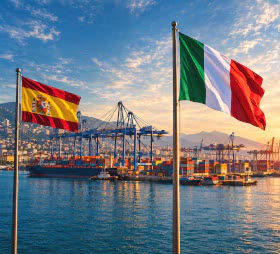
The main maritime nations of the southern part
are at the forefront of the call for amendments to the
significantly the European system for the decarbonisation of the
shipping. This line-up sees side by side, albeit with a whole
series of distinctions, Italy, Greece, Spain, Portugal, Cyprus and
Malta, but also nations of central and southern Europe that
share with them some proposals for changes, also
with regard to the application of the system to the maritime sector, which
hope they will be incorporated into the proposed change to the EU system
ETS that the European Commission is expected to present in a few years' time,
week. From the south, the main perplexities concern
the impact of the EU ETS, in particular, on maritime connections
to ensure territorial continuity with the islands and to
Building the Motorways of the Sea and its hijacking effect
of the traffic of goods to the ports of North Africa.
On the whole, the position of the governments of the
central and northern EU countries, which are more likely to
keep the system almost unchanged or contribute less to it
or to introduce a greater degree of flexibility.
Between the two camps are EU states, such as the
northern Poland, which flank geographically
distant to urge amendments that safeguard, more
that the maritime sector, industrial activities in their
complex.
The most recent position, expressed by the government of the
Sweden, confirms the dichotomy that characterizes opinions on the EU
Maritime ETS in the EU. The Swedish Minister for European Affairs,
Jessica Rosencrantz, in fact, sent a letter to the presidency
EU Report, outlining its priorities and positions
Sweden in view of the upcoming negotiations on the revision of the
emissions trading system, highlighting that the ETS is
the EU's most important climate policy instrument for
the reduction of greenhouse gas emissions and creates clear incentives
for companies to reduce their emissions and invest in new
technologies.
In the letter, Sweden stresses the importance of
that the ETS continues to be a strong driver of change and
to achieve the Union's climate objectives, and
strengthening European competitiveness. Sweden highlights in
the need to maintain the current rate of
reduction of emissions, to include waste incineration
in the system and - in relation to its application to the sector
maritime - to extend its coverage to a greater number of ships,
including those of 400 gross tonnage or more
tons. "Their inclusion - underlined the minister
in the letter - is necessary to ensure equality of
conditions in the maritime sector. At the same time, it is
important not to impose a disproportionate administrative burden on
operators of smaller vessels'.
In the letter, which also urges to create conditions
for the permanent absorption of carbon dioxide
through, inter alia, the capture and biological storage of
Rosencrantz highlighted that the Swedish government wants to
that the ETS remains ambitious, stable and predictable, and has
specified that, given that Swedish industry is much more
In the climate transition, a robust ETS is
at the same time a climate and competitiveness issue
European Union.
- Via Raffaele Paolucci 17r/19r - 16129 Genoa - ITALY
phone: +39.010.2462122, fax: +39.010.2516768, e-mail
VAT number: 03532950106
Press Reg.: nr 33/96 Genoa Court
Editor in chief: Bruno Bellio No part may be reproduced without the express permission of the publisher







 The differences in position between the northern and the northern states
of the European Union on the definition of the
of the governance and regulation of the sector
are certainly nothing new. It is not
It was therefore unexpected that two sides would emerge, if not
at least not converging, on the changes to be made to the
EU Emissions Trading ETS applied to the
maritime sector.
The differences in position between the northern and the northern states
of the European Union on the definition of the
of the governance and regulation of the sector
are certainly nothing new. It is not
It was therefore unexpected that two sides would emerge, if not
at least not converging, on the changes to be made to the
EU Emissions Trading ETS applied to the
maritime sector.











 - Via Raffaele Paolucci 17r/19r - 16129 Genoa - ITALY


