Independent journal on economy and transport policy
05:53 GMT+2
This page has been automatically translated by Original news
SEAFARERS
The latest report by BIMCO and ICS on the maritime workforce raises the alarm about the shortage of officers
In 2026, there is a shortage of 39,100 STCW-certified officers
Londra/Bagsværd
June 25, 2026
Currently on the 85,148 merchant ships of the maritime fleet
2,565,580 seafarers are believed to be serving in the world,
made up of 1,048,980 officers and 1,516,600 municipalities that
This year it will be characterized by a shortage of 39,100
STCW certified officers and a surplus of 56,890 municipalities.
This year, in fact, the demand for STCW-certified seafarers is
estimated at 2,547,790 units, of which approximately 1,088,080
and 1,459,710 municipalities. These data are presented
in the latest report "Seafarer Workforce Report 2026"
published by BIMCO and the International Chamber of Shipping (ICS)
and considered the industry reference for the planning of the
on-board staff, which highlights how by 2030 there will be
An additional 113,735 officers are needed to manage the fleet
world merchant ship. In particular, the relationship, which is
updated every five years, it provides that, in order to meet the demand
by 2030, expected to be 1,162,716 officers and 1,558,973
municipalities, will have to become part of the workforce annually
maritime an additional 22,747 officers and 8,475 municipalities, with increases in
annual averages of +2.0% and +0.5% respectively.
Compared to the last report in 2021, the year for which the
demand for STCW-certified seafarers was 1,881,320
of which 883,730 are official and 997,540 municipalities, if by 2026 the number of
ships in the world fleet grew by +14%, the demand for
STCW certified seafarers increased by +35.4%, a
significant increase compared to the two previous reports of
2021 and 2015. In particular, by 2026 the demand for officers is
increased by +23.1% and that of municipalities by +46.3% compared to the
2021 levels. The "Seafarer Workforce Report 2026"
explains that the growth in demand from both municipalities and officials
was probably driven by fleet expansion
global mercantile market and the recovery following the pandemic of
Covid-19.
The report published today by BIMCO and ICS specifies that, on the
supply of maritime labour, the geography of the
The supply of cabin crew remains concentrated in a few countries,
with the Philippines and India being the largest suppliers,
of the world fleet an equal number of officers
respectively to 203,179 and 140,718 units and a number of
municipalities equal to 256,968 and 171,218 units, followed by China,
Russian Federation and Indonesia. These five countries represent the
56.25% of the world's entire maritime workforce.
The new report by BIMCO and ICS therefore photographs a merchant fleet
booming global but struggling with a shortage
of commanders and engineer officers, a trend that
worries about its direction. The shortage of officers is not
A new phenomenon, but it is regularly exacerbated. In 2015
the deficit was equal to 16,500 officers. In 2021 it had risen to 26,240
and today it exceeds 39,000 units. In ten years, the gap has
more than doubled.
The segments that absorb the dimension
Greater than the demand for officers are ships for various goods
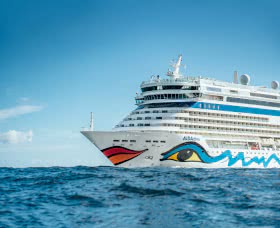
(21.4%), bulk carriers (18.9%) and cruise ships (14%). These
last are also those that total the highest demand
high number of municipalities, with 22.5% of the total, reflecting the
complexity of on-board hospitality services.
The report includes for the second consecutive edition
a detailed demographic analysis of the maritime workforce. I
data show that the dominant age group among officers
of management level is concentrated between 31 and 50 years of age, with the
37.7% in the 31-40 age group and 32.4% in the 41-50 age group. The
operational level officers, on the other hand, are predominantly more
young people: 43.4% are between 31 and 40 years old and 34.7% are in the
21-30 age group. The average age of senior officers
level is also slightly down compared to 2021,
a sign of a partial generational change in progress.
On the gender diversity front, the report records
progress, albeit partial. The increase in the presence of women
is mainly concentrated in the positions of officers, while
The share of women among municipalities remains substantially stable. Only
a maritime administration reported a decline in the number of
seafarers, limited to the category of deck municipalities.
The report closes with two operational indications aimed at
industry and governments. First of all, it is considered essential
promoting maritime training and careers at sea, including
including information on opportunities for transition to
roles on the ground, an element that can improve perception
overall of the profession and reduce turnover. Second
maritime administrations should monitor with
regularity the levels of recruitment and retention of the
staff, to provide industry and policymakers with a
updated picture of the situation.
'The recruitment, training and retention of the
maritime workforce - noted David Loosley, Secretary
General and CEO of BIMCO, presenting the report - will be crucial
to ensure that our industry is prepared for the future.
We have a great collective task ahead of us, which consists in
work with all stakeholders and countries that are the
largest suppliers of seafarers operating on our ships. The
report can help ensure that
recruitment and employment are future-oriented".
"Seafarers - underlined the Secretary General
of the ICS, Thomas A. Kazakos - are the backbone of the trade
and this report reaffirms how important they are for the
functioning of the world economy, especially in a world that is increasingly
more fragmented. As the industry continues to evolve
maritime policy, it is crucial to attract more
people towards a maritime career. We must continue our
relentless efforts to engage young people from an early age
and build a strong talent pool for the future. At the same time
it is equally important to retain and develop strength
existing work. Seafarers play a key role in the
transition of the sector towards new fuels and technologies.
Ensuring their access to training and skills
necessary for this future will be fundamental. Without
continuous investments in both recruitment and training, the
gap of skilled workers is likely to increase at a time
where the sector needs seafarers more than ever
qualified".
- Via Raffaele Paolucci 17r/19r - 16129 Genoa - ITALY
phone: +39.010.2462122, fax: +39.010.2516768, e-mail
VAT number: 03532950106
Press Reg.: nr 33/96 Genoa Court
Editor in chief: Bruno Bellio No part may be reproduced without the express permission of the publisher







 Currently on the 85,148 merchant ships of the maritime fleet
2,565,580 seafarers are believed to be serving in the world,
made up of 1,048,980 officers and 1,516,600 municipalities that
This year it will be characterized by a shortage of 39,100
STCW certified officers and a surplus of 56,890 municipalities.
This year, in fact, the demand for STCW-certified seafarers is
estimated at 2,547,790 units, of which approximately 1,088,080
and 1,459,710 municipalities. These data are presented
in the latest report "Seafarer Workforce Report 2026"
published by BIMCO and the International Chamber of Shipping (ICS)
and considered the industry reference for the planning of the
on-board staff, which highlights how by 2030 there will be
An additional 113,735 officers are needed to manage the fleet
world merchant ship. In particular, the relationship, which is
updated every five years, it provides that, in order to meet the demand
by 2030, expected to be 1,162,716 officers and 1,558,973
municipalities, will have to become part of the workforce annually
maritime an additional 22,747 officers and 8,475 municipalities, with increases in
annual averages of +2.0% and +0.5% respectively.
Currently on the 85,148 merchant ships of the maritime fleet
2,565,580 seafarers are believed to be serving in the world,
made up of 1,048,980 officers and 1,516,600 municipalities that
This year it will be characterized by a shortage of 39,100
STCW certified officers and a surplus of 56,890 municipalities.
This year, in fact, the demand for STCW-certified seafarers is
estimated at 2,547,790 units, of which approximately 1,088,080
and 1,459,710 municipalities. These data are presented
in the latest report "Seafarer Workforce Report 2026"
published by BIMCO and the International Chamber of Shipping (ICS)
and considered the industry reference for the planning of the
on-board staff, which highlights how by 2030 there will be
An additional 113,735 officers are needed to manage the fleet
world merchant ship. In particular, the relationship, which is
updated every five years, it provides that, in order to meet the demand
by 2030, expected to be 1,162,716 officers and 1,558,973
municipalities, will have to become part of the workforce annually
maritime an additional 22,747 officers and 8,475 municipalities, with increases in
annual averages of +2.0% and +0.5% respectively.










 - Via Raffaele Paolucci 17r/19r - 16129 Genoa - ITALY


