
'It will be essential that the EU Strategy for
unleashes the potential that private investment
represent for the ports of the European Union and their
connectivity, reducing risks to private capital and
improving the predictability and bankability of
ports as a cluster for the energy transition". It has
Affirmed the president of the Federation of Private Terminal Operators
European FEPORT, Gunther Bonz, commenting on the industrial strategy
adopted in recent days by the Council of the EU
 (
(
of
8
June 2026).
Referring to the challenges currently facing terminal operators
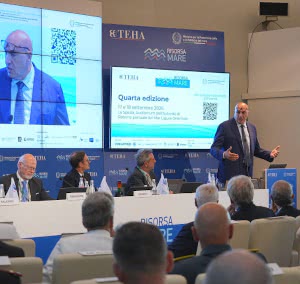
compare, in his speech at the FEPORT summer assembly,
held on Friday in Constanta, Romania, Bonz noted that
The sector finds itself "responding to the geopolitical landscape
and new risks such as
cyberattacks, drone risks and warfare
hybrid, but - he underlined - we must not forget that without
significant investments in transport infrastructure and
in terms of access to energy, ports will not be able to be
resilient and to play their role as facilitators of the
energy transition. In ports - he specified - the sector
is ready to play its role in supporting
investments, but we need clarification on the rules
State aid and funding, and we hope that the
The European Commission and the Member States must not miss the opportunity
offered by the revision of the Global Exemption Regulation for
category to provide legal clarity, instead of the current
fragmented picture that could deter investors
private individuals".
"FEPORT - continued Bonz - welcomes the
EU Transport Council conclusions on the
Action Initiative for Electrification, as a tool to support
the electrification of ports. We believe that the recognition,
in the Networks Package, that the electricity grid infrastructures and the
OPS systems in ports are of "overriding public interest",
will help overcome the traditional authorization delays".
Bonz also pointed out that "the recognition by
part of the EU Transport Council and the Commission
risk of traffic diversion to ports of
extra-EU transhipment due to the implementation of the
EU ETS emissions trading, is a step towards
significant, but - he stressed - should be followed,
as part of the ETS review, a strong recommendation
Member States to allocate part of their national revenues
specifically to port investments for
the installation of goods handling equipment
and for the spread of the supply of
electricity from shore to ships".

















 - Via Raffaele Paolucci 17r/19r - 16129 Genoa - ITALY


