
Yesterday the Supreme Court of the United States, with eight votes in favor
and one against, has reopened the judicial dispute that
contrasts the cruise groups Carnival Corporation, Royal
Caribbean Cruises, Norwegian Cruise Line Holdings and MSC Cruises
to the historic US company Havana Docks, founded in
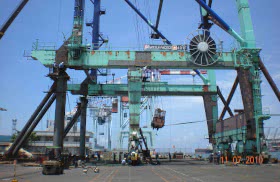
1917 and manager of the Cuban port docks in Havana from 1928 until
to 1960 when the business was confiscated by the government after the
Castro's revolution. The latter has been taking action for some time
legal law relating to the right to manage the docks of the port
and the highest federal judicial body in the United States,
referring to Title III of the "Cuban Liberty and Democratic
Solidarity Act" of 1996, which came into force in May 2019,
considering that the use of the docks of the port by the
cruise companies is sufficient to demonstrate that they have
used "property confiscated by the Cuban government" and
that Havana Docks is not required to prove that the companies
operated on an area over which Havana Docks held a right
concession (usufructuary concession that would have expired in
2004).
Between 2016 and 2019, the four cruise groups had
brought almost one million passengers to the Cuban port and in 2019
Havana Docks had appealed to Title III of the so-called law
Helms-Burton suing the four companies at the
U.S. District Court for the Southern District
of Florida. The cruise companies had claimed that they did not
be responsible because the right to grant Havana
Docks would have expired in 2004 even in the absence of confiscation. The
District Court had rejected this argument and had
sentence against all four sentences sentencing them to
payment of more than $100 million each to Havana Docks.
Subsequently, a panel of judges of the Court of Appeal
of the Eleventh Circuit, not unanimously, had overturned the
judgment arguing that a defendant is responsible for
trafficking in confiscated assets only if its actions interfere with
the applicant's right to property in the absence of confiscation
and, since the Havana Docks concession would have expired
before 2016, the conduct alleged against the companies from 2016 to
2019 did not constitute an economic enjoyment of ownership
confiscated.
The Supreme Court rejected this interpretation, stating
that the Court of Appeals had wrongly requested Havana Docks
to demonstrate that the four companies had precisely carried out
economic activities on confiscated assets instead of
rather used confiscated assets on which Havana Docks
he had a right.



















 - Via Raffaele Paolucci 17r/19r - 16129 Genoa - ITALY


