
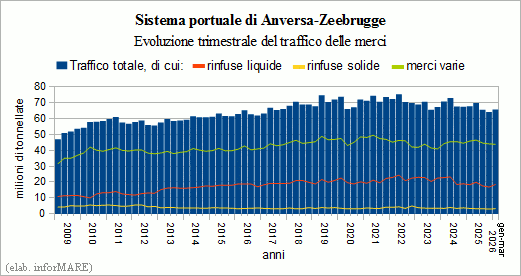
In the first quarter of this year, freight traffic in the
Antwerp-Bruges port system amounted to 65.5 million
tons, with a decrease of -3.2% over the same period in 2025 that
- noted the Belgian Port Authority - must be contextualized both
in relation to the comparison with a beginning of 2025 when the
restructuring of the alliances of the shipping companies of the
container sector had generated high volumes of inbound both
with regard to the effects of weaker exports
from Western Europe. The Port Authority recalled,
In addition, the beginning of 2026 was characterized by
extreme weather conditions, with a snowstorm and a
prolonged cold spell in January followed by strong storms in the
Bay of Biscay until mid-February which interrupted
both maritime and terminal operations. This has been achieved
added a four-day strike against the reform of the
pensions.
In the first three months of 2026, containerized traffic alone in the
Belgian port recorded a decrease of -5.5% to 36.3
million tons for 3.4 million TEU containers handled
(-2,6%). The decline in goods is more pronounced
which totalled two million tonnes, with
a decrease of -7.9% mainly caused - specified
The Port Authority - from the decline in steel exports to
key markets such as the United States, Mexico, and Canada, as well as
of the entry into force on 1 January of the Mechanism of
Carbon Border Adjustment (CBAM). Rolling stock, with 5.4
million tons, marked a growth of +5.3% which -
explained the Authority - was driven by higher volumes of
new vehicles and heavy equipment, while ro-ro traffic
continues to be affected by the effects of the application of the
maritime transport of the ETS emissions trading system
particularly on longer routes. Increasing is
the movement of new cars was also found with about 900 thousand
vehicles (+8.7%). In the bulk sector, liquid cargoes are
remained stable at 18.5 million tonnes,
with a slight increase of +0.2% supported by a strong performance at
March, while dry bulk fell by -4.9% to 3.3 million
tonnes due, inter alia, to the reduction in the volume of
fertilizers and the elimination of coal trafficking.
The Belgian port authority has highlighted that these trends are
influenced by changing market conditions, changes in the
in raw materials, by the anticipation of the import ban
of Russian liquefied natural gas by Europe, as well as
geopolitical tensions and market dynamics such as the
backwardation.
As noted by the Port Authority of
Rotterdam in relation to the Dutch port, also for the port of
Antwerp-Bruges the direct impact of the ongoing conflict in the Middle East
Oriente was limited in the first quarter of 2026,
with a drop of -12% in imports and -49% in
exports to and from the Persian Gulf that occurred in the period
which is largely attributable to disruptions in the
operations due to adverse weather conditions.
The Belgian authority specified that, however, since the end of March the
The first effects have become visible: the last ship for the
liquefied natural gas from Qatar is
arrived in Zeebrugge on 23 March and the airlines changed their
navigation programs by moving to alternative ports in
Middle East and the Eastern Mediterranean. Currently, it has
observed the entity - the most significant impact of the conflict
and blockade of the Strait of Hormuz is indirect, through
the increase in energy and fuel prices, with increases in
bunkering and transport costs that further weaken
competitiveness of European industry.

















 - Via Raffaele Paolucci 17r/19r - 16129 Genoa - ITALY


