testata inforMARE
Cerca
15 August 2026 - Year XXX
Independent journal on economy and transport policy
06:20 GMT+2
LinnkedInTwitterFacebook
FORUM of Shipping
and Logistics


RELAZIONE DEL PRESIDENTE ELETTO
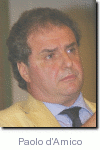
PAOLO d'AMICO


ASSEMBLEA
Roma, 18 marzo 2010


Signor Ministro, Onorevoli parlamentari, Autorità, Colleghi armatori, Signore e Signori,

è con grande emozione che prendo la parola per il mio primo discorso da Presidente di Confitarma in questa sala: una sala così ricca di arte e di storia del nostro Paese, e da tre lustri anche della storia della nostra industria armatoriale, che qui ha tenuto le sue Assemblee assieme ai vertici di Confindustria, ai rappresentanti dei Governi e ai parlamentari che si sono succeduti.

Proprio qui, nel 2001, si sono svolte le celebrazioni del nostro Centenario, cui volle essere presente anche il Presidente della Repubblica Ciampi.

Siamo una parte importante della storia e dell'economia del Paese.

E sono fiero ed orgoglioso di essere stato eletto dall'Assemblea di ieri alla guida di Confitarma per i prossimi tre anni.

Ringrazio quindi anzitutto gli amici e i colleghi che hanno riposto in me la loro fiducia.

Rivolgo un ringraziamento particolare a Nicola Coccia,

Ed ora tocca a me.

Come molti di voi sapranno, la mia famiglia opera da decenni nel mondo del mare.

Ricordo che mio padre Ciro assunse la carica di presidente della Confederazione nazionale degli armatori nel 1972, succedendo alla guida ultraventennale di Angelo Costa, l'indimenticato presidente sia di Confitarma che di Confindustria.

Fu proprio mio padre, convinto che dovesse essere finalmente superata la divisione della categoria, ad avviare con Ernesto Fassio ed Ercole Lauro, presidenti delle Associazioni degli armatori di Genova e Napoli, le trattative per la riunificazione che poi si realizzò nel 1976.

Un ricordo e un affetto altrettanto forte vanno a mio zio Antonio, che guidò la Confitarma per sei anni dal 1989: primo presidente armatore dopo oltre un decennio, seppe creare un nuovo spirito di coesione e di partecipazione fra le imprese di navigazione, rinvigorendo la vita associativa e rafforzando l'organizzazione confederale.

Grazie alla sua iniziativa il sistema marittimo italiano (quello che oggi si chiama cluster marittimo) si è unito nella Federazione del Mare e fu lui a volere la costituzione del gruppo Giovani armatori, convinto del valore e del contributo fondamentale delle nuove generazioni.

Colgo l'occasione per salutare Valeria Novella, nuova presidente dei Giovani armatori, che - insieme ai vicepresidenti confederali e ai presidenti di commissione che a giorni nomineremo, e ai consiglieri eletti ieri - farà parte della squadra di vertice della Confederazione.

La mia presidenza si inserisce quindi in una scia ben definita, di continuità della politica associativa volta a valorizzare concorrenza, rinnovamento e compattezza, prerequisiti indispensabili che già fanno parte della nostra cultura imprenditoriale e ci permettono di affrontare quotidianamente le sfide del mercato globale.


Le sfide da affrontare

Poco più di un anno e mezzo fa tutti noi raccoglievamo i frutti di uno dei momenti più felici del mercato marittimo.

Poi l'industria marittima mondiale, principale fornitore di servizi di trasporto al commercio internazionale, è stata colpita direttamente dalla crisi economico-finanziaria.

Lo shipping è un'attività ciclica.

Non è quindi per un ingenuo ottimismo che credo nella prossima ripresa. E credo anche che dobbiamo essere pronti per il momento in cui il vento sarà di nuovo favorevole.

Ci sono segnali all'orizzonte: il Fondo Monetario Internazionale prevede per il 2010 una crescita economica mondiale del 3,9%, con un miglioramento di 0,8 punti percentuali rispetto alle stime dell'ottobre scorso; mentre per il 2011 si attende un'ulteriore crescita del 4,2%.

Certo, la situazione resta ancora fragile e la ripresa procederà a diverse velocità: nelle economie avanzate sarà probabilmente debole, al 2%, e ancora legata al sostegno dei governi; per quelle emergenti si attende una crescita del 6%, con la Cina che farà ancora la parte del leone e avrà indici a doppia cifra.

Secondo le previsioni più accreditate, già nel 2010 l'economia statunitense dovrebbe ricominciare a trainare la ripresa dell'economia mondiale con un tasso di crescita positivo, per collocarsi vicino al 2% dal 2011.

Sul futuro dell'Europa le previsioni sono più incerte: nel 2010 ci sarà un miglioramento, ma solo dello 0,9%, e nel 2011 dell'1-1,5%.


Mercati marittimi

Anche per i mercati marittimi, che nel 2009 hanno subito un duro colpo con il crollo degli indici dei noli, le stime ufficiali prevedono per il 2010 una ripresa dei traffici mondiali ed un loro aumento del 2%.

Già negli ultimi mesi del 2009 abbiamo assistito ad una sostenuta crescita dei noli per navi bulk e gasiere, e ad una crescita più lieve ma progressiva per le navi petroliere.

Quest'ultimo settore ha risentito meno della crisi, con bassi livelli di disarmo, anche grazie all'utilizzo delle unità navali per lo stoccaggio del greggio.

Il settore delle navi portacontainer, invece, evidenzia ancora delle difficoltà, legate principalmente alla lenta ripresa dei consumi nei mercati avanzati.

Non è un caso che, ad una ripresa economica guidata dalle economie emergenti, corrisponda un migliore stato di salute dei traffici delle materie prime.

Sull'evoluzione dei traffici containerizzati peserà, nel prossimo futuro, la natura della crescita cinese: nei prossimi anni capiremo se essa verrà trainata dalla domanda interna o se invece, come in passato, solo ed esclusivamente dalle esportazioni.

Un simile cambiamento comporterebbe una rivoluzione nei flussi delle merci a più alto valore aggiunto trasportate nei container, andando a riequilibrare nei traffici est-ovest l'attuale sbilanciamento.

Senza contare la crescita dei mercati emergenti del continente africano. Uno scenario plausibile prevede per le principali correnti di traffico mondiale la circumnavigazione dell'Africa, proseguendo poi verso il Nord Europa o la costa orientale degli Stati Uniti senza entrare nel Mediterraneo, che potrebbe invece essere servito attraverso i porti hub di Algeciras o Tangeri.


Pirateria

Una tale ipotesi va valutata anche alla luce del problema pirateria al largo delle coste somale e nel golfo di Aden, la porta orientale del Mediterraneo.

Confitarma da sempre è attiva su questo fronte. Le nostre richieste di unità militari di scorta hanno portato nel 2005 e nel 2008 all'invio di due missioni militari; ricordo ancora le recenti pressioni per la partecipazione attiva dell'Italia alla missione europea “Atalanta”, nonché per il suo allargamento al “quadrante meridionale”.

Gli interessi nazionali coinvolti sono molto rilevanti: dei 22.000 transiti annuali attraverso il Canale di Suez, circa 2.000 sono connessi ad interessi italiani e ben 600 di questi, in media quasi due ogni giorno dell'anno, si riferiscono a navi di bandiera italiana.

Visto che oggi il 60% del commercio estero italiano viaggia per mare, appare evidente quanto sia importante che non solo l'industria, ma anche e soprattutto la politica si preparino per tempo a questi scenari, con scelte lungimiranti di strategia industriale e di logistica integrata.


Cosa ci aspetta

Sono molti i problemi sul tappeto e molte le possibili soluzioni.

Sono fermamente convinto che per far funzionare le cose è necessario adottare scelte il più possibile condivise. Solo così potremo porre in essere azioni concrete.

Di certo, la lista è lunga, ma credo che per sintetizzare il lavoro che dovremo portare avanti nei prossimi anni possano bastare tre parole: Bandiera, Investimenti e Occupazione. Non a caso la copertina della nostra relazione annuale si ispira proprio a questi concetti.


Bandiera

La Bandiera è quella italiana, che sventola sulle nostre 1.570 navi soprattutto grazie alla politica marittima di riduzione dei costi fiscali e parafiscali avviata nel 1998, seguendo l'impostazione europea.

Oggi la flotta italiana è all'avanguardia nel mondo e gioca un ruolo importante per l'economia nazionale: siamo al 12° posto nella graduatoria mondiale delle flotte di bandiera, con quasi 16milioni di tsl (tonnellate di stazza lorda): un aumento dell'8,7% rispetto al 2008.

Purtroppo, la legge finanziaria 2010 ha dimenticato di dedicare le risorse usuali al mare, sottovalutando uno strumento di competitività e di sviluppo quale è da circa dodici anni il Registro internazionale.

Inoltre, dopo dieci anni, per la prima volta non sono state rinnovate le misure per la riduzione degli oneri contributivi al cabotaggio, che nella liberalizzazione del mercato europeo rischia di perdere il confronto con le bandiere comunitarie più aggressive.

Da anni chiediamo una norma strutturale, che consenta di pianificare con tranquillità attività industriali e investimenti.


Privatizzazione del gruppo Tirrenia

La Bandiera italiana sventola su tutte le nostre navi, siano esse di imprese private o pubbliche: è la stessa Bandiera!

Con forza quindi mi auguro che venga finalmente posta la parola “fine” alla contrapposizione tra flotta privata e pubblica e la privatizzazione del Gruppo Tirrenia possa concludersi al più presto, in linea con le indicazioni comunitarie, ripristinando pienamente nel mercato le regole di concorrenza.

Più volte nel recente passato abbiamo manifestato perplessità in merito alle procedure di liberalizzazione e privatizzazione, lamentando un difetto di trasparenza dell'intero processo.

Non siamo mai stati invitati ai tavoli ministeriali di approfondimento e confronto in materia.

La scelta di procedere all'affidamento in blocco dei servizi marittimi a una stessa società di navigazione, invece che ad una pluralità di operatori attraverso gare linea per linea, certamente non aiuta, come pure non aiuta la prevista durata di 12 - 8 anni delle convenzioni ad esclusivo appannaggio delle società ex-regionali e della società Tirrenia.

Inoltre, ci pare non accettabile la commistione dei ruoli tra regolatore e gestore che si verrebbe a creare qualora fossero le Regioni, tramite partecipazioni in società, ad acquisire le ex-regionali del gruppo Tirrenia: sovrapposizione più volte oggetto di rilievo da parte della nostra Autorità Garante della Concorrenza e del Mercato.

Infine, il fatto che la materia sia stata oggetto di osservazioni da parte delle istituzioni comunitarie nel dicembre scorso, e ultimamente addirittura di una procedura di infrazione, conferma le perplessità che sussistono sull'intera procedura.


Investimenti

L'impegno dell'armamento italiano è testimoniato dallo sforzo profuso per il rinnovo della flotta.

Nel 2009, con quasi 1miliardo di euro, l'Italia è risultata il primo paese europeo per Investimenti in nuove navi.

E vorrei sottolineare che tutto ciò è avvenuto in coincidenza con il momento più difficile per l'economia mondiale!

Abbiamo continuato ad investire, nonostante la crisi, convinti che in un mercato sempre più concorrenziale gli alti standard qualitativi siano la carta vincente per affrontare la competizione globale.

Negli ultimi anni abbiamo investito oltre 27miliardi di euro in nuove navi ed oggi possiamo vantare una delle flotte più giovani del mondo, con il 64% del naviglio di età inferiore ai 10 anni ed il 35% ai 5 anni.

Accanto ad una flotta di navi da carico e per servizi ausiliari fortemente rinnovata, vantiamo navi da crociera nuove e bellissime, grazie alle quali nel 2009 nonostante la crisi abbiamo mantenuto la posizione dell'Italia quale prima destinazione europea di croceristi.

Il turismo che viene dal mare, rappresentato da navi da crociera e da traghetti, svolge un ruolo di traino per lo sviluppo del turismo di terra, così importante per il Paese.

Abbiamo lavorato per rendere le nostre navi più sicure per gli equipaggi e i passeggeri imbarcati, ed ancor più rispettose dell'ambiente.


La salvaguardia dell'ambiente

L'ambiente e la sua salvaguardia sono all'ordine del giorno di tutti i programmi di sviluppo industriale.

Lo shipping è parte della soluzione del problema: il trasporto marittimo è infatti la modalità meno inquinante, producendo la minore quantità di CO2 per unità di merce rispetto a tutte le altre modalità di trasporto impiegate sulle brevi e sulle lunghe distanze nel mondo.

Ciò naturalmente non vuol dire che non dobbiamo contribuire ancora di più a ridurre le emissioni globali.

Del resto, lo shipping è regolato da un gran numero di norme - internazionali, comunitarie e nazionali - dedicate soprattutto alla sicurezza e alla salvaguardia dell'ambiente.

L'armamento italiano risponde a tali disposizioni, talvolta non senza difficoltà tecniche, gestionali ed economiche.

Tuttavia, spesso non siamo messi in condizione di adempiere appieno a quanto ci viene richiesto, subendo danni non indifferenti.

Emblematico a tale riguardo è il caso della più recente normativa sui carburanti navali dell'organizzazione marittima mondiale (IMO), che impone una serie di limitazioni al tenore di zolfo presente nel combustibile delle navi. L'Unione europea, nel recepire tale normativa, ha deciso di inasprirne le prescrizioni, senza rendersi conto che così si determina una distorsione della concorrenza.

È vero infatti che qualunque nave voglia attraccare in un porto europeo deve sottostare a queste limitazioni, sia essa di bandiera europea o extracomunitaria. Ma è anche vero che i costi che ne derivano incidono maggiormente su chi opera prevalentemente in Europa rispetto alle altre aree.

Se vogliamo un'Europa che cresca al passo con le altre economie, dobbiamo evitare che tali situazioni si ripetano e, per quanto possibile, migliorare quelle esistenti.

Rivolgo pertanto al Governo un appello, affinché sia sostenuto a Bruxelles, in sede di revisione della normativa sul bunker in ambito europeo, il necessario riallineamento alla normativa internazionale, per esempio attraverso l'introduzione di misure transitorie per i casi in cui un'oggettiva difficoltà renda impossibile rispettare gli obblighi comunitari ed internazionali.


Leadership nel Mediterraneo

In questi mesi si fa un gran parlare di Mediterraneo: il rilancio dell'Italia quale asse strategico dei traffici nel bacino del Mediterraneo è tra i primi punti dell'agenda di Governo.

Non possiamo che condividere questo obiettivo, anche se devo dire che oggi la storica leadership italiana nel Mediterraneo è messa fortemente in discussione, soprattutto per quanto riguarda il settore marittimo-portuale.

I nostri diretti concorrenti sono la Francia e la Spagna, che rispettivamente hanno lanciato l'Unione per il Mediterraneo e potenziato i tre principali porti, grazie a massicci investimenti infrastrutturali.

Stiamo parlando di un mercato potenziale di 525 milioni di persone, previsto per il 2020. Un bacino nel quale circola il 30% dell'intero traffico marittimo mondiale: circa 1,4 miliardi di tonnellate di merci, delle quali oltre un terzo viene scaricata o caricata in Italia.

Non solo. A confermare l'importanza del bacino mediterraneo vi sono i dati dell'interscambio dell'Italia con i Paesi della sponda nord-africana: 25 miliardi di euro in export e 39 miliardi in import.

Appare chiaro che la perdita della nostra leadership nel “Mare Nostrum” non potrà che ripercuotersi su tali valori.

È pertanto necessario riaffermare il nostro ruolo nell'area, attraverso una concreta azione di valorizzazione dei fattori di sviluppo.

Gli incontri che si susseguono per tutta la penisola, a Roma, a Milano (che ricordo è il maggior centro economico-finanziario del bacino mediterraneo), mirano a questo.


Porti e riforma portuale

Purtroppo, anche a questo proposito devo sottolineare la nota dolente rappresentata dai porti italiani, spesso penalizzati da una normativa inadeguata e da povertà di finanziamenti.

Da un lato le infrastrutture portuali non risultano in linea con l'evoluzione della flotta: non solo unità italiane, ma navi di tutto il mondo spesso non vengono nei nostri porti perché non trovano scali adeguati a riceverle o, semplicemente, perché i fondali non sono abbastanza profondi.

Tutti avvertono l'esigenza di colmare il gap infrastrutturale del sistema portuale italiano per consentirgli di cogliere le opportunità che verranno offerte dalla futura ripresa economica, ma - mentre tutti sono d'accordo sulla diagnosi - sussistono molte perplessità circa la terapia da seguire.

Per di più, la crisi economica internazionale e l'esigenza di contenere il debito pubblico entro i parametri di Maastrich stanno fortemente condizionando le scelte in tema di sviluppo infrastrutturale della portualità.

Dall'altro lato, è da diversi anni che si sta lavorando per un aggiornamento della legge sui porti, aggiornamento ampiamente condiviso dal quale si attendono soluzioni a svariati problemi emersi nel corso dei sedici anni di vigenza.

I principi ispiratori seguiti nella revisione della legge sono principalmente quelli di una maggiore efficienza della nostra portualità, sia in termini di capacità progettuale che di snellezza delle procedure amministrative.

Nodo fondamentale resta però quello della realizzazione dell'autonomia finanziaria delle Autorità portuali, questione considerata strategica per lo sviluppo delle infrastrutture e per la futura ripresa dei traffici.

L'industria armatoriale sul punto ha condiviso il Protocollo sottoscritto la scorsa primavera dalle principali organizzazioni del cluster marittimo-portuale, nella convinzione che il Governo non possa ignorare il ruolo svolto dai porti e dalla flotta sull'economia nazionale.

Recentemente, anche il mondo finanziario ha lanciato una interessante proposta di sviluppo delle infrastrutture portuali attraverso il ricorso alla finanza partecipata, con la costituzione di società miste pubblico-privato: senza entrare nel merito di questa proposta, non si può non avvertire come appaia però scarsamente compatibile con l'attuale assetto normativo della portualità nazionale, che individua nelle Autorità portuali il centro nevralgico del sistema.

In conclusione, di fronte ad un panorama così confuso diventa difficile per l'armamento suggerire la soluzione migliore, che possa in tempi rapidi rispondere all'esigenza di sviluppo infrastrutturale della portualità nazionale. Ciò che non deve comunque avvenire è che dall'attuale confusione derivi una posizione di stallo sul piano delle scelte governative: non resta quindi che auspicare che quanto proposto nel protocollo del cluster marittimo-portuale possa in tempi brevi trovare accoglimento da parte del Parlamento e del Governo.


Autostrade del mare - ecobonus

Importante fattore di sviluppo sono sicuramente le Autostrade del Mare, che da noi hanno visto una crescita costante negli ultimi anni: con più di 400 partenze settimanali ed oltre 90 navi, disponiamo di una fitta rete di collegamenti tra i porti italiani e tra di essi e quelli esteri.

È una rete infrastrutturale che, a differenza di quella terrestre, ha il vantaggio di essere immateriale e di non richiedere investimenti faraonici e tempi biblici per la sua realizzazione: è sufficiente avere navi e porti efficienti.

Per quanto riguarda le navi, l'Italia può vantare la seconda flotta mondiale di traghetti RO/RO. In particolare, nel settore passeggeri registriamo il primato mondiale, trasportando ogni anno circa 55 milioni di passeggeri, tra persone che si spostano per lavoro e turisti.

Oggi le Autostrade del Mare sono una risorsa strategica per il Paese. Lo sono perché rappresentano un sistema che, quando correttamente integrato, consente di ridurre, oltre ai costi diretti del trasporto, anche quelli derivanti dal suo impatto sociale ed ambientale: tutti quelli che sono definiti costi esterni.

L'Italia, prima in Europa, ha adottato il cosiddetto ecobonus, al fine di incentivare il trasferimento via mare delle merci: uno strumento che ha trovato applicazione nel triennio appena concluso e che il Governo si è impegnato, da ultimo con il protocollo firmato con le associazioni dell'autotrasporto il 1° dicembre scorso, a prorogare nel cosiddetto decreto-legge “Milleproroghe”.

In realtà, non solo la norma inserita nel decreto e nella successiva legge di conversione non fa cenno alla proroga promessa, ma addirittura prevede la possibilità di utilizzare i fondi stanziati in passato ai fini del finanziamento dell'“ecobonus” per lo sviluppo del “ferrobonus”.

Tale provvedimento, Signor Ministro, crea a nostro parere un pericoloso precedente: sembra quasi che i sistemi di trasporto alternativi a quello stradale, cioè il

Né va dimenticato che i fondi stanziati ogni anno servono in realtà a coprire un fabbisogno che si è creato con l'utilizzazione del trasporto marittimo durante l'anno precedente: la mancanza di fondi a partire dal 2011 rende quindi in realtà l'ecobonus inesistente già per i trasporti effettuati quest'anno.

Ci auguriamo che il Governo riconsideri la situazione, eliminando ogni ambiguità.


Occupazione

Infine, l'Occupazione: le navi italiane hanno bisogno di ufficiali ed equipaggi qualificati. Nel corso degli ultimi anni, Confitarma ha contribuito più che mai a tante iniziative per la formazione di ufficiali e altre figure professionali a bordo e a terra. Dobbiamo proseguire su questa strada, per far capire sempre più ai giovani che la carriera marittima può dare grandi opportunità.

I rapporti con le organizzazioni sindacali dei marittimi sono da anni aperti e collaborativi, pur nell'ovvia diversità dei ruoli: sono certo che così si manterranno anche in occasione del prossimo rinnovo contrattuale, che per la prima volta darà applicazione nel nostro settore al nuovo assetto triennale.

Colgo l'occasione per ribadire l'attenzione dell'armamento privato al problema dell'occupazione dei marittimi che inevitabilmente scaturirà dalla privatizzazione della flotta Tirrenia.

L'armamento privato è pronto a farsi carico dell'intero personale.


Conclusioni

Signor Ministro, cari Colleghi,

dobbiamo impostare la nostra strategia rivolgendo la nostra attenzione soprattutto al mercato e alla concorrenza: due realtà con le quali gli armatori hanno da sempre dimestichezza e sulle quali chiediamo alle Istituzioni di seguirci con determinazione.

Abbiamo tutti un unico grande obiettivo: far sì che il nostro Paese sia forte e competitivo nel mondo e in Europa.

Anche nel settore marittimo, abbiamo grandi progetti e confido di poterli portare avanti con Lei, ma vorrei farlo sulla base di regole certe.

Lasciatemi però aggiungere un'ultima considerazione sui temi che oggi ho brevemente trattato: Passato e Futuro.

Noi armatori italiani la nostra storia la conosciamo e la ricordiamo bene.

Ricordiamo bene il lungo e faticoso percorso che - grazie alla riduzione dei costi armatoriali, prevista nell'89 per le navi italiane date in bare-boat charter all'estero e nel '98 per tutte le navi italiane iscritte nel neo-istituito Registro internazionale - la nostra industria ha saputo compiere per tornare ad essere competitiva, con l'appoggio del sindacato dei lavoratori del mare.

Vogliamo ora guardare al futuro con fiducia e con passione, ma abbiamo bisogno di capire se il Governo intenda proseguire sulla strada intrapresa anni fa, oppure se qualcosa è cambiato.

Vogliamo un'indicazione chiara sul Registro internazionale e se il Governo intenda mantenere i suoi impegni, prevedendo adeguate coperture finanziarie per tale istituto.

Vogliamo capire se il Governo ha valutato con attenzione il bilancio positivo del nostro settore nell'ultimo decennio:

  • investimenti pari a 27miliardi di euro in nuove navi
  • incremento della consistenza della flotta dell'81%,
  • incremento dell' occupazione del 65%,
In sostanza, indubbi benefici per tutto il sistema marittimo, un sistema di cui l'industria armatoriale rappresenta quasi la metà e che produce beni e servizi per 40miliardi di euro, risultando così fondamentale per la prosperità del nostro Paese.

Signor Ministro, anche un minimo segnale di arretramento sul Registro internazionale porterebbe indietro le lancette del tempo per il nostro settore, con il conseguente fallimento di quel disegno di qualificazione dell'occupazione marittima e di progressivo rilancio della flotta e delle attività indotte che per anni è stato perseguito con coerenza, indipendentemente dal colore dei Governi.

Signor Ministro, abbiamo bisogno che oggi lei ci rassicuri che tale scenario non sia nemmeno lontanamente ipotizzabile.

Grazie
›››File
FROM THE HOME PAGE
In the first half of 2026, freight traffic in the port of La Spezia grew by +2.0%
La Spezia
In decisa crescita il traffico delle merci nei porti tunisini
Nel trimestre aprile-giugno è stato di 7,4 milioni di tonnellate (+8,8%)
The port of Koper reports a 5.6% decrease in quarterly freight traffic
Ljubljana
In June the decline was -18.9%
Strait of Hormuz crisis has severe impact on DP World's financial and operating performance
Dubai
Container traffic at CK Hutchison terminals fell by -1% in the first six months of 2026.
Hong Kong
Excluding operations in Panama, volumes increased by +5%
In the first half of 2026, freight traffic in the port of Hamburg decreased by -3.1%.
Hamburg
Containers amounted to four million TEUs (-3.7%)
HMM's revenues increased by 29.7% in the second quarter
Seoul
Net profit down, weighed down by lower financial income
Evergreen's net profit grew by 43.9% in the April-June quarter.
Taipei
Maersk and Hapag-Lloyd benefit from the recovery of the container shipping market
Copenhagen/Hamburg
The Danish company reports better quarterly performance than its German partner in Gemini Cooperation
Freight traffic in the ports of Genoa and Savona-Vado remained stable in the second quarter
Genoa
Passenger numbers drop at both ports
In the second quarter, Yang Ming recorded a net profit growth of +610.7%.
Keelung
Revenues stable in the first half of 2026
Two ships attacked in the Gulf of Oman and off the coast of Yemen
Southampton
A container ship was reportedly hit by an American helicopter
The Northern Sea Route is not at all competitive with the sea route through Suez
Basel
Study by two researchers from Mokpo National Maritime University
The auction on August 28 is expected to confirm Rheinmetall-MSC's interest in the Romanian Mangalia shipyard.
Bucharest
In the second quarter, vessel traffic in the Panama Canal grew by +9.6%, but decreased significantly in June
Panama/Balboa
The ACP introduces new limitations on vessel draft and does not exclude reductions in the daily number of transits.
Contract with Fincantieri for the construction of a third cruise ship for Crystal is now in force
Monaco/Miami
Delivery is scheduled for 2034
More explosions in the Strait of Hormuz area
Southampton/Tehran
Iran-Oman negotiations continue, but reopening to ship transit still seems a long way off.
Shipping associations reiterate their opposition to mandatory tolls and tariffs for transiting the Strait of Hormuz.
Two ships attacked in the Red Sea
Southampton/San'a'/New Delhi
Indian vessel "Faize Noore Oliya" sunk, Houthis claim attack on "NCC Wafa"
Prologis makes $18.8 billion offer to buy Segro
San Francisco
The combination will create a European giant in the ownership and management of logistics properties
In the April-June quarter, ONE recorded an improvement in financial performance
Singapore
During the period the fleet transported almost 3.3 million containers (+2.9%)
Global Port Holdings' revenues grew by 27% in the first half of this year.
Istanbul
Gross operating margin up 22%
In the second quarter, naval traffic in the Suez Canal increased by +16.5%
Cairo
In the first half of 2026, growth was +14.0%
In the second quarter of 2026, the Bosphorus Strait was crossed by 10,082 ships (+0.5%)
Ankara
In the first half of the year, naval traffic decreased by -0.5%
A report by the French National Assembly notes the competitive decline of the state's port ecosystem.
Paris
In the first half of 2026, FS's freight transport segment recorded a -2.7% drop in operating revenues
Rome
Traffic volumes amounted to approximately 8.8 billion tonne-km (-7.3%)
The EU ETS Observatory confirms that the emissions trading system is having a negative impact on EU ports.
Madrid
The proposed corrections are the broadening of the criteria for the designation of neighbouring container transhipment ports and a percentage reduction factor applied to the volume of CO2 emissions from ships.
Norwegian Cruise Line Holdings' revenues increased by 4.9% in the second quarter of 2026.
Miami
New historical record of passengers embarking on the fleet's ships
Fincantieri's half-year revenues remain stable
Trieste
Net profit increased by 191.4%. New orders fell by 58.5%.
In the second quarter, freight traffic in Albanian ports grew by +8.9%
Tirana
The US think tank Open Markets Institute proposes the establishment of a public container shipping company
Washington
Rao: Today the United States depends on a cartel of six foreign shipping companies
Royal Caribbean reports record revenue for the April-June quarter
Miami
New all-time peak in turnover in the first half of 2026
In the second quarter, CMA CGM group revenues increased by +19.2%
Marseille/New York/Los Angeles
United Ports Joint Venture with Stonepeak Completed
PortXchange: To immediately reduce shipping emissions, we need to focus on ports.
Rotterdam
In the port of Trieste, bulk cargo is increasing and miscellaneous goods are decreasing.
Trieste
In the first six months of 2026, traffic in Monfalcone dropped by 24.9%.
Fermerci, freight train transport production in Italy could fall to 2015 levels this year.
Rome
Map: We are faced with data that exceeds all expectations.
Indian government approves $7.2 billion in aid for domestic shipbuilding
New Delhi
Strategy adopted today to revitalize the sector
Two Indian shipyards included in the new EU list of ship recycling facilities proposed by the Commission
Brussels/Washington
Satisfaction of ECSA and World Shipping Council
Hyundai and Siemens sign agreement for AI-powered shipbuilding
Washington
The goal is an autonomous manufacturing system in which all processes, including design, production, logistics, inspection and testing, are digitally connected.
African Union condemns attacks on tankers in Red Sea claimed by Houthis
Addis Ababa
Youssouf: The security of Red Sea shipping lanes is of vital strategic importance for Africa
In Genoa, Fincantieri delivered the new cruise ship Explora III to Explora Journeys.
Genoa
"Explora IV" and "Explora V" will follow in 2027 and "Explora VI" in 2028.
In the second quarter of 2019, bulk cargo volumes increased while general cargo volumes decreased.
Rotterdam
In the first half of 2026, 212.0 million tonnes of goods were moved (+0.4%)
In the second quarter, Spanish ports handled 144.8 million tonnes of goods (+2.9%)
Madrid
Record for conventional goods and containers (in TEU)
The EU Commission opens an in-depth investigation into the Saipem-Subsea7 merger.
Brussels
Brussels considers the effects of the operation to be particularly critical, especially in the SURF market.
Medlog (MSC Group) acquires a stake in Interporto Bologna
Bologna
Caliandro: Industrial development that will allow us to achieve our rail freight traffic objectives
The Barcelona Port Authority will acquire 40% of Terminal Intermodal de Navarra.
Barcelona
The remaining 60% of the capital will remain with Hutchison Ports Best
In the first half of this year, Chinese seaports handled 5.87 billion tons of cargo (+3.0%).
Beijing
New historical records for half-yearly and quarterly container traffic
Ports of Italy: The issue of competences divides the reform.
Rome
At the Confitarma conference, Rixi defends the new national control room, while experts and operators ask for clarity on the relationships with the AdSPs and on the resources of the new company.
The maritime sector is divided between cautious support and criticism over the EU ETS review.
Brussels/Washington/
Copenhagen/Piraeus/Rotterdam
Yet another attack on a ship in the Strait of Hormuz
Southampton
A tanker was hit and abandoned by the crew.
ECSA considers the proposed revision of the EU ETS to be a first step, but many others should follow.
Brussels
Raptis: It's a good idea to allocate system revenues at EU and national levels to support sustainable fuels.
ESPO: No to lowering the EU ETS application threshold from 5,000 to 400 GRT vessels.
Brussels
Appreciation for measures aimed at reducing evasive ship calls
T&E welcomes some new proposals from Brussels for the EU maritime ETS
Brussels
The association is more critical of the measures studied by the EU Commission for the aviation sector
For Assarmatori, the Commission's proposal on the EU ETS is timid, while more courageous measures were expected
Brussels
EU Maritime ETS: The European Commission partially accepts shipowners' requests.
Brussels
A new €110 million fund for clean fuels, non-permanent exemptions extended to 2035, an IMO deduction mechanism, and crackdowns on "evasive" transshipment ports.
Another ship was hit by a shell in the Strait of Hormuz
Southampton/Tampa
US Marines conducted an inspection aboard a sanctioned oil tanker
Port of Gioia Tauro: First connection of a large container ship to the cold ironing system
Gioia Tauro
The ship "MSC Mirja" powered with a total power of approximately seven MW
In the second quarter of 2026, freight traffic in the port of Antwerp-Bruges decreased by -2%.
Antwerp
Dry bulk volumes recovered and rolling stock increased. Other sectors declined.
COSCO Shipping Ports sets new quarterly and half-year container traffic records
Hong Kong
US forces struck the VLCC Belma sailing towards Iran's Kharg Island.
Tampa
It is operated by the Emirati Max Maritime Solutions which is subject to US sanctions
In May, freight traffic in the port of Genoa was stable, while in Savona-Vado it decreased
Genoa
In the first five months of 2026, containers amounted to 1,199,914 TEUs (-2.8%), of which 999,228 (-1.4%) and 200,686 (-9.2%) were handled by the two ports respectively.
Turkey's GIH acquires Royal Caribbean's stakes in Kusadasi and Lisbon cruise terminals
Istanbul
Shareholdings rose to 99.99% and 60% respectively
In the first half of the year, Russian ports handled 451.5 million tons of cargo (+5.8%)
St. Petersburg
Record traffic in the second quarter
Trump backtracks on 20% tax on ships passing through Hormuz under US protection
Washington/Southampton/Rotterdam
Meanwhile, another tanker, the "Stolt Magnesium", was hit by a missile near Oman
European shipowners call for permanent derogations from the EU maritime ETS after 2030
Brussels
Exemptions for connections with islands and outermost regions, for polar class vessels, for transnational public service obligations and for search and rescue activities
The rail sector is calling for recognition of its contribution to decarbonisation in the EU ETS review.
Brussels
Two VLCCs operated by the UAE's ADNOC were attacked in the Strait of Hormuz.
Abu Dhabi/Tampa
US Central Command announces reinstatement of blockade on maritime traffic in and out of Iranian ports
Trump announces a tax on goods passing through the Strait of Hormuz protected by the US
Washington/Portsmouth
Expected to be equal to 20% of the value of the transported loads
Six-monthly vessel traffic in the Straits of Malacca and Singapore increased by +3.7%
Port Klang
In the second quarter of this year alone, a decrease of -0.5% was recorded
In May, naval traffic in the Suez Canal increased by +15.0%
Cairo
In the first five months of 2026, 5,696 ships passed through the port (+12.7%)
OOCL records sharp increase in containers carried by its fleet
Hong Kong
In the April-June quarter, revenues generated by this activity grew by +19.8%
Strait of Hormuz, a container ship was attacked near the coast of Oman
Muscat/Portsmouth/New Delhi/Tampa
Fire on board. One crew member missing. 23 other sailors rescued.
Danish DFDS's quarterly financial performance improves
Copenhagen
In the April-June quarter, rolling stock transported by the fleet increased by 1.1%. Passengers decreased by 8.9%.
Container traffic at HHLA terminals decreased by -8.0% in the second quarter
Hamburg
Revenues increased by 2.5%. Operating costs increased by 5.7%.
The Livorno Port Authority creates an internal task force for the Darsena Europa project.
Livorno
The aim is to ensure a unified coordination with the commissioner structure that follows the project
Costa Cruises announces change of management for the Americas region.
Genoa
Jorge Serrano Martín de Vidales will replace Dario Rustico
MSC installs Jotun's proactive hull cleaning system on MSC Daniela
Sandefjord
Combines advanced antifouling technology with robotic inspection and cleaning
Wan Hai Lines reports a 965.6% increase in quarterly profit
Taipei
The company orders six new 11,000 TEU containerships
In the second quarter, cargo traffic in Montenegrin ports decreased by -5.8%
Podgorica
Cargoes to and from Italy dropped by -40.6%
The Grimaldi Group has taken delivery of the Grande Pacifico
Naples
The vessel is the first of five new sister PCTCs with a capacity of 9,800 ceu
In 2025, the Fratelli Cosulich group's revenues amounted to 1.9 billion euros (-11.5%)
Genoa
Net profit of 20.0 million euros (-3.0%)
Maurizio Longo, Secretary General of Trasportounito, has passed away.
Rome
He passed away in Rome after a long illness.
Terminal Investment Limited abandons Tercat acquisition
Brussels
It provided for joint control of the Barcelona terminal with Hutchison Ports
Work has been completed to activate cold ironing at the Porto Corsini cruise terminal in Ravenna.
Ravenna
Acceleration of the redevelopment process for the former CIVAM area in the port of Vibo Valentia Marina
Vibo Valentia
The area will be transformed into new yards for commercial logistics
Maersk Group sells Maersk Training and Maersk H2S Safety Services
Copenhagen
They will be sold to the US Open Gate Capital, specialized in industrial carve-out operations
In the April-June quarter, the port of Venice handled 6.3 million tons of goods (-1.2%)
Venice
Cruise passengers down by -15.3%
In the second quarter, freight traffic in the port of Ravenna recorded a sharp increase of +10.9%
Ravenna
In the first six months of 2026 the increase was +5.9%
DP World acquires six GXO logistics sites in the UK
Dubai
186,000 square meters and 2,000 employees change hands: this is the transfer imposed by the British Antitrust for the acquisition of Wincanton
DHL soars in the second quarter, but not everywhere
Bonn
Revenue and EBIT in double digits. Express performed well, while Supply Chain and Post & Parcel Germany fared less well.
Global Ship Lease reports record quarterly and half-year revenues
Athens
Rising costs impact profits
DP World to build temperature-controlled logistics hub in the port of Antwerp
Dubai/Kallo
GNV will activate a third maritime service to Algeria on Saturday
Genoa
The Civitavecchia-Annaba line will complement the existing routes from Sète to Algiers and Bejaia.
Danaos Corporation reports quarterly revenue growth of 4.7%.
Athens
The containership segment remains stable. Bulk carriers continue to contribute.
A bulk carrier hit by a shell in the Strait of Hormuz
Southampton/London
One crew member is reportedly missing.
This year, 800,000 cruise passengers are expected in Messina.
Messina
Passengers make a direct expenditure of almost 16 million euros in the city
Container traffic at the Port of New York grew by 1.6% in the second quarter
New York
In the first six months of 2026, 4.43 million TEUs were handled (+0.2%)
HZ Cargo and Railtrans form joint venture for intermodal transport
Zagreb
The aim is to activate a traffic of over 500 thousand tons between the ports of Croatia and the markets of Central Europe.
ICTSI posts record net income of $363 million (+24.2%) in the second quarter
Manila
Another GasLog vessel hit while leaving the Persian Gulf
Piraeus/Southampton
Damage to the engine room
Finnlines reports record quarterly revenues
Helsinki
In the April-June period, net profit was 42.9 million euros (+64.7%)
Spinelli Group approves 2025 sustainability report
Genoa
Production value grew by 5%. New hires increased by 48%.
Fabrizio Marilli will be the new secretary general of the Central Adriatic Sea Port Authority.
Ancona
The Management Committee has approved the institution's budget adjustment
The Western Ligurian Sea Port Authority has adopted the 2026-2028 Port Plan.
Genoa
Projections for 2028 indicate an increase of approximately 150 employees in the ports of the system
The Southern Tyrrhenian and Ionian Sea Port Authority has approved the budget adjustment change.
Gioia Tauro
It records higher revenues and higher expenses of 1.69 million euros
One and a half million euros for training in Tuscan ports
Livorno
The Northern Tyrrhenian Port Authority has presented its 2026-2028 training plan.
Terminali Italia will manage the Orte intermodal terminal starting next year.
Rome
It has approximately 96,000 square meters of yards and three tracks
Italy and Tunisia sign a collaboration agreement in the transport and logistics sector
Rome
Another Saudi-owned Bahri ship attacked by Houthis in the Red Sea
Southampton/Sana'a/Riyadh
Yemeni militants' spokesman claimed responsibility for the attack on the chemical tanker "NCC Ghazal"
The final breakthrough of the two main tunnels of the Brenner Base Tunnel was achieved today.
Bolzano
The two construction sites are connected approximately 1,400 meters below the Brenner Pass
UPS revenues increased 7.6% in the second quarter
Atlanta
Net profit amounted to $604 million (-52.9%)
In 2025, the revenues of the Italian logistics company Nord Ovest grew by +13.6%
Wedge
Net profit down 8.3%
Quarterly freight traffic increased at the ports of Algeciras and Barcelona. Valencia saw a decline.
Algeciras/Barcelona/
Valencia
Increase in containers at the Catalan port
Fincantieri signs agreement with NextGeo's reinvesting partners
Trieste
The operation is part of the development strategy in the diving segment
The update to the DPSS of the ports of Sardinia has been adopted.
Cagliari
Resolution of the Management Committee of the Port System Authority
ICTSI acquires the ATU12 and ATU18 bulk terminals at the Brazilian port of Aratu.
Sao Paulo/Manila
They will be sold by SIMPAR for approximately 355 million dollars
SAILING LIST
Visual Sailing List
Departure ports
Arrival ports by:
- alphabetical order
- country
- geographical areas
Konecranes reports decline in quarterly financial performance as orders increase
Helsinki
The value of orders relating to port equipment grew by +17%
Fourteen regions are in favor and five are against the bill on port governance reform.
Rome
Rixi: Let's now continue the institutional process with the aim of achieving a balanced reform.
Kuehne+Nagel's net sales increased by 8% in the second quarter.
Schindellegi
Performance improved markedly in the air freight segment
Assagenti's management team has been renewed.
Genoa
The composition of the executive committee and the chairmen of the commissions
DP World signs preliminary agreement to build two terminals at Fujairah Port
Dubai
VIO - Vado Ligure Interport Board of Directors Renewed
Genoa
Pierangelo Olivieri has been appointed president
Kalmar's turnover increased by 14% in the second quarter
Helsinki
New orders value stable
Saipem wins new offshore drilling contract off Ivory Coast
Milan
It was awarded by Eni Côte d'Ivoire
DSV's quarterly performance continues to grow, boosted by the Schenker acquisition.
Hedehusene
Net profit of DKK 2.6 billion (+11.5%) was recorded in the April-June period of 2026.
Falteri (Federlogistica) has been co-opted into the Board of the European Logistics Association
Genoa
International collaboration protocol on integrated logistics with ACLI Terra
GCC urges international community to protect maritime transport against Houthi threats
Riyadh
Reaction to the announcement of a maritime embargo against Saudi Arabia
Fincantieri signs agreement in Qatar for operational management of the Training and Simulation Centre.
Trieste
The center is intended for the training of naval personnel of the Qatari Navy.
Wärtsilä records sharp increase in new order value in second quarter
Helsinki
Net turnover decreased by -2%
Over 770 kilos of cocaine seized at the port of Vado Ligure
Savona
Once released on the market, the drug would have ensured criminal organizations profits of 250 million euros.
Yang Ming orders Hanwha Ocean to build six 13,000 TEU dual-fuel containerships
Keelung
Contract valued at over $1.2 billion
The toll of attacks on ships in the Black Sea worsens
Odessa
Ten dead on board a ship leaving the port of Odessa
Today a new attack on a ship in the Strait of Hormuz
Southampton
The product tanker Kavomaleas of the Greek company Dynacom Tankers Management caught fire
Confitarma disappointed by the Commission's proposal to revise the EU ETS
Rome
Zanetti: The notable absentee is the competitiveness of the Italian and European shipping industry.
ALIS: Commission's proposals on the EU ETS are positive, but serious issues remain.
Rome
MIT adopts cold ironing guidelines
Rome
The aim is to ensure clear, uniform and transparent criteria for all Port System Authorities.
In the first half of the year, cruise traffic at GPH port terminals grew by +10.1%
Istanbul
In the second quarter alone the increase was +2.8%
Western Liguria Port Authority approves 2026 budget update
Genoa
Assiterminal clarifies its doubts about the responsibilities assigned to Porti d'Italia Spa.
Genoa
ABB buys British Rotork
Zurich/London
The Bath-based company specializes in flow control and industrial automation.
Central Adriatic Port Authority refinances €100 million from the Infrastructure Decree
Ancona
The funds concern seven strategic interventions of the port system
Container traffic at the Port of Los Angeles increased by 3.4% in the first half of 2026.
Los Angeles
In the second quarter, growth was +11.5%
IMO and ITF call for an end to attacks on seafarers and transport workers
London
Resurgence of incidents in the Black Sea, Sea of Azov and the Strait of Hormuz region
Container traffic in the port of Hong Kong grew by 0.2% in the second quarter of 2026.
Hong Kong
An increase of +6.5% was recorded in June
PORTS
Italian Ports:
Ancona Genoa Ravenna
Augusta Gioia Tauro Salerno
Bari La Spezia Savona
Brindisi Leghorn Taranto
Cagliari Naples Trapani
Carrara Palermo Trieste
Civitavecchia Piombino Venice
Italian Interports: list World Ports: map
DATABASE
ShipownersShipbuilding and Shiprepairing Yards
ForwardersShip Suppliers
Shipping AgentsTruckers
MEETINGS
The conference "EU-Mercosur Agreement: The Role of the Maritime Economy" will be held in Genoa on July 1st.
Genoa
It is organized by the Casa America ETS Foundation and the Western Liguria Port Authority
The Federagenti assembly will be held in Civitavecchia on July 3rd.
Rome
Pessina: We will not discuss regulations, community relations, or the pursuit of theories and bureaucracy, but rather the challenges of Italian port infrastructure.
››› Meetings File
PRESS REVIEW
Empire buys back: After Tata, Adani can rewrite India's colonial past
(The Economic Times)
Govt does not interfere in port management appointments - Loke
(Bernama)
››› Press Review File
FORUM of Shipping
and Logistics
Intervento del presidente Tomaso Cognolato
Roma, 19 giugno 2025
››› File
Uiltrasporti is strongly opposed to the establishment of Porti d'Italia Spa
Rome
Verzari and Gulli: the AdSPs must be coordinated by a public body that can protect port workers
CMPort sets new monthly, quarterly and half-yearly container traffic records
Hong Kong
In the first half of 2026, 78.3 million were moved (+4.6%)
In the first half of this year, the port of Singapore handled 22.7 million containers (+4.7%)
Singapore
Historic record for half-year bunker sales
Container traffic at the Port of Long Beach increased by 10.3% in the second quarter.
Long Beach
Growth of +1.7% was recorded in the first half of 2026
The new board of directors of Ferrovie dello Stato Italiane has been appointed.
Rome
Tommaso Tanzilli confirmed as president. Gianpiero Strisciuglio is the new CEO.
Port of Gioia Tauro: tender launched for completion of dredging activities
Gioia Tauro
The expected duration of the contract is 60 days
In the first half of 2026, cargo traffic in Turkish ports was 279.1 million tonnes (+1.5%)
Ankara
Cargoes with Italy alone amounted to 23.4 million tons (-2.5%)
The first steel cutting of the Carnival Destiny cruise ship.
Monfalcone
Fincantieri and Carnival celebrate the thirtieth anniversary of their collaboration
NatPower Marine acquires Aqua superPower to accelerate the electrification of ports and marinas
Monk
It operates the largest international network of electric charging points in Europe.
European Logistics Observatory established
Brussels
The aim is to strengthen the competitiveness, resilience and sustainability of European logistics.
Agreement reached at Mimit with JSW to relaunch the Piombino steelworks
Rome/Livorno
Gariglio: Strengthening integration between port docks and industrial areas
Agreement between Fincantieri and the Croatian shipyards Brodotrogir Cruise and Iskra Shipyard
Trieste
Initiative within the framework of the two-corvette program promoted by the Croatian Ministry of Defence
Evergreen, Yang Ming and WHL return to quarterly revenue growth
Keelung/Taipei
Four consecutive quarters of decline behind us
Project for a direct rail link between the port of Gioia Tauro and the Interporto D'Abruzzo
Pescara
Tax fraud on labor in the logistics sector
Milan
€28 million seized from four Milanese companies
PSA Genova Pra', the state of agitation has been lifted following the successful completion of the cooling procedure.
Genoa
- Via Raffaele Paolucci 17r/19r - 16129 Genoa - ITALY
phone: +39.010.2462122, fax: +39.010.2516768, e-mail
VAT number: 03532950106
Press Reg.: nr 33/96 Genoa Court
Editor in chief: Bruno Bellio
No part may be reproduced without the express permission of the publisher
Search on inforMARE Presentation
Feed RSS Advertising spaces

inforMARE in Pdf
Mobile