Independent journal on economy and transport policy
07:03 GMT+2
This page has been automatically translated by Original news
SEAFARERS
ICS and ITF meeting with the Gulf States to address the impact of the Hormuz crisis on seafarers
Federlogistica, logistics is recognized as an essential service and strategic infrastructure
Londra/Genova
March 31, 2026
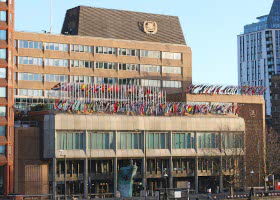
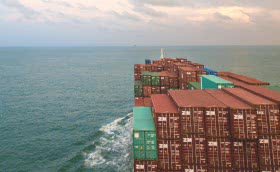
Delegates of the International Chamber of Shipping (ICS) and the International Transport Workers' Federation (ITF) met the representatives of the States of the Persian Gulf to discuss the conflict in progress in the region and its impact on the marine and the marine transport as well as to define mainly urgent practical and joint initiatives aimed at supporting the ships and crews currently affected. In the region, in fact, there are about 20,000 seamen blocked under conditions of fear and uncertainty on board ships unable to cross the Strait of Hormuz.
It has been highlighted the need to introduce, through the International Maritime Organization, a mechanism for ships to signal their most immediate supply needs, so that they can be communicated to the partners of the Gulf States. Moreover, the need for recognition of seafarers as essential workers, in accordance with national legislation, and the urgency to give priority to their replacement on board ships, where necessary and in accordance with international standards, to ensure that ships in the region continue to be adequately equipped and operational. Finally, the need to ensure that seafarers can quickly and safely disembark from ships for medical reasons.
During the meeting, representatives of the Gulf States at the IMO have specified that their respective governments have already begun and will continue to do everything possible to support the seafarers, underlining the importance of concerted efforts to ensure that neither the seamen nor the passengers on board the ships feel abandoned. They also pointed out that the current phase of the conflict is different from the initial ones and, as such, requires different measures. They also confirmed that logistic support will be implemented in all States of the Gulf Cooperation Council for ships that are not able to leave the region and that the crew changes will not encounter difficulties. In cases where crew contracts or medical certificates expire, it has been indicated that the States of the Gulf Cooperation Council may resort to exceptional measures, similar to those adopted during the Covid-19 pandemic, to alleviate the situation of seafarers. Finally, they stressed the need to cooperate closely with the IMO and its Secretary-General, in the context of the resolutions of its extraordinary session held recently.(of 20 March 2026), to ensure the establishment of a safe maritime corridor for the evacuation of the ships, to ensure the safety of the seafarers and to restore the marine transports the Strait.
Meanwhile, Federlogistica has raised the alarm for the consequences of the blockade of the Strait of Hormuz on the very estate of world trade and the European and Italian economic/productive fabric, as it represents a possible breakpoint of a global model built in the last thirty years on continuity, predictability and fluidity of exchanges. "We are not faced - said the president of Federlogistica, Davide Falteri - to a conjunctural crisis but to a possible redefinition of global balances. When you alter logistics, you do not simply slow down the trade: the operation of the economic system itself.' Falteri found that if for decades international trade had been based on an implied but fundamental assumption, that goods leave and arrive, that routes were considered reliable, programmable times and continuous flows, today instead this paradigm is cracked being introduced a structural unpredictability that prevents enterprises from planning, forces them to freeze investments in front of a fragmentation of productive supply chains. "When predictability is less - Falteri has highlighted - the problem is no longer only economic: becomes systemic. And logistics, often perceived as invisible, is revealing for what it really is: a global critical infrastructure, like energy and digital networks".
"For such a crisis - the president of Federlogistica added - the answer must be extraordinary: needs rapid, coordinated and courageous decisions at national and European level. Logistics must be recognized as a strategic asset and governed as such to avoid a direct impact on the competitiveness of enterprises, on the production and occupation put at risk from what would be a regionalization of trade".
Federlogistica has therefore launched an appeal to the institutions so that the logistics is recognized as an essential service and strategic infrastructure, are activated extraordinary tools to ensure the continuity of the supply chains, is strengthened European coordination on the safety of the commercial routes and is accelerated the process of digitization and resilience of the supply chain.
- Via Raffaele Paolucci 17r/19r - 16129 Genoa - ITALY
phone: +39.010.2462122, fax: +39.010.2516768, e-mail
VAT number: 03532950106
Press Reg.: nr 33/96 Genoa Court
Editor in chief: Bruno Bellio No part may be reproduced without the express permission of the publisher







 Delegates of the International Chamber of Shipping (ICS) and the International Transport Workers' Federation (ITF) met the representatives of the States of the Persian Gulf to discuss the conflict in progress in the region and its impact on the marine and the marine transport as well as to define mainly urgent practical and joint initiatives aimed at supporting the ships and crews currently affected. In the region, in fact, there are about 20,000 seamen blocked under conditions of fear and uncertainty on board ships unable to cross the Strait of Hormuz.







 - Via Raffaele Paolucci 17r/19r - 16129 Genoa - ITALY


