
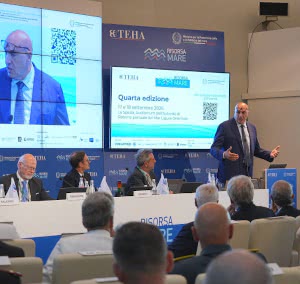
European Shipowners (ECSA), at an event today at the
European Parliament on the strategic role of maritime transport
European Competitiveness Initiative, which is
organized by the European Shipowners' Association itself,
presented a study on the economic value of transport
European maritime sector, which highlights how the sector represents a
geopolitical resource for Europe, facilitating the export and
the import of goods, food and energy. In addition, the
sector generates €148.7 billion in direct economic impact and
supports around 1.7 million jobs.
The document recalls that although the EU accounts for around 15%
of the world's gross domestic product, the European maritime fleet is
one of the largest in the world and accounts for about 34.5%
of the global fleet in terms of global tonnage in all
segments of ships. In particular, European maritime transport
controls 28% of bulk carriers, 45% of ships
container ships, 34% of tankers and 32% of LNG carriers.
In addition, the European fleet is growing year on year and in 2025 its
consistency increased by +2.6%, the largest increase
of the last five years.
The study points out that, however, fleets from other countries
growing faster and the fierce competition that the
European maritime transport faces globally makes it
international standards and a more efficient level playing field
necessary than ever.
The document also underlines that the transport sector
European maritime industry is at the forefront of the race for
energy transition, with European shipowners who are
investing significantly in ships powered by high-powered
low and zero carbon emissions, which account for 44% of the
orders of this type of vessel globally. Inside
of orders placed by European shipowners, 38% of ships and
54% of the gross tonnage are designed to work with these
sustainable fuels. The study finds that, however, this
level of investment is not accompanied by adequate
availability of sustainable fuels and Europe is
lagging behind in the production of these fuels, with Asia being
leader with 74% of fuel production projects
while Europe accounts for only 10%.
The paper highlights that maritime transport contributes to the
with nine billion euros per year to the revenues of the ETS
emissions trading and notes that investing these
funds in the production of clean fuels for the
maritime transport is not only fundamental for the
energy transition, but also a question of security
energy efficiency.
Reiterating that, in order to remain globally competitive, the
European shipping sector needs a level playing field
at international level, ECSA Secretary General, Sotiris
Raptis, referring to transport emission standards
noted that, once a regulatory framework had been agreed
at the International Maritime Organization, "we will have to
withdraw the current regional measures. As long as the sector
will be subject to EU climate legislation -
said - it is essential to invest the nine billion
paid by shipping companies to the EU ETS for
support the production and availability of fuels
for maritime transport in Europe".

















 - Via Raffaele Paolucci 17r/19r - 16129 Genoa - ITALY


