
The Group of the European People's Party, which with its 185
MEPs is the main political group in Parliament
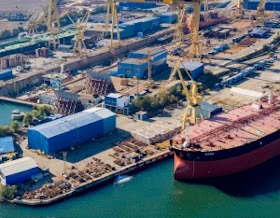
considers that European ports can no longer be
treated as neutral trading spaces and that the EU can no longer
accept that foreign governments and state-owned companies can
invest and hold stakes in some of Europe's most
strategic. In a note, the EPP Group points out that 'in a
Europe we are allowing foreign states to keep the keys
of our front door - our ports - checking
access to the doors of our economies". "We have
granted to external actors - it is underlined - direct access to the
our critical infrastructures. China is an example of the
at stake. Beijing's top three port investors -
the state-owned companies COSCO and China Merchants Ports and CK Hutchison,
based in Hong Kong - hold minority or majority stakes
in around 30 EU port terminals. These include terminals
of the busiest ports in the EU: Rotterdam, Antwerp-Bruges and
Hamburg".
According to the EPP Group, 'to avoid the 'waterbed
effect", a European approach is needed. È
now - the note specifies - to stop being naïve: in a
increasingly competitive geopolitical environment, the dependence of
foreign investment in critical infrastructure raises
serious questions about security, transparency and resilience.
However, it's not just about geopolitics. Ports with poor
surveillance are ports where criminal networks thrive.
Europe is already the largest cocaine market
and most of them arrive by sea, right through the
terminal of which we are losing control. Right now -
specifies the note referring to the "water mattress" effect
- stricter controls in a port do nothing but
Move the issues to another. We need better
cooperation, information sharing and action
to prevent criminal networks from exploiting our ports.
Non-transparent management of ports is also a risk for
public safety".
EPP Group welcomes the strategy for
ports presented last March by the European Commission
 (
of 4
March 2026), highlighting that this strategy "passes through the
finally to the next level and address security issues
which, until now, have been absent from European port policy"
and "rightly focuses on the risks related to property
and on ensuring that Member States can guarantee
access and operational control".
(
of 4
March 2026), highlighting that this strategy "passes through the
finally to the next level and address security issues
which, until now, have been absent from European port policy"
and "rightly focuses on the risks related to property
and on ensuring that Member States can guarantee
access and operational control".
"The real vulnerabilities - continues the note - are not
they only affect those who own the terminals. They concern those who
controls, who manages the data and who provides the software, and
hardware. China is a clear example of how these
levels can create risks: combine commercial expansion with
intelligence, coercion, espionage, sabotage and
even military logistics, demonstrating how influence can
extend far beyond formal ownership. We must ensure
that our ports remain absolutely safe, preventing
additional foreign ownership and excluding foreign actors
from operational control. The risk of disruption of our
imports and exports is too large; there is no
time to lose".
Specifying that the goal, moreover, is that the ports
remain competitive, the EPP Group makes it clear that
The proposed approach "does not mean turning our backs on the
investments. If adequately screened - it is specified - they can
to help modernise our ports and create jobs for
work. The goal is not to close down, but to ensure that
openness must never be at the expense of our independence".
The note also stresses the importance of having a "brake
", providing European governments with a clear
legal mechanism to quickly regain control of ports
in the event that a foreign state were to use control over
European ports to exert political pressure on Europe.
"We have learned a brutal lesson
from our dependence on Russian gas. Prices have risen. The
Families have struggled to pay their heating bills. Not
We can continue to fall into the same traps. Our ports
they are the gates of Europe, so let's stop giving away the keys."













 - Via Raffaele Paolucci 17r/19r - 16129 Genoa - ITALY


