testata inforMARE
Cerca
21 December 2025 - Year XXIX
Independent journal on economy and transport policy
17:33 GMT+1
LinnkedInTwitterFacebook
FORUM of Shipping
and Logistics
Il Nuovo
Piano Generale dei Trasporti


CAPITOLO 4 LA LOGISTICA E IL TRASPORTO MERCI

L'Italia sconta forti ritardi nella logistica e nella sua terziarizzazione. Il livello della domanda è insufficiente, poiché l'industria non appare sensibile ai benefici della razionalizzazione; e sussistono problemi anche sul versante dell'offerta, poiché le aziende italiane che prestano servizi di logistica sono di piccole dimensioni, hanno scarsa capacità finanziaria e manageriale.

Il PGT dovrà dunque condurre un'analisi delle strategie volte a superare le attuali condizioni di arretratezza, assumendo come obiettivi gli standard di servizio europei e il coordinamento con le politiche europee per i servizi di trasporto e logistica, in modo da ridurre il forte deficit della bilancia commerciale.


4.1 Caratteristiche e criticità dei servizi di trasporto


L’autotrasporto

Con questo PGT si intende superare un luogo comune che ha sempre accompagnato il dibattito sull’autotrasporto: la polverizzazione delle imprese di trasporto. Il rimedio che si è sempre proposto a questo luogo comune è il sostegno all’accorpamento delle imprese. L’impresa di autotrasporto italiana ha infatti dimensioni tali da poter difficilmente competere sul piano dei servizi a valore aggiunto con i concorrenti europei. Ma il fenomeno della polverizzazione dell’impresa è un fenomeno patologico proprio non solo dell’autotrasporto, ma un fenomeno generalizzato nel settore dei servizi alle imprese.

Il problema in realtà risiede nella difficoltà dell’impresa italiana di autotrasporto a trasformarsi in impresa di trasporto e logistica che offre non solo servizi di trazione su gomma ma anche servizi complessi ad elevato valore aggiunto.

Innanzitutto occorre distinguere nettamente due universi: quello del trasporto pesante e quello del trasporto leggero.

Nel trasporto pesante desta maggiori preoccupazioni lo stato della media o medio-grande impresa di trasporto in Italia, se paragonata con il mercato europeo, dove la concentrazione di capitale sta raggiungendo livelli molto elevati.

Man mano che il mercato si sposta dai mezzi tradizionali (autocarri, autotreni) ai mezzi intermodali (trattore + semirimorchio) si realizza sempre più la separazione tra unità di trazione e unità di carico, con conseguenze sul piano dell’organizzazione delle imprese. La separazione consente di raggiungere livelli di flessibilità molto elevati e consente oggi ai produttori di veicoli pesanti di prevedere un futuro sempre più dominato dalle società di leasing e sempre meno caratterizzato da imprese titolari del parco, siano esse imprese micro o macro.

Il perdurare di un sistema di microimprese artigiane monoveicolari in Italia non è la causa, ma è la conseguenza di un assetto di mercato in cui prevale la media impresa non specializzata. La media impresa di trasporto italiana, invece di cercare la propria specializzazione e sviluppare all’interno di quella l’offerta di servizi sofisticati, orientandosi verso il prodotto, si è sempre orientata verso il territorio. E’ quindi la sua debolezza strutturale che l’ha costretta al ricorso ai "padroncini" e alla loro flessibilità. Laddove l’impresa di trasporto italiana ha invece individuato filiere logistiche o segmenti delle medesime in cui specializzarsi, ha avuto successo e ha creato un sistema di "imprese di nicchia" altamente competitive anche sul piano internazionale.

Il mercato della trazione conto terzi (autotrasporto puro) in Italia è oggi cos' articolato:

il 9% della domanda è soddisfatta direttamente dai padroncini,

il 53% è soddisfatta da trasportatori di maggiori dimensioni che utilizzano per il 27% veicoli propri,

il 38% è acquisito da altri operatori (corrieri, spedizionieri) che utilizzano per il 5% veicoli propri, per il 60% veicoli di autotrasportatori non padroncini, e per il 35% il parco dei padroncini.

Nel settore del trasporto leggero, il fenomeno della microimpresa artigiana è destinato invece ad espandersi per due ragioni: il costo dell’investimento è minore; ad alimentare questo mercato sono imprese di grandissime dimensioni che concentrano gli investimenti nell’informatica o nei mezzi aerei e decentrano il parco veicolare. La logistica e il principio just in time hanno accelerato questa tendenza con la frammentazione dei lotti e la frequenza delle consegne.

Le azioni di policy che si consigliano per l’autotrasporto sono dunque:

l’abrogazione delle norme restrittive alla separazione tra le unità di trazione e le unità di carico nel trasporto pesante;

una forte azione di controllo e regolamentazione degli orari di lavoro;

incentivi al ricambio generazionale degli autotrasportatori.

Occorre quindi riqualificare le imprese medie e medio-grandi, indirizzandole verso profili da operatore logistico specializzato, poiché questa è la vera debolezza del trasporto su gomma in Italia.


Servizi di cabotaggio marittimo

I servizi di trasporto merci mediante navi traghetto, sia miste che tuttomerci, hanno segnato nel Mediterraneo un forte incremento negli ultimi anni interessando i porti italiani dell’Adriatico e del Tirreno in modo determinante.

Profonde trasformazioni sono avvenute in questo mercato ed altre sono attese negli anni prossimi.

La flotta italiana di cabotaggio è costituita da 460 navi: è la seconda flotta mondiale per tonnellaggio nel settore delle navi Ro Ro e passeggeri. Le navi dedicate esclusivamente al trasporto merci rappresentano meno del 20% della flotta; l’occupazione del settore è di circa 43 mila persone, 85% delle quali residenti nel Mezzogiorno.

A partire dal 1 gennaio 1999 il mercato dei servizi di cabotaggio marittimo è stato liberalizzato alle flotte europee con la sola deroga per la Grecia fino al 2003 per quanto concerne i servizi di linea per passeggeri, i servizi di traghetto e di trasporto merci. Il mercato italiano rappresenta circa il 50% dell’area interessata alla liberalizzazione nel settore merci.

Per quanto riguarda il servizio delle merci, i principali flussi che interessano i porti italiani riguardano:

relazioni con la Turchia, la Grecia, la Croazia (principali porti interessati: Trieste, Venezia, Ancona, Ravenna, Brindisi)

relazioni con la Sicilia (principali porti interessati: Venezia, Ravenna, Napoli, Livorno, Genova, Catania, Palermo)

relazioni con la Sardegna (principali porti interessati: Genova, Livorno, Piombino, Civitavecchia, Napoli, Cagliari, Olbia, Porto Torres).

E’ ragionevole attendersi uno sviluppo dei collegamenti con la penisola iberica e con i paesi del Maghreb.

La liberalizzazione del mercato ha già prodotto sensibili effetti sull’offerta, in particolare sul Tirreno, in direzione dei mercati più ampi, quello sardo e quello siciliano: numerosi armatori hanno potenziato i loro servizi di linea o ne hanno aperti di nuovi. Non si notano invece ancora segnali in tal senso per quanto riguarda l’Adriatico riguardo i collegamenti con la Sicilia. In questo mare la marineria greca è da tempo dominante, avendo circa il 75% degli approdi nei porti italiani adriatici.

Appare quindi giustificata la preoccupazione dell’armamento italiano che la flotta greca, favorita dalla deroga alla liberalizzazione, invada anche il più ricco mercato del Tirreno. A tal fine il governo ha predisposto dei provvedimenti di sgravio fiscale validi sino al 2001 a favore della flotta italiana di cabotaggio per aiutarla a superare l’impatto della liberalizzazione.

Sia sul Tirreno che sull’Adriatico nei collegamenti nazionali la posizione dell’armamento pubblico è dominante (società Tirrenia e Adriatica). Tale posizione si è consolidata negli anni in quanto l’armamento pubblico era il solo a garantire una continuità di servizio durante l’intero anno solare, mentre l’armamento privato concentrava la sua offerta soprattutto nei periodi estivi. Questa situazione nel Tirreno sta rapidamente cambiando, almeno nel settore delle navi tuttomerci, dove l’armamento privato tenta di erodere quote di mercato della flotta pubblica.

A parte i problemi di assetto del mercato, due sono i fenomeni innovativi che caratterizzano il mercato del cabotaggio nel settore delle merci.

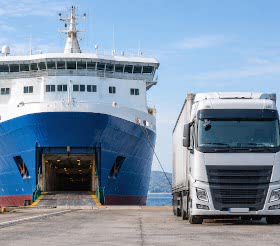
Il più importante è dato dalla graduale trasformazione del traffico da accompagnato a non accompagnato, avvenuta in seguito alla forte ristrutturazione delle imprese di trasporto, che oggi imbarcano sulle navi Ro Ro i semirimorchi senza autista piuttosto che gli autocarri con autista.

Il secondo fenomeno innovativo è rappresentato dall’entrata in servizio di navi veloci e superveloci, dapprima dedicate essenzialmente al trasporto passeggeri e ora anche al trasporto misto.

Azioni di policy nel settore dei servizi di trasporto e della logistica devono quindi tenere conto di questi due fenomeni e delle loro conseguenze sul settore portuale.

Il passaggio del traffico da accompagnato a non accompagnato richiede un rinnovamento dei servizi e delle strutture portuali, in quanto i mezzi richiedono sempre più l’intervento di un’impresa portuale per lo sbarco e imbarco dei semirimorchi; inoltre, i porti necessitano sia di aree di parcheggio e di pre-imbarco attrezzate e vigilate, sia di un’organizzazione in grado di programmare imbarchi e sbarchi. Inoltre, i mezzi in transito per operazioni di cabotaggio nazionale non dovrebbero essere soggetti a vincoli fisici e amministrativi da parte della dogana, pena l’efficienza del servizio stesso. Infine, l’entrata in servizio di mezzi veloci e superveloci richiede opere di rinforzo sulle banchine e di riqualificazione delle apparecchiature di segnalazione, per la sicurezza della navigazione e l’integrità delle infrastrutture.

Ma il problema posto dall’impetuosa crescita del traffico Ro Ro, riguarda più in generale le scelte di fondo sul ruolo del nostro Paese nell’ambito degli interscambi tra Mediterraneo e Europa centrale. I veicoli provenienti dal Mediterraneo orientale sono in buona parte veicoli in transito per destinazioni situate in tutta Europa. Ciò aggrava la situazione del traffico pesante sulle strade della dorsale adriatica e dell’Italia cispadana. Per contro, lo sviluppo del cabotaggio, il miglioramento dell’offerta in termini di qualità dei servizi (frequenza) e di costo dei medesimi, potrà produrre effetti positivi di riequilibrio modale e di decongestione del traffico stradale nei collegamenti con la Sicilia. E’ necessario quindi adottare misure diversificate per le aree interessate da flussi di traffico di transito e per le aree interessate da flussi di traffico di destinazione. Allo stato attuale, la prima area è quella adriatica e la seconda è quella tirrenica: due aree che, dal punto di vista del cabotaggio, si stanno differenziando sempre più, in quanto la prima è interessata principalmente da flussi internazionali, la seconda da flussi nazionali.


Servizi intermodali

Uno dei fenomeni più rilevanti sul mercato dei servizi intermodali è stato l’aumento del 15-20% dei prezzi da parte delle società partecipate FS a partire dal 1 gennaio 1999. Le FS, in linea con tutte le ferrovie europee, calcolano un margine negativo del 52% per i servizi di trazione intermodali e, in ottemperanza alla politica di risanamento, aumentano le tariffe delle convenzioni con le partecipate.

Nei traffici intermodali occorre distinguere due segmenti: il traffico container e quello di casse mobili e semirimorchi. Il primo (traffico seaborne) può essere fortemente influenzato da azioni di regolazione del mercato; il secondo segmento (traffico landborne) è invece estremamente sensibile al costo del trasporto dei percorsi terminali su strada, che dipendono a loro volta dal grado di organizzazione delle imprese ma, per quanto riguarda l'Italia, anche dall'allentamento dei vincoli imposti al traffico pesante dall'Austria e dalla Svizzera.

Si presentano numerosi punti critici in entrambi i segmenti a causa principalmente:

del forte squilibrio tra costo della tratta marittima e costo di quella terrestre nel segmento dei container (6.000 km di mare costano quanto 600 km via strada);

dell'incoerenza tra l'allentamento dei vincoli al transito alpino da parte di Austria e Svizzera e la conclamata intenzione di voler sostenere il trasporto su rotaia;

della scarsa chiarezza di regole nei progetti europei di freeways;

dell'aumento dei prezzi dei servizi ferroviari.

Si propongono pertanto come elementi qualificanti del PGT le seguenti azioni:

studio di azioni di sostegno al trasporto combinato;

verifica sulla politica tariffaria delle FS, in comparazione con quelle europee;

accelerazione del progetto freeways e controllo della politica dello sportello affidato all'Italia (freeway Rotterdam - Gioia Tauro);

istituzione di un Osservatorio dei prezzi del trasporto intermodale per monitorare il forte squilibrio tra i costi delle tratte marittima e terrestre;

controllo degli accordi tra società ferroviarie per impedire i cartelli.


Piattaforme logistiche e interporti

Con la legge 240/90 è stata individuata una prima serie di interporti, da ammettere ai contributi, che sono già in esercizio o avviati a realizzazione: Padova, Verona, Rivalta Scrivia, Torino Orbassano, Livorno, Parma, Bologna, Nola Marcianise.

Le modifiche introdotte dall'art. 6 della legge 294/95 hanno consentito nelle more dell'adozione del Piano quinquennale degli interporti, di procedere alle istruttorie della documentazione presentata da altri soggetti al fine di accedere ai residui finanziamenti. Attualmente quindi i programmi di interporti all'attenzione del Ministero dei Trasporti sono i seguenti: Orte, Bari, Catania, Prato, Bergamo Montello, Novara, Pescara, Vado Ligure Gioia Tauro. Altre nove strutture interportuali sono attualmente all'esame poiché ammesse a beneficiare delle provvidenze per le aree depresse: Pescara, Termoli, Tito, Frosinone, Venezia, Iesi, Area Ionico - Salentina, Cervignano e Pontecagnano.

Inoltre la legge 454/97 stanzia circa 100 miliardi per ulteriori infrastrutture di potenziamento della rete interportuale per l'incremento del trasporto combinato, con priorità per i nodi intermodali più congestionati. Il relativo piano di interventi ha definito la rete nazionale interportuale e individuato le priorità nelle aree milanese, romana e palermitana. Analogo procedimento dovrà essere seguito per la ripartizione degli ulteriori fondi previsti dalla legge 413/98 di rifinanziamento della citata 454/97 per circa 200 miliardi a partire dal 2.000.

Al fine di evitare la proliferazione di strutture esorbitanti le reali necessità di traffico intermodale è opportuno inserire nel nuovo piano la possibilità di classificare e individuare infrastrutture di trasporto alternative agli interporti, di minore importanza ma di supporto a questi, al fine di amplificare le potenzialità della rete logistica nazionale.

Il nuovo PGT potrà adottare quindi il Piano quinquennale degli interporti, le cui linee programmatiche possono cos' essere riassunte:

realizzazione degli interporti già definiti e ammessi alle provvidenze;

individuazione delle aree carenti in relazione alle reali capacità di movimentazione delle merci;

individuazione delle località in cui i problemi possono essere risolti attraverso la realizzazione di infrastrutture intermodali minori quali piattaforme logistiche, retroporti, centri intermodali, con lo scopo di favorire l'integrazione tra le diverse modalità, ridurre gli squilibri nella ripartizione modale del trasporto merci, favorire l'integrazione con le strutture esistenti, migliorare la qualità dei servizi, decongestionare il traffico nelle grandi aree urbane;

regolamentazione sia delle risorse finanziarie che delle procedure di individuazione delle iniziative;

destinare parte degli investimenti alla formazione professionale degli operatori nel campo della logistica.

Lo sviluppo del trasporto va considerato infatti nell'ottica della logistica integrata che presuppone il riferimento agli assi di collegamento nazionali e internazionali. Ciò consentirà la definizione di una rete integrata intesa come insieme di tutte le infrastrutture di trasporto in grado di razionalizzare il sistema merci, attraverso il riequilibrio modale, e di correggere inefficienze e squilibri.

Deve quindi provvedersi all'individuazione - di concerto con gli Enti territoriali - delle reali necessità delle diverse aree al fine di definire una rete equilibrata comprensiva di infrastrutture logistiche intermedie in grado di completare e potenziare la rete nazionale.

Si può inoltre ipotizzare la definizione di una legge che - ferme restando le risorse già stanziate – consenta il superamento della normativa esistente che permette il finanziamento solo di infrastrutture interportuali propriamente dette.

Per il completamento degli interventi già previsti il Ministero dei trasporti e della navigazione dovrebbe ammettere a contributo la realizzazione di strutture intermodali per il completamento e il riequilibrio della rete interportuale nazionale, definendo modalità e requisiti per l'ammissione ai contributi sulla base dei seguenti principi:

equilibrio modale e territoriale per ridurre la perifericità del Mezzogiorno e aumentare la competitività delle aree deboli attraverso un sistema integrato di trasporto;

individuazione delle aree carenti di dotazione infrastrutturale intermodale in riferimento alle reali funzionalità dell'offerta e della domanda;

individuazione delle località tenendo conto dell'esigenza di sviluppare il traffico intermodale lungo i corridoi plurimodali, con particolare riferimento ai problemi della congestione del traffico, per creare anelli logistici di piattaforme intermodali collegate tra loro e con le principali vie di adduzione alle aree urbane e metropolitane;

accertamento del livello di servizi minimi sufficienti a soddisfare la domanda nell'area interessata all'infrastruttura tenendo conto prioritariamente delle esigenze di integrazione tra reti di trasporto e tra le infrastrutture intermodali esistenti, di fruibilità dei servizi e di riduzione dell'inquinamento;

previsione a fini dell'ammissione al contributo del maggior apporto possibile di altre risorse rese disponibili da soggetti pubblici e privati e comunque di una spesa complessiva per la quale il contributo dello Stato non superi il 50% dell'importo;

destinazione di una quota non inferiore all'1% dei finanziamenti alla formazione professionale.

Ai fini della localizzazione si può procedere attraverso Accordi di programma, nel caso che l'amministrazione comunale competente non abbia provveduto attraverso il Piano regolatore generale o ad apportare variante allo stesso.


Porti marittimi

Al forte sviluppo del traffico marittimo non ha corrisposto un rafforzamento delle imprese italiane; nella tipologia dei trasporto container, anzi, le imprese che gestiscono i terminal maggiori hanno subito acquisizioni da parte di operatori esteri a Gioia Tauro, La Spezia, Genova Voltri, Venezia, Trieste e Taranto. Analogo fenomeno si è verificato nello shipping.

Nel traffico container i quattro maggiori porti adriatici non raggiungono ancora tutti insieme il traffico dei terminal di Genova e Genova Voltri e rappresentano una quota di mercato del 20%.

La crisi del Far East ha fortemente penalizzato alcuni porti. La debolezza delle imprese e la loro scarsa propensione agli investimenti ha rallentato il processo di liberalizzazione in particolare nei settori rinfuse e merci varie.

Si nota un rafforzamento e un consolidarsi dei porti "universali", favoriti dalla presenza di terziario marittimo. Si va inoltre profilando una mappa della specializzazione che qualifica alcuni porti per merceologie o per relazioni di traffico.

Una delle maggiori criticità che presenta oggi il sistema portuale italiano è costituita dal modo in cui numerose Autorità Portuali interpretano il processo di privatizzazione, travisando lo spirito della legge di riforma 84/94. La legge infatti non solo prevedeva la rinuncia da parte dell’organismo pubblico ad esercitare direttamente attività commerciali ma prevedeva che i porti raggiungessero gradatamente un maggiore livello di autonomia finanziaria accrescendo la quota di introiti proveniente, sotto forma di canoni di concessione, dall’attività economica delle società terminaliste private. Lo strumento del canone, la cui entità doveva essere funzione dei positivi risultati economici delle società terminaliste e quindi crescere con la crescita degli introiti delle medesime, doveva essere lo strumento principe dell’autonomia finanziaria dei porti.

Accade invece che molti porti interpretino tale strumento come un incentivo alle imprese e chiedano di poterlo abbassare, sino a ridurlo a zero, per non incidere eccessivamente sui conti economici delle medesime. In tal modo si crea un circolo vizioso per cui i porti, privatisi dello strumento principe della loro autonomia finanziaria, sono costretti a ricorrere in misura maggiore rispetto al passato all’aiuto dello Stato.

Se cos' fosse, si otterrebbe esattamente l’opposto di quanto ci si attendeva dalla legge di riforma. Non è un caso che oggi i porti chiedano di ottenere maggiore autonomia finanziaria non mediante lo strumento del canone ma mediante lo strumento del decentramento fiscale. Se si ottemperasse a tale richiesta e contemporaneamente si accettasse che i canoni siano interpretati e usati come sostegno alle imprese terminaliste, non solo lo Stato si vedrebbe privato di risorse finanziarie ma si esporrebbe al rischio di dover aumentare il proprio intervento quanto più aumentano i traffici, mentre dovrebbe avvenire il contrario.

Lo strumento del canone infatti, a differenza delle tasse portuali, stimola i porti a dotarsi di traffici che producono valore aggiunto in quanto è dalla movimentazione e manipolazione dei carichi che si ricavano i profitti ed è dalla ripartizione dei medesimi che si alimenta l’economia sia dell’impresa che dell’Autorità Portuale. Le tasse portuali invece sono un semplice pedaggio sul movimento delle navi: che i carichi siano ricchi o poveri, tali da produrre valore aggiunto o meno, è indifferente.

Tasse portuali e canoni rispondono a due concezioni del porto per certi versi opposte: da un lato il porto come mera agenzia fiscale dello Stato addetta alla riscossione dei pedaggi marittimi, dall’altro lato il porto come impresa economica autosufficiente, che trae alimento dall’efficienza delle imprese terminaliste in esso localizzate. A differenza del Nord Europa, in Italia il porto è ancora concepito come agenzia che riscuote i pedaggi dalle navi in transito e non un sistema-impresa di trasporto e logistica.

Il canone di concessione è al tempo stesso stimolo e indicatore di una sana economia portuale, in quanto premia le Autorità Portuali che hanno saputo concedere l’uso delle banchine a società efficienti e competitive sul mercato. Se, come si segnala da numerose Autorità Portuali, le società terminaliste si trovano oggi in difficoltà e, malgrado l’aumento dei traffici, chiedono la riduzione o l’azzeramento dei canoni, assecondando tali richieste si rischia non solo di tornare alla logica dell’assistenzialismo, mantenendo un sistema di imprese e di Autorità Portuali inefficienti, ma anche di esporsi alle sanzioni dell’Unione Europea.

Il perdurare di questa situazione sta già producendo effetti distorsivi sul mercato, in particolare per quanto riguarda la sovra-offerta di terminal. Le previsioni di mercato sono tali per cui è molto difficile attendersi un incremento dei traffici pari a quello conosciuto negli ultimi anni. La portualità italiana dovrà ripartirsi volumi di traffico tendenzialmente costanti, a fronte di un incremento dell’offerta di terminal molto superiore. L’effetto è che sia i terminal avranno un tasso di utilizzo inferiore alla media attuale con conseguenze negative sulla redditività delle imprese.

In conclusione, ci attende un periodo di crescita molto contenuta che produrrà una drastica selezione delle imprese terminalistiche. Il PGT si impegna a trovare strumenti per evitare che questa selezione, a causa delle distorsioni introdotte nel mercato dalla privatizzazione zoppa, colpisca le imprese più efficienti e salvaguardi quelle meno efficienti.

Alla luce delle problematiche evidenziate, il PGT suggerisce le seguenti linee:

il completamento della privatizzazione dei porti;

la diffusione del terziario marittimo nei porti;

misure per favorire la concentrazione di imprese in modo da permettere investimenti nei terminal;

potenziamento dei collegamenti ferroviari;

promozione di terminal attrezzati per il Ro – Ro;

adeguamento delle statistiche portuali alla privatizzazione.


4.2 Il raggiungimento degli standard di servizio europei nella logistica

Alcuni Paesi europei, come Francia e Gran Bretagna, hanno ottenuto brillanti risultati sulla produttività del trasporto su strada sia con l'istituzione di borse merci telematiche, sia con un lungo processo di ristrutturazione delle imprese di trasporto e di un forte miglioramento dei loro sistemi organizzativi.

Andrebbe attentamente studiata la costituzione di un'Agenzia di promozione del sistema logistico italiano all'estero, sul modello dell'Olanda, con l'obiettivo di ridurre l'attuale forte deficit commerciale (il 67% delle merci italiane viene movimentato e trasportato da imprese straniere). Mille container in transito generano un fatturato di circa 600 milioni, un utile di circa 50, una entrata complessiva per lo Stato di 220 milioni e 5 posti di lavoro. Se fossero invece sdoganati, e la merce stoccata, lavorata, reimballata e distribuita, il fatturato salirebbe a 4,6 miliardi, l'utile a circa 370 milioni, l'entrata per lo Stato a 2,1 miliardi e i posti di lavoro a 42.

Non sembrano al momento necessarie politiche particolari. Sono comunque da mettere in evidenza due punti importanti:

le politiche di sostegno all'industrializzazione del Mezzogiorno e in particolare i distretti industriali devono essere accompagnati da progetti logistici;

almeno nel Mezzogiorno, estensione alle imprese di logistica e trasporto delle principali leggi di sostegno riservate all'industria manifatturiera, in particolare delle misure per l'innovazione tecnologica, per le aree depresse, per le nuove assunzioni e per l'acquisto di macchinari.


INDICE
›››File
FROM THE HOME PAGE
The level of connection of Italian ports to the network of containerized maritime routes is growing
Geneva
The only exception was Trieste, which recorded a decrease of -12.3%.
Carnival Corporation Says 2025 Was Its Best Year Ever
Miami
Reintroduction of dividend distribution announced
T&E: European e-fuel production projects insufficient for shipping decarbonization
Brussels
It is likely that European targets will be met with imported fuels, or not at all.
Porto Marghera inaugurates a new single-section underground pipeline for the transport of vegetable oils.
Venice
At 3.1 kilometers, it is the longest in Italy and among the top five in Europe.
PSA Intermodal Italy and Logtainer to manage the Intermodal Terminal at Interporto Padova
Padua
A financial offer of 75 million euros was presented
Sea-Intelligence: By 2025, the container ship deployment model will have radically changed.
Copenhagen
Vessels are frequently replaced to accommodate short-term fluctuations in demand and to manage operational disruptions
Finnish Mikki Koskinen is the new president of European Shipowners - ECSA
Brussels
He will take over from Karin Orsel on January 1st.
Premier Alliance's Asia-Northern Europe services will be based on a hub-and-spoke model
Seoul
Drastic reduction in the number of stopovers on some routes
Work has begun in Switzerland to build a four-meter rail corridor for freight transport from France.
Bern
Construction site completion at the end of 2029
In the third quarter, freight traffic in French ports grew by +6.9%
La Defense
Increase driven by rising bulk cargo. Miscellaneous cargo remained stable.
Fincantieri plans to double the production capacity of its Italian shipyards in the defense segment
Trieste
Revenues expected to increase by 40% over the next five years
WHL orders CSSC Huangpu Wenchong Shipbuilding Co. to build six dual-fuel LNG containerships
Taipei
Charter of three additional vessels
The Spanish observatory on the EU ETS notes an unusual increase in container traffic in neighbouring non-European ports
Madrid
Growing activity in ports such as those in the UK, Egypt and Turkey
Marsa Maroc to acquire 45% of Spain's Boluda Maritime Terminals
Casablanca/Valencia
Investment worth 80 million euros
Investment firm BC Partners to acquire majority stake in Fortidia
Milan
The company operates through multiple franchise brands, including Mail Boxes Etc. and PostNet
MPC Container Ships orders six 3,700 TEU containerships
Oslo
Taizhou Sanfu Ship Engineering wins $292.5 million contract
Ownership of the Fagioli group will pass to CEVA Logistics
Milan
The Sant'Ilario D'Enza group specializes in the project logistics sector
MSC Cruises orders Meyer Werft to build four cruise ships with options for two more
Berlin
Orders for a total value of up to ten billion euros
AD Ports submits a bid to acquire control of Egypt's Alexandria Container & Cargo Handling Co.
The number of calls at Italian ports in the Premier Alliance network for 2026 is increasing.
Seoul/Singapore/Keelung
Three calls in Genoa, two in La Spezia, and two in Gioia Tauro. The Asia-Europe services will continue to circumnavigate Africa.
Stefano Messina is heading for a new term as president of Assarmatori.
Rome
The renewal of the association's positions for the four-year period 2026-2030 is scheduled for next month.
Hapag-Lloyd orders CIMC Raffles to build eight 4,500-TEU containerships
Hamburg
Long-term charter of 14 container ships with capacities ranging from 1,800 to 4,500 TEUs
Hanwha raises its stake in Austal from 9.9% to 19.9%
Henderson
The South Korean group has become the reference shareholder of the Australian company
Companies inform
Accelleron calls for cross-sector action to unlock carbon-neutral fuels for shipping
Maersk Group changes several top positions in the company
Copenhagen
New CFO and appointment of new regional managers
In the first half of the year, Italian ports recorded growth in containers and dry bulk cargo
Rome
Rolling stock and liquid bulk volumes decreased. "Port Infographics" by Assoporti-SRM
Snam will acquire 48.2% of Igneo Infrastructure Partners in OLT - Offshore LNG Toscana
London/San Donato Milanese
Operation worth approximately 126 million euros
The first "Decade of Sustainable Transport" established by the UN will begin on January 1st.
New York
Kramek (WSC): Effective global regulation of greenhouse gas emissions at IMO is vital for shipping
EU investigation into joint control of Spanish company Tercat by TiL (MSC Group) and Hutchison Ports
Brussels
The company manages the BEST terminal at the port of Barcelona
In the third quarter, freight traffic in the ports of Naples and Salerno recorded increases of +0.5% and +2.5%
Naples
ESPO urges MEPs to endorse report on military mobility
Brussels
Ryckbost: Clearly recognizes the strategic role of ports
From January 1st ICTSI will manage Durban Container Terminal 2 at the Port of Durban
Durban
Traffic capacity will be increased from two to 2.8 million TEUs
The ZIM Board of Directors confirms that it has received multiple expressions of interest in purchasing the company, including one of a strategic nature.
In the third quarter, freight traffic in the port of Bremen/Bremerhaven grew by +5.7%
Bremen
Significant increase in general cargo. Bulk cargo declines.
CSSC and COSCO sign cooperation agreement for the construction of 87 ships
Beijing
Project worth approximately 7.1 billion dollars under China's 15th Five-Year Plan
Last October, maritime traffic in the Suez Canal decreased by -0.7%
Cairo
Tanker transits increased by 9.6%. Other vessel types declined by 6.5%.
HD Hyundai to build shipyard in Indian state of Tamil Nadu
Seongnam
An agreement was also signed with BEML for the construction of marine and port cranes in India.
Shipowners call for suspending the application of the EU ETS to the maritime sector.
Federlogistica expresses concern over the proposed Genoese tax on maritime passengers.
Genoa
Concerns for the overall balance of the national port ecosystem and for the operational choices of shipowners
SEA Europe disappointed by the failure to recognize the maritime manufacturing industry as a strategic sector for the EU
Port of Palermo: Administrative violations amounting to one million euros related to boating and concessions
Palermo
Over 265 vessels used for rental purposes without mandatory insurance were identified.
EU transport ministers approve incentives for trucks by amending the directive on dimensions and weights.
Brussels
Road haulage - CER, ERFA, RFF, UIP, UIRR and UNIFE denounce - can expect economic gains, but the company will have to wait for a reduction in the environmental impact of logistics.
First LNG refueling of a ferry in the port of Genoa
Genoa
500 cubic meters of bioLNG delivered to the new vessel "GNV Virgo"
ONE appoints new agency in Albania
London
Centralog Albania is based in Durres and will be fully operational by the end of the month
Genoa-based shipping broker Lockton PL Ferrari expands its operations into other sectors.
Genoa
New segments Natural Resources, Oil & Gas and Construction & Real Estate
Giampieri (Assoporti): Italy's widespread port system requires a single, stable control room.
Rome
The port reform - he stated - can be a great opportunity for all of us
Lufthansa Cargo and Swiss WorldCargo have signed a strategic cooperation agreement.
Frankfurt/Zurich
Synergies are expected in both the commercial and operational fields
Agreement to end EU dependence on Russian energy
Brussels
The Council-Parliament agreement provides for a gradual but definitive elimination of Russian gas imports by the end of 2027.
Assiterminal confirms its appeal to the Regional Administrative Court (TAR) regarding the indexation of concession fees.
Genoa
108 member companies reached
The ITF urges the Dutch Court of Appeal to correct its preliminary findings on maritime work.
London
Port of Piombino, the regasification terminal has created both opportunities and obstacles
Livorno
Gariglio: It is necessary to know if and for how long the "Italis LNG" will remain in port.
Fincantieri signs a memorandum of understanding on its production model and procurement.
Rome/Trieste
A step forward - underline Fim, Fiom and Uilm - for the regulation and control of the supply chain system
The Port Authority of Genoa and Savona opposes the introduction of a three-euro municipal surcharge on ferry and cruise boarding fees.
Genoa
Cargo traffic in Chinese seaports grew by 3.8% last October.
Beijing
International volumes increased by 8.9%. Container traffic amounted to 26.4 million TEUs (+8.0%).
The composition of the International Maritime Organization's council has been renewed.
London
Rixi: Italy was once again the most voted nation
Quarterly decline in general cargo traffic at the ports of Genoa and Savona-Vado
Genoa
During the July-September period, solid bulk cargoes also decreased. Liquid cargoes increased.
The large port of Syracuse will be equipped with a new maritime station
Syracuse
An old warehouse will be renovated and redeveloped
Assologistica applauds the approval of the new rules on pallet exchanges.
Milan
Potential savings of at least 70 million euros are estimated
Giuseppe Grimaldi confirmed as Secretary General of the Central Tyrrhenian Port Authority
Naples
Unanimous resolution of the Management Committee
Hiab acquires Brazilian loading crane supplier ING Cranes.
Helsinki
The company has 250 employees and a turnover of approximately 50 million euros.
Norwegian MPC Container Ships' revenues fell by 5.0% in the third quarter.
Oslo
Net profit was $53.6 million (-15.8%)
The Algerian port of Skikda will be equipped with a new 600,000 TEU container terminal
Algiers
It will be built as part of the oil port expansion project
Port of Rotterdam plans offshore wind terminal
Rotterdam
A public consultation has been launched
ZIM is evaluating several proposals for the purchase of the company
Haifa
Receipt of the offer submitted by Glickman and Ungar confirmed
Hapag-Lloyd and Maersk have not set a date for the return of their ships via Suez
Copenhagen/Hamburg
Maersk announces the return of its ships through the Suez Canal starting next month
Ismailia
In October, transits remained unchanged. A 16% increase is expected in November.
After 2035, Russian cargo traffic on the Arctic route could decrease
Moscow/St. Petersburg
The governor of the Murmansk region highlighted this during a meeting with Putin
Diana Shipping offers to acquire all of Genco Shipping & Trading Ltd.
Athens/New York
Planned investment of $758 million for the remaining 85.2% of the capital
At the IMO assembly, Rixi acts as a lobbyist for the party opposed to the European Union ETS system.
London
The election of the new council of the International Maritime Organization is on Friday.
Macquarie Asset Management submits an offer to acquire Australian logistics group Qube Holdings
Sydney
Proposal worth $7.5 billion
HMM orders eight 13,400 TEU containerships from HD Hyundai Group
Seoul
Six will be built by HD Hyundai Samho and two by HD Hyundai Heavy Industries
G20 economies' merchandise trade growth in the July-September quarter
Paris
Exports and imports of services are also increasing
Freewheels: New payment terms rules leave hauliers unprotected.
Modena
They do not address - explains Franchini - the heart of the problem: the disproportion of bargaining power between clients and small carriers.
The Trump administration unveils a plan for the massive exploitation of offshore oil and gas fields.
Washington
The program covers areas of the outer continental shelf amounting to approximately 514 million hectares.
In the July-September quarter, ZIM's revenues decreased by -35.7%
Haifa
Fleet volumes fell by 4.5%. Performance in the Asia-Europe market was very negative.
Fincantieri granted additional areas in the port of Ancona
Ancona
The company is committed to implementing a modernization and development program for the shipyard at the port of Portorož.
Assogasliquidi-Federchimica, LNG and bioGNL are strategic for the energy transition of shipping and road haulage.
Legora (Uniport): the objective of greater national coordination envisaged by the port reform is positive, but there is concern over the lack of dialogue
Rome
He underlined that discussion, vision and urgent interventions are needed for the competitiveness of Italian ports.
New measures in Switzerland to promote the shift of freight from road to rail
Bern
They will be introduced to strengthen the new transalpine railway Alptransit and to encourage rail and intermodal transport
HMM and BGN joint venture for liquefied petroleum gas transportation
Seoul
The new company will charter two new 88,000 cubic meter VLGCs
Slight decline in freight traffic in the ports of Barcelona and Valencia in October
Barcelona/Valencia
Container cargo fell by -2.5% at both ports
Green light for a new site for sediments from excavations in the Venice Lagoon.
Venice
New expansion in sight for the Greek shipyard in Eleusis
Athens
Financial support from the US International Development Finance Corporation
In the third quarter, freight traffic in the port of Hamburg grew by +3%
Hamburg
Container traffic on the rise thanks to increased transhipments
In the July-September quarter, CMA CGM's revenues decreased by -11.3%
Marseille
Record volumes of goods transported by the container fleet
Bank of China finanzia l'acquisto della Grande Melbourne di Grimaldi Euromed
Importo di 57 milioni di euro
GeneSYS Informatica (Fratelli Cosulich) has acquired 51% of the capital of Navimeteo
KSOE wins $466 million order for four container ships
Lysaker/Seongnam
NYK and Ocean Yield Award Order for Four New LNG Carriers
ONE's Adriatic Service 1 will also make stops at the port of Ancona
Singapore
The line to Damietta has a weekly frequency
Consolidation work on the Riva quay at the port of Ortona has been completed.
Ancona
Thirteen million is the cost for the adaptation of the infrastructure
Vard has signed a cooperation agreement with the Norwegian research institute Norce
Ålesund
It concerns all fields of research and innovation in the naval sector
Energy transition, regulatory simplification, competitiveness of the maritime industry, and port governance are Confitarma's priorities.
Rome
Federlogistica reports the project cargo's inability to travel on Northwest highways.
Genoa
Falteri: We are facing a real systemic crisis.
ZIM shareholders reach agreement again
Haifa
Agreement reached on candidates for the renewal of the board of directors
Merger by incorporation of Degrosolutions into CLS
Milan
Castelli: We aim to strengthen our growth path in the Italian forklift market.
Approval has been given to measures to support the re-employment of workers at the Pippo Rebagliati Company in Savona-Vado.
Genoa
Administrative proceedings for cold ironing at the cruise terminal in the port of Savona have begun.
Assiterminal reports an assault on a worker at the Vado Gateway terminal.
Genoa
It is not tolerable - the association highlighted - that similar episodes occur
The Management Committee of the Central-Northern Adriatic Sea Port Authority has been established.
Ravenna
It is composed of Francesco Benevolo, Luca Coffari, Tomaso Triossi and Maurizio Tattoli
Stonepeak (Textainer) Completes Acquisition of Seaco
Hamilton
It was sold by China's Bohai Leasing Co.
In the second quarter of 2025, cargo traffic in Greek ports decreased by -3.9%.
Piraeus
Passengers increased by +0.9%
AD Ports involved in container traffic development at Shuaiba Port
Abu Dhabi
Agreement with the Kuwait Ports Authority
EU expands fight against Russian shadow fleet to include operators facilitating its deployment
Brussels
Five more people and four companies fined
In November, the port of Barcelona handled 296,000 containers (+1.0%)
Barcelona
Import and export containers are increasing; transit containers are decreasing.
Paolo Spada, vice president of Federagenti, has passed away.
Rome
Pessina: He leaves an unfillable void in the entire Italian maritime community.
Container traffic at the port of Hong Kong decreased by -12.0% in November
Hong Kong
In the first 11 months of 2025 the decline was -5.7%
Emanuele Grimaldi has been appointed an honorary member of the National Order of Merit of Malta.
Naples
Rebranding for the Messina Group's activities
Genoa
Common graphic and lexical choice for all business areas
Six new 100% electric yard cranes have arrived at the PSA Genova Pra' terminal.
Genoa
Three more vehicles will be delivered to the PSA Venice-Vecon terminal at Christmas
ICTSI to upgrade the Rio Brasil Terminal container terminal at the Port of Rio de Janeiro
Rio de Janeiro
Investment of approximately 175 million dollars
SAILING LIST
Visual Sailing List
Departure ports
Arrival ports by:
- alphabetical order
- country
- geographical areas
In the first 11 months of 2025, the Port of Singapore handled over 40.7 million containers (+8.5%)
Singapore
Overall freight traffic decreased by -1.1%
GTS increases the frequency of its intermodal connections between Bari and Verona and Piacenza and Nola.
Bari
The first will increase to six rotations; the second will become daily
The Partnership Body for the Sea Resources of the Eastern Ligurian Sea Port Authority has been established.
La Spezia
Appointment by decree of President Pisano
Agreement between the Port Authority and the Chamber of Commerce to facilitate the entry of an industrial partner into Genoa Airport.
Genoa
It will be signed soon
Paolo Guidi has been elected the new president of Assologistica.
Milan
The Vice Presidents are Sabrina De Filippis, Riccardo Fuochi, Agostino Gallozzi, Paolo Pandolfo, Umberto Ruggerone and Renzo Sartori.
138 kilos of cocaine seized at the port of Civitavecchia.
Rome
Found inside an articulated lorry disembarked from a ship coming from Spain
The decree has been signed for the disposal of dredged sediment from the port of La Spezia at the new breakwater in Genoa.
La Spezia
The transfer of 282,000 cubic meters is planned
Greek CCEC has almost completed its exit from the containership segment
Athens
$814.3 million in proceeds from the sale of 14 full containers in 22 months
GNV Virgo was christened in the port of Palermo
Genoa
GNV's fleet renewal program includes the construction of eight ships
The Livorno Port Center celebrates a decade spent integrating the port and city reality
Livorno
Gariglio (AdSP): in recent years we have managed to create a community atmosphere
Members of the Management Committee of the Northern Tyrrhenian Sea Port Authority have been appointed.
Livorno
The nomination of the member expressed by the Tuscany Region has not yet been received
Fincantieri and WSense reach agreement on underwater monitoring and communication technologies for maritime infrastructure.
Trieste/Milan
Among the objectives, safety, predictability and control in port activities
The entry into force of the EU ETS for construction and road transport has been postponed to 2028.
Brussels/Rome
Confetra, the deferral allows for more rational planning of investments in fleet renewal
Costa Cruises is testing the use of electric trucks to supply ships in the ports of Genoa and Savona.
Genoa
Tests as part of the collaboration with LC3 Trasporti
Collaboration agreement between ALIS and ANITA to promote the development of road haulage and logistics
Rome
Agreement also extended to the field of industrial relations
The Regional Administrative Court for Lazio has accepted Grimaldi's request to suspend the sale of the five Moby ships.
Rome
Appeal aimed at "preventing the consolidation of an irreversible anti-competitive structure"
The launch of the ultra-luxury cruise ship Seven Seas Prestige was celebrated at the Marghera shipyard.
Trieste
It will be delivered next year to Regent Seven Seas Cruises
The last two journeys of the rolling highway on the railway line between Fribourg and Novara will be on Thursday.
Olten
RAlpin, in the company's nearly 25-year history, has transported over two million trucks by rail
Edison signs a contract with Knutsen for the charter of a new LNG vessel
Milan
With a capacity of 174,000 cubic meters, it will be built by Hanwha Ocean
Unifeeder, P&O Ferrymasters and P&O Maritime Logistics will be brought together under the single DP World brand.
Dubai
Project to build a tourist center at the cruise terminal of the Mexican port of Ensenada
Miami/Cancun
Agreement between Carnival Corporation, ITM Group and Hutchison Ports
Lineas and FS Logistix have inaugurated the Modalink terminal joint venture.
Antwerp
Five weekly train rotations between Antwerp and Milan
Marcel Theis will be the new CEO of SBB Cargo International from January 1st.
Olten
He will take over from Sven Flore
In October, freight traffic in the port of Ravenna grew by +13.4%
Ravenna
A rise of +14.5% is expected in November
The conflict over the Genoa Municipality's additional tax on port boarding fees is escalating.
Genoa
Assarmatori, Assagenti, CLIA, Confindustria Genova and Confitarma will not participate in the technical meeting announced by the mayor.
Bulgaria, Greece, and Romania reach agreement on enhanced cooperation within the Black Sea-Aegean Corridor
Brussels
Acceleration of implementation of transport axis projects expected
The Port of Barcelona plans to halve its CO2 emissions by 2030
Barcelona
Private investments of 920 million euros and public investments of 780 million are expected.
Fincantieri reaches agreement with Bahraini ASRY to collaborate in the shipbuilding sector
Trieste
They will evaluate opportunities for the construction of naval vessels and offshore units
In the first year of operation, 750,000 tons of goods passed through the Parma Interporto railway terminal
Parma
Over 800 trains moved
Salis: The municipal surcharge on boarding fees will not lead to any reduction in traffic.
Genoa
The mayor of Genoa recalls that similar measures have already been activated in other port cities
The five ships put up for sale by Moby were sold for €229.9 million.
Vicenza
A bid equal to the starting price was submitted
PSA Italy expects to close 2025 with further growth in container traffic
Genoa
Brussels approves African joint venture between MSC and NYK
Brussels
European Commission clears Yusen Logistics' acquisition of Movianto International
Port of Genoa fines luxury cruise megayacht Vidantaworld's Elegant
Genoa
Serious violations of European ship recycling legislation found
Consalvo appointed president of the Eastern Adriatic Sea Port Authority
Trieste
He is the general manager of Aeroporto Friuli Venezia Giulia Spa
Promoting sustainable development and the energy transition process of the Port of Taranto
Taranto
This is provided for in an agreement between the AdSP of the Ionian Sea and GSE
The Northern Tyrrhenian Port Authority (APSP) will be in Oran to present its Mediterranean Green Corridors development project.
Livorno
Among the objectives, the consolidation of relations with Algeria
The tender for the railway shunting service in the ports of Savona and Vado Ligure has been published.
Genoa
The concession duration is set at 60 months
In 2024, passenger traffic in European Union ports increased by +6.2%
Luxembourg
The three ports with the highest traffic volume are Italian
GSL invests $90 million to buy three 8,600 TEU containerships built in 2010 and 2011
Athens
Youroukos: They are the cash cows of the future
RCG launches intermodal link between Bosnia and Herzegovina and the port of Koper
Vienna
The train service to Tuzla is weekly.
The Ministry of the Interior announces an inter-ministerial meeting for the early exodus of port workers.
Rome
The goal is to identify a definitive solution within a certain timeframe.
Christening and delivery of a new PCTC of the Grimaldi Group
Naples
The "Greater Istanbul" has a cargo capacity of 9,241 CEUs
GNV strengthens its ferry service on the Naples-Palermo route.
Genoa
By December 19, the capacity on the line will increase to over 6,000 linear meters
The Marseille-Fos Port Authority will invest €1-1.3 billion by 2029.
Marseille
Agreement with MSC for the expansion of the Fos 2XL container terminal
Port workers are holding a demonstration in Rome today to demand the establishment of a Fund to support the exodus.
Rome/Genoa
The general assembly of the Sustainable Intermodal Logistics Association will be held tomorrow in Rome.
Rome
The meeting at the Auditorium Parco della Musica
Cisl and Fit Cisl Savona, for Vado Gateway 2025 has proved to be a substantially positive year
Savona
Seeking opportunities with the reopening of the Suez Canal and the recovery of some markets
Assarmatori welcomes the new regulations, which are very important for shipping companies and maritime workers.
Rome
In the first nine months of 2025, freight traffic in the port of Tanger Med grew by +14.9%
Anjra
118 million tons of cargo moved
Zanetti (Confitarma): The Simplification Decree offers more modern tools to our businesses.
Rome
Listen - he underlined - to the needs of our industry
Spediporto's conference "Take opportunities navigating trade tensions" will be held in Genoa on December 1st and 2nd.
Genoa
It will be held at the Conference Hall of Banca Bper
National Maritime Fund: The House of Representatives approved the legislation.
Genoa
D'Amato: Measures expected for our seafarers and the competitiveness of the national fleet
Potassium permanganate seized at the Port of Genoa as part of the fight against drug trafficking.
Genoa
Operation by the Customs and Monopolies Agency and the Financial Police
Fincantieri cancels orders for four U.S. Navy frigates
Trieste
Further orders are expected for the construction of new classes of naval units
The Northern Tyrrhenian Port Authority met with the port cluster to discuss the new sustainability report.
Livorno
The Italian Merchant Marine Academy celebrates its first 20 years
Genoa
During this period, 3,660 students from all over Italy graduated.
Crédit Agricole Italia financed the construction of the Grande Tianjin ship for Grimaldi Euromed.
Naples/Parma
PORTS
Italian Ports:
Ancona Genoa Ravenna
Augusta Gioia Tauro Salerno
Bari La Spezia Savona
Brindisi Leghorn Taranto
Cagliari Naples Trapani
Carrara Palermo Trieste
Civitavecchia Piombino Venice
Italian Interports: list World Ports: map
DATABASE
ShipownersShipbuilding and Shiprepairing Yards
ForwardersShip Suppliers
Shipping AgentsTruckers
MEETINGS
Spediporto's conference "Take opportunities navigating trade tensions" will be held in Genoa on December 1st and 2nd.
Genoa
It will be held at the Conference Hall of Banca Bper
The National Maritime Fund has organised a meeting with the ITS Mare and the maritime training centres
Rome
It will be held on December 3rd in Rome
››› Meetings File
PRESS REVIEW
Bulgarian court rejects extradition of Russian owner of a ship linked to Beirut port blast
(ABCNEWS.com)
Three UAE Firms Eye Investment In Kenya's Port, Renewable Energy, And Shipping Projects
(Capital FM Kenya)
››› Press Review File
FORUM of Shipping
and Logistics
Intervento del presidente Tomaso Cognolato
Roma, 19 giugno 2025
››› File
Hapag-Lloyd expects next 45% increase in EU ETS surcharge
Hamburg
The Emissions Trading System will enter into full force on January 1st.
European Commissioner Tzitzikostas visited the Monfalcone shipyard
Trieste
Upcoming measures announced to strengthen the sector's competitiveness, resilience, innovation, and technological leadership.
The trial against Damen for alleged corruption and sanctions violations begins today
Amsterdam
The company expresses disappointment with the protracted investigation and anticipates a lengthy legal battle.
AD Ports Group has acquired a 19.3% stake in Egypt's Alexandria Container & Cargo Handling Co.
Cairo/Abu Dhabi
Saudi Egyptian Investment Company's share purchased
In 2024, the turnover of the main Italian port container terminals grew by +8.1%
Milan
Traffic increased by +3.4%
Corsica Sardinia Ferries has purchased the Stena Vision ferry
Vado Ligure
It will be renamed "Mega Serena"
Work has begun to increase container traffic capacity at the port of Thessaloniki by 40%.
Thessaloniki
The expansion of Pier 6 will be completed in 40 months
A precautionary seizure of over €100 million has been ordered against Liberty Lines.
Trapani
BLS Cargo urges Switzerland to exert tangible pressure on German rail infrastructure stakeholders.
Bern
The company denounces the dire situation of transalpine rail freight transport. Further incentives requested.
Livorno is confident in the additional one hundred million euros promised by Salvini to build the Darsena Europa.
Livorno
Salvetti: I asked how we intend to proceed with the future assignment to private individuals who have expressed interest.
The Chinese embassy in Greece responds to alleged American ambitions in the port of Piraeus.
Athens
Beijing speaks of a Cold War mentality and a hegemonic logic
The procedure for requesting access to the third year of the Sea Modal Shift grant has been activated.
Rome
Applications must be submitted by December 17th
US cruise group Viking reports strong quarterly performance growth
Los Angeles
The July-September period closed with a net profit of 514.0 million dollars (+35.4%)
Guido Pietro Bertolone is the new president of Fedit
Rome
He takes over from Giuseppe Cela, outgoing president and currently head of Fedit Servizi
Latrofa (AdSP Lazio): the ZLS will make our ports even more attractive for investors, logistics operators, and businesses.
Civitavecchia
The tool - he highlighted - can lead to a qualitative leap in terms of logistical and industrial competitiveness
Container traffic continued to decline at the ports of Los Angeles and Long Beach in October
Los Angeles/Long Beach
Cordero: Consumers will likely see price escalation in the coming months
Pasquale Legora de Feo has been confirmed as president of Uniport
Rome
New Technical Commission for "Cruises and Passengers" established
The expansion of the Suez Canal Container Terminal was inaugurated on Sunday.
Port Said
Capacity increase of 2.2 million TEUs per year
Katoen Natie to acquire 80% of French firm Bils-Deroo Solutions
Luxembourg
The logistics company has nearly 1,500 employees
Danaos Corporation closed the third quarter with a net profit of $130.6 million (+6.2%)
Athens
Revenues up 1.8%
- Via Raffaele Paolucci 17r/19r - 16129 Genoa - ITALY
phone: +39.010.2462122, fax: +39.010.2516768, e-mail
VAT number: 03532950106
Press Reg.: nr 33/96 Genoa Court
Editor in chief: Bruno Bellio
No part may be reproduced without the express permission of the publisher
Search on inforMARE Presentation
Feed RSS Advertising spaces

inforMARE in Pdf
Mobile