
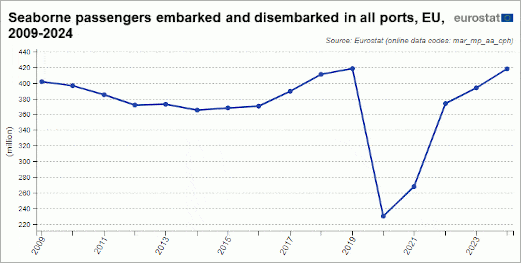
Eurostat has announced that in 2024 passenger traffic
in European Union ports was 417.8 million
people, with an increase of 24.3 million compared to 2023 (+6.2%) and
overall traffic that has approached the levels of the
2019 (-0.1%) continuing to show signs of recovery after the
collapse caused by Covid. The EU Statistical Office has
specified that, in fact, after having continuously decreased between the
2009 and 2014, with an exception in 2013 (+0.3% compared to 2012),
the total number of passengers embarked and disembarked in ports
has been recovering since 2015 and has reached a
peak in 2019 with 418 million (+4.1% on 2009, the year of the peak
previous), while, following the strict precautionary measures
adopted due to the pandemic, maritime transport of
almost halved in 2020 compared to 2019
(-45.0%), falling to a low for the period of 230 million
passengers. In 2021 and 2022, a partial
recovery, with increases of +16.4% and +39.5% respectively on the
previous years.
Last year, ten nations, each with over 14 million
passengers, accounted for 94.1% of all transport
maritime passenger transport in the EU. At the top of the ranking of the
countries with the highest volume of traffic was confirmed
Italy with 93.5 million passengers, equal to 22.4% of the total
closely followed by Greece with 81.1 million
passengers (19.4%) and then from Denmark with 41.3 million passengers
passengers (9.9%).
The statistics institute specified that between 2019 and 2019
2024 half of the top ten nations by traffic volume have
recorded an increase in passenger numbers, with Greece
marked an increase of 7.1 million passengers (+9.7%), Italy
by seven million (+8.0%) and Malta by two million (+14.9%). The
Sharper decreases in traffic were recorded in
Sweden (-5.7 million; -18.7%), Finland (-4.8 million; -25.1%) and
Germany (-3.1 million; -9.8%).
In 2024, the three EU passenger ports with the highest
significant volume of traffic were all Italians: the port of
Messina ranked first with 11.4 million
passengers followed, on the other side of the Strait of Messina, by
Villa San Giovanni/Reggio Calabria (11.2 million passengers) and
then from the port of Naples (11.0 million). Compared to 2019, Naples
recorded the largest increase in the number of passengers (+1.7
Million; +18.5%), while Helsinki recorded the largest decline
(-2.3 million; -19.7%).
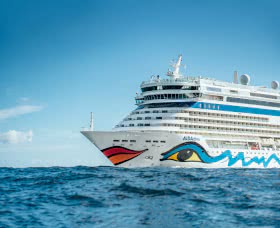
With regard to cruise traffic alone, Eurostat has
recalled that the number of cruise passengers who embarked and
landed in EU ports has plummeted to 1.2 million in
2020, and then recovered in 2021 and 2022 by going up
2.8 and 11.7 million passengers respectively. Demonstrating
of a solid recovery, 2024, with 17.9 million cruise passengers, has
exceeded the pre-pandemic level with an increase of +22.5% compared to
to 14.6 million in 2019 and with an increase of +12.1% on 15.9 million
of 2023.
Almost 66% of the total number of cruise passengers embarked and
landed in EU ports in 2024 was concentrated in three
countries: Italy (4.9 million cruise passengers on boarding/disembarking, equal to
27.6% of the EU), Spain (3.9 million cruise passengers, equal to
21.8%) and Germany (2.9 million cruise passengers, equal to 16.5%).
























 - Via Raffaele Paolucci 17r/19r - 16129 Genoa - ITALY


