
The shipping industry has the antibodies to overcome
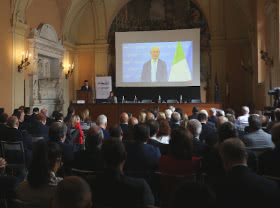
the Strait of Hormuz crisis. This was underlined by the president
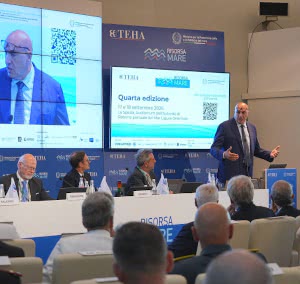
of Federagenti, Paolo Pessina: "I realize - he specified
- to swim against the current, but while recognizing gravity
of the crisis in the Persian Gulf and therefore the criticality of the
Strait of Hormuz (through which, however, a number of no better
of oil tankers, especially if bound for China, is
transiting), I would like to say that shipping (ships, companies
shipping companies, ports and us shipping agents) once again
will be able to respond to the emergency with the flexibility and
ability to adapt that he has also demonstrated in times
recent ones".
"Today," Pessina added, "we cannot afford to
underestimate the current crisis, but I would like to remind you how many
days, more than four months, the most important way
of the world's water, that of the Suez Canal, has been forced to
drastically reduce transits due to missiles from the
Yemen, and how from 1967 to 1975 the canal was closed
totally. Hormuz is without a doubt a choke point of
strategic planetary value, and today the more than a thousand ships
blocked cannot fail to generate alarm. But in the power plants of the
large shipping companies, also with the contribution of our
maritime agencies, solutions are already being studied
alternatives, knowing full well that the time factor will be
decisive".
"As in any conflict - concluded the president of the
Federation of Italian Shipping Agents - The Ways of the Sea
will make a difference and it will be very difficult to think of
a Strait of Hormuz open only to ships bound for China and closed
to all the others, whether tankers or container ships. Today
The main objective is to minimize the risks even
and especially for the crews. We hope that in a short time it will be
scenario can change in the direction of a progressive
normalization. Interests (just think of oil and gas and
to the economy of all the countries bordering the Gulf) are of
such magnitude that the world community hardly does not
will find an operational solution".
Perhaps - as Pessina argues - the world community
will find an operational solution. Certainly in the immediate future, but
even in the near future if the ongoing conflict in the region does not
The impact of rising prices on economies will be resolved soon
cost of energy will undoubtedly be felt, given
that oil and gas fields are not replaced by today
to tomorrow. Maritime transport can now perhaps support the
increase in costs by passing them on to its customers, but it is
likely to have the effects of the crisis on the
industrial production and consumption will have a very important influence on the
Shipping was also negative. It is no coincidence that Pessina hopes for a
The situation is about to return to normal.
















 - Via Raffaele Paolucci 17r/19r - 16129 Genoa - ITALY


