
Due to the spotlight on the Strait of Hormuz and the
over a thousand ships stopped waiting to be able to transit through the Gulf
Perch to the Indian Ocean, the focus was on the
maritime traffic, on the record increase in war risk premiums
and on the blockade of ports, but the perfect example of what
could happen, if the war were to be prolonged, is provided by the
and in particular by logistics related to air
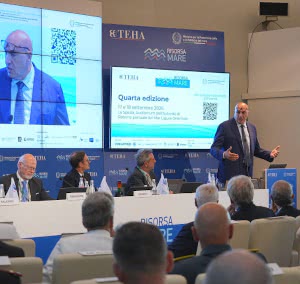
cargo. This was noted by the president of Federlogitica, Davide
Falteri, highlighting that the importance of logistics is
discovered even by most of the industries that daily
use it, and that they should know that it is a component
costs of their finished products, only on the wings of
an emergency and, as in the specific case, of a war conflict.
If it is true, as Fattori observed, that transport
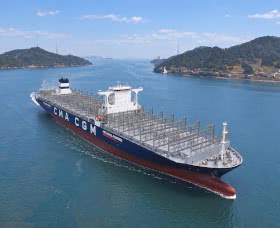
maritime is in the spotlight, but so is the
Especially since it is the ships that have been hit by
and that these caused deaths and injuries among the crews,
which hopefully will never happen for aircraft and their crews,
It is equally true, as the president of
Federlogistica, that the consequences of the conflict situation on the
air flights has important consequences on passenger traffic and
goods. Falteri specified that the blocking of flights on hubs
such as Dubai and Doha has had a devastating impact on the
fashion and textile sector, as well as cargo planes that
to connect Europe to the Far East they are forced to
take a narrow channel above the Caspian Sea, keeping
far from Afghanistan and Pakistan, in order to avoid "the
anti-aircraft" of the Russian-Ukrainian and Iranian conflicts.
Falteri announced that with this situation a
dramatic congestion of perishable products (in particular
pharmaceutical and agri-food sectors) in the Gulf hub airports and the
Global cargo aircraft capacity has decreased
18% and on the Asia-Middle East-Europe route
by as much as 40%.
"Everything now - explained the president of Federlogistica -
it is linked to the time factor. If the conflict in Iran
will solve within a couple of weeks, both the
congestion of goods and the escalation of prices (for
air deliveries to the Middle East have seen the
jump by 53% in a week) can be contained.
Otherwise, logistics whose value in the Persian Gulf alone
is estimated at 115 billion dollars, will have to undergo a
revolution that will affect and weigh on all
main sectors, from air to maritime transport,
impacting on the traffic of hydrocarbons, containers,
fertilizers (5% of the amount of fertilizers is exported from the Gulf
of the world market), electronics, fashion textiles. And to date, at
avoiding the flowering of experts in geopolitics and geoeconomics,
there is no one capable of formulating reliable predictions".
















 - Via Raffaele Paolucci 17r/19r - 16129 Genoa - ITALY


