testata inforMARE
Cerca
08 December 2025 - Year XXIX
Independent journal on economy and transport policy
17:21 GMT+1
LinnkedInTwitterFacebook
FORUM of Shipping
and Logistics
Assemblea della
Confederazione Italiana Armatori

Roma, 22 ottobre 2015

Relazione del presidente
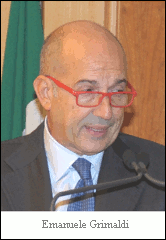
Emanuele Grimaldi


Autorità, colleghi Armatori, Signore e Signori,

Benvenuti e grazie per la vostra presenza a questo importante appuntamento annuale della nostra Confederazione.

Signori Ministri, sono molto lieto di avervi qui oggi e siamo veramente onorati di avere un dialogo diretto con due autorevoli rappresentanti del Governo: il responsabile del Dicastero competente per la navigazione marittima e il responsabile della Difesa con cui da anni abbiamo rapporti sempre più stretti.


****************


Lo shipping nell'economia mondiale

Quando ci si domanda quali attività influiscano maggiormente sull'economia globale, vengono subito in mente l'industria meccanica, l'energia, le telecomunicazioni, per non parlare dell'agricoltura.

In genere, non si pensa al trasporto marittimo: più di 100 mila navi su cui sono imbarcati oltre un milione e mezzo di marittimi.

Il suo ruolo è essenziale per lo sviluppo.

Il 90% del commercio mondiale viaggia su navi petroliere, portarinfuse per materie prime secche, navi porta-container, traghetti e porta-auto.

Ed anche nel trasporto passeggeri sono le navi ad assicurare la continuità territoriale con le isole e a costituire un forte volano turistico attraverso le crociere.

Alcuni numeri.

Nell'ultimo decennio, la capacità di carico della flotta mondiale è aumentata dell'81%,le tonnellate trasportate via mare sono cresciute dell'83%, passando da 6 a 11 miliardi (praticamente più di una tonnellata e mezza per ogni persona sul pianeta)e si prevede che nel 2030 saranno pari a 17 miliardi.

Siamo alla fine di EXPO 2015,intitolata “Nutrire il Pianeta”. Su tale tema i dati emersi dallo studio commissionato dalla Federazione del mare sono impressionanti.

Il trasporto marittimo di merci alimentari e agricole ha raggiunto 5.800 miliardi di tonnellate-chilometro, il 65% del trasporto globale di cibo. I volumi trasportati via mare oggi sono pari a circa 400 milioni di tonnellate di cereali e soia e a 100milioni di tonnellate di altri alimenti deperibili,di cui circa il 75%è trasportato in container refrigerati.

Un discorso analogo si può fare per i prodotti energetici, per le materie prime o semilavorate e, con la mondializzazione dei consumi, anche per i prodotti finiti.

La realtà dunque è questa: da sempre - e sempre di più - l'economia del mondo e la vita quotidiana delle persone dipendono dalle navi.

L'altra faccia della medaglia è che il trasporto marittimo, a sua volta, è fortemente condizionato da eventi di portata globale: economici, sociali, geo-politici.

Basti pensare alla grave crisi economica e finanziaria iniziata nel 2007-2008, che finalmente stiamo cominciando a superare, il cui impatto sulla navigazione mercantile è stato certamente di grande rilievo.

Siamo ora difronte ad un forte calo del prezzo del petrolio. Fare previsioni nel medio-lungo periodo è difficile, tenuto conto della complessità dei fattori in gioco.

Si può dire, però, che il minor costo del bunker rappresenta certamente un vantaggio per gli armatori, ma la riduzione di alcune attività petrolifere è uno svantaggio per chi opera nel settore dell'off-shore.

Grave fattore di incertezza, anche per noi, è il rallentamento dell'economia cinese che oggi rappresenta circa il 40% della crescita economica mondiale ed è raddoppiata negli ultimi cinque anni. Infatti, la domanda di materie prime della Cina è da tempo uno dei principali indicatori dello stato di salute dello shipping.

L'accordo di Vienna sul programma nucleare di Teheran, con la conseguente revisione delle sanzioni, favorirà la ripresa dei traffici commerciali con l'Iran e contribuirà al processo di stabilizzazione di tutto il Medio Oriente.

D'altra parte, continua a crescere il numero dei paesi sottoposti a sanzioni commerciali, tanto che ormai dobbiamo avvalerci di esperti anche di diritto internazionale per “fissare” un viaggio con relativa tranquillità.

Anche la recente, epocale,riapertura dei rapporti tra gli Stati Uniti e Cuba avrà certamente ricadute positive sui traffici marittimi di quell'area e in particolare sul turismo, tanto è vero che le principali compagnie di navi da crociera e traghetti si sono immediatamente attivate, Italia in prima linea.

L'allargamento del canale di Suez potrebbe giovare al ruolo dell'Italia nei traffici marittimi mondiali, mail nostro Paese deve saper sfruttare la sua centralità nel Mediterraneo,affermando la sua leadership.

Bisogna quindi tenere sempre presente, pur senza dimenticare l'importanza del cabotaggio, che il trasporto marittimo si muove in un contesto internazionale.

Internazionali sono:
  • le norme che lo regolano,
  • i mercati in cui opera,
  • la concorrenza che deve fronteggiare,
  • le crisi che deve affrontare.

Pirateria

Da più di dieci anni l'Italia è tra i paesi protagonisti nella lotta alla pirateria nell'Oceano Indiano.

La pirateria mette in pericolo l'intera economia del nostro Paese, che - non dimentichiamolo - riceve via mare gran parte delle materie prime e dei semilavorati che alimentano la nostra industria.

Un ringraziamento, quindi, alle Istituzioni che hanno preso coscienza delle gravi situazioni di pericolo e di insicurezza della navigazione.

Colgo l'occasione per ringraziare il Ministro della Difesa, che nei giorni scorsi ha emanato il decreto che consente di imbarcare team armati non solo nell'Oceano Indiano, ma in tutte le aree definite dell'IMO a rischio di pirateria, e cioè anche il Mare della Cina, lo Stretto di Malacca e l'Africa Occidentale.

Confitarma ha condiviso con i Ministeri della Difesa, degli Esteri, dell'Interno e dei Trasporti, la Guardia Costiera e il RINA l'intenso lavoro preparatorio del corpus normativo che nel 2011 ha creato il cosiddetto modello “duale” di difesa attiva pubblica e privata, consentendo, nelle aree a rischio, l'impiego di personale di scorta a bordo delle navi italiane.

Voglio ringraziare ancora la Marina Militare, con tutti i suoi uomini, per quanto ha fatto e continua a fare a tutela dei traffici marittimi e nell'interesse strategico generale della collettività.

L'esperienza vissuta dai nostri equipaggi nei 350 viaggi protetti dai Nuclei Militari è stata straordinaria.

Ai due Marò sotto inchiesta in India, l'augurio di una prossima soluzione della vicenda, grazie al buon esito del nuovo - e più corretto - approccio internazionale che il Tribunale del Diritto del Mare sta delineando.

L'armamento ha preso atto della recente decisione politica che ha sancito la fine di questo impianto, eliminando l'impiego di personale militare.

Continueremo il proficuo dialogo avviato con il Viminale, affinché i servizi offerti dalle società di sicurezza private siano capillari, efficienti ed allineati al mercato anche sotto il profilo economico.


Crisi umanitaria nel Mediterraneo

L'instabilità in Medio Oriente e nel sud del Mediterraneo, oltre a far nascere una nuova minaccia terroristica, incide sulle dinamiche economiche e sociali in tutto l'Occidente, specie in Europa.

Del complesso fenomeno migratorio in atto, colpiscono il numero delle popolazioni che si spostano e soprattutto la drammaticità delle traversate nel Mediterraneo su imbarcazioni del tutto inadatte.

Sono oltre 5.000 i migranti che da gennaio 2014 hanno perso la vita in mare.

Una strage inaccettabile.

Nell'ambito delle missioni Mare Nostrum e Triton, le navi mercantili hanno risposto alle chiamate di intervento per soccorrere i migranti in difficoltà o in pericolo di vita con più di 1.300viaggi dirottati, contribuendo al salvataggio di oltre 42.000persone,un quarto dei 166.000 migranti tratti in salvo nel 2014 e di altre 15.200 nei primi otto mesi del 2015.

L'armamento italiano è stato il più coinvolto,con quasi 270interventi nelle operazioni Search& Rescue tra gennaio 2014 e settembre 2015.

Con evidenti difficoltà e rischi, equipaggi e navi, nonostante dotazioni di bordo inadeguate al grande numero di naufraghi, hanno risposto con prontezza alla richiesta di salvare vite in pericolo.

Di fronte all'intensificarsi delle deviazioni compiute - che rendono ordinari interventi concepiti per situazioni occasionali e straordinarie - fin dal novembre 2014, abbiamo richiamato l'attenzione delle Amministrazioni italiane, europee ed internazionali sulla necessità di avere in mare una forza navale dedicata.

Oggi EuNavForMed, coordinata dalla Marina Militare Italiana, opera per il soccorso di vite umane e il contrasto dei trafficanti nel Mediterraneo.

Tutte le Forze armate italiane coinvolte in questa drammatica vicenda hanno svolto il ruolo di protagonisti.

Lasciatemi però oggi riservare un saluto particolare alla Guardia Costiera italiana,cogliendo l'occasione anche per rinnovare gli auguri per i 150 anni dall'istituzione del Corpo delle Capitanerie di Porto.

In vista dell'imminente avvicendamento al vertice, saluto l'Ammiraglio Angrisano ringraziandolo per la passione e l‘impegno con cui ha ricoperto il suo incarico.

L'auspicio è che nel futuro delle Capitanerie di porto, specie sul territorio, si rafforzi l'idea della nave quale “soggetto” economico vitale per lo sviluppo del nostro Paese.


Ambiente

Lo shipping sta da tempo facendo la sua parte per ridurre l'impatto della sua attività sull'ambiente, in particolare nell'ultimo decennio, contenendo le emissioni di Co2.

Infatti, nonostante l'aumento del commercio marittimo e nonostante le navi trasportino il 90% delle tonnellate miglia mondiali, dal 2007 lo shipping ha ridotto di oltre il 10% le emissioni Co2, che ora rappresentano solo il 2,2% del totale mondiale.

In base alle nuove normative già entrate in vigore in tutto il mondo, l'International Maritime Organization (IMO) ha fissato l'obiettivo vincolante per cui tutte le navi costruite a partire dal 2025 (comprese quelle dei paesi in via di sviluppo) dovranno essere del 30% più efficienti rispetto alle navi costruite negli anni 2000.

Con navi più grandi, motori migliori e una differente gestione della velocità, lo shipping prevede che la riduzione di Co2 sarà pari al 50% entro il 2050, quando l'intera flotta mondiale sarà composta da superfuel-efficientship e si diffonderà ancor di più l'utilizzo di combustibili alternativi.

In aggiunta, sempre in ambito internazionale, si discute già da tempo del Green Climate Fund e di come l'armamento mondiale possa contribuire per la sua parte, insieme con gli altri settori industriali, in proporzione alle emissioni prodotte.

Lo shipping è un settore responsabile: sui 100 miliardi di dollari complessivi all'anno ipotizzati per tale fondo, il contributo degli armatori potrebbe essere di circa 2,5 miliardi, da versare attraverso l'IMO e destinati alle politiche climatiche per il mare.

Il principio “chi inquina paga” - modo di dire generico e astratto - va quindi sostituito con “chi inquina paga e paga per quanto inquina”.

A preoccupare non è solo il costo crescente per gli investimenti necessari all'adeguamento alle norme internazionali, ma anche l'incertezza dovuta ad una proliferazione di regole - internazionali, europee, nazionali e regionali - che spesso si sovrappongono, sono differenti a seconda delle aree geografiche e di difficile applicazione.

Complessità e incertezze ad esempio legate a:
  • entrata in vigore della Convenzione IMO sulle acque di zavorra;
  • attuazione a livello locale delle normative sulla raccolta dei rifiuti e residui del carico delle navi;
  • applicazione del Regolamento europeo MRV - Monitoring Reporting Verification
  • entrata in vigore in Italia del decreto legislativo 102 sull'efficienza energetica che recepisce una direttiva europea.
D'altra parte, la sfida ambientale offre opportunità che dobbiamo saper cogliere.

Per esempio, l'Unione europea ha previsto si adottino piani strategici nazionali per la realizzazione di un'infrastruttura continentale per l'utilizzo di combustibili alternativi nei trasporti, con cospicui stanziamenti.

In tale contesto, l'Italia ha già avviato la predisposizione di un piano strategico nazionale per il GNL, ma bisognerebbe intervenire anche con sostegni agli investimenti in unità navali adatte al trasporto di tale combustibile.

Altro esempio. L'Europa promuove la ricerca e l'innovazione, che pertanto diventano anche in campo navale la nuova frontiera dell'intervento pubblico. L'Italia, secondo criteri entrati in vigore all'inizio di questo mese, ha stanziato proprio per questa finalità 100 milioni di euro da assegnare a progetti innovativi presentati da cantieri navali e imprese armatoriali.

Sono distribuiti in 20 anni. Un intervento più incisivo dello Stato in questo settore fondamentale sarebbe quanto mai opportuno.

Le risorse disponibili dovranno essere gestite al meglio per poter avviare un ciclo virtuoso che, oltre a favorire il rinnovamento della flotta e la protezione dell'ambiente, potrà costituire un'opportunità per la cantieristica nazionale.

Siamo convinti che per lo Stato sia un investimento dal rendimento garantito.


Economia marittima e flotta italiana

Non anticiperò i dati del “V Rapporto sull'economia del mare”, che domani verranno presentati a Milano.

Posso dirvi comunque che il trasporto via mare di merci e passeggeri si conferma il comparto trainante del cluster marittimo italiano e uno dei settori economici più dinamici del Paese, importante fonte di reddito e occupazione: in totale, i posti di lavoro legati alle attività marittime sfiorano il mezzo milione.

Grazie agli oltre 15 miliardi di euro investiti negli ultimi dieci anni per il rinnovo del naviglio, la flotta è cresciuta in quantità e migliorata in qualità, con il 60% delle navi di età inferiore ai 10 anni ed evidenti ricadute positive anche per l'occupazione.

Dal 2005 sono state consegnate 436 navi nuove, con punte di rinnovamento particolarmente rilevanti nei settori tanker (67%) e drybulk (74%).

La nostra flotta è leader in alcuni dei settori più sofisticati (navi Ro-Ro, navi da crociera, navi per prodotti chimici). Ancora una volta ricordo che, considerando il genuine link tra bandiera della nave e nazionalità dell'armatore, è la seconda nell'Unione europea e la quarta nel mondo.

Bisogna riconoscere l'importanza del sostegno costante che le nostre Istituzioni hanno assicurato negli anni, consentendo agli armatori italiani di raggiungere questi risultati.

Mantenere la posizione della nostra flotta in questi anni non è stato facile, ma è stato possibile grazie al Registro Internazionale.

Inoltre, il dialogo costante e trasparente con gli stakeholder finanziari, in primis il sistema bancario -struttura portante del consolidamento in atto- ha consentito di contenere gli effetti della crisi, facendo emergere alcune peculiarità del nostro armamento.

Diversificazione, leadership in alcuni comparti, rinnovamento della flotta, approccio non speculativo: tutti fattori apprezzati dal sistema bancario, che si riveleranno preziosi non appena i mercati marittimi mostreranno segni di riequilibrio tra domanda e offerta.


Occupazione e relazioni sindacali

Il 1° luglio 2015, Confitarma ha sottoscritto con le Organizzazioni Sindacali

l'accordo per il rinnovo dei contratti collettivi di lavoro del settore marittimo.

Il rinnovo interessa i circa 55.000 marittimi imbarcati su navi battenti bandiera italiana e gli 8.000 addetti a terra, per un totale di circa 63.000 lavoratori.

È un importante traguardo, raggiunto in un momento economico non certo tra i più favorevoli, destinato ad avere un impatto positivo sulla capacità competitiva delle nostre navi.

Riteniamo che questo sia un accordo equilibrato: da un lato semplifica notevolmente i vari contratti collettivi nazionali, eliminando la pesante sovrapposizione di norme pregresse, dall'altro aggiorna i contratti alle più recenti novità legislative sia nazionali che internazionali.


Formazione

Tale trattativa si è completata con l'importante intesa sindacale riguardante l'imbarco degli allievi italiani.

Da anni, l'armamento italiano sta investendo concretamente nella formazione di professionisti in grado di gestire al meglio le nostre navi.

Dopo il periodo di navigazione, acquisite le competenze necessarie, questi possono anche essere assorbiti dal complesso di attività di terra e non solo presso le aziende marittime.

Attualmente in Italia sono circa 3.000 gli studenti e i cadetti che stanno frequentando gli istituti marittimi italiani, tra i quali ricordo l'Accademia Italiana della Marina Mercantile, che quest'anno compie dieci anni, e l'ITS Caboto di Gaeta.


Shortsea Shipping, cabotaggio e Autostrade del mare

Componente essenziale dell'industria armatoriale sono le imprese che operano nello shortsea shipping e nel cabotaggio tra porti nazionali, assicurando il trasporto di merci e la mobilità di milioni di persone, lavoratori, studenti, turisti ela continuità territoriale tra il continente e le nostre isole.

Dalla comparazione con le altre modalità, risulta che il trasporto marittimo resta complessivamente quello più sostenibile in termini di riduzione dei costi esterni: incidentalità, congestione, rumore, emissioni e tempi di percorrenza.

A parità di merci e passeggeri trasportati, il maggior costo a carico della collettività derivante dall'utilizzo dei camion rispetto alle navi può arrivare al 220%. Anche la ferrovia ha costi che possono essere fino al 60% maggiori.

Questi risultati e l‘esperienza dell'Ecobonus in Italia nel periodo 2007-2011 rafforzano il nostro auspicio che uno strumento analogo venga adottato al più presto a livello europeo.

Saremo lieti, Signor Ministro, se lei volesse confermare in questa sede le indiscrezioni sull'introduzione del “Marebonus” nel disegno di legge di stabilità.

Questo strumento contribuirebbe a sviluppare ulteriormente le autostrade del mare, alleggerendo il trasporto su strada a favore della modalità marittima, con grandi risparmi in termini di costi esterni per la collettività.

Il comparto ha dimostrato di saper crescere ed adattarsi ai nuovi mercati ed è ormai quasi interamente privato, con l'unica eccezione della Saremar, che sconta in questi giorni gli effetti del lento procedere sulla via della privatizzazione.

Quest'oggi, al termine dell'Assemblea, verranno presentati i due studi che Confitarma ha realizzato sull'impatto ambientale e sulla rilevanza economica e sociale dei servizi di trasporto marittimo di shortsea shipping e cabotaggio in Italia.


Riforma della portualità e della logistica

Fattore determinante per l'ulteriore crescita anche dei traffici resta comunque l'efficienza dei nostri porti e del nostro sistema logistico.

Signor Ministro, condividiamo appieno con Lei che il rilancio del sistema portuale e logistico favorirà la ripresa economica del Paese.

L'Italia, ottava potenza economica del mondo, è solo 55^ per la qualità delle infrastrutture portuali.(Fonte: Global Competitiveness Report 2014-2015, World Economic Forum, 2014, citato nel Piano Strategico Nazionale della Portualità e della Logistica).

Ciò è di ostacolo al lavoro degli operatori marittimi.

L'inefficienza del nostro sistema logistico-portuale non è più sostenibile dal Paese, che continua a perdere traffici a vantaggio dei grandi porti del Nord Europa.

Il recente Piano Strategico Nazionale della Portualità e della Logistica, che prelude alla futura revisione della Legge n. 84 del 1994, può certamente rappresentare un punto di svolta per la riorganizzazione della portualità nazionale.

In più occasioni l'armamento ha ribadito la sua disponibilità a contribuire a tale riforma.

Riassumo le nostre principali osservazioni che Lei, Signor Ministro, già conosce:
  1. attivare un sistema tariffario centralizzato a livello ministeriale, per migliorare in termini di efficienza e costi i servizi tecnico-nautici, ottenendo trasparenza e uniformità di applicazione nei singoli scali nazionali;
  2. introdurre un procedimento di concertazione tra Autorità di Sistema Portuale e Capitanerie di Porto, per favorire un processo virtuoso che assicuri al contempo le esigenze di sicurezza della navigazione e lo sviluppo commerciale dei porti;
  3. attuare una forma di controllo e supervisione da parte di un Organismo pubblico indipendente, che vigili sull'ampia autonomia amministrativa, finanziaria ed impositiva delle nuove Autorità di Sistema Portuale, tenendo conto delle osservazioni basate sulla determinante esperienza degli utenti del porto: gli armatori e le navi in primis!
Peraltro, ritengo doveroso sottolineare come l'indubbia importanza del settore portuale non debba far dimenticare la totalità della politica marittima e trasportistica del sistema Paese, del quale la portualità rappresenta un importante nodo infrastrutturale di un più ampio sistema logistico.


L'importanza del Registro Internazionale Italiano

Ridare competitività alle flotte, frenare il flagging out e rilanciare l'occupazione: questi i principali obiettivi delle Linee-guida per gli aiuti al trasporto marittimo varati dalla Comunità europea già alla fine degli anni Ottanta.

Una politica marittima per la difesa dello shipping europeo che ha ottenuto un evidente successo.

Questi obiettivi l'Italia li ha perseguiti dal 1998, attuandole Linee-guida europee con l'introduzione del Registro Internazionale, tuttora il pilastro di una politica marittima efficace ed espansiva.

Oggi, la flotta mercantile italiana è più che raddoppiata rispetto alla fine degli anni '90 e, nonostante le riduzioni registrate negli ultimi anni di lunga crisi, è ancora pari a circa 17 milioni di tonnellate di stazza.

Nello stesso periodo, anche l'occupazione marittima è aumentata del 59%, dato ancor più rilevante se si pensa che gli occupati a livello nazionale sono aumentati solo del 5%. Dall'inizio della crisi del 2008 ad oggi, l'occupazione marittima è aumentata del 12,7% mentre l'occupazione in ambito nazionale è diminuita del 3,5%.

Negli anni, il Registro Internazionale è stato migliorato, con misure che hanno consentito di equiparare i costi di esercizio delle navi italiane a quelli dei principali competitor stranieri, anche nei collegamenti di cabotaggio di lunga percorrenza e nelle crociere.

Tra queste misure ne ricordo una in particolare: la tonnage tax.

È uno strumento adottato da tutti i principali paesi europei -da Nord a Sud (dal Regno Unito a Malta) e da Est a Ovest (dalla Finlandia al Portogallo) - che ora la Commissione ci chiede di modificare rendendolo, come negli altri Stati membri, applicabile in egual misura a tutte le navi di bandiera europea.

Ciò sta suscitando qualche timore per l'occupazione di marittimi italiani, ma ritengo che queste preoccupazioni siano eccessive.

Ciò che realmente riteniamo necessario, pena la perdita dei tanti risultati positivi raggiunti,è da un lato salvaguardare l'integrità del Registro Internazionale e dall'altro intervenire con energia ai fini di un'ampia e concreta semplificazione normativa.


Sburocratizzazione e Amministrazione marittima

D'altronde, tale richiesta si fonda anche sull'esigenza di valorizzare il ruolo dell'Amministrazione dedicata alle problematiche marittime, interfaccia altamente qualificata con il mondo produttivo.

Il sistema delle regole deve essere semplice e chiaro, per consentire all'Amministrazione una sua facile applicazione e alle imprese di competere efficacemente a livello internazionale.

La scelta del Paese di registrazione di una nave si basa innanzitutto sui costi della bandiera. Purtroppo, i maggiori costi di quella italiana sono oggi da imputare alle stratificazione normativa, che rende spesso inefficace l'attività delle tante amministrazioni chiamate ad occuparsi del nostro settore.

Basti dire, che nel confronto con le altre bandiere europee, le navi italiane hanno un costo aggiuntivo derivante da procedure farraginose, che può superare i 100.000 dollari l'anno per nave.

Signor Ministro, parlando di riforma del codice degli appalti, Lei ha detto che la parola d'ordine deve essere: “semplificare”. Il che non significa diminuire i controlli, ma consentire all'Amministrazione di rispondere con rapidità ed efficienza alle esigenze degli operatori.

Non è giusto ignorare “best practice” come la collaborazione tra Ministeri degli Esteri e dei Trasporti e del Corpo delle Capitanerie di porto in materia di assistenza alle navi italiane all'estero: è un esempio efficace, pur in assenza di specifici strumenti normativi.

Come primo segnale, Le chiediamo di adottare alcune norme di riordino che non comportano oneri a carico dello Stato e che sono già state individuate in dettaglio da anni. Ad esempio:
  • le procedure per l'iscrizione e la cancellazione delle navi nei registri;
  • le formalità di arrivo e partenza delle navi nei porti;
  • il rilascio dei certificati di sicurezza all'estero;
  • le norme in tema di sorveglianza sanitaria marittima;
  • l'approvazione di un nuovo regolamento sul trasporto passeggeri che sostituisca il Regio Decreto del 1890.
Occorre anche colmare al più presto il gap informatico del Paese, che fatalmente tocca anche la nostra Pubblica Amministrazione.

Esistono tante banche dati, ognuna con la propria finalità.

Ma perché non esiste ancora quella dei pubblici registri marittimi consultabili anche dall'utenza?

Oggi alla domanda “come è composta la flotta?” nessuno può rispondere con immediatezza.

Purtroppo, nonostante il grande peso che il sistema marittimo riveste in Italia, le nostre numerose e complesse tematiche sono distribuite tra troppi ministeri accanto ai trasporti (ne abbiamo perso il conto: ambiente, sanità, lavoro, sviluppo economico, ecc.) e non semprevengono affrontate tenendo nel debito conto la loro specificità rispetto a quelle terrestri.

Se la logica sottostante a tale frammentazione è stata la spending review, ebbene, un'analisi attenta dei benefici economici ottenuti e dei costi legati alla dispersione delle competenze e all'impoverimento del servizio all'utenza cambierebbe radicalmente la chiave di lettura.


Conclusioni

Le navi, le rotte marittime e i porti sono “strumenti” indispensabili al servizio della comunità.

Noi armatori siamo orgogliosi della nostra attività e vogliamo continuare a lavorare per le nostre imprese e per il bene del Paese.

Signor Ministro, di recente Lei ha affermato la necessità di una “cura dell'acqua” per rilanciare la politica dei trasporti in Italia.

Ebbene, parte fondamentale di tale cura sono proprio le navi.

Da anni sosteniamo l'importanza del ruolo della flotta per il Paese e quindi la necessità di mantenere l'impianto che, sia nelle autostrade del mare sia nei traffici internazionali, consente alla nostra flotta di crescere e di restare competitiva.

La novità è che,per questo obiettivo, il Registro internazionale italiano è condizione necessaria ma,da solo,non più sufficiente.

Pertanto, Signor Ministro, La ringraziamo per quanto sta facendo per assicurare la competitività delle nostre navi e delle nostre imprese.

La sosteniamo, inoltre, nel percorso che Lei vuole proporre per assicurare più efficienza all'Amministrazione marittima, semplificando e razionalizzando le normative.

Non mi stancherò mai di ripetere che, accanto agli armatori, ci sono porti, cantieri e fornitori navali, agenti, terminalisti, spedizionieri, e ancora compagnie di assicurazioni, studi legali, istituti finanziari, enti di classifica, di formazione e di ricerca, senza dimenticare la pesca e la nautica da diporto.

Tutte queste imprese danno vita all'insieme di attività marittime, fulcro delle nostre tante città di mare, che svolgono un ruolo economico e sociale molto importante per il Paese.

Signor Ministro, la “cura dell'acqua” per avere successo ha bisogno di un'Italia “shipping friendly”.

Grazie per la vostra attenzione.
›››File
FROM THE HOME PAGE
Shipowners call for suspending the application of the EU ETS to the maritime sector.
Brussels
Messina speaks of the ideological shortsightedness of a part of the Commission that relies on partial and imprecise market monitoring
Federlogistica expresses concern over the proposed Genoese tax on maritime passengers.
Genoa
Concerns for the overall balance of the national port ecosystem and for the operational choices of shipowners
SEA Europe disappointed by the failure to recognize the maritime manufacturing industry as a strategic sector for the EU
Port of Palermo: Administrative violations amounting to one million euros related to boating and concessions
Palermo
Over 265 vessels used for rental purposes without mandatory insurance were identified.
EU transport ministers approve incentives for trucks by amending the directive on dimensions and weights.
Brussels
Road haulage - CER, ERFA, RFF, UIP, UIRR and UNIFE denounce - can expect economic gains, but the company will have to wait for a reduction in the environmental impact of logistics.
First LNG refueling of a ferry in the port of Genoa
Genoa
500 cubic meters of bioLNG delivered to the new vessel "GNV Virgo"
ONE appoints new agency in Albania
London
Centralog Albania is based in Durres and will be fully operational by the end of the month
Genoa-based shipping broker Lockton PL Ferrari expands its operations into other sectors.
Genoa
New segments Natural Resources, Oil & Gas and Construction & Real Estate
Giampieri (Assoporti): Italy's widespread port system requires a single, stable control room.
Rome
The port reform - he stated - can be a great opportunity for all of us
Lufthansa Cargo and Swiss WorldCargo have signed a strategic cooperation agreement.
Frankfurt/Zurich
Synergies are expected in both the commercial and operational fields
Agreement to end EU dependence on Russian energy
Brussels
The Council-Parliament agreement provides for a gradual but definitive elimination of Russian gas imports by the end of 2027.
Assiterminal confirms its appeal to the Regional Administrative Court (TAR) regarding the indexation of concession fees.
Genoa
108 member companies reached
The ITF urges the Dutch Court of Appeal to correct its preliminary findings on maritime work.
London
Port of Piombino, the regasification terminal has created both opportunities and obstacles
Livorno
Gariglio: It is necessary to know if and for how long the "Italis LNG" will remain in port.
Fincantieri signs a memorandum of understanding on its production model and procurement.
Rome/Trieste
A step forward - underline Fim, Fiom and Uilm - for the regulation and control of the supply chain system
The Port Authority of Genoa and Savona opposes the introduction of a three-euro municipal surcharge on ferry and cruise boarding fees.
Genoa
Cargo traffic in Chinese seaports grew by 3.8% last October.
Beijing
International volumes increased by 8.9%. Container traffic amounted to 26.4 million TEUs (+8.0%).
The composition of the International Maritime Organization's council has been renewed.
London
Rixi: Italy was once again the most voted nation
Quarterly decline in general cargo traffic at the ports of Genoa and Savona-Vado
Genoa
During the July-September period, solid bulk cargoes also decreased. Liquid cargoes increased.
The large port of Syracuse will be equipped with a new maritime station
Assologistica applauds the approval of the new rules on pallet exchanges.
Milan
Potential savings of at least 70 million euros are estimated
Giuseppe Grimaldi confirmed as Secretary General of the Central Tyrrhenian Port Authority
Naples
Unanimous resolution of the Management Committee
Hiab acquires Brazilian loading crane supplier ING Cranes.
Helsinki
The company has 250 employees and a turnover of approximately 50 million euros.
Norwegian MPC Container Ships' revenues fell by 5.0% in the third quarter.
Oslo
Net profit was $53.6 million (-15.8%)
The Algerian port of Skikda will be equipped with a new 600,000 TEU container terminal
Algiers
It will be built as part of the oil port expansion project
Port of Rotterdam plans offshore wind terminal
Rotterdam
A public consultation has been launched
ZIM is evaluating several proposals for the purchase of the company
Haifa
Receipt of the offer submitted by Glickman and Ungar confirmed
Hapag-Lloyd and Maersk have not set a date for the return of their ships via Suez
Copenhagen/Hamburg
Maersk announces the return of its ships through the Suez Canal starting next month
Ismailia
In October, transits remained unchanged. A 16% increase is expected in November.
After 2035, Russian cargo traffic on the Arctic route could decrease
Diana Shipping offers to acquire all of Genco Shipping & Trading Ltd.
Athens/New York
Planned investment of $758 million for the remaining 85.2% of the capital
At the IMO assembly, Rixi acts as a lobbyist for the party opposed to the European Union ETS system.
London
The election of the new council of the International Maritime Organization is on Friday.
Macquarie Asset Management submits an offer to acquire Australian logistics group Qube Holdings
Sydney
Proposal worth $7.5 billion
HMM orders eight 13,400 TEU containerships from HD Hyundai Group
Seoul
Six will be built by HD Hyundai Samho and two by HD Hyundai Heavy Industries
Companies inform
Accelleron calls for cross-sector action to unlock carbon-neutral fuels for shipping
G20 economies' merchandise trade growth in the July-September quarter
Paris
Exports and imports of services are also increasing
Freewheels: New rules on payment times leave hauliers without protection.
Modena
They do not address - explains Franchini - the heart of the problem: the disproportion of bargaining power between clients and small carriers.
The Trump administration unveils a plan for the massive exploitation of offshore oil and gas fields.
Washington
The program covers areas of the outer continental shelf amounting to approximately 514 million hectares.
In the July-September quarter, ZIM's revenues decreased by -35.7%
Haifa
Fleet volumes fell by 4.5%. Performance in the Asia-Europe market was very negative.
Fincantieri granted additional areas in the port of Ancona
Ancona
The company is committed to implementing a modernization and development program for the shipyard at the port of Portorož.
Assogasliquidi-Federchimica, LNG and bioGNL are strategic for the energy transition of shipping and road haulage.
Legora (Uniport): the objective of greater national coordination envisaged by the port reform is positive, but there is concern over the lack of dialogue
Rome
He underlined that discussion, vision and urgent interventions are needed for the competitiveness of Italian ports.
New measures in Switzerland to promote the shift of freight from road to rail
Bern
They will be introduced to strengthen the new transalpine railway Alptransit and to encourage rail and intermodal transport
HMM and BGN joint venture for liquefied petroleum gas transportation
Seoul
The new company will charter two new 88,000 cubic meter VLGCs
Slight decline in freight traffic in the ports of Barcelona and Valencia in October
Barcelona/Valencia
Container cargo fell by -2.5% at both ports
Green light for a new site for sediments from excavations in the Venice Lagoon.
Venice
New expansion in sight for the Greek shipyard in Eleusis
Athens
Financial support from the US International Development Finance Corporation
In the third quarter, freight traffic in the port of Hamburg grew by +3%
Hamburg
Container traffic on the rise thanks to increased transhipments
In the July-September quarter, CMA CGM's revenues decreased by -11.3%
Marseille
Record volumes of goods transported by the container fleet
The EU will abolish customs duty exemptions for goods worth less than €150.
Brussels
A temporary solution is being studied to make the measure effective as early as 2026.
BIMCO: Legal disputes threaten to hinder progress in ship recycling industry
London
Over the next decade, 16,000 ocean-going vessels will have to be scrapped, more than double the number of ships scrapped in the decade just ending.
Significant resources for the expansion of the port of Bremerhaven, also for military purposes
Bremen
Approved financing of approximately 1.35 billion euros
In the July-September quarter, freight traffic in the port of Koper decreased by -4.9%
Ljubljana
Container growth
HMM reports a 23.8% decline in quarterly revenues
Seoul
In the period July-September the fleet of the South Korean company transported over one million TEUs (+3.7%)
Hapag-Lloyd's revenues fell by 11.3% in the third quarter.
Hamburg
The fleet transported more than 3.4 million containers (+6.1%). During the period, traffic handled by HHLA port terminals grew by +4.5%.
Salvini signs the nomination of eight more presidents of Port System Authorities
Rome
The Chamber of Deputies approved Consalvo's appointment as president of the Eastern Adriatic Port Authority.
Evergreen orders 14 14,000 TEU dual-fuel containerships
Taipei
Series of orders also for eight ship-to-shore cranes and other port equipment and for 90,500 containers
In the third quarter, the value of new orders acquired by Fincantieri grew by +44%
Trieste
MSC Cruises orders two more World-class ships from Chantiers de l'Atlantique
Geneva
The contract is worth €3.5 billion. Delivery will take place in 2030 and 2031.
Evergreen, Yang Ming and WHL reported negative quarterly financial performances.
Taipei/Keelung
In the period July-September, revenues fell by -36.6%, -42.2% and -35.7% respectively.
In the July-September quarter, cargo traffic in Croatian ports decreased by -4.4%
Zagreb
Passengers on scheduled services decreased by 1.5%. Cruise passengers increased by 7.8%.
In the third quarter, Eurogate and Contship Italia port terminals handled 3.6 million TEUs (+15.6%)
Hamburg
Historic traffic record in Wilhelmshaven
In the first nine months of 2025, goods in the port of La Spezia increased by +4.5%
La Spezia
Growth of +6.9% at the port of Marina di Carrara
Finnlines' revenues grew by 3.2% in the July-September period
Helsinki
Record passenger numbers onboard the fleet's ships. Cargo volumes decline.
Houthi militias announce cessation of attacks on ships in the Red Sea
Riyadh
Letter from the Chief of Staff to the Hamas Qassam Brigades
In the third quarter, traffic in the port of Venice decreased by -2.2%
Venice
Miscellaneous cargo is increasing. Bulk cargo is decreasing.
Fincantieri to build ultra-luxury cruise ship for Regent Seven Seas Cruises
Trieste
Order from NCLH worth between 500 million and 1 billion euros
Today Washington and Beijing suspended their mutual measures against ships
Beijing/Washington
Application of additional taxes postponed by one year
The Suez Canal was crossed by the largest container ship in the last two years
Ismailia
The transit of the "CMA CGM Benjamin Franklin" on Saturday
EU shipping emissions hit record levels, T&E reports
Brussels
The association reiterates its proposal to extend the ETS to smaller vessels
In September, freight traffic in the port of Ravenna increased by +18.3%
Ravenna
In the third quarter of 2025, growth was +10.6%. A +58% increase in cruises is expected in 2026.
In the first nine months of 2025, freight traffic in the ports of the Southern Adriatic system decreased by -7%
Sea-Intelligence: Marked deterioration in the westbound transatlantic shipping market
Singapore
Last year, 13 seafarers died in accidents involving EU vessels.
Luxembourg
Nine deaths occurred on board fishing vessels
The European Parliament and the Council have reached an agreement on the calculation of greenhouse gas emissions from transport.
Brussels
Incentives are foreseen for small and medium-sized enterprises
The English port of Shoreham has won the ESPO Award for Social Integration of Ports.
Brussels/Rome
Assoporti received a special mention for its project on gender inequalities.
In the third quarter, the Ocean division of the Maersk group recorded a decrease in revenues of -17.4%.
Copenhagen
Container ship volumes increased by 7.0%. The Danish company highlights the benefits of the VSA Gemini Cooperation.
The Chamber of Deputies has approved the final text of the proposed law on interports
Rome
Applause from the United Interports Union
ECSA and T&E welcome the STIP plan presented by the European Commission
Brussels
CER applauds measures to accelerate the development of high-speed rail
Only one proposal admitted to the competition for the construction of mooring points outside the protected waters of the Venice lagoon
Venice
It will now have to be developed by the proposing entity
The European Commission presents the plan to ensure the sustainability of maritime and air transport by guaranteeing the production of the necessary alternative fuels
Brussels
The one to accelerate the development of high-speed rail is also ready
In the third quarter, naval traffic in the Suez Canal grew by +2.5%
Cairo/Ismailia
10.6% increase in transits in September
The first freight train opens the new Austrian Koralm railway line.
Villach
The infrastructure is part of the European Baltic-Adriatic Corridor
Lineas and FS Logistix have inaugurated the Modalink terminal joint venture.
Antwerp
Five weekly train rotations between Antwerp and Milan
Marcel Theis will be the new CEO of SBB Cargo International from January 1st.
Olten
He will take over from Sven Flore
In October, freight traffic in the port of Ravenna grew by +13.4%
Ravenna
A rise of +14.5% is expected in November
The conflict over the Genoa Municipality's additional tax on port boarding fees is escalating.
Genoa
Assarmatori, Assagenti, CLIA, Confindustria Genova and Confitarma will not participate in the technical meeting announced by the mayor.
Bulgaria, Greece, and Romania reach agreement on enhanced cooperation within the Black Sea-Aegean Corridor
Brussels
Acceleration of implementation of transport axis projects expected
The Port of Barcelona plans to halve its CO2 emissions by 2030
Barcelona
Private investments of 920 million euros and public investments of 780 million are expected.
Fincantieri reaches agreement with Bahraini ASRY to collaborate in the shipbuilding sector
Trieste
They will evaluate opportunities for the construction of naval vessels and offshore units
Salis: The municipal surcharge on boarding fees will not lead to any reduction in traffic.
Genoa
The mayor of Genoa recalls that similar measures have already been activated in other port cities
In the first year of operation, 750,000 tons of goods passed through the Parma Interporto railway terminal
Parma
Over 800 trains moved
The five ships put up for sale by Moby were sold for €229.9 million.
Vicenza
A bid equal to the starting price was submitted
PSA Italy expects to close 2025 with further growth in container traffic
Genoa
Brussels approves African joint venture between MSC and NYK
Brussels
European Commission clears Yusen Logistics' acquisition of Movianto International
Port of Genoa fines luxury cruise megayacht Vidantaworld's Elegant
Genoa
Serious violations of European ship recycling legislation found
Consalvo appointed president of the Eastern Adriatic Sea Port Authority
Trieste
He is the general manager of Aeroporto Friuli Venezia Giulia Spa
Promoting sustainable development and the energy transition process of the Port of Taranto
Taranto
This is provided for in an agreement between the AdSP of the Ionian Sea and GSE
The Northern Tyrrhenian Port Authority (APSP) will be in Oran to present its Mediterranean Green Corridors development project.
Livorno
Among the objectives, the consolidation of relations with Algeria
The tender for the railway shunting service in the ports of Savona and Vado Ligure has been published.
Genoa
The concession duration is set at 60 months
In 2024, passenger traffic in European Union ports increased by +6.2%
Luxembourg
The three ports with the highest traffic volume are Italian
GSL invests $90 million to buy three 8,600 TEU containerships built in 2010 and 2011
Athens
Youroukos: They are the cash cows of the future
RCG launches intermodal link between Bosnia and Herzegovina and the port of Koper
Vienna
The train service to Tuzla is weekly.
The Ministry of the Interior announces an inter-ministerial meeting for the early exodus of port workers.
Rome
The goal is to identify a definitive solution within a certain timeframe.
Christening and delivery of a new PCTC of the Grimaldi Group
Naples
The "Greater Istanbul" has a cargo capacity of 9,241 CEUs
GNV strengthens its ferry service on the Naples-Palermo route.
Genoa
By December 19, the capacity on the line will increase to over 6,000 linear meters
The Marseille-Fos Port Authority will invest €1-1.3 billion by 2029.
Marseille
Agreement with MSC for the expansion of the Fos 2XL container terminal
Port workers are holding a demonstration in Rome today to demand the establishment of a Fund to support the exodus.
Rome/Genoa
The general assembly of the Sustainable Intermodal Logistics Association will be held tomorrow in Rome.
Rome
The meeting at the Auditorium Parco della Musica
Cisl and Fit Cisl Savona, for Vado Gateway 2025 has proved to be a substantially positive year
Savona
Seeking opportunities with the reopening of the Suez Canal and the recovery of some markets
In the first nine months of 2025, freight traffic in the port of Tanger Med grew by +14.9%
Anjra
118 million tons of cargo moved
Assarmatori welcomes the new regulations, which are very important for shipping companies and maritime workers.
Rome
Zanetti (Confitarma): The Simplification Decree offers more modern tools to our businesses.
Rome
Listen - he underlined - to the needs of our industry
Spediporto's conference "Take opportunities navigating trade tensions" will be held in Genoa on December 1st and 2nd.
Genoa
It will be held at the Conference Hall of Banca Bper
SAILING LIST
Visual Sailing List
Departure ports
Arrival ports by:
- alphabetical order
- country
- geographical areas
National Maritime Fund: The House of Representatives approved the legislation.
Genoa
D'Amato: Measures expected for our seafarers and the competitiveness of the national fleet
Potassium permanganate seized at the Port of Genoa as part of the fight against drug trafficking.
Genoa
Operation by the Customs and Monopolies Agency and the Financial Police
Fincantieri cancels orders for four U.S. Navy frigates
Trieste
Further orders are expected for the construction of new classes of naval units
The Northern Tyrrhenian Port Authority met with the port cluster to discuss the new sustainability report.
Livorno
The Italian Merchant Marine Academy celebrates its first 20 years
Genoa
During this period, 3,660 students from all over Italy graduated.
Crédit Agricole Italia financed the construction of the Grande Tianjin ship for Grimaldi Euromed.
Naples/Parma
Hapag-Lloyd expects next 45% increase in EU ETS surcharge
Hamburg
The Emissions Trading System will enter into full force on January 1st.
European Commissioner Tzitzikostas visited the Monfalcone shipyard
Trieste
Upcoming measures announced to strengthen the sector's competitiveness, resilience, innovation, and technological leadership.
The trial against Damen for alleged corruption and sanctions violations begins today
Amsterdam
The company expresses disappointment with the protracted investigation and anticipates a lengthy legal battle.
AD Ports Group has acquired a 19.3% stake in Egypt's Alexandria Container & Cargo Handling Co.
Cairo/Abu Dhabi
Saudi Egyptian Investment Company's share purchased
Corsica Sardinia Ferries has purchased the Stena Vision ferry
Vado Ligure
It will be renamed "Mega Serena"
In 2024, the turnover of the main Italian port container terminals grew by +8.1%
Milan
Traffic increased by +3.4%
Work has begun to increase container traffic capacity at the port of Thessaloniki by 40%.
Thessaloniki
The expansion of Pier 6 will be completed in 40 months
A precautionary seizure of over €100 million has been ordered against Liberty Lines.
Trapani
BLS Cargo urges Switzerland to exert tangible pressure on German rail infrastructure stakeholders.
Bern
The company denounces the dire situation of transalpine rail freight transport. Further incentives requested.
Livorno is confident in the additional one hundred million euros promised by Salvini to build the Darsena Europa.
Livorno
Salvetti: I asked how we intend to proceed with the future assignment to private individuals who have expressed interest.
The Chinese embassy in Greece responds to alleged American ambitions in the port of Piraeus.
Athens
Beijing speaks of a Cold War mentality and a hegemonic logic
The procedure for requesting access to the third year of the Sea Modal Shift grant has been activated.
Rome
Applications must be submitted by December 17th
US cruise group Viking reports strong quarterly performance growth
Los Angeles
The July-September period closed with a net profit of 514.0 million dollars (+35.4%)
Guido Pietro Bertolone is the new president of Fedit
Rome
He takes over from Giuseppe Cela, outgoing president and currently head of Fedit Servizi
Latrofa (AdSP Lazio): the ZLS will make our ports even more attractive for investors, logistics operators, and businesses.
Civitavecchia
The tool - he highlighted - can lead to a qualitative leap in terms of logistical and industrial competitiveness
Container traffic continued to decline at the ports of Los Angeles and Long Beach in October
Los Angeles/Long Beach
Cordero: Consumers will likely see price escalation in the coming months
Pasquale Legora de Feo has been confirmed as president of Uniport
Rome
New Technical Commission for "Cruises and Passengers" established
The expansion of the Suez Canal Container Terminal was inaugurated on Sunday.
Port Said
Capacity increase of 2.2 million TEUs per year
Katoen Natie to acquire 80% of French firm Bils-Deroo Solutions
Luxembourg
The logistics company has nearly 1,500 employees
Danaos Corporation closed the third quarter with a net profit of $130.6 million (+6.2%)
Athens
Revenues up 1.8%
In the first nine months of 2025, Circle's production value increased by +80%
Milan
As of September 30, the value of the group's multi-year backlog had grown by +66%.
APM Terminals to build and operate Laldia Container Terminal at Chittagong Port
Dhaka/The Hague
30-year concession contract signed
MPCC orders four new 4,500 TEU containerships from China
Oslo
The contract unit price is $58 million.
In October, the port of Singapore handled 31.2 million tonnes of containerized cargo (+1.0%).
Singapore/Hong Kong
In the port of Hong Kong, traffic amounted to 1.1 million TEUs (-6.9%)
DHL Group revenues decreased by 2.3% in the third quarter
Bonn
Net profit was 888 million euros (+9.5%)
Fincantieri and KAYO sign agreement for the construction and maintenance of military vessels in Albania.
Trieste
CMA Terminals (CMA CGM Group) to acquire 20% of Container Terminal Hamburg
Marseille/Hamburg
Agreement with the German Eurogate
The Municipality of Civitavecchia denounces that the Fiumicino cruise port project undermines the foundations of the law on ports
Rome/Civitavecchia/London
The project - Cruise Terminals International underlines - will be a pillar of the sustainable development of Fiumicino
Over 175 kilos of cocaine seized at the port of Gioia Tauro.
Reggio Calabria/Cagliari
Over 8,500 counterfeit items intercepted at Cagliari's Porto Canale
Global Ship Lease reports record quarterly revenue again
Athens
Youroukos emphasizes the solidity and excellent prospects of the small and medium-sized containership market
In the third quarter, Montenegro's ports handled 675 thousand tons of goods (+4.1%)
Podgorica
80.0% growth in cargoes to Italy
Svitzer acquires 66.6% of Norwegian towing company Buksér og Berging
Copenhagen
It has a fleet of approximately 35 tugboats and 25 pilot boats
The keel-laying ceremony for the new oceanographic vessel Arcadia took place in Piombino.
Piombino
Construction entrusted to T. Mariotti
The Management Committee of the Central Adriatic Port Authority has approved the 2026 budget forecast.
Ancona
An administrative surplus of 32.2 million is expected
Cruise passenger traffic at GPH terminals stable in the summer quarter
Istanbul
1,503 stopovers were recorded (+9.6%) for a total of 4.66 million passengers (+0.8%)
The UNIPORT public meeting will be held in Rome on November 19th.
Rome
Among the topics at the centre of the meeting was the port system reform project.
Ocean Network Express establishes its own shipping agency in Greece
Singapore
It will take over the activities of the ENA Shipping Agency
Regional Container Lines orders two new 14,000 TEU containerships from KSOE
Bangkok/Seongnam
MSC includes calls at Bremerhaven, Limassol and Beirut in the Levante Express service
Geneva
The line connects Northern Europe with the Mediterranean
AD Ports to acquire 20% stake in Latakia International Container Terminal
Abu Dhabi
Agreement with the CMA CGM shipping group
The Eastern Liguria Port Authority approves the 2026 budget and three-year plan.
La Spezia
The decree has been signed to begin construction on the new high-voltage electricity grid in the port of La Spezia.
A new SDC Customs Service Containers warehouse has opened in Porto Marghera.
Venice
It will be used for the storage and movement of goods at room temperature
Moby is selling five ferries at a starting price of €229.9 million.
Vicenza
Sale and lease-back agreement expected for two of the vessels
d'Amico International Shipping's quarterly financial results decline
Luxembourg
Mottola Crossbow: The fundamentals of the tanker industry remain solid.
ICTSI posts record quarterly financial and operating performance
Manila
In the period July-September, container traffic in the group's terminals grew by +12.3%
Denmark's DFDS to cut 400 jobs
Copenhagen
The group is looking for a new CEO. Record revenues were recorded in the July-September quarter.
PORTS
Italian Ports:
Ancona Genoa Ravenna
Augusta Gioia Tauro Salerno
Bari La Spezia Savona
Brindisi Leghorn Taranto
Cagliari Naples Trapani
Carrara Palermo Trieste
Civitavecchia Piombino Venice
Italian Interports: list World Ports: map
DATABASE
ShipownersShipbuilding and Shiprepairing Yards
ForwardersShip Suppliers
Shipping AgentsTruckers
MEETINGS
Spediporto's conference "Take opportunities navigating trade tensions" will be held in Genoa on December 1st and 2nd.
Genoa
It will be held at the Conference Hall of Banca Bper
The National Maritime Fund has organised a meeting with the ITS Mare and the maritime training centres
Rome
It will be held on December 3rd in Rome
››› Meetings File
PRESS REVIEW
Three UAE Firms Eye Investment In Kenya's Port, Renewable Energy, And Shipping Projects
(Capital FM Kenya)
Foreign firms to operate 3 terminals under Ctg Port for up to 30 years; deals by December
(The Business Standard)
››› Press Review File
FORUM of Shipping
and Logistics
Intervento del presidente Tomaso Cognolato
Roma, 19 giugno 2025
››› File
CEVA Logistics has completed the acquisition of Turkey's Borusan Logistics.
Marseille
Operation worth 383 million dollars
1,100 cars from the Chinese car manufacturer Dongfeng were unloaded in the port of Livorno
Livorno
Traffic is managed through the "Il Faldo" logistics area operated by XCA
Assiterminal, the MIT note clarifies that the 90-minute grace period applies only to waiting times
Rome/Genoa
Ferrari: The Conference of Port Authority Presidents could consider a sort of national program agreement.
Harren assigns a single brand to its heavy lift companies
Bremen
The fleet of 80 vessels will be operated under the single SAL brand.
Wallenius Wilhelmsen's revenues fell by 2% in the third quarter.
Lysaker
Net profit was $280 million (+8%)
ESPO has presented its new annual environmental report
Brussels
Climate change remains the top priority for European ports to address
Over €60 million from the PNRR for the ports of Naples and Salerno
Rome
Rixi: Let's make more effective use of European resources and accelerate the implementation of strategic projects.
Agreement between Escola Europea and DLTM to promote international mobility and maritime training
La Spezia
Synergies between the Ligurian maritime cluster and the port and training community of Barcelona
CMA CGM to register ten new 24,212 TEU containerships in the French International Register
Marseille/Copenhagen
The company will take delivery of them starting from 2026
UPS has completed its acquisition of Canada's Andlauer Healthcare Group.
Atlanta/Toronto
Operation worth 1.6 billion dollars
- Via Raffaele Paolucci 17r/19r - 16129 Genoa - ITALY
phone: +39.010.2462122, fax: +39.010.2516768, e-mail
VAT number: 03532950106
Press Reg.: nr 33/96 Genoa Court
Editor in chief: Bruno Bellio
No part may be reproduced without the express permission of the publisher
Search on inforMARE Presentation
Feed RSS Advertising spaces

inforMARE in Pdf
Mobile