testata inforMARE
Cerca
20 August 2026 - Year XXX
Independent journal on economy and transport policy
15:22 GMT+2
LinnkedInTwitterFacebook
FORUM of Shipping
and Logistics
Associazione Agenti Raccomandatari Mediatori Marittimi Agenti Aerei
Genova

Relazione del presidente Antonio Cosulich all'assemblea dei soci

17 aprile 1997

Signore e Signori buon giorno,

grazie per essere venuti qui oggi alla nostra Assemblea Annuale, cominciamo da un brevissimo esame della

SITUAZIONE ECONOMICA

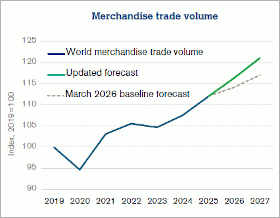
Nel mondo, anche nello scorso anno, é proseguita la crescita degli scambi commerciali con un incremento del 7%; é un andamento positivo che tutti speriamo continui.

In Italia, nel 1996, le importazioni sono diminuite del 2%; si prevede quest'anno un aumento del 4%, mentre per le esportazioni, che hanno avuto un aumento dello 0,5% nel 96, si prevede per quest'anno un incremento del 5%. La bilancia commerciale, sempre nel 1996, é stata attiva per 78 mila miliardi.

E' andata male invece la produzione industriale che ha avuto un calo nel 1996 dello 0,4% del fatturato e del 4,8% degli ordinativi: il 1997 si é aperto in controtendenza per quanto riguarda gli ordinativi, mentre la produzione di gennaio ha avuto il ben noto tonfo del 6,4% rispetto al gennaio 96.

E sono ancora purtroppo negativi i dati dell'occupazione: il tasso di disoccupazione é rimasto il 12% e non sembra possa avere sostanziali miglioramenti nell'anno in corso.

Passiamo ora ai

TRAFFICI MARITTIMI

Qui preferisco risparmiarVi dati e statistiche, che appaiono sulla stampa specializzata e non, per invece affrontare qualche argomento che interessa specificamente gli agenti marittimi.

Già nella relazione dello scorso anno si faceva riferimento ad un fenomeno, allora appena abbozzato, che iniziava a manifestarsi in forma crescente e complessa, non solo nel settore delle Compagnie di Navigazione porta-contenitori.

Negli ultimi 12 mesi le forme di aggregazione tra Società operanti nello stesso settore sono all'ordine del giorno.

Gli esempi sono molti e sotto gli occhi di tutti, dall'aggregazione P&O/Nedlloyd (che è quella più recente e quella che sta avendo conseguenze che ci colpiscono più da vicino), alla Safmarine/C.M.B. Transport/Delmas per quello che riguarda il traffico di linea contenitori, all'acquisizione Carnival Cruises/Costa Crociere, alla fusione delle attività downstream in Europa della B.P e della Mobil in campo petrolifero o all'unione Unireefer/Cool Carriers nel settore dei trasporti di merce refrigerata.

Evidentemente la cosiddetta globalizzazione del mercato induce gli operatori a mettere in discussione il proprio assetto commerciale e operativo in maniera radicale, al fine di raggiungere un adeguato dimensionamento dei volumi trasportati (e, quindi, un conseguente aumento dei ricavi) a fronte di una significativa riduzione dei costi operativi ottenuta grazie alla gestione unica degli "assets" (navi o contenitori) e, solitamente, anche grazie ad una drastica revisione degli organici.

Questo fenomeno ci induce ad un paio di considerazioni, una di carattere generale, l'altra direttamente rivolta alla nostra categoria.

L'esperienza fin qui raccolta, soprattutto come spettatori interessati di tali aggregazioni, ci ha insegnato che non esistono solo aspetti positivi, ma anche alcune negatività che, se non affrontate con pianificazione e metodo, possono risultare quasi fatali all'aggregazione stessa e vanificare la bontà del principio.

Nella maggior parte dei casi, infatti, il mercato reagisce in maniera autonoma ed imprevista, ed ecco che i rispettivi "portafogli clienti" delle due Società in fusione iniziano a cercare ed a trovare alternative presso altre Compagnie di Navigazione, onde evitare di porre la nuova, unica Società in posizione dominante di mercato. Tale emorragia è difficilmente contrastabile da parte della nuova Società, in quanto, generalmente, tutte o quasi le risorse di management sono concentrate nel tentativo di tradurre in pratica concetti studiati a tavolino.

Il personale, sia quello considerato "in eccedenza", sia quello già "confermato" deve comunque adeguarsi al cambiamento ed attraversa un periodo di forte demotivazione, con la evidente conseguenza di fornire alla propria clientela un livello di servizio inferiore al normale.

Insomma uno più uno non fa sempre due, ma più probabilmente in questi casi uno più uno fa uno e mezzo; non ce ne vogliano i "mega carriers" di qualsiasi settore, ma riteniamo che non sempre "BIG IS BEAUTIFUL" e che essendo lo shipping un fenomeno tendenzialmente ciclico, fra qualche anno si possa assistere ad una disaggregazione, quantomeno parziale, di ciò che si sta formando adesso. Rimane il fatto che, in questo momento, la tendenza è in atto e, a causa dell'inerzia di queste cose, l'inversione di tendenza o il cambiamento, sempre che avvenga, non sarà dietro l'angolo; aspettiamoci quindi anni difficili.

La seconda considerazione ci riguarda più da vicino.

Se questo è lo scenario attuale di riferimento del nostro mercato, che tipo di atteggiamento dovrebbe adottare un'azienda del nostro settore?

La risposta non è semplice, né può essere generalizzata. In linea di massima, comunque, le strade appaiono soprattutto due:

A) da un lato la risposta non può che essere PROFESSIONALITA' e QUALITA' del SERVIZIO;

B) dall'altro appare evidente che anche le nostre aziende debbano, in qualche modo, cercare di superare particolarismi ed individualismi per trovare forme di aggregazione e razionalizzazione.

Soltanto con la vera professionalità che si esplica attraverso una reale qualità del servizio si crea un rapporto solido e duraturo con i propri rappresentati, rapporto che dovrebbe superare i normali canoni Armatore/Agente, ma che più spesso dovrebbe essere improntato ad una forma di "partnership" se non finanziaria, quantomeno nei contenuti.

Si è molto parlato, in questi ultimi tempi, di Qualità, un concetto originariamente industriale e che si è poi cercato di applicare anche al mondo dei servizi. Noi riteniamo che il processo di Certificazione di Qualità, al quale molti nostri associati si stanno sottoponendo, potrebbe effettivamente dare concreti ritorni in termini di qualità del servizio soltanto qualora questo stesso processo non sia solo passivamente subito dall'azienda.

Il desiderio e la necessità di innovare, correggere e migliorare il nostro modo di lavorare e la nostra organizzazione sono sempre stati presenti nelle nostre aziende che, di fatto, da sempre, per sopravvivere hanno lavorato per migliorare la propria qualità, anche se prima la scrivevamo con la "q" minuscola.

Questa Certificazione che, in pratica, ci viene quasi imposta, ha come novità che persone esterne all'azienda vengono a frugare, ad analizzare come lavoriamo e proprio in quanto esterne possono vedere cose che noi, da sempre immersi nella nostra realtà quotidiana, fatichiamo a vedere; e sotto questo aspetto può quindi essere utile.

Ma rimangono le perplessità sulla massa di scartoffie, sull'effettiva utilità dei manuali, sulla competenza degli enti certificatori.

L'altra strada sembra essere, prendendo ad esempio i nostri armatori, quella della razionalizzazione, delle sinergie e del service-sharing.

I nostri colleghi nord-europei ci hanno già preceduto in questa direzione ed è da qualche anno che propongono agli Armatori, soprattutto nel settore della linea, il concetto di "back-office" e di "front-office". Back-office è chiaramente un centro di servizi comune a più agenzie e/o armatori all'interno della stessa agenzia, mentre il front-office appare sul mercato esterno come l'unica entità esclusivamente dedicata alla vendita (e molto spesso anche ai servizi post-vendita) per quell'armatore o per quella linea particolare.

Anche in questo caso non esiste una "ricetta" miracolosa per aumentare i ricavi, ridurre i costi ed elevare contemporaneamente il livello di servizio offerto; esistono comunque situazioni che, una volta razionalizzate, permettono di creare sinergie combinando quindi al meglio le nuove tecnologie con le risorse umane, elemento che rimane comunque centrale nell'ottica del servizio offerto ai nostri Armatori.

Lo sforzo in questa direzione deve essere inizialmente teso a superare quegli ostacoli posti dai particolarismi locali o dalle accese situazioni di rivalità, reali o presunte, che tendono a dividere piuttosto che ad unire, fatti ovviamente salvi gli interessi legittimamente conflittuali degli Armatori che sono rappresentati.

TRAFFICO CROCIERE

Per quanto riguarda questo settore, a fronte di uno sviluppo generalizzato e tangibile, di cui è stato recentemente protagonista il bacino del Mediterraneo e di cui hanno beneficiato i maggiori porti crocieristici italiani (Civitavecchia, Livorno, Napoli, Venezia ed anche Portofino), Genova non è purtroppo riuscita a trarre vantaggio, per ora, da questo trend positivo, vanificando massicce operazioni di marketing.

Le principali ragioni si possono sintetizzare come segue:

- Genova non è ancora generalmente percepita come destinazione turistica;

- le tariffe dei portabagagli e quelle degli altri servizi portuali accessori son fuori mercato;

- un eccesso di burocratizzazione caratterizza i vari aspetti dell'operatività portuale.

La recente apertura del terminal crociere di Savona, poi, ha determinato la parziale perdita di clienti per la stagione invernale 96/97 (Costa, Festival, Leisure ad altre minori).

Per recuperare i traffici e migliorare la situazione sono state comunque intraprese importanti iniziative quali la drastica riduzione delle tariffe dei portabagagli, la creazione del Consorzio "Genova Crociere", di cui fa parte anche la nostra Associazione, che si prefigge di assumere iniziative per una valorizzazione turistica e culturale internazionale del nostro porto, della nostra città e delle zone circostanti. Ci si sta poi attivando per eliminare gli squilibri tariffari che rendono il nostro scalo non competitivo.

Appare quindi che quantomeno la volontà di ripresa ci sia, ma saranno sicuramente necessari alcuni anni prima di recuperare almeno il bacino di utenza europeo, per il quale Genova potrebbe diventare in un prossimo futuro un punto di riferimento importante.

BROKERS

Il mercato dei noli durante il 1996 non verrà senz'altro ricordato come un anno di particolari soddisfazioni per gli armatori in generale, per le bulkcarriers in particolare.

Dopo alcuni anni di euforia e senza che la situazione economica mondiale lo lasciasse supporre in questi termini, le rate su tutte le principali rotte sono crollate a livelli riscontrabili solo nell'ultimo periodo buio dei primi anni ottanta.

Una parziale ripresa si è vista nell'autunno con una tendenza al recupero che si è però stabilizzata in queste ultime settimane.

Al di là dei dati statistici di mercato, che ci vengono sciorinati periodicamente dalla stampa specializzata, vorremmo parlare invece di quello che sta succedendo ultimamente nel mondo dei brokers.

Sarebbe ormai restrittivo parlare della situazione genovese o italiana, in un mondo dello shipping che si confronta ormai quotidianamente con la concorrenza internazionale.

E' un dato di fatto che - eccezion fatta per alcune aziende di minori proporzioni che si sono ricavate una nicchia di mercato per traffici più o meno geograficamente limitati - la sfida delle aziende brokeristiche si gioca ormai a tutto campo con i concorrenti stranieri.

Da ciò nasce la necessità di strutture all'avanguardia nel settore delle comunicazioni che consentano informazioni di mercato in tempo reale.

E' opinione diffusa che queste tecnologie potrebbero portare ad una progressiva riduzione del numero dei brokers coinvolti in una singola trattativa data la standardizzazione del mercato.

Da qui una forte necessità di rinnovamento del ruolo del broker che dovrà essere sempre più un consulente per i propri clienti piuttosto che un broker competitivo inteso nell'accezione odierna.

Il broker dovrà essere in grado di fornire i prodotti richiesti dal mercato, non contro commissione, ma contro margini derivanti dal know-how e da migliori modelli.

Sebbene infatti le moderne tecnologie consentano a chiunque di avere contatti con qualunque angolo sperduto del mondo, nulla potrà sopperire al rapporto interpersonale col proprio broker di fiducia che sappia, con la sua competenza, dare il giusto parere.

Un altro fenomeno che si sta sviluppando su scala internazionale e che, se vogliamo, è una diretta conseguenza di quanto dicevo prima, è la fusione o l'accorpamento di aziende brokeristiche che uniscono le loro risorse umane per meglio affrontare sul mercato la concorrenza ed ottimizzare i costi gestionali. In un anno di modesti ricavi dovuti al mercato in flessione, ma forse non solo a causa delle situazioni contingenti, abbiamo potuto notare come accordi in tal senso si siano finalizzati un pò su tutte le principali piazze brokeristiche, sia in Scandinavia, che a Londra, a Genova come a New York. Al riguardo si può citare, a titolo di esempio, quanto avvenuto, seppur con differenti tipologie di accordi societari: Howard Robinson Londra/Lambert Brothers Londra, Anderson Huges Londra/B.M.M. Shipbrokers Londra, Mid Ship New York/Stratton Londra, Sark Express Istambul/Venus Shipping Istambul, Clarkson Londra/Sea Dragon Singapore ed anche a Genova tra Bancosta/Martini/Cambiaso Tankers.

C'è sempre maggiore attenzione al mercato dell'Estremo Oriente e sono ormai numerose le aziende brokeristiche europee con uffici di rappresentanza, o con vere e proprie filiali operative in quella zona, che le previsioni di mercato pronosticano in sostanziale crescita economica nei prossimi dieci anni a differenza delle prospettive stagnanti del mercato europeo.

Infine gli operatori marittimi guardano con sempre maggior interesse a quello che alcuni prevedono essere il futuro mercato dei noli, almeno per quanto concerne le sizes maggiori: i cosiddetti "shipping derivatives". Ci saranno sempre più affari conclusi "on screen" né più né meno come accade in borsa, ma su scala mondiale. I brokers moderni dovranno prendere l'abitudine di lavorare con un occhio allo schermo dei futures per cogliere le opportunità che si presentano e trasferire gli inputs ad un "derivatives" desk in grado di muoversi sui prodotti offerti dal mercato.

E' questa un'ulteriore sfida con la quale le nostre aziende dovranno confrontarsi per mantenere quel ruolo strategico che sino ad oggi hanno ricoperto sul mercato dei noli non solo europeo.


SITUAZIONE PORTUALE E RIASSETTO DELL'ORGANIZZAZIONE DEL LAVORO

Nella relazione all'Assemblea del marzo '96 c'erano preoccupazioni circa la concreta possibilità di una liberalizzazione dei servizi di carico e scarico delle merci in tempi brevi.

In effetti dal 1° gennaio di quest'anno la fornitura di servizi alle imprese terminaliste avrebbe dovuto essere consentita a più imprese attrezzate e non soltanto alle ex compagnie portuali, essendo scaduta con il 31 dicembre 1996 la riserva di cui al punto 1 b) dell'art. 21 della legge di riforma. Ma questa apertura, ribadita nel testo originario dell'art. 17, veniva di fatto bloccata dal noto emendamento apportato all'ultimo comma di detto articolo, che ha nuovamente riservato alle ex compagnie portuali la fornitura dei servizi in questione. Di qui i ricorsi del Comitato Nazionale dell'Utenza Portuale all'Autorità Garante della Concorrenza e alla CEE. Come sapete l'Autorità Garante ha già risposto e, direi, in maniera soddisfacente per noi.

Vorrei qui fare un inciso per esprimere con forza il mio sdegno per il modo con il quale il nostro Parlamento ha fatto passare questo famoso emendamento. E' semplicemente una vergogna per un paese civile che episodi di questo genere si verifichino dopo che tutte, dico tutte, le parti avevano lavorato a lungo per elaborare un testo su cui ci si potesse trovare d'accordo. Adesso sono ormai tre mesi che tutti lavorano per trovare una soluzione; tre mesi persi, buttati al vento, riunioni su riunioni: un bell'esempio su come sprecare tempo e denaro.

Pare che il Ministro sia intenzionato a ripristinare la formulazione originaria che consentiva la fornitura di servizi anche da parte di altre imprese (e non solo da parte delle ex compagni portuali) in possesso dei necessari requisiti. Speriamo che questo avvenga al più presto. Noi glielo abbiamo detto in tutte le salse.

In compenso con il 31 dicembre 1996 é finalmente decaduto l'obbligo (sancito dall'art.23 della legge già citata) per le imprese portuali di dare priorità nelle assunzioni ai dipendenti degli enti e ai lavoratori portuali. Segno che il processo di liberalizzazione del settore avanza, pur fra mille ostacoli, e di questo dobbiamo onestamente prendere atto.

Altra preoccupazione, più che fondata, riguardava e tutt'ora riguarda la mancata trasformazione della CULMV in due distinte società, così come previsto dall'art. 21 della legge di riforma. Ad oggi, infatti, nonostante le prese di posizione (per iscritto e a voce) del Comitato Utenti e Operatori del Porto di Genova nei confronti dell'Autorità Portuale, la CULMV é costituita in un'unica società che svolge la duplice funzione di impresa terminalista e di impresa di servizi in contrasto con la norma di legge. Al riguardo non è comprensibile la ragione per cui non vi sia stata ancora una presa di posizione decisa dell'Autorità Portuale.

Il problema assume una particolare rilevanza proprio per il fatto che la CULMV é diventata nel frattempo uno dei principali azionisti del Terminal Multipurpose ed è quindi venuta a trovarsi in una posizione potenzialmente dominante, avendo il diretto controllo degli appalti di servizio e quindi della fornitura di mano d'opera agli altri terminal, e sicuramente privilegiata per quel che attiene ai costi fissi del "Multipurpose" grazie alla creazione di una "struttura variabile" e al correlativo ridimensionamento della "struttura fissa".

Per quel che riguarda la completa attuazione della riforma portuale prevista dalla Legge n. 84 del 1994, siamo sempre in attesa del Decreto (ancora all'esame del Consiglio di Stato) contenente le disposizioni attuative dell'art. 18, anche se il Ministero, con la Circolare n. 41 del 6 maggio 1996, ha cercato in qualche modo di venire incontro alle esigenze rappresentate dalle Autorità Marittime e Portuali anticipando le linee fondamentali del provvedimento (bandi di gara, possibilità di ricorso alla trattativa privata, criteri base per il rilascio delle concessioni, etc.).

E' stato per contro sciolto, con le ultime modifiche apportate alla Legge di cui sopra, il pericoloso conflitto di competenze in atto tra l'Autorità Portuale e l'Autorità Marittima a proposito del controllo sulla sicurezza delle operazioni portuali. La competenza in questo specifico settore é stata infatti definitivamente attribuita alle Autorità Portuali, ferma restando la competenza dell'Autorità Marittima relativamente a tutte le altre mansioni di polizia e sicurezza previste dal Codice della Navigazione e dalle leggi speciali.

Irrisolto finora il problema della cosiddetta banchina pubblica, riguardo all'esigenza di garantire comunque il servizio pubblico del porto e quindi di assicurare un accosto a navi non programmate dai singoli terminal, che comunque lo richiedano, specie nei confronti di quelle in grado di operare in regime di autoproduzione.

Non sappiamo onestamente se le clausole contenute negli atti di concessione dei vari terminal consentano di soddisfare una simile più che legittima esigenza. Ci risulta che l'Autorità Marittima, responsabile della programmazione degli accosti, abbia espresso alcune preoccupazioni in merito a quanto sopra.

Certamente ci sono ancora molte disfunzioni che incidono sull'operatività portuale, giustamente denunciate da varie parti; i problemi dei collegamenti ferroviari e stradali sono all'ordine del giorno di convegni, degli enti pubblici a tutti i livelli: l'impressione é che la volontà ci sia, che sui progetti non ci siano più grandi divergenze: il problema, come sempre nel nostro paese é passare ai fatti, mettere mano ai lavori, che si prospettano lunghi; quando? Speriamo bene.

COMITATO UTENZA

La nostra Associazione ha attivamente collaborato con il Comitato Utenti e Operatori del Porto di Genova, guidato con infaticabile impegno dal Dottor Gidoni a cui é recentemente succeduto il Dottor Romani. Il Comitato ha svolto una continua azione di stimolo sopra tutto nei confronti dell'Autorità Portuale. Come ho già detto prima, il Comitato si è molto impegnato per sollecitare la trasformazione della CULMV in due distinte società, come prescritto dalla legge, e per risolvere molte altre problematiche riguardanti i servizi e l'operatività portuale (servizi antincendio, servizi ecologici, regolamento sicurezza, dragaggio fondali, disservizi doganali, vertenze tariffarie, etc.).

Ci siamo anche attivamente occupati del Piano Operativo Triennale e più recentemente del Piano Regolatore Portuale.

Purtroppo non c'è stato e non c'è un soddisfacente coordinamento fra l'azione del Comitato Nazionale e quella dei Comitati locali. E' questo un punto importante che mi sono permesso di raccomandare all'attenzione del nuovo presidente del Comitato.

* * *

Concluderei dicendo che il buon andamento dei traffici del porto ci rallegra ma attenzione ai troppo facili trionfalismi che sembrano abbondare nelle pubbliche dichiarazioni di molti: i problemi ci sono ancora e la strada è lunga e soprattutto gli altri porti non staranno a guardare.

Per quanto riguarda il primo anno di attività del nuovo Ministro, senz'altro positive le iniziative sulla riforma dell'autotrasporto, le disposizioni per la nautica da diporto, il lancio, finalmente, del Registro Italiano Internazionale, la continuazione degli esodi; peccato il pasticciaccio della conversione in legge di cui abbiamo detto e l'atteggiamento incerto e poco chiaro di fronte alle reazioni dell'utenza e dell'Autorità Garante.

Da ultimo chiedo a Voi un consenso e un incoraggiamento (oppure un dissenso e disapprovazione) se l'Associazione debba affrontare il problema della vetustà delle nostre due leggi cardine: la 135/77 per i raccomandatari e la 478/68 per i brokers.

* * *

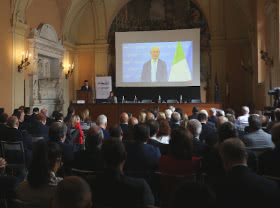
Ho finito. Voglio ringraziare la Camera di Commercio per l'ospitalità e ringrazio Voi per la pazienza con la quale mi avete ascoltato.

* * *

Inizia ora la parte riservata ai soli associati.

›››File
FROM THE HOME PAGE
CK Hutchison initiates international arbitration proceedings against the Republic of Panama
Hong Kong
The action follows a similar one by its subsidiary PPC. The lawsuit seeks damages of $2 billion and over $1.5 billion.
Hapag-Lloyd to acquire 25% stake in APM Terminals Maasvlakte II
Hamburg
The Maersk Group company will retain operational control of the Dutch terminal
The German company Hapag-Lloyd has signed an agreement with APM Terminals, the terminal operator of the AP Møller-Mærsk shipping group, for
ZIM also records a recovery in the second quarter
Haifa
Acquisition by Hapag-Lloyd expected by the end of the year
In the second quarter, freight traffic in the port of Civitavecchia grew by +3.6%
Civitavecchia
In the first half of this year the total was 3.93 million tons (+1.5%)
Last month the port of Singapore handled four million containers (+3.1%)
Singapore/Hong Kong
A 1.6% decline was recorded in the port of Hong Kong
AP Moller Capital to acquire majority stake in Globex Investissement
Copenhagen/Casablanca
Ship hit in the Strait of Hormuz
Southampton
Crew member of the "Minoan Dignity" dies
Last month, freight traffic in the port of Barcelona decreased by -6.5%.
Barcelona
In July, 300,961 containers were handled (-13.2%)
Abu Dhabi's sovereign wealth fund offers to acquire 100% of AD Ports' capital.
Abu Dhabi
He currently owns a 75.42% stake
In the first half of 2026, freight traffic in the port of La Spezia grew by +2.0%
La Spezia
Cargo traffic in Tunisian ports is growing sharply
In the April-June quarter it was 7.4 million tons (+8.8%)
The port of Koper reports a 5.6% decrease in quarterly freight traffic
Ljubljana
In June the decline was -18.9%
Strait of Hormuz crisis has severe impact on DP World's financial and operating performance
Dubai
Container traffic at CK Hutchison terminals fell by -1% in the first six months of 2026.
Hong Kong
Excluding operations in Panama, volumes increased by +5%
In the first half of 2026, freight traffic in the port of Hamburg decreased by -3.1%.
Hamburg
Containers amounted to four million TEUs (-3.7%)
HMM's revenues increased by 29.7% in the second quarter
Seoul
Net profit down, weighed down by lower financial income
Evergreen's net profit grew by 43.9% in the April-June quarter.
Taipei
Maersk and Hapag-Lloyd benefit from the recovery of the container shipping market
Copenhagen/Hamburg
The Danish company reports better quarterly performance than its German partner in Gemini Cooperation
Freight traffic in the ports of Genoa and Savona-Vado remained stable in the second quarter
Genoa
Passenger numbers drop at both ports
In the second quarter, Yang Ming recorded a net profit growth of +610.7%.
Keelung
Revenues stable in the first half of 2026
Two ships attacked in the Gulf of Oman and off the coast of Yemen
Southampton
A container ship was reportedly hit by an American helicopter
The Northern Sea Route is not at all competitive with the sea route through Suez
Basel
Study by two researchers from Mokpo National Maritime University
The auction on August 28 is expected to confirm Rheinmetall-MSC's interest in the Romanian Mangalia shipyard.
Bucharest
In the second quarter, vessel traffic in the Panama Canal grew by +9.6%, but decreased significantly in June
Panama/Balboa
The ACP introduces new limitations on vessel draft and does not exclude reductions in the daily number of transits.
Contract with Fincantieri for the construction of a third cruise ship for Crystal is now in force
Monaco/Miami
Delivery is scheduled for 2034
More explosions in the Strait of Hormuz area
Southampton/Tehran
Iran-Oman negotiations continue, but reopening to ship transit still seems a long way off.
Shipping associations reiterate their opposition to mandatory tolls and tariffs for transiting the Strait of Hormuz.
Two ships attacked in the Red Sea
Southampton/San'a'/New Delhi
Indian vessel "Faize Noore Oliya" sunk, Houthis claim attack on "NCC Wafa"
Prologis makes $18.8 billion offer to buy Segro
San Francisco
The combination will create a European giant in the ownership and management of logistics properties
In the April-June quarter, ONE recorded an improvement in financial performance
Singapore
During the period the fleet transported almost 3.3 million containers (+2.9%)
Global Port Holdings' revenues grew by 27% in the first half of this year.
Istanbul
Gross operating margin up 22%
In the second quarter, naval traffic in the Suez Canal increased by +16.5%
Cairo
In the first half of 2026, growth was +14.0%
In the second quarter of 2026, the Bosphorus Strait was crossed by 10,082 ships (+0.5%)
Ankara
In the first half of the year, naval traffic decreased by -0.5%
A report by the French National Assembly notes the competitive decline of the state's port ecosystem.
Paris
In the first half of 2026, FS's freight transport segment recorded a -2.7% drop in operating revenues
Rome
Traffic volumes amounted to approximately 8.8 billion tonne-km (-7.3%)
The EU ETS Observatory confirms that the emissions trading system is having a negative impact on EU ports.
Madrid
The proposed corrections are the broadening of the criteria for the designation of neighbouring container transhipment ports and a percentage reduction factor applied to the volume of CO2 emissions from ships.
Norwegian Cruise Line Holdings' revenues increased by 4.9% in the second quarter of 2026.
Miami
New historical record of passengers embarking on the fleet's ships
Fincantieri's half-year revenues remain stable
Trieste
Net profit increased by 191.4%. New orders fell by 58.5%.
In the second quarter, freight traffic in Albanian ports grew by +8.9%
Tirana
The US think tank Open Markets Institute proposes the establishment of a public container shipping company
Washington
Rao: Today the United States depends on a cartel of six foreign shipping companies
Royal Caribbean reports record revenue for the April-June quarter
Miami
New all-time peak in turnover in the first half of 2026
In the second quarter, CMA CGM group revenues increased by +19.2%
Marseille/New York/Los Angeles
United Ports Joint Venture with Stonepeak Completed
PortXchange: To immediately reduce shipping emissions, we need to focus on ports.
Rotterdam
In the port of Trieste, bulk cargo is increasing and miscellaneous goods are decreasing.
Trieste
In the first six months of 2026, traffic in Monfalcone dropped by 24.9%.
Fermerci, freight train transport production in Italy could fall to 2015 levels this year.
Rome
Map: We are faced with data that exceeds all expectations.
Indian government approves $7.2 billion in aid for domestic shipbuilding
New Delhi
Strategy adopted today to revitalize the sector
Two Indian shipyards included in the new EU list of ship recycling facilities proposed by the Commission
Brussels/Washington
Satisfaction of ECSA and World Shipping Council
Hyundai and Siemens sign agreement for AI-powered shipbuilding
Washington
The goal is an autonomous manufacturing system in which all processes, including design, production, logistics, inspection and testing, are digitally connected.
African Union condemns attacks on tankers in Red Sea claimed by Houthis
Addis Ababa
Youssouf: The security of Red Sea shipping lanes is of vital strategic importance for Africa
In Genoa, Fincantieri delivered the new cruise ship Explora III to Explora Journeys.
Genoa
"Explora IV" and "Explora V" will follow in 2027 and "Explora VI" in 2028.
In the second quarter of 2019, bulk cargo volumes increased while general cargo volumes decreased.
Rotterdam
In the first half of 2026, 212.0 million tonnes of goods were moved (+0.4%)
In the second quarter, Spanish ports handled 144.8 million tonnes of goods (+2.9%)
Madrid
Record for conventional goods and containers (in TEU)
The EU Commission opens an in-depth investigation into the Saipem-Subsea7 merger.
Brussels
Brussels considers the effects of the operation to be particularly critical, especially in the SURF market.
Medlog (MSC Group) acquires a stake in Interporto Bologna
Bologna
Caliandro: Industrial development that will allow us to achieve our rail freight traffic objectives
The Barcelona Port Authority will acquire 40% of Terminal Intermodal de Navarra.
Barcelona
The remaining 60% of the capital will remain with Hutchison Ports Best
In the first half of this year, Chinese seaports handled 5.87 billion tons of cargo (+3.0%).
Beijing
New historical records for half-yearly and quarterly container traffic
Ports of Italy: The issue of competences divides the reform.
Rome
At the Confitarma conference, Rixi defends the new national control room, while experts and operators ask for clarity on the relationships with the AdSPs and on the resources of the new company.
The maritime sector is divided between cautious support and criticism over the EU ETS review.
Brussels/Washington/
Copenhagen/Piraeus/Rotterdam
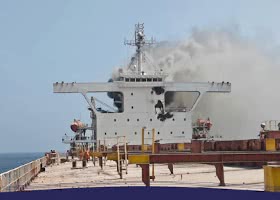
Yet another attack on a ship in the Strait of Hormuz
Southampton
A tanker was hit and abandoned by the crew.
ECSA considers the proposed revision of the EU ETS to be a first step, but many others should follow.
Brussels
Raptis: It's a good idea to allocate system revenues at EU and national levels to support sustainable fuels.
ESPO: No to lowering the EU ETS application threshold from 5,000 to 400 GRT vessels.
Brussels
Appreciation for measures aimed at reducing evasive ship calls
T&E welcomes some new proposals from Brussels for the EU maritime ETS
Brussels
The association is more critical of the measures studied by the EU Commission for the aviation sector
For Assarmatori, the Commission's proposal on the EU ETS is timid, while more courageous measures were expected
Brussels
EU Maritime ETS: The European Commission partially accepts shipowners' requests.
Brussels
A new €110 million fund for clean fuels, non-permanent exemptions extended to 2035, an IMO deduction mechanism, and crackdowns on "evasive" transshipment ports.
Another ship was hit by a shell in the Strait of Hormuz
Southampton/Tampa
US Marines conducted an inspection aboard a sanctioned oil tanker
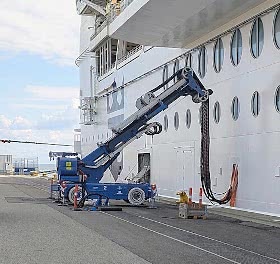
Port of Gioia Tauro: First connection of a large container ship to the cold ironing system
Gioia Tauro
The ship "MSC Mirja" powered with a total power of approximately seven MW
In the second quarter of 2026, freight traffic in the port of Antwerp-Bruges decreased by -2%.
Antwerp
Dry bulk volumes recovered and rolling stock increased. Other sectors declined.
COSCO Shipping Ports sets new quarterly and half-year container traffic records
Hong Kong
Sallaum creates a company for land logistics of cars in Europe
Vilnius
It will initially be equipped with 50 car transporters and the fleet will reach 300 vehicles by 2029
In the second quarter, freight traffic in the port of Taranto grew by +6.7%
Taranto
An increase of +104.9% was recorded in July
Viking Holdings Cruise Line Reports Record Quarterly Revenue
Los Angeles
Net profit of $587.7 million (+33.8%)
Container traffic at the Port of Los Angeles dropped 5.8% last month.
Los Angeles
In the first seven months of 2026, growth of +1.8% was recorded
Container traffic at the Port of Long Beach dropped 1.7% in July.
Long Beach
In the first seven months of this year, total traffic was 5,758,086 TEUs (+1.2%)
In the second quarter, RCL recorded an increase in revenues that was outweighed by the increase in operating costs
Bangkok
Net profit down 1.1%
Danish DFDS's quarterly financial performance improves
Copenhagen
In the April-June quarter, rolling stock transported by the fleet increased by 1.1%. Passengers decreased by 8.9%.
Container traffic at HHLA terminals decreased by -8.0% in the second quarter
Hamburg
Revenues increased by 2.5%. Operating costs increased by 5.7%.
Costa Cruises announces change of management for the Americas region.
Genoa
Jorge Serrano Martín de Vidales will replace Dario Rustico
The Livorno Port Authority creates an internal task force for the Darsena Europa project.
Livorno
The aim is to ensure a unified coordination with the commissioner structure that follows the project
MSC installs Jotun's proactive hull cleaning system on MSC Daniela
Sandefjord
Combines advanced antifouling technology with robotic inspection and cleaning
Wan Hai Lines reports a 965.6% increase in quarterly profit
Taipei
The company orders six new 11,000 TEU containerships
In the second quarter, cargo traffic in Montenegrin ports decreased by -5.8%
Podgorica
Cargoes to and from Italy dropped by -40.6%
The Grimaldi Group has taken delivery of the Grande Pacifico
Naples
The vessel is the first of five new sister PCTCs with a capacity of 9,800 ceu
In 2025, the Fratelli Cosulich group's revenues amounted to 1.9 billion euros (-11.5%)
Genoa
Net profit of 20.0 million euros (-3.0%)
Maurizio Longo, Secretary General of Trasportounito, has passed away.
Rome
He passed away in Rome after a long illness.
Terminal Investment Limited abandons Tercat acquisition
Brussels
It provided for joint control of the Barcelona terminal with Hutchison Ports
Work has been completed to activate cold ironing at the Porto Corsini cruise terminal in Ravenna.
Ravenna
Acceleration of the redevelopment process for the former CIVAM area in the port of Vibo Valentia Marina
Vibo Valentia
The area will be transformed into new yards for commercial logistics
Maersk Group sells Maersk Training and Maersk H2S Safety Services
Copenhagen
They will be sold to the US Open Gate Capital, specialized in industrial carve-out operations
SAILING LIST
Visual Sailing List
Departure ports
Arrival ports by:
- alphabetical order
- country
- geographical areas
In the April-June quarter, the port of Venice handled 6.3 million tons of goods (-1.2%)
Venice
Cruise passengers down by -15.3%
In the second quarter, freight traffic in the port of Ravenna recorded a sharp increase of +10.9%
Ravenna
In the first six months of 2026 the increase was +5.9%
DP World acquires six GXO logistics sites in the UK
Dubai
186,000 square meters and 2,000 employees change hands: this is the transfer imposed by the British Antitrust for the acquisition of Wincanton
DHL soars in the second quarter, but not everywhere
Bonn
Revenue and EBIT in double digits. Express performed well, while Supply Chain and Post & Parcel Germany fared less well.
Global Ship Lease reports record quarterly and half-year revenues
Athens
Rising costs impact profits
DP World to build temperature-controlled logistics hub in the port of Antwerp
Dubai/Kallo
GNV will activate a third maritime service to Algeria on Saturday
Genoa
The Civitavecchia-Annaba line will complement the existing routes from Sète to Algiers and Bejaia.
Danaos Corporation reports quarterly revenue growth of 4.7%.
Athens
The containership segment remains stable. Bulk carriers continue to contribute.
A bulk carrier hit by a shell in the Strait of Hormuz
Southampton/London
One crew member is reportedly missing.
This year, 800,000 cruise passengers are expected in Messina.
Messina
Passengers make a direct expenditure of almost 16 million euros in the city
Container traffic at the Port of New York grew by 1.6% in the second quarter
New York
In the first six months of 2026, 4.43 million TEUs were handled (+0.2%)
HZ Cargo and Railtrans form joint venture for intermodal transport
Zagreb
The aim is to activate a traffic of over 500 thousand tons between the ports of Croatia and the markets of Central Europe.
ICTSI posts record net income of $363 million (+24.2%) in the second quarter
Manila
Another GasLog vessel hit while leaving the Persian Gulf
Piraeus/Southampton
Damage to the engine room
Finnlines reports record quarterly revenues
Helsinki
In the April-June period, net profit was 42.9 million euros (+64.7%)
Spinelli Group approves 2025 sustainability report
Genoa
Production value grew by 5%. New hires increased by 48%.
Fabrizio Marilli will be the new secretary general of the Central Adriatic Sea Port Authority.
Ancona
The Management Committee has approved the institution's budget adjustment
The Western Ligurian Sea Port Authority has adopted the 2026-2028 Port Plan.
Genoa
Projections for 2028 indicate an increase of approximately 150 employees in the ports of the system
The Southern Tyrrhenian and Ionian Sea Port Authority has approved the budget adjustment change.
Gioia Tauro
It records higher revenues and higher expenses of 1.69 million euros
One and a half million euros for training in Tuscan ports
Livorno
The Northern Tyrrhenian Port Authority has presented its 2026-2028 training plan.
Terminali Italia will manage the Orte intermodal terminal starting next year.
Rome
It has approximately 96,000 square meters of yards and three tracks
Italy and Tunisia sign a collaboration agreement in the transport and logistics sector
Rome
Another Saudi-owned Bahri ship attacked by Houthis in the Red Sea
Southampton/Sana'a/Riyadh
Yemeni militants' spokesman claimed responsibility for the attack on the chemical tanker "NCC Ghazal"
The final breakthrough of the two main tunnels of the Brenner Base Tunnel was achieved today.
Bolzano
The two construction sites are connected approximately 1,400 meters below the Brenner Pass
UPS revenues increased 7.6% in the second quarter
Atlanta
Net profit amounted to $604 million (-52.9%)
In 2025, the revenues of the Italian logistics company Nord Ovest grew by +13.6%
Wedge
Net profit down 8.3%
Quarterly freight traffic increased at the ports of Algeciras and Barcelona. Valencia saw a decline.
Algeciras/Barcelona/
Valencia
Increase in containers at the Catalan port
Fincantieri signs agreement with NextGeo's reinvesting partners
Trieste
The operation is part of the development strategy in the diving segment
The update to the DPSS of the ports of Sardinia has been adopted.
Cagliari
Resolution of the Management Committee of the Port System Authority
ICTSI acquires the ATU12 and ATU18 bulk terminals at the Brazilian port of Aratu.
Sao Paulo/Manila
They will be sold by SIMPAR for approximately 355 million dollars
Konecranes reports decline in quarterly financial performance as orders increase
Helsinki
The value of orders relating to port equipment grew by +17%
Fourteen regions are in favor and five are against the bill on port governance reform.
Rome
Rixi: Let's now continue the institutional process with the aim of achieving a balanced reform.
Kuehne+Nagel's net sales increased by 8% in the second quarter.
Schindellegi
Performance improved markedly in the air freight segment
Assagenti's management team has been renewed.
Genoa
The composition of the executive committee and the chairmen of the commissions
DP World signs preliminary agreement to build two terminals at Fujairah Port
Dubai
VIO - Vado Ligure Interport Board of Directors Renewed
Genoa
Pierangelo Olivieri has been appointed president
Kalmar's turnover increased by 14% in the second quarter
Helsinki
New orders value stable
Saipem wins new offshore drilling contract off Ivory Coast
Milan
It was awarded by Eni Côte d'Ivoire
DSV's quarterly performance continues to grow, boosted by the Schenker acquisition.
Hedehusene
Net profit of DKK 2.6 billion (+11.5%) was recorded in the April-June period of 2026.
Falteri (Federlogistica) has been co-opted into the Board of the European Logistics Association
Genoa
International collaboration protocol on integrated logistics with ACLI Terra
PORTS
Italian Ports:
Ancona Genoa Ravenna
Augusta Gioia Tauro Salerno
Bari La Spezia Savona
Brindisi Leghorn Taranto
Cagliari Naples Trapani
Carrara Palermo Trieste
Civitavecchia Piombino Venice
Italian Interports: list World Ports: map
DATABASE
ShipownersShipbuilding and Shiprepairing Yards
ForwardersShip Suppliers
Shipping AgentsTruckers
MEETINGS
The conference "EU-Mercosur Agreement: The Role of the Maritime Economy" will be held in Genoa on July 1st.
Genoa
It is organized by the Casa America ETS Foundation and the Western Liguria Port Authority
The Federagenti assembly will be held in Civitavecchia on July 3rd.
Rome
Pessina: We will not discuss regulations, community relations, or the pursuit of theories and bureaucracy, but rather the challenges of Italian port infrastructure.
››› Meetings File
PRESS REVIEW
Empire buys back: After Tata, Adani can rewrite India's colonial past
(The Economic Times)
Govt does not interfere in port management appointments - Loke
(Bernama)
››› Press Review File
FORUM of Shipping
and Logistics
Intervento del presidente Tomaso Cognolato
Roma, 19 giugno 2025
››› File
GCC urges international community to protect maritime transport against Houthi threats
Riyadh
Reaction to the announcement of a maritime embargo against Saudi Arabia
Fincantieri signs agreement in Qatar for operational management of the Training and Simulation Centre.
Trieste
The center is intended for the training of naval personnel of the Qatari Navy.
Over 770 kilos of cocaine seized at the port of Vado Ligure
Savona
Once released on the market, the drug would have ensured criminal organizations profits of 250 million euros.
Wärtsilä records sharp increase in new order value in second quarter
Helsinki
Net turnover decreased by -2%
Yang Ming orders Hanwha Ocean to build six 13,000 TEU dual-fuel containerships
Keelung
Contract valued at over $1.2 billion
The toll of attacks on ships in the Black Sea worsens
Odessa
Ten dead on board a ship leaving the port of Odessa
Today a new attack on a ship in the Strait of Hormuz
Southampton
The product tanker Kavomaleas of the Greek company Dynacom Tankers Management caught fire
Confitarma disappointed by the Commission's proposal to revise the EU ETS
Rome
Zanetti: The notable absentee is the competitiveness of the Italian and European shipping industry.
ALIS: Commission's proposals on the EU ETS are positive, but serious issues remain.
Rome
MIT adopts cold ironing guidelines
Rome
The aim is to ensure clear, uniform and transparent criteria for all Port System Authorities.
In the first half of the year, cruise traffic at GPH port terminals grew by +10.1%
Istanbul
In the second quarter alone the increase was +2.8%
Western Liguria Port Authority approves 2026 budget update
Genoa
Assiterminal clarifies its doubts about the responsibilities assigned to Porti d'Italia Spa.
Genoa
ABB buys British Rotork
Zurich/London
The Bath-based company specializes in flow control and industrial automation.
Central Adriatic Port Authority refinances €100 million from the Infrastructure Decree
Ancona
The funds concern seven strategic interventions of the port system
Container traffic at the Port of Los Angeles increased by 3.4% in the first half of 2026.
Los Angeles
In the second quarter, growth was +11.5%
IMO and ITF call for an end to attacks on seafarers and transport workers
London
Resurgence of incidents in the Black Sea, Sea of Azov and the Strait of Hormuz region
Container traffic in the port of Hong Kong grew by 0.2% in the second quarter of 2026.
Hong Kong
An increase of +6.5% was recorded in June
Uiltrasporti is strongly opposed to the establishment of Porti d'Italia Spa
Rome
Verzari and Gulli: the AdSPs must be coordinated by a public body that can protect port workers
CMPort sets new monthly, quarterly and half-yearly container traffic records
Hong Kong
In the first half of 2026, 78.3 million were moved (+4.6%)
In the first half of this year, the port of Singapore handled 22.7 million containers (+4.7%)
Singapore
Historic record for half-year bunker sales
Container traffic at the Port of Long Beach increased by 10.3% in the second quarter.
Long Beach
Growth of +1.7% was recorded in the first half of 2026
The new board of directors of Ferrovie dello Stato Italiane has been appointed.
Rome
Tommaso Tanzilli confirmed as president. Gianpiero Strisciuglio is the new CEO.
Port of Gioia Tauro: tender launched for completion of dredging activities
Gioia Tauro
The expected duration of the contract is 60 days
In the first half of 2026, cargo traffic in Turkish ports was 279.1 million tonnes (+1.5%)
Ankara
Cargoes with Italy alone amounted to 23.4 million tons (-2.5%)
The first steel cutting of the Carnival Destiny cruise ship.
Monfalcone
Fincantieri and Carnival celebrate the thirtieth anniversary of their collaboration
- Via Raffaele Paolucci 17r/19r - 16129 Genoa - ITALY
phone: +39.010.2462122, fax: +39.010.2516768, e-mail
VAT number: 03532950106
Press Reg.: nr 33/96 Genoa Court
Editor in chief: Bruno Bellio
No part may be reproduced without the express permission of the publisher
Search on inforMARE Presentation
Feed RSS Advertising spaces

inforMARE in Pdf
Mobile